Select region and language
Close button
Booking and service information for the selected country and language will be applied.
paradise

Ca Mau travel and a journey to Vietnam’s southernmost land

Ca Mau travel leads to Vietnam’s southernmost land, where rivers, mangrove forests and expansive wetlands create a slower, more open way of life, softened by the warmth of generous, welcoming communities. From U Minh Forest and Thi Tuong Lagoon to Hon Da Bac and Cape Ca Mau, the journey follows waterways into a landscape where forest meets sea, boat rides replace hurried roads, and the quiet generosity of local life makes every stop feel relaxed, spacious and deeply connected to the southern Delta.

Things to do in Ca Mau, where the sea meets the forest

A local saying describes Ca Mau as a place where “land expands, forests move and the sea gives birth”, an evocative piece of folklore that seems to belong to a landscape forever shaped by tidal waters and the restless meeting of river and sea. Follow that thought into the southernmost reaches of Vietnam, and the journey becomes a succession of waterways, forest passages and open horizons, with shrimp ponds glinting beside canals and mangrove roots anchoring the soft coastal earth. Yet what stays with travellers throughout this journey is often the warmth found along the way, in generous meals shared without ceremony, conversations that begin easily and the open-hearted hospitality of communities whose lives have long been woven between forest and sea. These are the things to do in Ca Mau that give the journey its true soul.
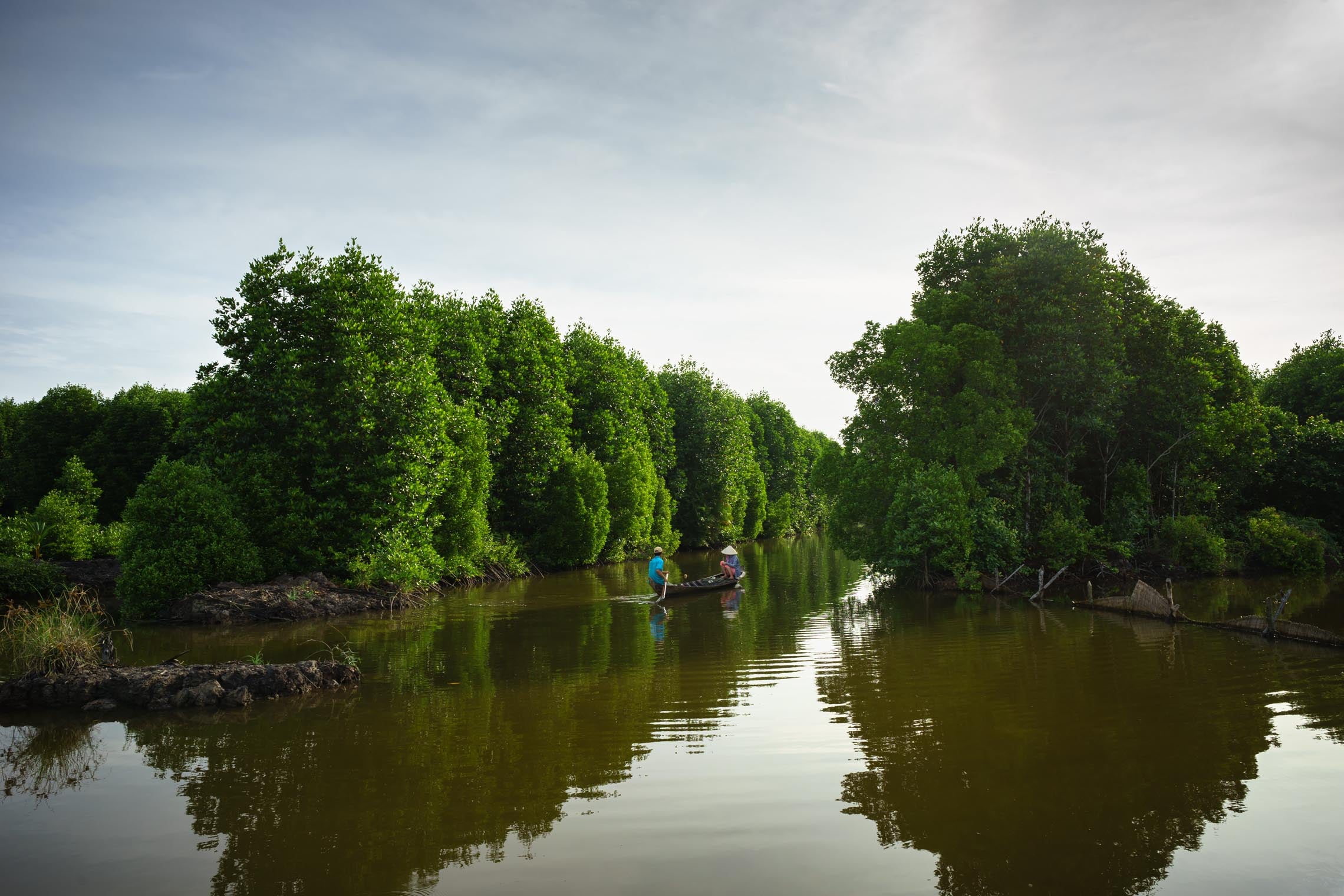
Mangrove forest reflected in calm waterways in Ca Mau, Vietnam

Mangrove forest reflected in calm waterways in Ca Mau, Vietnam

Things to do in Ca Mau through waterways and countryside

Waterways shape Ca Mau’s countryside, linking river settlements, canals and rice fields, while each route brings a closer look at resourceful communities whose livelihoods have long grown from the fertile waterways and southern lowlands.

Read the tides along Ganh Hao River and Hoa Thanh

A river journey through southern Ca Mau draws travellers into a world that feels elemental yet deeply lived, where water laps against the hull, wet timber scents the air and pale light stretches across brackish channels. Following the Ganh Hao River towards Hoa Thanh, the passing landscape brings fishing vessels, riverside homes and narrow waterways into view, leading the eye towards communities whose livelihoods depend on knowing currents, salinity and water levels. That knowledge appears in nets hung beside wooden houses and vessels slipping between the banks, while birds call across open channels, allowing travellers to sense how closely daily life remains connected to the waterways sustaining the local communities.

Follow the coastal life of Rach Goc towards Dat Mui

Rach Goc draws travellers into a coastal landscape where shrimp farms glimmer beside tidal creeks and the day’s catch finds its way from estuary to riverside kitchen, giving the journey a distinctly local flavour. The area’s famed Rach Goc dried shrimp grew from this abundance, with brackish-water shrimp traditionally preserved to keep their savour long after leaving the fishing grounds. The same abundance also finds its way into ba khia, salted in household jars to transform another humble catch into a pungent accompaniment to rice.

Following the road from Rach Goc towards Dat Mui, the scenery gradually opens into mangrove waterways and tidal flats, where salt-laden air, dark roots and broad skies deepen the sensation of reaching Vietnam’s southernmost land, shaped by the generosity of its waters.

Slow down among the rice fields and canals of Thoi Binh

A narrow canal winds past rice paddies and garden plots in Thoi Binh, leading beneath wooden footbridges and past modest homes where pots of herbs grow beside kitchen doors. Following its course brings travellers closer to the agricultural life that has long sustained these communities, with rice fields, family gardens and neighbouring hamlets linked by waterways inherited from generations of Delta settlement. Because the canal is both passage and livelihood, its banks become a window onto everyday routines, from vegetables gathered for family meals to grilled food scented through open kitchens. From such a rustic scene here come bicycle bells, insects and distant conversation, mingling with rustling palms and deepening the sense of warmth created by this close-knit countryside life.

Discovering Ca Mau's abundant nature

Ca Mau’s wilderness changes dramatically from coast to interior, unfolding through offshore islands, peat wetlands and weathered granite shores, each ecosystem distinguished by its own geology, vegetation and wildlife.

Leave the mainland behind for Hon Khoai Island

The first glimpse of Hon Khoai arrives as a moment of quiet exhilaration, when its forested silhouette rises from the Gulf of Thailand and the mainland begins to feel to fade into the distance. As the shoreline draws nearer, granite outcrops emerge beneath dense foliage, their weathered surfaces contrasting with the blue expanse around the island, while Hon Khoai’s historic lighthouse stands above the canopy as a solitary guide. Built during the French colonial period, the lighthouse has watched over the southern sea for generations, lending the landscape a sense of maritime history without diminishing its wild beauty. Stepping ashore, travellers feel the salt on their skin, hear waves breaking against rock and look across an immense horizon, an experience that leaves the island feeling remote, rugged and wonderfully untamed.

Enter the peat wetlands of U Minh Ha Forest

The forest feels almost cinematic, with towering cajuput trees, dark water and shafts of light creating an atmosphere so mysterious and striking that it has appeared in numerous Vietnamese films. Yet no screen can quite capture the sensation of being there, surrounded by pale trunks, mirrored waterways and the earthy scent of wet peat. Emerging into U Minh Ha Forest, travellers find that familiar cinematic images become tangible, as dense vegetation closes around narrow channels and birds call from somewhere deep in the canopy. Beneath this haunting beauty lies a fragile wetland ecosystem formed by acidic soils, peat and waterlogged ground, while traditional gác kèo ong beekeeping adds a cultural story rooted in generations of life among the cajuput trees.

Experience the silvered granite landscapes of Hon Da Bac

Later on, Hon Da Bac (Hon Da Bac Island) marks a striking change from U Minh Ha, rising from the western Gulf with ancient granite outcrops, wind-bent foliage and tide-polished hollows. The island’s name is often linked to the silvery sheen that appears across the stone when sunlight catches its sea-washed surfaces, giving the rugged terrain a distinctive visual allure. This silvery sheen becomes part of the experience on foot, as uneven slabs lead towards secluded coves where sea foam gathers in shallow pools and waves surge through narrow fissures. Along the way, salt spray touches the skin, seabirds circle above the open horizon and the scent of the ocean lingers around the weathered formations, while caves and secluded sites quietly preserve traces of wartime history.

Experiencing Ca Mau's local cultural identity

Travellers exploring Ca Mau may find a Buddhist temple at one street corner and a Khmer place of worship further along, with Hoa shrines adding another layer to the streetscape. Each reflects the migration, beliefs and cultural traditions that have shaped the province’s distinctive identity.

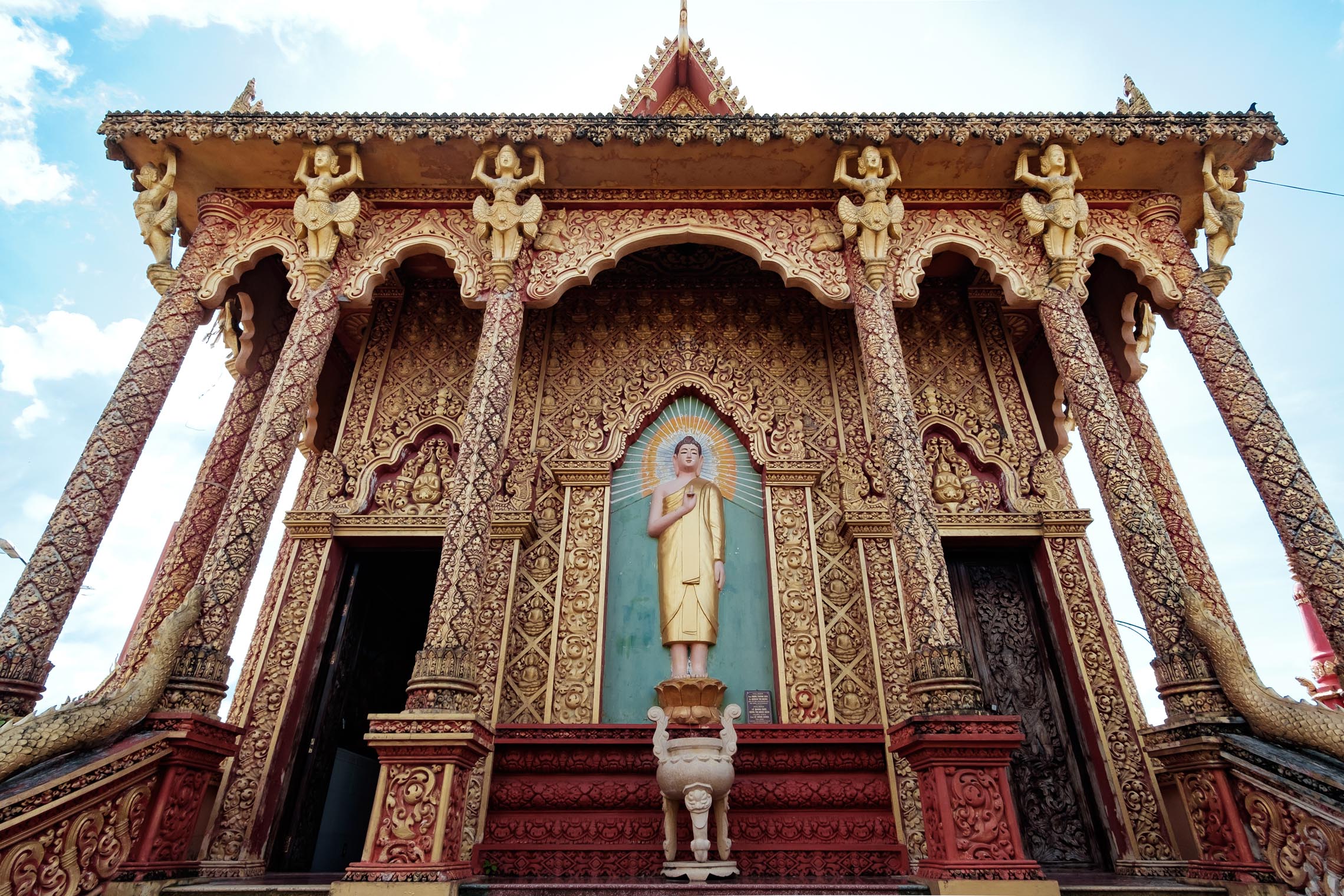
Ornate Khmer Buddhist temple with intricate carvings and a Buddha statue in  Ca Mau

Ornate Khmer Buddhist temple with intricate carvings and a Buddha statue in Ca Mau

Step into Khmer Buddhist heritage at Monivongsa Bopharam Pagoda

Monivongsa Bopharam Pagoda catches the eye with soaring tiered roofs, vermilion walls, gilded ornament and sculpted naga guarding its sacred spaces. Stepping through the compound, visitors enter a visual language shaped by Khmer Theravada Buddhism, from richly painted Buddhist scenes to intricate figures that draw the gaze towards the prayer hall. Within this ornate setting, the atmosphere gradually grows more contemplative as incense drifts through the air, temple bells sound softly and worshippers move between devotional spaces. During festivals and communal observances, this atmosphere becomes more animated, with prayer, offerings and family gatherings revealing how Khmer Buddhism remains closely woven into community life throughout Ca Mau’s southern cultural landscape.

Follow the maritime faith of the Hoa community at Ba Thien Hau Pagoda

Thien Hau was traditionally invoked for protection on water, making her worship particularly resonant in a province threaded by rivers and coastal passages. In the space, Incense curls beneath carved wooden panels as Thien Hau, the sea goddess revered by Chinese communities, watches over a Ba Thien Hau Pagoda - the sanctuary shaped by centuries of maritime belief. Stepping inside, visitors find offerings arranged before her altar, while intricate motifs and devotional objects evoke the voyages of merchants and boatmen who followed southern trade routes into the Mekong Delta. Here, the atmosphere is both devotional and deeply evocative, connecting Hoa heritage with migration, commerce and the seafaring traditions that helped form Ca Mau’s multicultural identity.

Hear the musical heritage of the South at Cao Van Lau Theatre

To understand the spiritual life of people in Vietnam’s southernmost region, one should listen at least once to Da Co Hoai Lang (The nightly longing for the absent husband), the 1919 composition by musician Cao Van Lau that gave musical expression to the longing and tenderness woven into southern life. Its plaintive melody grew from Don Ca Tai Tu (Southern Vietnamese chamber music), a tradition in which musicians gathered to improvise, respond to one another and turn personal feeling into song. At Cao Van Lau Theatre, these sonic traditions become a living performance through resonant strings, expressive vocals and lingering pauses, drawing the audience into an emotional world shaped by longing and devotion.

Leaving Ca Mau, the landscapes may remain vivid in a traveller’s photographs, but perhaps it is the lingering voice of southern song that stays longest in the mind.

Quick information

Frequently Asked Questions

Two to three days allow enough time to experience the main things to do in Ca Mau, from exploring the city and U Minh Ha Forest to choosing either Hon Khoai Island or Hon Da Bac, while still leaving space for riverside communities, local food and slower countryside journeys.

December to April is generally the drier period, with more comfortable conditions for boat trips, forest excursions and coastal journeys. From May to November, heavier rainfall raises water levels across the waterways and brings a different atmosphere to the wetlands and countryside.

Yes. One-day tours from Ca Mau generally range from around VND 690,000 to VND 1,450,000 per person, depending on the route and inclusions. A U Minh Ha – Hon Da Bac itinerary starts at around VND 690,000, while tours from Ca Mau to Dat Mui start at approximately VND 850,000.

What to eat in Ca Mau to explore its southernmost flavours

In a land where mangrove roots grip tidal mud and cajuput forests perfume the inland wetlands, ingredients arrive carrying the scent of brackish water, smoke, herbs and rain-soaked earth. In Ca Mau, a bowl of noodles or a handful of forest greens can therefore tell a chronicle about where people live, how they harvest and which waters have fed their families for generations.

What to eat in Ca Mau for a taste of its local specialties

In Ca Mau, cooking begins with an astute reading of what the forests, estuaries and wetlands yield, with each ingredient demanding its own treatment before it reaches the table. Brackish-water seafood is salted, sun-cured or fermented to intensify its savoury richness, while wild greens from the wetlands are tempered with herbs, sour fruits and fragrant broths. Such techniques coax striking contrasts from unassuming produce, from the delicate sweetness of crab to the briny depth of cured seafood and the resinous perfume of cajuput. Those flavours lead back to fishing grounds, forest clearings and household kitchens, revealing how generations have adapted their cooking to Ca Mau’s waterways, vegetation and enduring food customs.

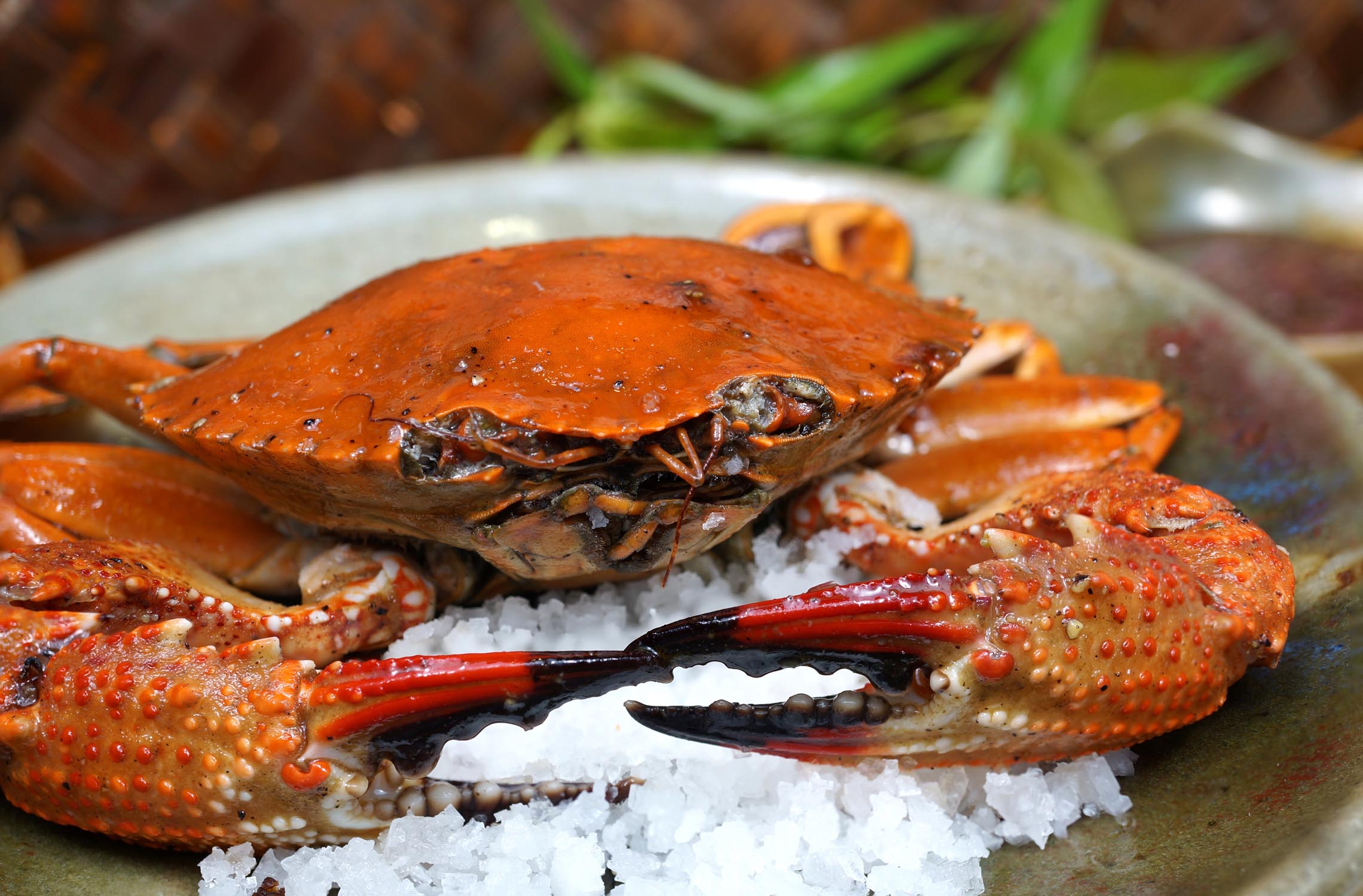
Ca Mau mud crab served on a bed of coarse salt

Ca Mau mud crab served on a bed of coarse salt

Ca Mau’s spicy rice noodles, the local breakfast ritual

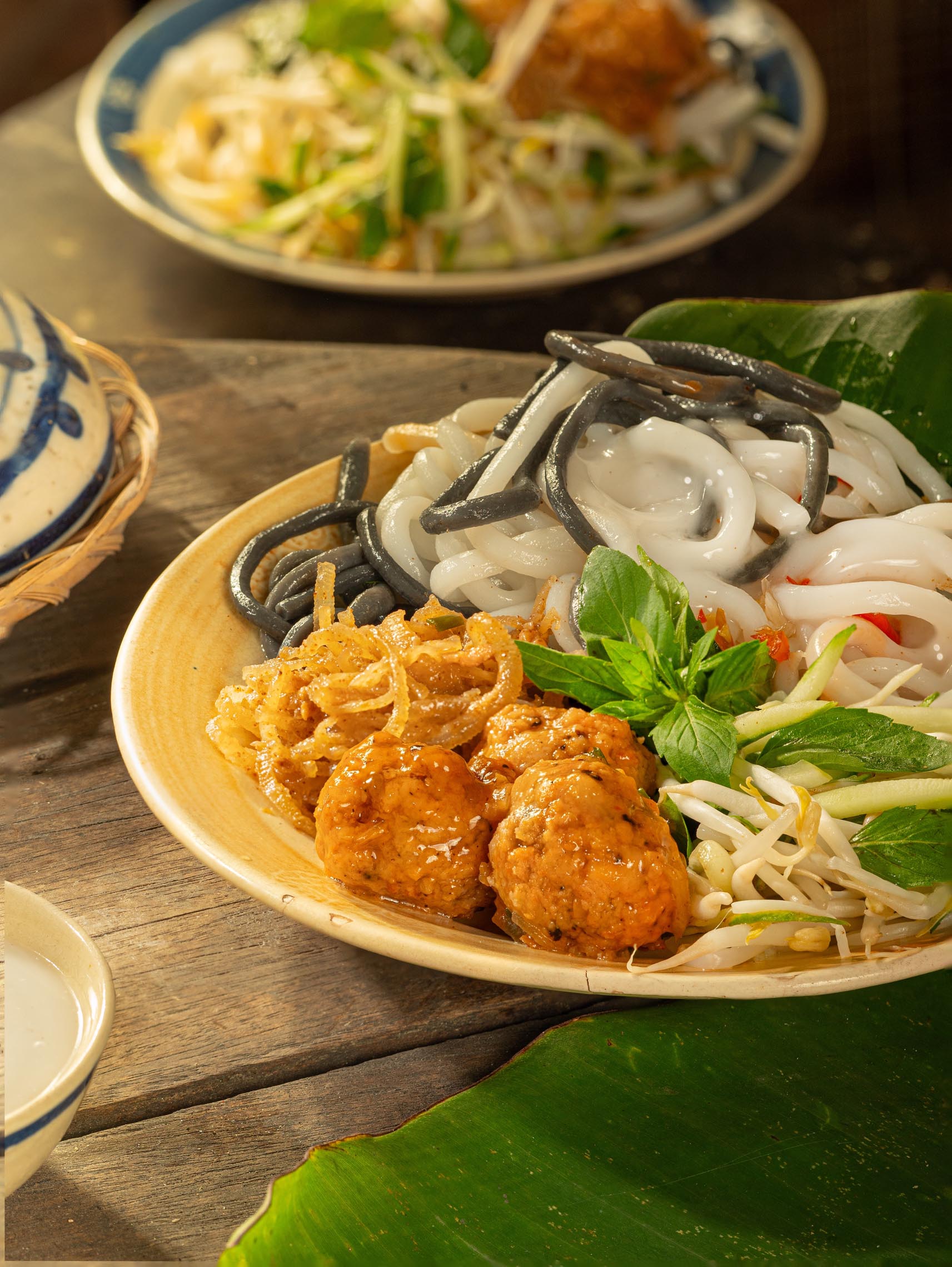
Local diners in Ca Mau often begin the day with a bowl of Banh Tam Cay Ca Mau (Ca Mau spicy rice noodles), a dish whose fiery broth has become part of the city’s everyday food culture in Ca Mau. At neighbourhood stalls, they lift thick, supple noodles through a brick-red broth scented with chilli and garlic, then add herbs and crisp vegetables to soften the heat and sharpen its freshness. Chicken or pork meatballs lend a savoury richness, while the noodles absorb the broth, becoming tender, fragrant and pleasantly piquant with every bite. The pleasure comes from this interplay of heat, saltiness, softness and crunch, with each mouthful changing as herbs and vegetables mingle with the broth. Eating the dish this way reflects a southern preference for assertive seasoning balanced by abundant fresh produce, turning a simple breakfast into a distinctly local sensory experience.

Banh Tam Cay Ca Mau with thick rice noodles, meatballs, fresh herbs and vegetables

Banh Tam Cay Ca Mau with thick rice noodles, meatballs, fresh herbs and vegetables

Taste the cajuput forest in U Minh bee larvae salad

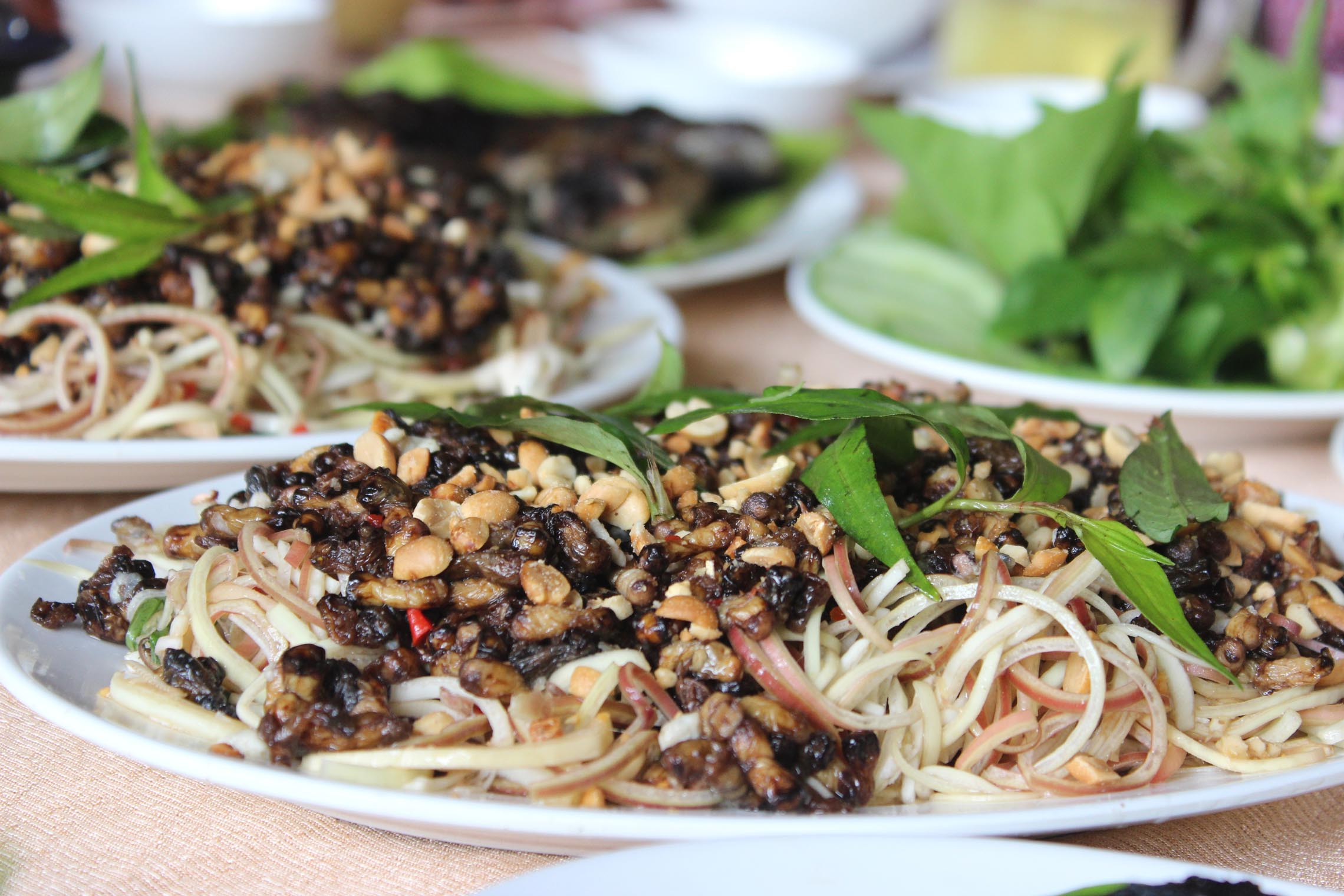
Deep among U Minh’s cajuput forests, the traditional wild-bee beekeeping has long connected local livelihoods with the flowering canopy, as forest keepers tend bee colonies around leaning cajuput branches and harvest honey without exhausting the hives. That intimate knowledge of the woodland’s beekeeping technique also extends to the table through Goi Nhong Ong U Minh (U Minh bee larvae salad), where tender larvae are dressed with herbs, crisp vegetables and aromatic seasonings. The first bite surprises with a soft, buttery richness, followed by peppery herbs and fresh greens that sharpen the palate and prevent the sweetness from becoming heavy. For diners, the experience is both unfamiliar and remarkably delicate, with each mouthful carrying faint floral notes and earthy nuances. Tasting the salad near U Minh makes the forest feel present not as scenery, but through flavour, texture and the ingenuity of local food traditions.

A plate of rice noodles topped with savoury ingredients and fresh herbs

A plate of rice noodles topped with savoury ingredients and fresh herbs

Follow Rach Goc’s coastal harvest through salted crab and mud crab

From the resinous fragrance of U Minh’s cajuput forests, the culinary trail moves towards Rach Goc, where tidal creeks and mangrove flats replace woodland and seafood takes centre stage. Here, Ba Khia Rach Goc (Rach Goc salted crab) has long been preserved in salt, a household craft born from the abundance of small crabs in the brackish estuaries. Its flesh develops a pungent, saline intensity that softens against steamed rice and crisp herbs, giving the palate a savoury depth followed by a refreshing lift. The same waters produce Cua Ca Mau (Ca Mau mud crab), prized for dense meat and delicate sweetness. Tasting them side by side traces two expressions of the coast, one fermented and robust, the other succulent and clean-tasting.

Food in Ca Mau, a journey from land to sea

The beauty of Ca Mau’s everyday cooking lies in its resourcefulness, with ingredients gathered from the garden beside the house, from the canals running past the fields and waters close to the communities that cook from them. Nothing needs to travel far before it reaches the kitchen, keeping cooking closely attuned to what each household can grow, gather or catch. This resourceful way of eating reflects a quiet form of sustainability, rooted in seasonal abundance, minimal waste and respect for what the surrounding land and waterways can provide.

Trace Khmer and Chinese influences through southern noodle dishes

A taste of southern Vietnam can be found in its noodle dishes, where recipes shaped by Khmer and Chinese communities have become part of the region’s everyday table.The first spoonful of Bun Nuoc Leo (Khmer-style fish noodle soup) brings fermented fish, herbs and a savoury broth together, filling the air with a pungent aroma that lingers pleasantly on the palate. Its layered flavour recalls Khmer culinary traditions rooted in communities across the western Mekong Delta, where waterways connect homes, markets and temples. Following that briny depth, Hu Tieu (Rice noodle soup) feels lighter, its clear broth, tender noodles and crisp garnishes shaped by Chinese migration and the trading culture of southern market towns. The palate then turns softer with Banh Cu Cai (Bac Lieu steamed radish cake), where rice flour and radish meet savoury seasoning. Together, these tastes let diners experience how migration became part of local cuisine.

Balance rich flavours with bitter greens and pickled vegetables

A plate of greens beside a steaming bowl of fish broth invites a first taste of bright pickle, followed by softer, earthier flavours beneath it. Bon Bon Muoi Chua (Pickled local vegetable) cuts through the broth’s richness, while Dot Choai (Fiddlehead fern shoots) adds a tender crunch that prepares the palate for Rau Dang Dat (Bitter herb), whose pronounced bitterness can sharpen a rich fish dish. Local families value these flavours not simply for their distinct tastes but for the practical uses associated with each plant, from nourishment to traditional household knowledge. Tasting them together invites visitors to appreciate a mindful food culture where every leaf has a purpose, every flavour earns its place and little is treated as insignificant.

Share the southern habit of eating fish, vegetables and rice

Smoke from a wood fire drifts through a kitchen, mingling with the aroma of caramelised fish sauce as a clay pot of Ca Kho (Braised fish) simmers beside a basket of greens. The fish cooks slowly until tender, its dark seasoning sinking into every layer before being spooned over steamed rice. This style of eating belongs to a southern tradition of placing shared dishes at the centre of the table, rooted in rice-growing communities where meals have long been occasions for conversation and connection. Around Ca Mau, that communal spirit extends from family kitchens to noodle stalls and modest eateries, where familiar flavours invite easy exchanges. Rice, fresh vegetables and boldly seasoned dishes remain central to a food culture shaped by shared plates, local produce and the generous habit of sharing foods.

Quick information

Frequently Asked Questions

Local markets, neighbourhood eateries and family-run food stalls are among the best places to experience everyday flavours, while rural and coastal communities provide access to seasonal seafood, freshwater fish, forest produce and traditional home-style dishes.

Yes. Ca Mau city has a wider choice of casual eateries and markets, while areas around U Minh, Rach Goc and Dat Mui are better for discovering ingredients and dishes closely connected to forest, river and coastal life.

A casual local meal generally costs around VND 30,000 – VND 80,000 per person, while seafood dishes and more substantial restaurant meals usually range from VND 150,000 – VND 300,000 per person, depending on the ingredients and portion size.

How to get to Ca Mau for the most memorable journey

Reaching Ca Mau feels inseparable from the waterways that have long connected fishing villages, rice fields and coastal settlements across the southern Delta. Roads trace these communities inland, flights cross the vast flatlands from major Vietnamese cities, while boats follow channels shaped by generations of river trade, bringing travellers closer to the province’s mangroves, estuaries and open sea.

How to get to Ca Mau by road and air

The best way to travel to Ca Mau depends on the starting point and preferred pace of the journey. Coaches connect the province with major Delta cities, while private cars allow flexible stops; flights provide a direct alternative for travellers arriving from Vietnam’s larger urban centres.

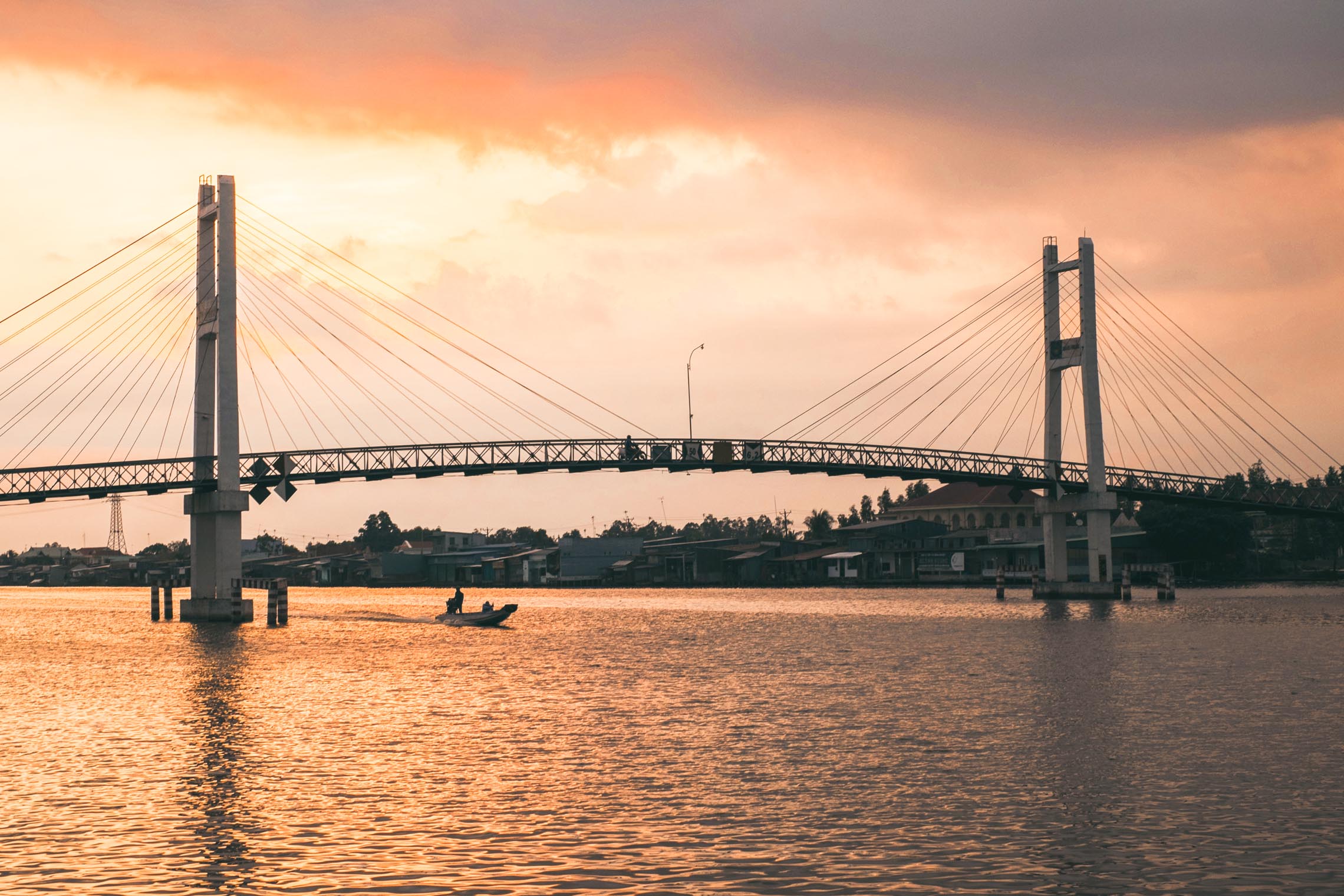
Cable-stayed bridge crossing a river in the Mekong Delta at sunset

Cable-stayed bridge crossing a river in the Mekong Delta at sunset

Follow the Mekong Delta by bus from Ho Chi Minh City

Buses remain one of the most practical ways to travel from Ho Chi Minh City to Ca Mau, following routes shaped by the Delta’s history of trade and settlement. Beyond the city, roads thread through rice-growing districts and market towns, passing orchards, bridges and canal-side homes. The journey traces infrastructure that connected once-isolated communities across southern Vietnam, turning road travel into part of regional life. For passengers watching through the window, these scenes create an introduction to the Delta, where agriculture, commerce and waterways remain closely intertwined.

Turn the journey into a southern road trip

A private car creates more freedom to pause along the route from Ho Chi Minh City, particularly around the Mekong Delta provinces between the city and Ca Mau. Small towns, ferry crossings, rural markets and agricultural landscapes can become spontaneous stops, giving the journey a more personal pace. The road gradually moves towards a wetter, flatter landscape, where canals appear beside homes and waterways become increasingly important to local transport. Travellers can stop for coffee in small townships, browse roadside produce or pause beside a canal where fishing boats move between settlements. These details turn a transfer into a closer reading of the Delta, with each stretch of road revealing how agriculture, water and household life remain closely connected. This route works particularly well for travellers combining Ca Mau with other southern destinations.

Fly south through Ca Mau Airport

For travellers planning to travel to Ca Mau from northern or central Vietnam, flying provides a direct route into the southernmost province, with Ca Mau Airport located close to the city. The compact domestic airport keeps arrivals straightforward, while flight schedules can vary according to the operating route. Checking the latest timetable and booking available flights helps travellers coordinate onward plans, while TripCare insurance can be considered alongside the wider travel arrangements.

Travel to Ca Mau through its airport

Ca Mau Airport sits close enough to the urban centre for the final transfer to remain straightforward. For passengers arriving by air, the transition from terminal to city can happen quickly, leaving more time for the landscapes and cultural experiences further south. To make the journey smoother from the moment you arrive, explore the Ca Mau Airport map for useful airport navigation information before setting off.

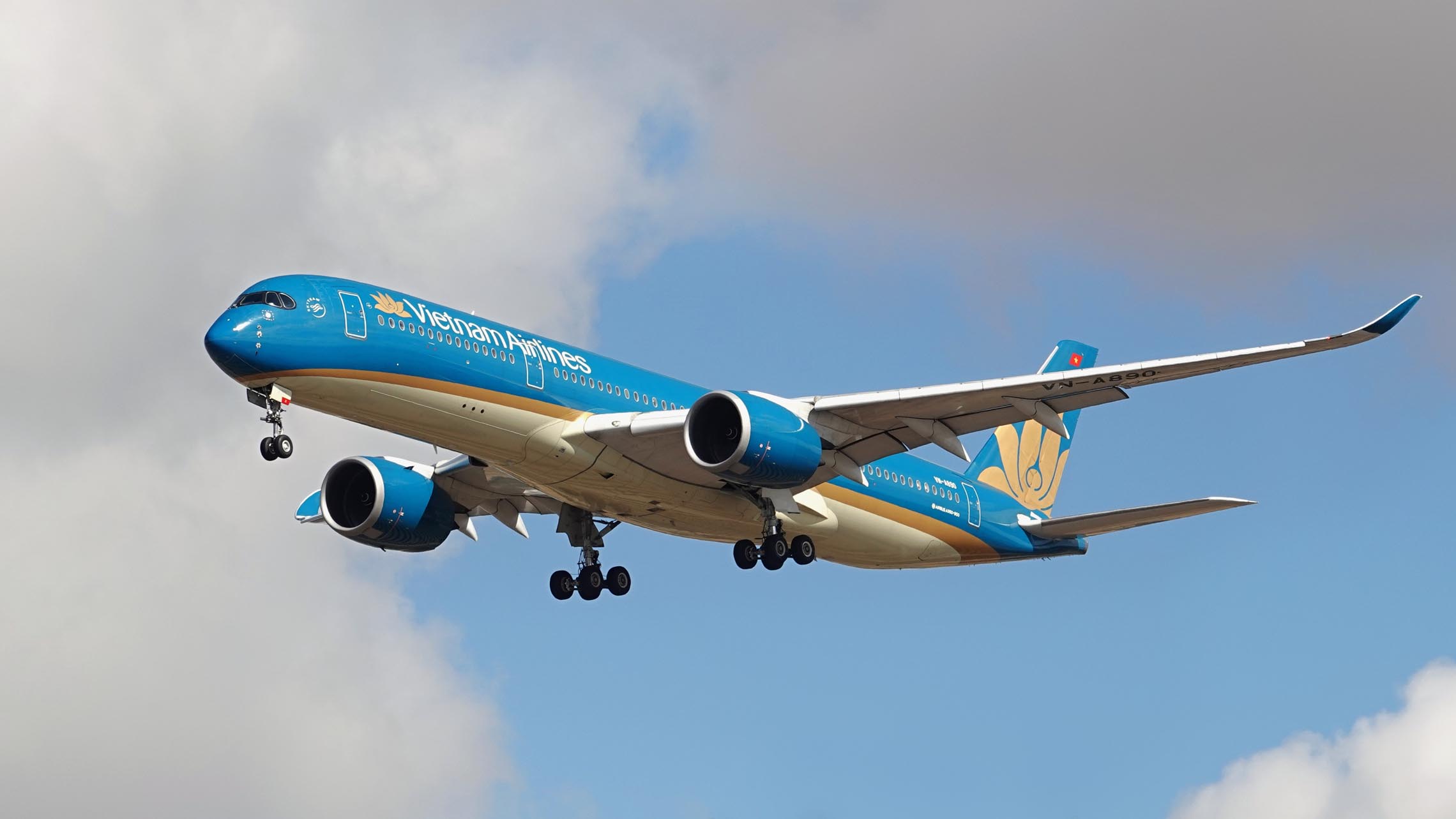
A Vietnam Airlines aircraft en route to Ca Mau by air

A Vietnam Airlines aircraft en route to Ca Mau by air

An airport with essential passenger facilities

Ca Mau Airport has one terminal serving domestic flights, with basic passenger facilities designed to support a straightforward arrival and departure experience. Compared with Vietnam’s principal aviation hubs, the airport is relatively small, with essential amenities such as check-in and waiting areas that make it easier for passengers to navigate the terminal. This compact layout is particularly convenient for travellers on domestic routes, offering a less complicated experience after a longer journey.

Ways of airport transfer to Ca Mau city centre

Ca Mau Airport is approximately 10km from the city centre, with taxis and private transfers available for journeys to central hotels and urban areas. The relatively short transfer means passengers can reach the city without a lengthy connection after landing. The route also provides a first glimpse of Ca Mau beyond the terminal, with residential streets, roadside businesses and waterways gradually replacing the airport surroundings.

Use road, motorbike and boat connections after arrival

Once in Ca Mau, taxis and motorbikes make it easy to move through the city, from market streets and riverside neighbourhoods to local food stalls tucked along smaller roads. Private cars become more practical for longer excursions towards U Minh, Dam Thi Tuong and the southern coast, where distances between communities can stretch across open countryside. When roads narrow into canals and tidal channels, boats become the more revealing way to travel, passing fishing grounds, garden plots and homes oriented towards the water. The shift from road to water is part of everyday life here, where a motorbike may stop beside a small pier and the next stretch of the route continues by boat.

Quick information

Frequently Asked Questions

Coach fares generally range from VND 180,000 to VND 300,000 per person, one way, with the journey taking around seven to eight hours. Travel time and ticket prices vary by operator, seat type, traffic and the number of stops along the route.

Motorbikes are practical for independent journeys around the city and nearby areas, while taxis and private cars work better for longer distances or family groups. Boats are the preferred choice for excursions centred on rivers, canals and waterways.

A taxi from Ca Mau Airport to the city centre generally costs around VND 100,000 to VND 150,000 per trip, depending on the destination and taxi operator. Fares can vary, so confirming the price before departure is advisable.

Hotels in Ca Mau and the places that make a stay feel local

A stay in the urban core keeps markets and everyday street life nearby, while garden settings place rooms beside canals and quieter neighbourhoods, with coastal and forest areas bringing shrimp farms, mangroves and waterways closer to the doorstep. The best hotels in Ca Mau, among varied types of accommodation , make these surroundings part of the stay, whether that means market sounds drifting through an open window, garden scents lingering after rain or boats passing along nearby waterways.

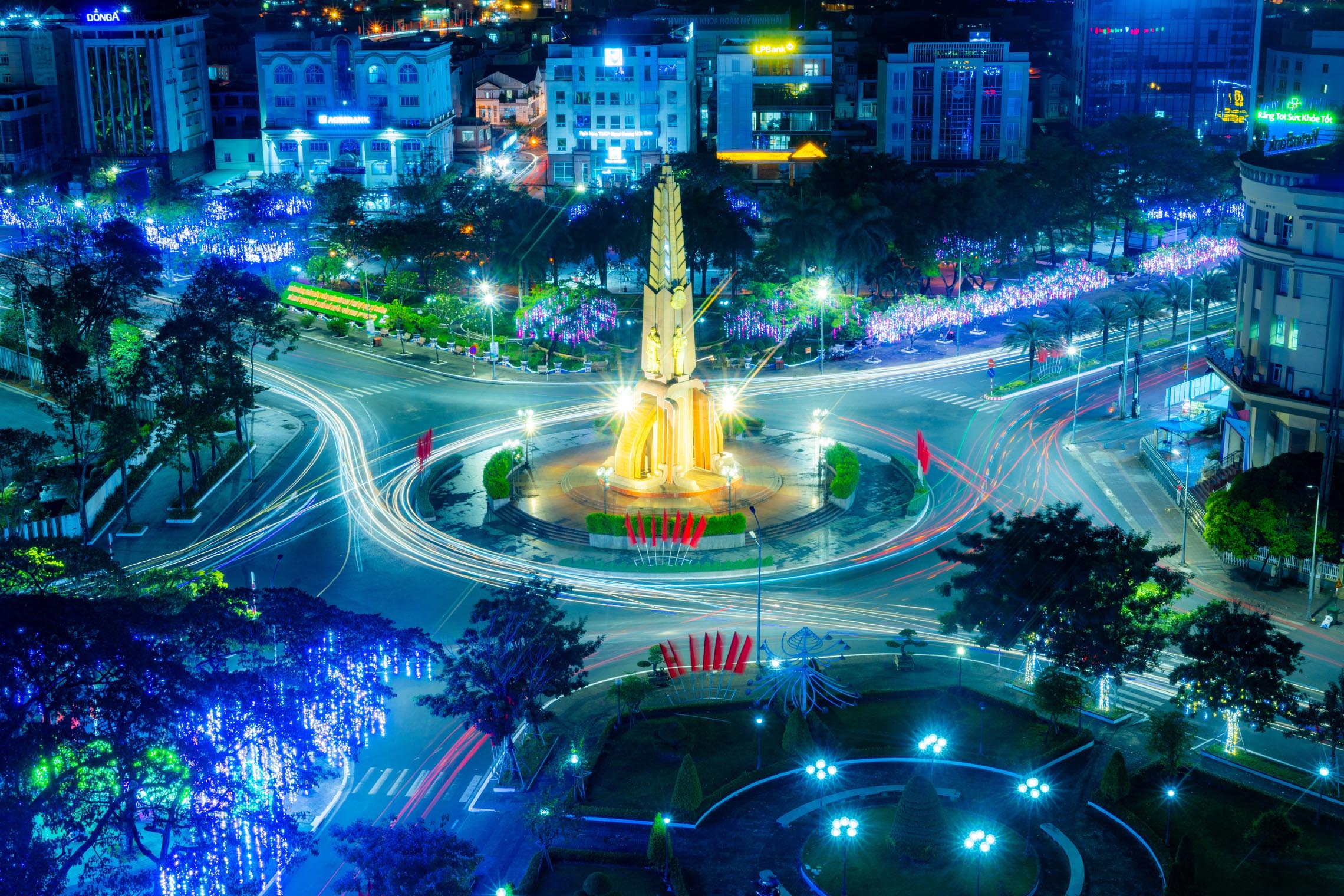
Illuminated roundabout and surrounding streets in central Ca Mau at night

Illuminated roundabout and surrounding streets in central Ca Mau at night

Hotels in Ca Mau for different travellers

A journey through Ca Mau changes with the people sharing it, because each group brings its own pace, priorities and way of using a place to stay. Solo travellers can keep plans fluid, couples may value a calm space between excursions, while families and friends often need rooms and common areas that accommodate different routines. These differences become especially noticeable after a day of exploring, when some guests want quiet, others continue talking, and everyone needs a comfortable base that matches the way the group travels.

A central stay keeps solo trips close to everyday Ca Mau

A solo stay in central Ca Mau puts the texture of city life within easy reach, turning ordinary streets into part of the experience rather than scenery passed on the way elsewhere. Staying in this part of the city also makes it easy to follow local flavours beyond the hotel, as a bowl of Banh Tam Cay Ca Mau (Ca Mau spicy rice noodles) can lead to a crowded market aisle, where vendors sort herbs, freshwater fish and local produce across low wooden stalls. Nearby cafés fill with quiet conversations, while motorbikes thread between food shops and riverside streets. With little need to plan every outing, solo travellers can follow curiosity from one small discovery to another, tasting familiar flavours and watching the daily commerce that gives the city its character.

Garden and riverside settings create a quieter base for couples

A private balcony overlooking palms and still water can turn a hotel stay into something quietly romantic, especially when two people have nowhere to be except together. At a hotel set among gardens and waterways, a cool drink shared beneath the shade leads naturally into long conversation, while the scent of wet leaves and distant birds settles around the garden. The same sense of seclusion continues by the pool, where an afternoon spent reading, talking or simply watching the canal drift past becomes a pleasure in itself. With these hotel spaces keeping the city’s bustle at a distance, couples have room to savor each other’s company, letting the surrounding greenery and waterways become part of their shared escape.

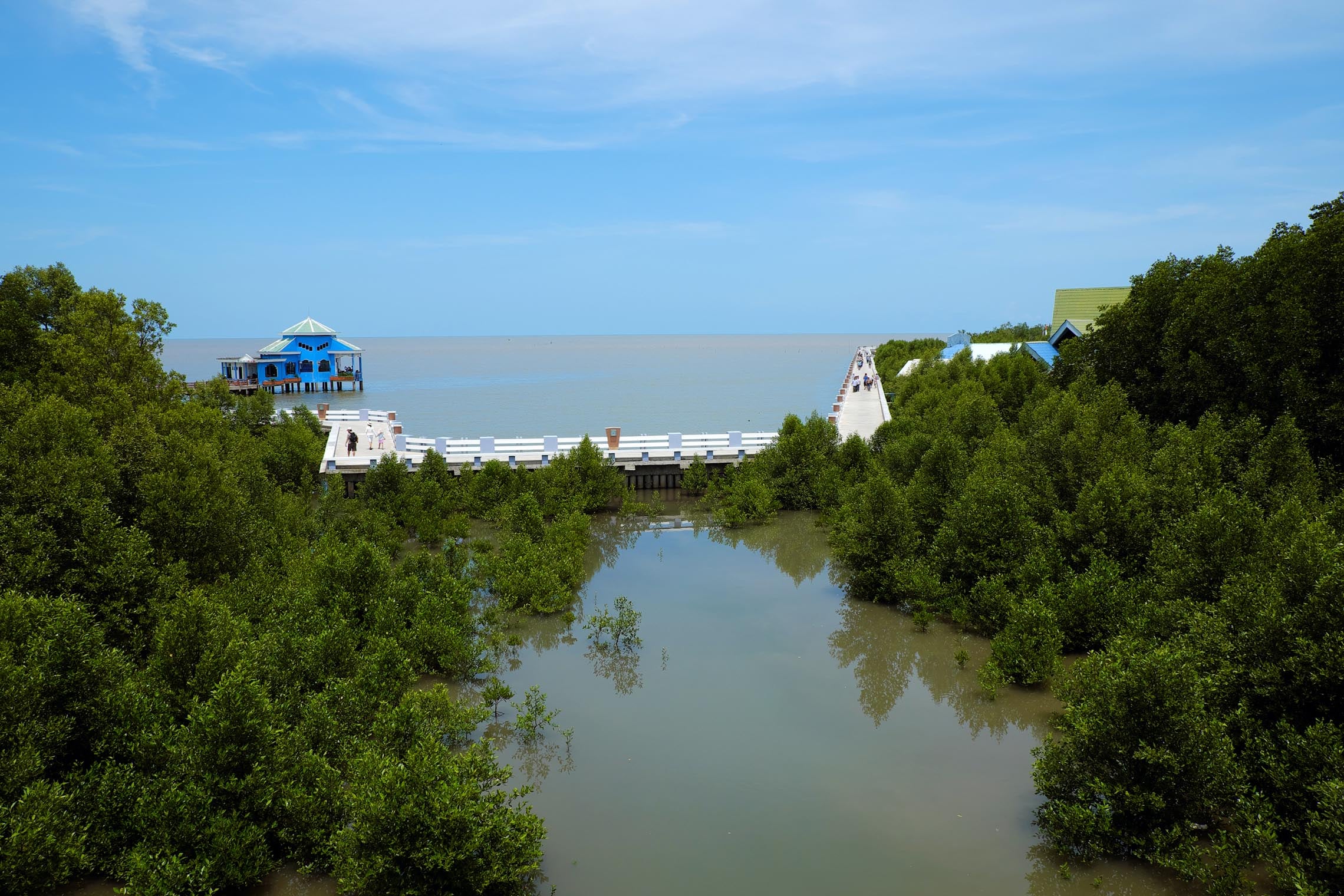
A coastal accommodation in Ca Mau surrounded by mangrove forests and water

A coastal accommodation in Ca Mau surrounded by mangrove forests and water

Larger rooms and pools make family journeys easier

After a full day on the road, families tend to value comfort above all else, with larger rooms, breakfast and pools useful for trips towards U Minh, Dat Mui and Bac Lieu. At a hotel that serves as a base for these longer journeys, extra space becomes especially valuable when children need somewhere to play while parents unpack, rest or enjoy a quiet meal. The pool then becomes part of the hotel experience itself, giving younger guests something to look forward to after excursions while adults unwind nearby. Alongside these spaces, breakfast and flexible dining hours help establish an easy routine without rushing from one activity to another, leaving more energy for the long coastal roads and forest landscapes ahead.

Countryside homestays give friends a shared place to return to

A countryside homestay gives friends a house to share, so the pleasures of travelling together continue after the day’s excursions have ended. That shared space naturally gathers everyone around a wooden table, where locally cooked dishes, iced tea and garden fruit turn dinner into a relaxed group ritual. From the table, attention drifts towards the garden, where vegetables are grown for household meals and canal water slips quietly past the property. These details draw friends closer to the everyday habits of rural Ca Mau, encouraging them to divide simple chores, choose the next meal or sit together outdoors. The homestay therefore becomes part of the friendship itself, shaped by shared food, shared space and unplanned moments.

Ca Mau accommodations and varied kinds of journey

A stay in Ca Mau changes markedly once the itinerary leaves the city, with each excursion introducing a different reason to choose one base over another. That practical choice becomes clearer when distances, road conditions and the day’s activities enter the picture.

An Xuyen keeps a first visit close to markets and city life

An Xuyen is a practical base for travellers who want their hotel stay to remain closely connected to the everyday life of Ca Mau. Its commercial life centres on market aisles leading towards coffee houses, small shops and riverside lanes. Baskets of freshwater fish, tropical produce and household goods fill the stalls, while vendors weigh purchases, arrange their displays and exchange familiar greetings with regular customers. Their activity spills naturally into the surrounding streets, where motorbikes thread between shopfronts and bicycles pause beside roadside counters. From a hotel nearby, these details become easy to observe without elaborate planning, whether browsing market goods, sitting beside a coffee counter or following the riverside streets. The experience gives a first stay a close-up view of Ca Mau’s urban life, grounded in trade, routine and local interaction.

Thoi Binh or Vinh Trach brings homestays closer to agricultural life

Once the road leaves the urban centre, homestays around Thoi Binh and Vinh Trach place guests among rice paddies, irrigation channels and garden plots tended beside family homes. The setting feels closely entwined with agricultural routines, as narrow waterways run past vegetable beds, wooden footbridges connect neighbouring households and hammocks sway beneath shaded verandas. Without the formality of a conventional hotel, a homestay gives these rural details greater presence, from farmers tending crops to neighbours exchanging greetings across the canal. Sometimes, the quiet atmosphere in the homestays here is punctuated by boat engines, rustling palms and the occasional clatter from a household workshop. Staying here brings a closer appreciation of southern village life, where cultivation, waterways and domestic routines remain woven into the fabric of each household.

The coast connect stays with shrimp-farming communities

The road towards Rach Goc, Vinh Hau and Vinh Hau A gradually leaves the bustle of town behind, narrowing between shrimp ponds where dark water stretches beneath low mangrove canopies. A homestay here opens onto a coastline shaped by aquaculture, with raised embankments leading past timber houses, bamboo racks and small jetties where fishing boats rest between trips. From the veranda, the landscape comes into closer focus, as shrimp farmers tend their ponds, nets dry beside the water and the briny scent of the estuary drifts through the humid air. For those accustomed to city hotels, this proximity changes the way Ca Mau is experienced, replacing distant scenery with an immediate understanding of how tides, shrimp ponds and coastal livelihoods are woven into daily life.

Dat Mui lodges place the mangrove landscape at the doorstep

Unlike city hotels built around enclosed rooms and polished facilities, small local lodges in Dat Mui are defined by their proximity to mangroves, tidal channels and open coastal space. Simple rooms and airy verandas let guests step straight into a panorama where dark mangrove crowns meet open water beneath a vast southern sky.

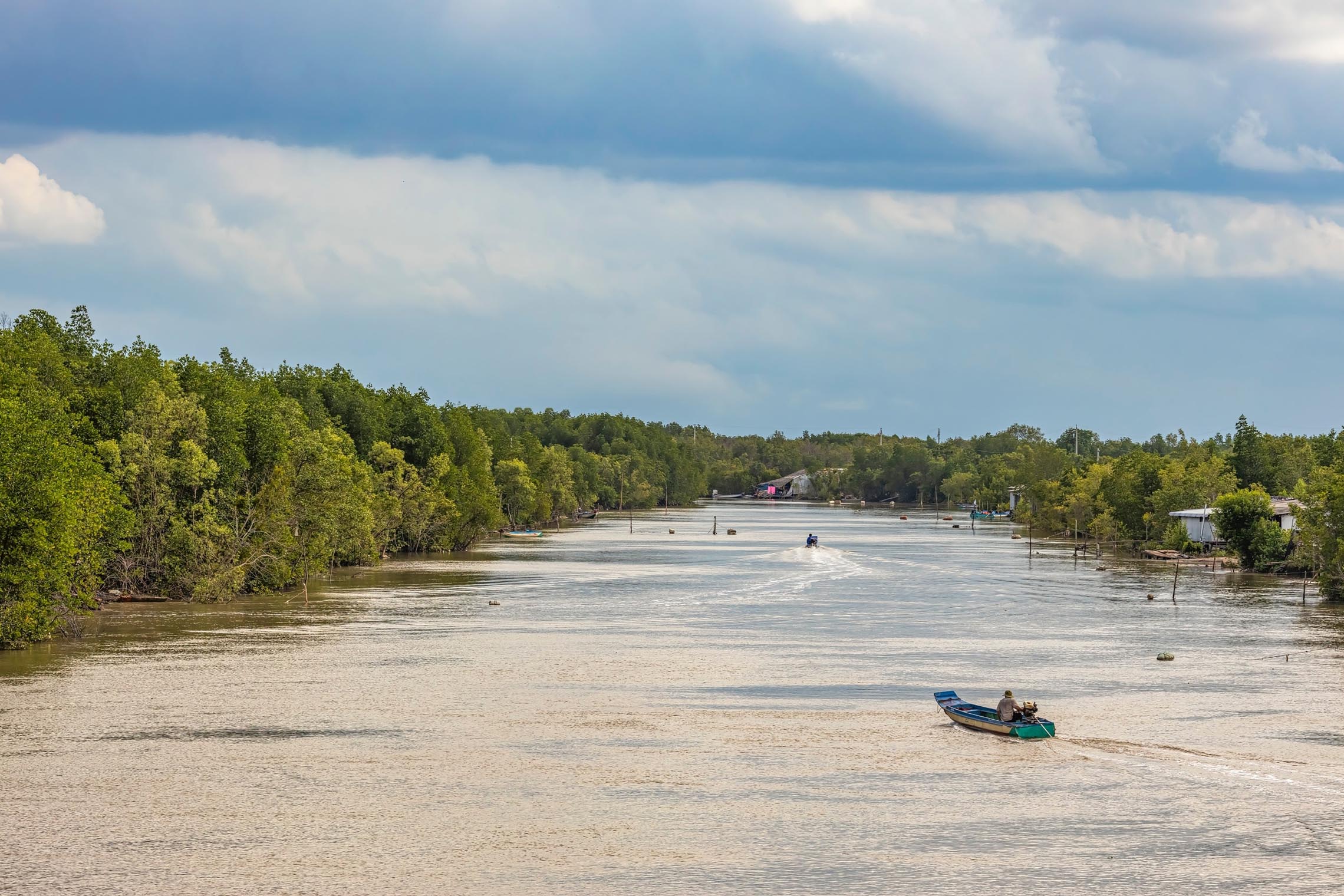
The riverine landscape of Dat Mui, Ca Mau, featuring a wide river and rows of green  trees along the banks

The riverine landscape of Dat Mui, Ca Mau, featuring a wide river and rows of green trees along the banks

The sense of scale grows with every detail in view, from sunlight scattered across winding channels to fishing boats reduced to tiny silhouettes and the forest fringe stretching towards the Gulf. After the denser streets of the provincial centre, this immense openness can feel almost overwhelming, giving guests the rare sensation of standing at Vietnam’s southernmost point. Wind through the foliage and distant bird calls deepen that feeling, while water laps quietly against the banks. A night at a local lodge in Dat Mui becomes a vivid final chapter of the journey, rooted in the extraordinary vastness of Vietnam’s farthest southern edge.

Quick information

Frequently Asked Questions

Budget hotels generally start at around VND 200,000 – VND 400,000 per night, while mid-range stays typically range from VND 400,000 – VND 800,000. Higher-end properties can cost from around VND 2,000,000 per night, depending on facilities, location and travel dates.

For weekends and public holidays, booking around one to two weeks ahead is advisable, particularly when travelling during busier periods. Weekdays usually provide more flexibility, although availability can vary by location and season.

Yes. A three- to five-night stay works well for combining Ca Mau city with the countryside, U Minh, the southern coast and Dat Mui. Hotels, homestays and small local lodgings can each serve different parts of the itinerary, allowing travellers to experience both urban life and more remote landscapes.

Explore some of the must-visit Ca Mau market

The history and abundance of Ca Mau’s natural produce are chronicled in its colourful markets, where forest harvests, river catches and coastal delicacies gather in vivid profusion. Freshwater fish lie on beds of crushed ice beside baskets of dried shrimp, while jars of U Minh forest honey glow amber beneath the market lights and herbs spill from woven baskets onto wooden counters. In the markets here, as vendors clean fish, measure dried seafood and ladle produce into bags, their calls mingle with the clatter of scales, boat engines and footsteps along the crowded aisles. For anyone browsing these stalls, each purchase leads back to the landscapes that nourish Ca Mau, from cajuput forests and freshwater channels to the brackish waters of the southern coast.

Discover unique local specialties at Ca Mau market

Ca Mau market reflects everyday trading in Vietnam's southernmost region, bringing together forest, coastal and waterway products alongside daily essentials.

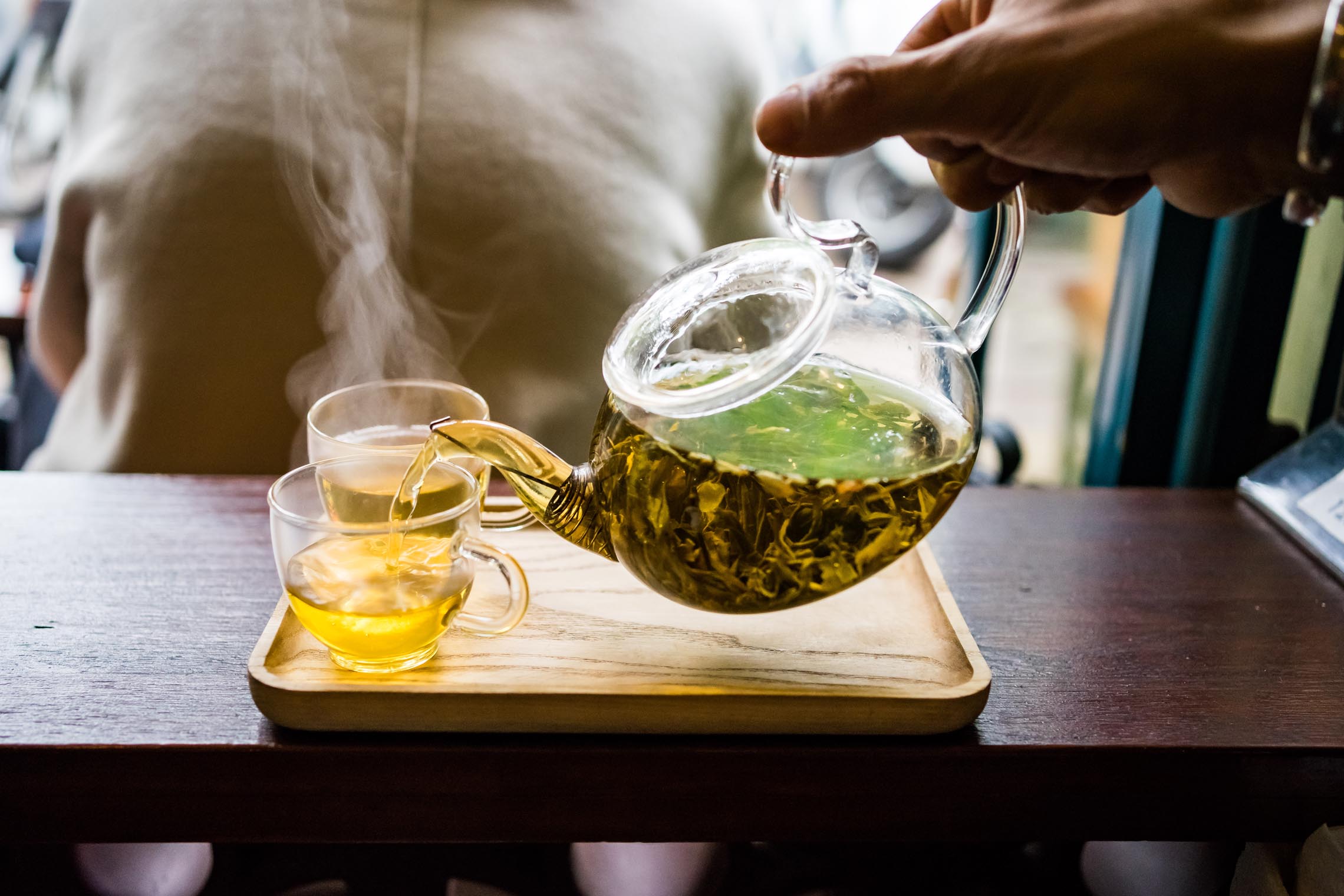
Thưởng thức trà Shan Tuyết pha nóng tại một quán nước

Fresh fruit stalls at a traditional market in southern Vietnam

Forest specialties rooted in U Minh Ha beekeeping heritage

Mat Ong Rung U Minh (U Minh forest honey) is one of the distinctive forest specialties of U Minh Ha, with its flavour closely tied to the cajuput forests and wetlands where local beekeepers tend their hives. A taste of this honey begins with a fleeting floral sweetness, then settles into a subtle resinous fragrance reminiscent of cajuput blossoms and damp peat beneath the U Minh Ha canopy.

That connection to the forest also extends to the traditional beekeeping practice behind each harvest, a distinctive craft recognised as a national intangible cultural heritage in 2019, which carries an ecological wisdom into every jar, since beekeepers leave part of the honeycomb intact so colonies can return and rebuild. For travellers tasting it at a market, the amber liquid becomes more than a regional delicacy. Its delicate perfume, mellow sweetness and faint woodland notes evoke the secluded wetlands that nourish the bees, while the story behind each harvest lends the tasting experience a sense of wonder, as though a spoonful had opened a small window onto U Minh’s forest culture and those who know it well.

Coastal specialties shaped by Rach Goc shrimp traditions

Deep reddish-orange and richly aromatic, Tom Kho Rach Goc (Rach Goc dried shrimp) catches the eye before its concentrated savouriness settles on the palate, its firm texture followed by a subtle sweetness. That intensity comes from the shrimp harvested around Rach Goc, where brackish creeks wind through mangrove country and coastal households have refined ways of turning a fresh catch into something enduring. The shrimp are boiled, shelled and carefully dried until their flesh contracts, concentrating the flavours of the estuary into small, intensely seasoned morsels.

The same coastal bounty takes a lighter form in Banh Phong Tom Ca Mau (Ca Mau shrimp crackers), where finely prepared shrimp are transformed into thin rounds that puff into crisp, fragrant bites. Placed side by side at a market stall, the two specialities lead the palate from dense umami to delicate crunch, while the contrast draws attention to the ingenuity rooted in Rach Goc’s shrimp culture. Together, they show how the area’s shrimp harvest extends from everyday preservation to carefully crafted local specialities, with each preparation revealing a different way of working with the same coastal resource. This range of preparations makes the coast tangible through flavour, texture and aroma, allowing travellers to experience Rach Goc through the character of its local produce.

Waterway specialties preserve the taste of the Delta

Dried snakehead fish, dried gourami and Kho Ca Keo Bac Lieu (Bac Lieu dried goby) distill the character of southern waterways into flavours that are savoury, smoky and faintly sweet. Behind these flavours, the journey from catch to kitchen begins with fresh fish cleaned, seasoned and dried until the flesh firms and its natural richness intensifies, a technique closely associated with households living along canals, rivers and brackish channels.

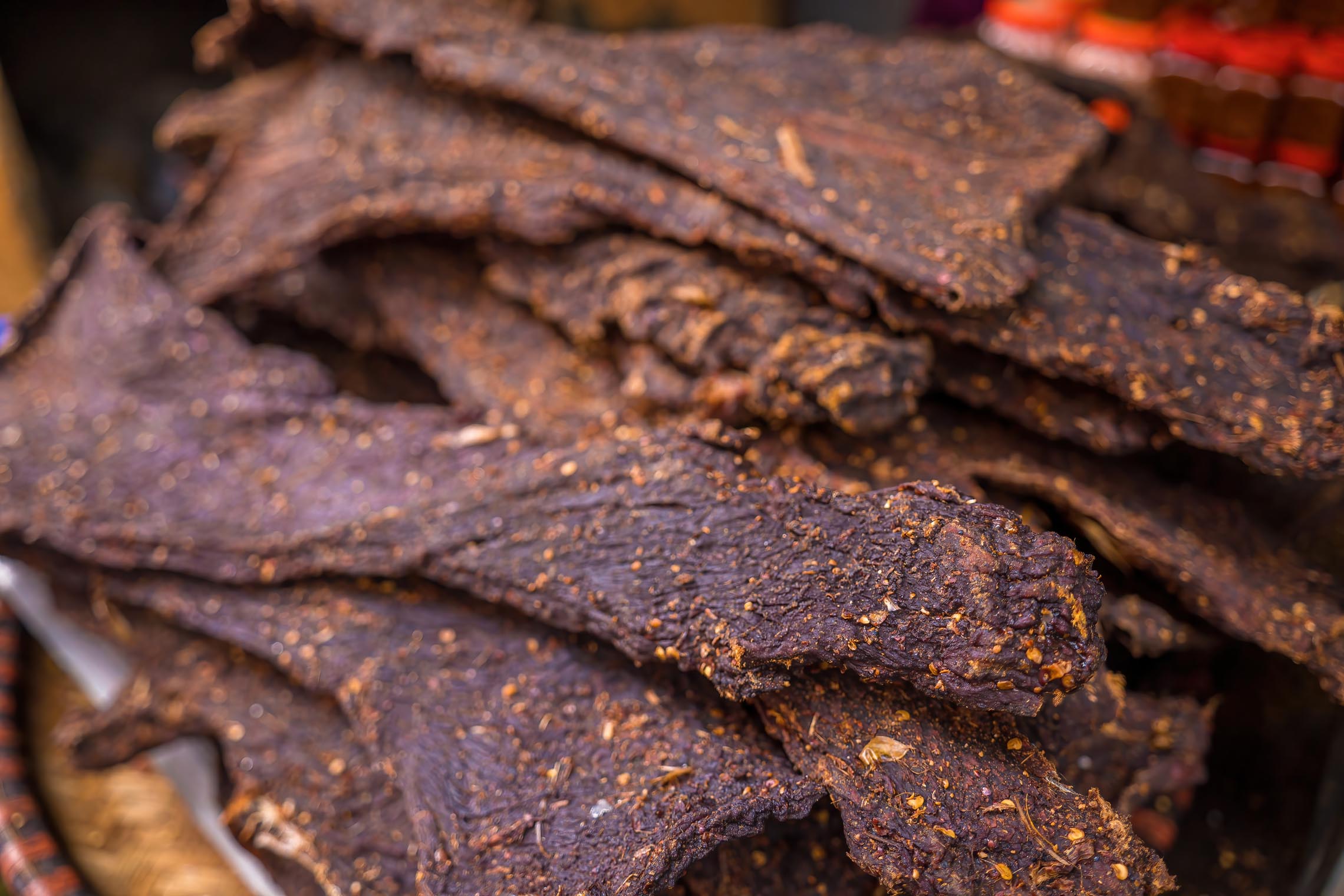
Thịt trâu sau khi được hun khói bằng củi trong gian bếp

Assorted dried fish and seafood displayed at a local market

That concentrated flavour explains their place in everyday cooking, where a few pieces can deepen steamed rice, accompany garden vegetables or mingle with a pungent dipping sauce. For travellers browsing the market, the dried fish may appear humble, but its aroma carries an unmistakable sense of the Delta, recalling wooden jetties, fishing nets and kitchens fragrant with grilled or simmered fish. Tasting it at the table completes the story, turning a simple market purchase into a vivid connection with southern food culture.

Different shopping experiences at markets in Ca Mau

Markets in Ca Mau come in several forms, from traditional stalls to floating trade and lively night scenes, each shaped by a different pattern of local habits.

Ca Mau floating market keeps river commerce at the heart of the city

Boats gathering along the Ganh Hao River create a distinctive marketplace where fruit, vegetables and household provisions are arranged across wooden decks, turning the water into a lively commercial landscape that travellers experience from an unusually close perspective. Drifting among the vessels, they watch vendors exchange goods across narrow gaps, hear engines vibrating against the current and catch the mingled scents of fresh produce and humid river air, while gestures, greetings and shouted prices form a social language understood by those who trade here regularly.

For generations, the rivers of the Delta have connected farms, households and riverside settlements, carrying goods alongside news and local knowledge from one community to another. The floating market preserves a trace of that history, keeping the river closely tied to the routines, relationships and memories of the communities along its banks.

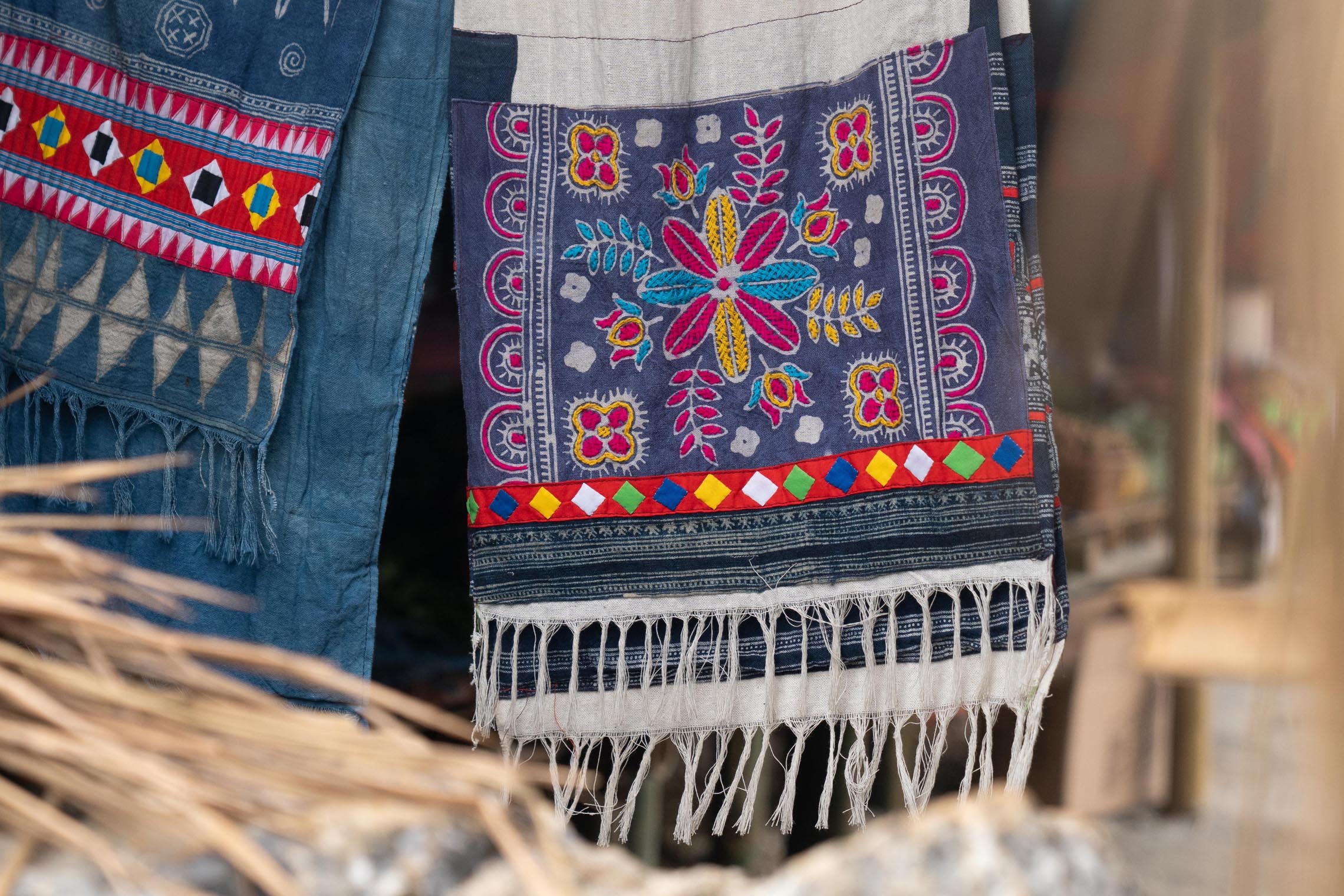
Trang phục truyền thống của đồng bào các dân tộc Việt Nam

Traditional leaf-wrapped rice cakes displayed among local market specialties

Ca Mau night market brings food and local life into the city

Warm pools of street light fall across night markets in An Duong Vuong and Ngo Gia Tu streets, illuminating rows of food stalls, local specialities and everyday goods as shoppers weave between counters, baskets and tables. The air here is thick with the fragrance of grilled seafood, fresh herbs and simmering broths, while vendors call out prices and familiar voices mingle above the clatter of dishes and passing motorbikes.

Food anchors the scene in the night markets in Ca Mau, with sizzling grills drawing attention from one stall to the next and steaming bowls providing a reason to pause at crowded tables. Local delicacies can be selected as edible gifts, while practical household goods reveal the everyday purpose behind these busy streets, where commerce remains closely tied to what families eat, use and share.

The atmosphere here also adds an urban chapter to Ca Mau’s identity, shifting attention from mangrove channels and coastal waterways towards illuminated streets filled with appetite, conversation and familiar routines. A vendor folds a purchase into a small parcel, a family gathers around a shared dish, and shoppers continue along the pavement with bags in hand, leaving the market with the flavours and impressions of a city whose social life is found as much around its shopping streets as along its rivers and coast.

Quick information

Frequently Asked Questions

Prices can vary according to quality, origin and packaging, while bargaining is common at local markets. Check the weight, packaging and storage requirements before buying dried seafood or other products intended as gifts. And, for travellers buying those packaged specialties in larger quantities, checking the latest excess baggage information is useful before heading to the airport.

Tom Kho Rach Goc (Rach Goc dried shrimp) typically costs around VND 900,000 – VND 1.8 million per kg, while Kho Ca Sac (Dried gourami) usually ranges from VND 300,000 – VND 500,000 per kg. Smaller packaged specialties generally cost around VND 50,000 – VND 300,000, depending on the product and quantity.

It is better to buy Ca Mau specialties at local markets or specialty shops before heading to the airport. Dried shrimp, dried fish and shrimp crackers can usually be packaged for travel and taken home as gifts, while airport shops may have a more limited selection.

Offers from Vietnam Airlines

Promotion List
Sorry, there are currently no promo codes matching the selected criteria!
Please search again with different criteria
Filters

Loading