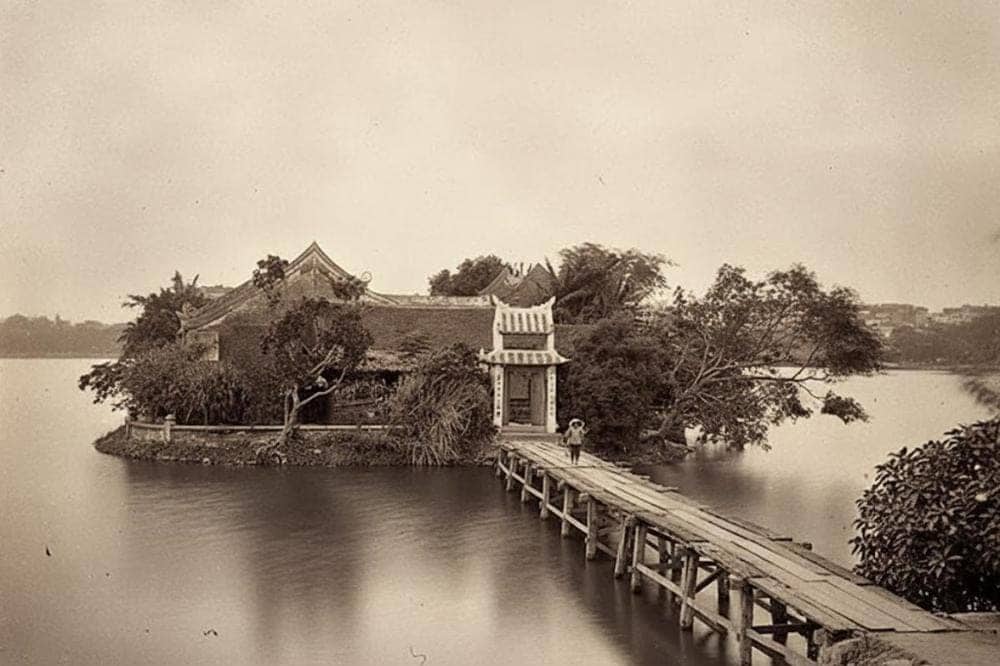
To date, the bridge has undergone two major renovations, once in 1897 during the Thanh Thai (Thành Thái) period and once in 1952 after a bridge span broke due to overload on New Year's Eve when crowds visiting for spring festivities were too dense. Today, the bridge has been rebuilt with foundations and horizontal beams still using solid cement, but the bridge surface and railings remain wooden as in the original architecture.
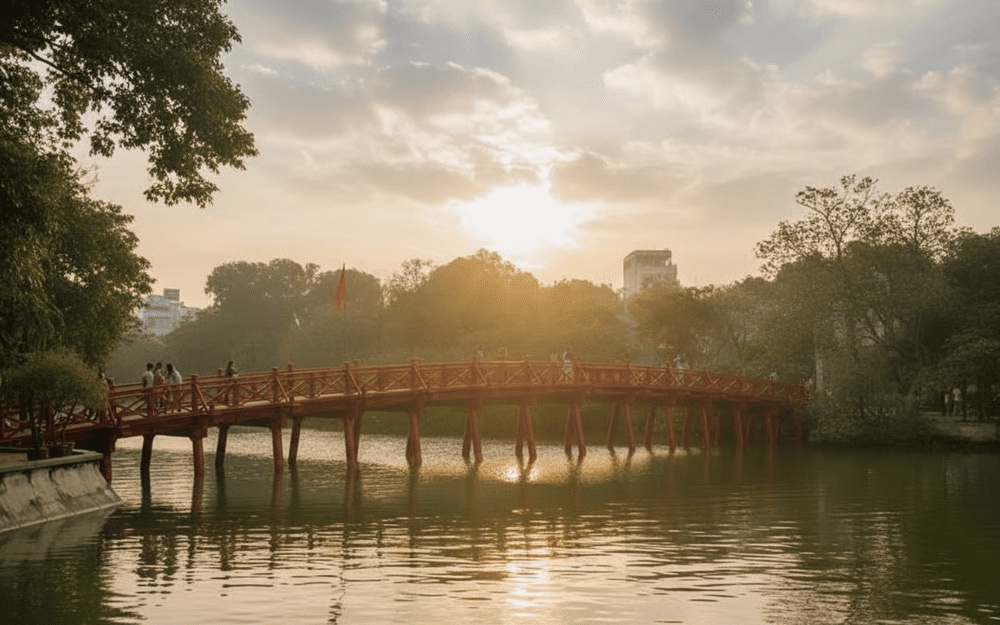
The Huc Bridge faces east where the sun rises, fully receiving light and spiritual energy from heaven and earth. The deep red color of the bridge symbolizes life, luck, happiness, containing profound cultural philosophy about wishing for prosperity and peace in the Hanoi people's consciousness.
2. How to get to The Huc bridge
The Huc Bridge is located right in the area between Hoan Kiem Lake, in the center of the Old Quarter (phố cổ), so it's very easy to reach by various means of transportation such as buses; taxis or ride-hailing services; motorbikes or private cars.
- Bus: This is an economical and popular choice for tourists wanting to experience Hanoi in local style. Some bus routes passing through the Hoan Kiem Lake area include 02, 04, 42, 146, and CNG 03. After getting off at nearby stops, you can walk a few minutes to reach the bridge. Bus fares range from 7,000 - 9,000 VND per trip.
- Taxi or ride-hailing services: If you're near the Old Quarter area, you can easily catch a taxi or motorcycle taxi to reach The Huc Bridge area. Currently, ride-hailing services in Hanoi are very developed, so you can easily catch rides and check prices in advance on apps.
- Self-driving by motorbike or private car: You can reach The Huc Bridge by private vehicle following these routes:
- Starting from Giang Vo (Giảng Võ) area, go through Nguyen Thai Hoc (Nguyễn Thái Học), turn into Hai Ba Trung (Hai Bà Trưng) and continue to Dinh Tien Hoang (Đinh Tiên Hoàng).
- Starting from Kham Thien (Khâm Thiên), move through Tran Hung Dao (Trần Hưng Đạo), Hang Bai (Hàng Bài), Dinh Tien Hoang.
- Starting and going through Dai Co Viet Road (đường Đại Cồ Việt), move to Pho Hue (Phố Huế) - Dinh Tien Hoang.
Since the area around Sword Lake (Hồ Gươm) prohibits vehicle traffic on weekends, you should find parking spots nearby beforehand to continue walking to visit The Huc Bridge and Ngoc Son Temple.
3. What's special about The Huc bridge architecture?
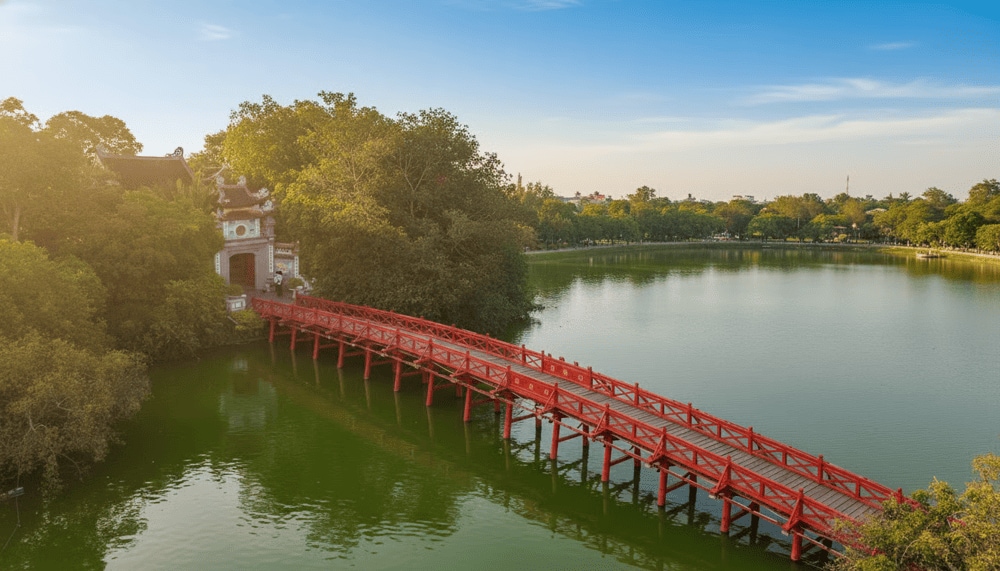
The Huc Bridge possesses special architecture, attracting visitors through the harmonious combination of art and deep cultural significance. The bridge consists of 15 spans and 32 round wooden pillars arranged in 16 pairs, built in a soft curved arch style, with the bridge's reflection in the lake creating a shape like a red silk ribbon stretching across the water.
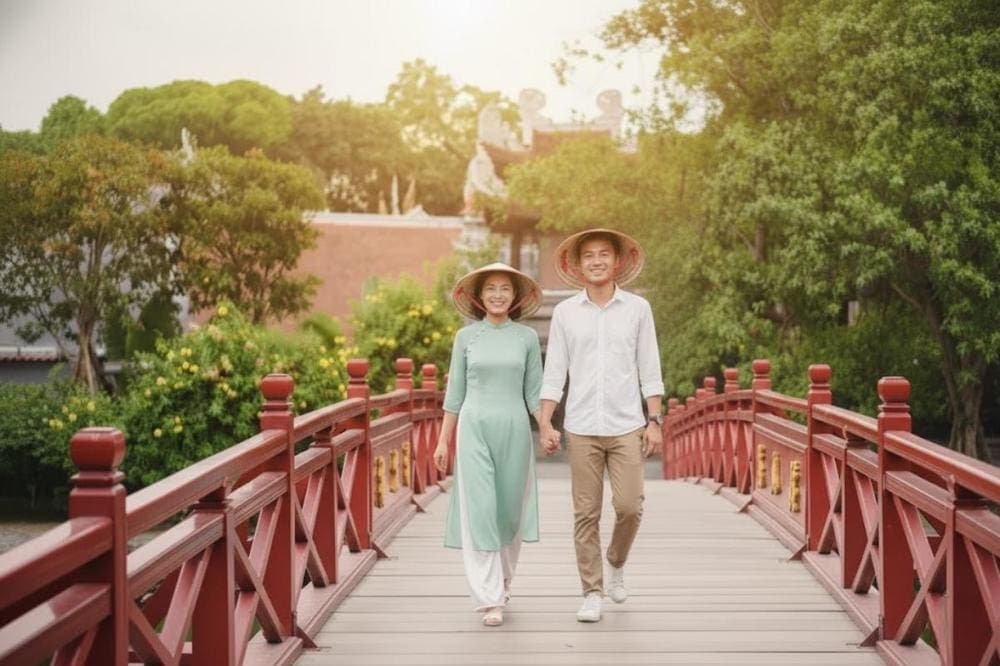
The Huc Bridge has its surface and railings painted deep red, with railings consisting of wooden bars woven in X-shaped crosses, both creating beautiful symmetry and meaning to increase the bridge's stability. The bridge also features the words "The Huc" gilded on the railings as an aesthetic highlight.
Regarding materials, despite reinforcement, the bridge surface and railings remain wooden. Experts say the bridge structure takes inspiration from ancient wooden houses of people in the Red River Delta (châu thổ sông Hồng). Woods once used included precious four-season woods, with bridge pillars made from dinh wood, aged lim wood; the middle of the bridge used lim layers mixed with sen and tau woods.



 Link opens in new window. Site may not meet accessibility guidelines.