Select region and language
Close button
Booking and service information for the selected country and language will be applied.
paradise

A journey through Quang Tri’s historic heritage and living culture

Quang Tri stretches from the historic banks of the Ben Hai River to the misty mountains around Khe Sanh, where wartime memories meet highland cultures and quiet rural landscapes. Memorial sites, riverside rituals, regional flavours and communities of the central highlands give the province a distinctive identity rooted in remembrance and resilience. For travellers seeking Quang Tri tourist attractions, the journey moves through places where history remains close to everyday life, creating a reflective and deeply human experience of Central Vietnam.

A quest into Quang Tri tourist attractions

Some journeys across Quang Tri begin with the sound of wind over grass, others with incense rising beside a memorial or the slow drift of a lantern on dark water. These moments lead into a landscape where wartime memory remains close to everyday life, preserved through riverside rituals, family offerings and places where generations return to remember.
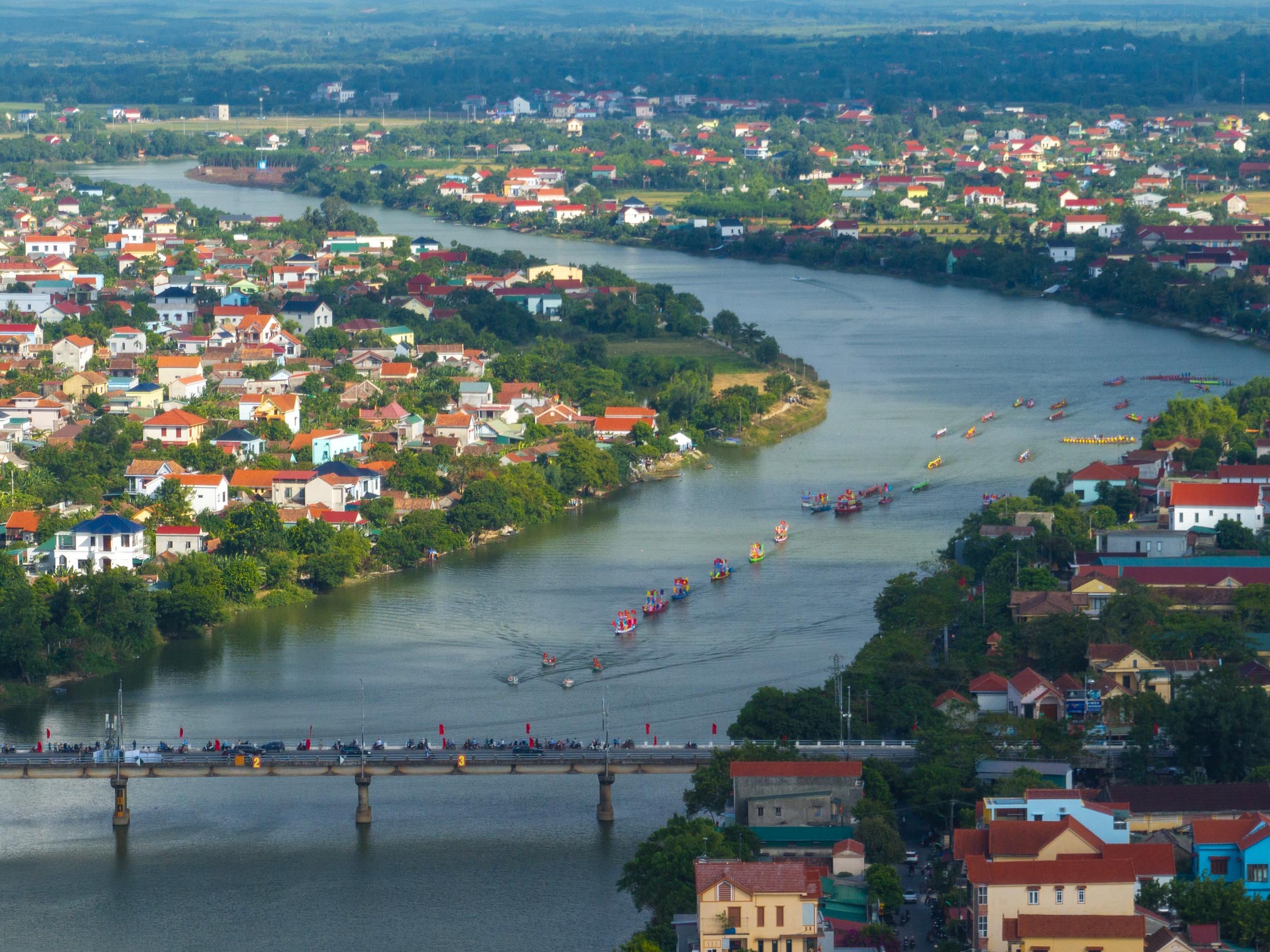
Dòng sông Kiến Giang uốn lượn giữa những mái nhà bình yên ở Quảng Trị

Nhat Le River flowing through Quang Tri

Quang Tri tourist attractions through layers of historical memory

Beyond the cultivated plains, the terrain rises towards former battlefields and military strongholds, with traces of wartime upheaval embedded in hillsides, bridges and stretches of earth now softened by vegetation. These traces give the province a geography unlike anywhere else in Central Vietnam, where rice fields, rivers and forested slopes exist beside places that witnessed decisive moments of the war, leaving remembrance inseparable from the land itself.

Thach Han River shining at dusk

Flowing through Quang Tri and past the ancient citadel, Thach Han River was a vital route during the 81-day battle for Quang Tri Citadel in 1972, when soldiers and supplies moved into the battlefield under heavy fire. The river also marked a perilous passage for soldiers crossing under fire, leaving a history that remains deeply tied to its waters, even as life along its banks has grown quieter with time.

Along the same river where those wartime crossings once took place, the afternoon now settles gently over the water, its broad surface catching the burnished light of the western sky as the current glides past reed-fringed banks and fishing boats make their way home, nets gathered after the day’s work. As the air turns cooler, families stroll along the embankment, anglers sit quietly beside the water and children watch boats slip beneath the bridges, while the river moves steadily through the fading light, carrying a sense of stillness that makes its wartime memory all the more poignant. Visitors pause here for commemorative ceremonies, releasing lotus lanterns onto the current and watching their candlelit procession drift away, a quiet gesture of remembrance carried towards the sea.

Truong Son National Martyrs’ Cemetery and the memory of the fallen

Leaving the quiet waters of Thach Han behind, the journey heads west towards the foothills of the Truong Son range, where the road gradually leaves the river plain for wooded slopes and a vast memorial complex. Set across Ben Tat Hill in Gio Linh District as Vietnam’s largest war memorial complex, Truong Son National Martyrs’ Cemetery is the final resting place of more than 10,000 soldiers, youth volunteers and frontline workers who gave their lives along the legendary Truong Son – Ho Chi Minh Trail.

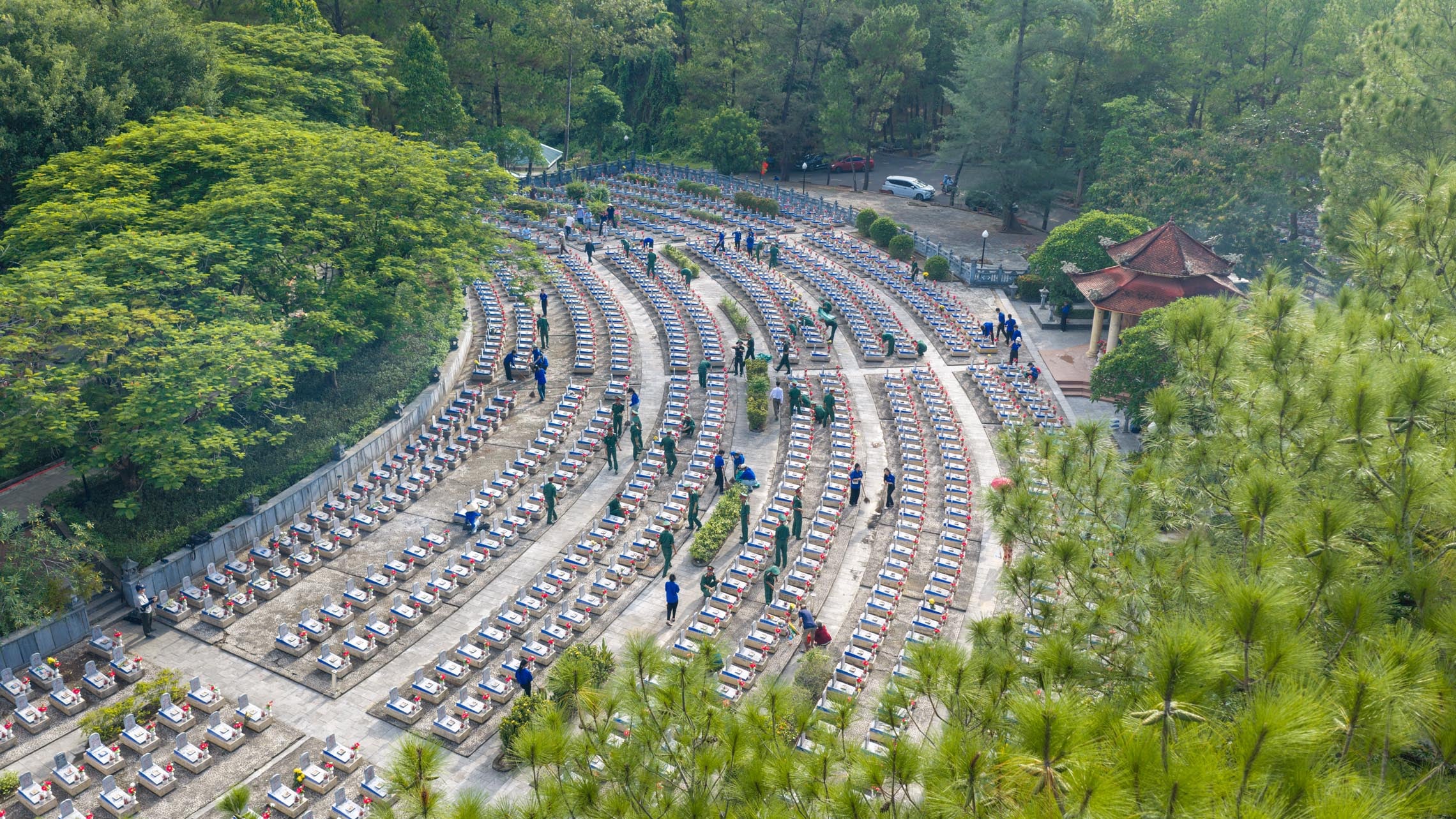
At Truong Son National Martyrs’ Cemetery, rows of pale stone markers extend beneath tall trees, their ordered geometry softened by moss, fallen leaves and the shifting shade of the forest. The many rows gradually become a series of individual graves, each carrying a name and a life remembered here. Visitors walk slowly between them, often stopping before a single name, placing flowers or incense, and confronting the immense scale of wartime loss through one deeply personal moment. Beyond the central monument, the surrounding hills are remarkably serene, their dense greenery and distant birdsong providing a quiet counterpoint to the history preserved here. The journey from river to mountain thus acquires a profoundly human dimension, moving from remembrance beside the water towards a landscape where sacrifice is inscribed across generations.

 Những hàng mộ trang nghiêm tại Nghĩa trang liệt sĩ Trường Sơn

Truong Son National Martyrs Cemetery in Quang Tri

Hien Luong Bridge and the Ben Hai River: Where the 17th Parallel still speaks

Hien Luong Bridge and the Ben Hai River are among Quang Tri’s most significant historical landmarks, where the story of Vietnam’s division remains deeply connected to the landscape. Under the Geneva Accords of 1954, the river became the provisional military demarcation line at the 17th Parallel, placing families, villages and familiar landscapes on opposite sides. What was meant to be a temporary separation lasted for years, leaving the riverbanks marked by waiting, longing and messages carried across a divide that kept loved ones apart.

Beside the water today, the old folk call-and-response songs known in Vietnam as hò naturally come to mind, their elongated melodies recalling the tenderness of people separated from loved ones, the quiet sorrow of life along the divided banks and the hope of one day hearing familiar voices from the other side again. In Vinh Linh, where music and folk singing remained part of everyday life through the years of war, those voices became inseparable from the landscape itself, carrying memories of separation and the enduring wish for reunion.

Today, the Ben Hai glides beneath the preserved span with a tranquillity almost impossible to reconcile with its wartime past, flanked by the monumental flagpole and exhibition house on its northern bank. From the riverbank, the distance between the two shores appears almost startlingly slight, yet its historical weight is immense. Now the Ben Hai runs peacefully past fields and villages, its surface catching shifting clouds and late sunlight. After the forested solemnity of Truong Son, the riverside acquires a softer cadence, with the Ben Hai revealing its deepest visual poetry in the slow passage of water, the pale bridge and the open countryside beyond.

Khe Sanh historical site amid coffee hills and wartime memories

Mist gathers above the coffee hills of Huong Hoa as the road approaches Khe Sanh, a remote highland destination known for its wartime history, where red earth, dark forest and cultivated slopes surround a former battlefield now softened by vegetation. Its position near the western frontier made Khe Sanh a strategically important military stronghold and a major theatre of the 1968 campaign. That role is still evident at the Khe Sanh Combat Base, where Ta Con airfield and surviving wartime traces reveal the immense logistical undertaking that sustained troops and supplies across rugged terrain, while Route 9 continues towards the Lao border.

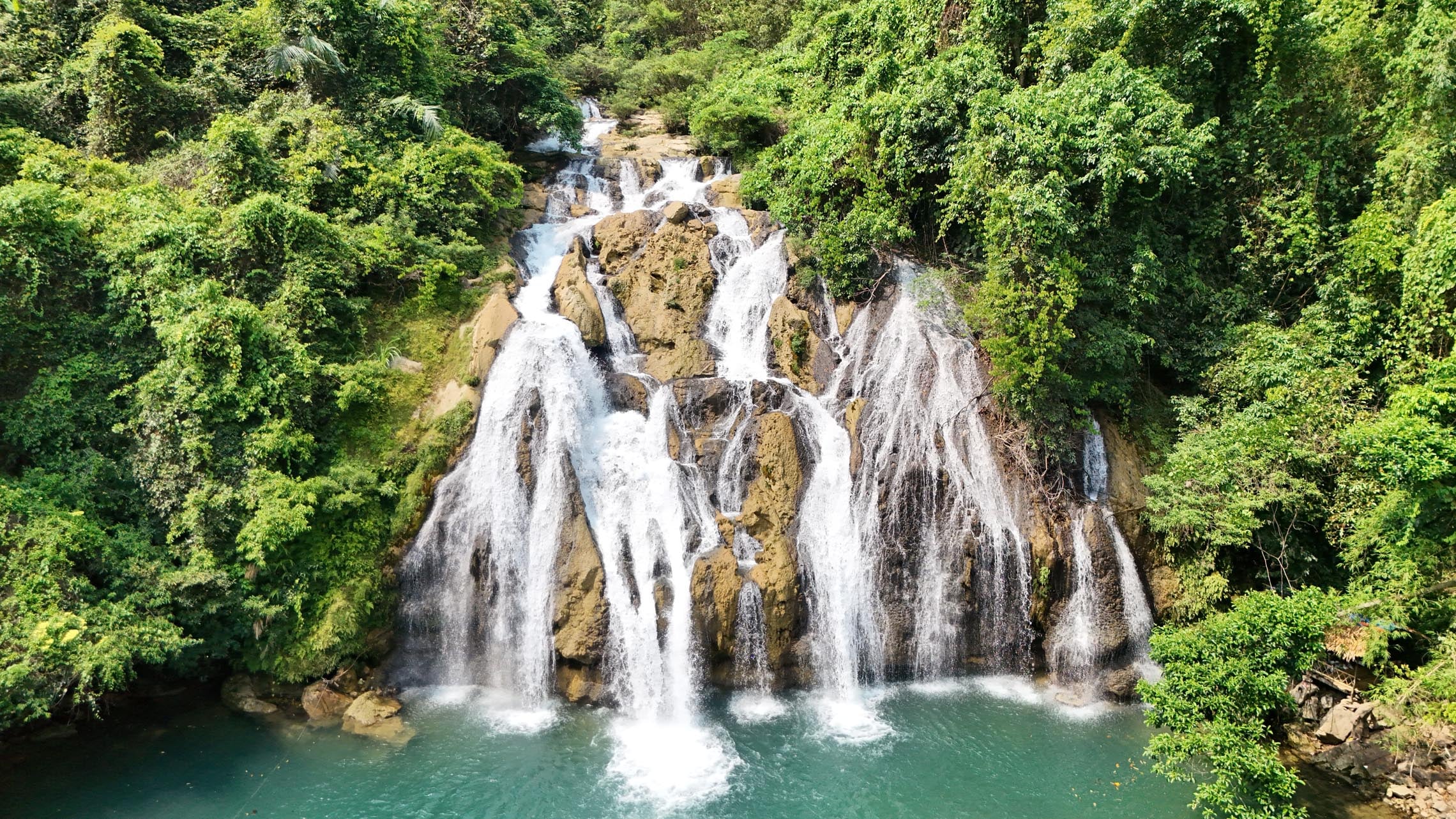
Beyond the battlefield, the hills are home to Bru–Van Kieu communities whose relationship with the mountains has been passed down through generations. Daily life follows the seasons and the land, from tending fields and gathering forest produce to meeting neighbours in communal houses after work. In the evenings, the sound of gongs can carry through the villages during ceremonies, while families gather over rice wine and stories shared across generations. Traditional weaving remains part of this everyday rhythm, with familiar motifs appearing in textiles made by hand, keeping memories of family and place close to home. The juxtaposition is quietly arresting, with coffee gardens growing beside former military ground and highland villages preserving customs rooted in a cultural heritage far older than the war. Nearby Chenh Venh community village and the emerald cascades of Ta Puong Waterfall sit within the same landscape that has long sustained Bru–Van Kieu communities, allowing a journey through western Quang Tri to move between history, landscape and living culture.

Thác Tà Puồng đổ trắng xóa giữa núi rừng xanh thẳm

Ta Puong Waterfall surrounded by lush mountains in Quang Tri

Quang Tri Ancient Citadel: A sacred place for historical reflection

Quang Tri Citadel stands as a sacred landscape of remembrance, where weathered walls, old earth and incense-filled air preserve the memory of those who fought and fell here.

Understanding the history behind Quang Tri Citadel

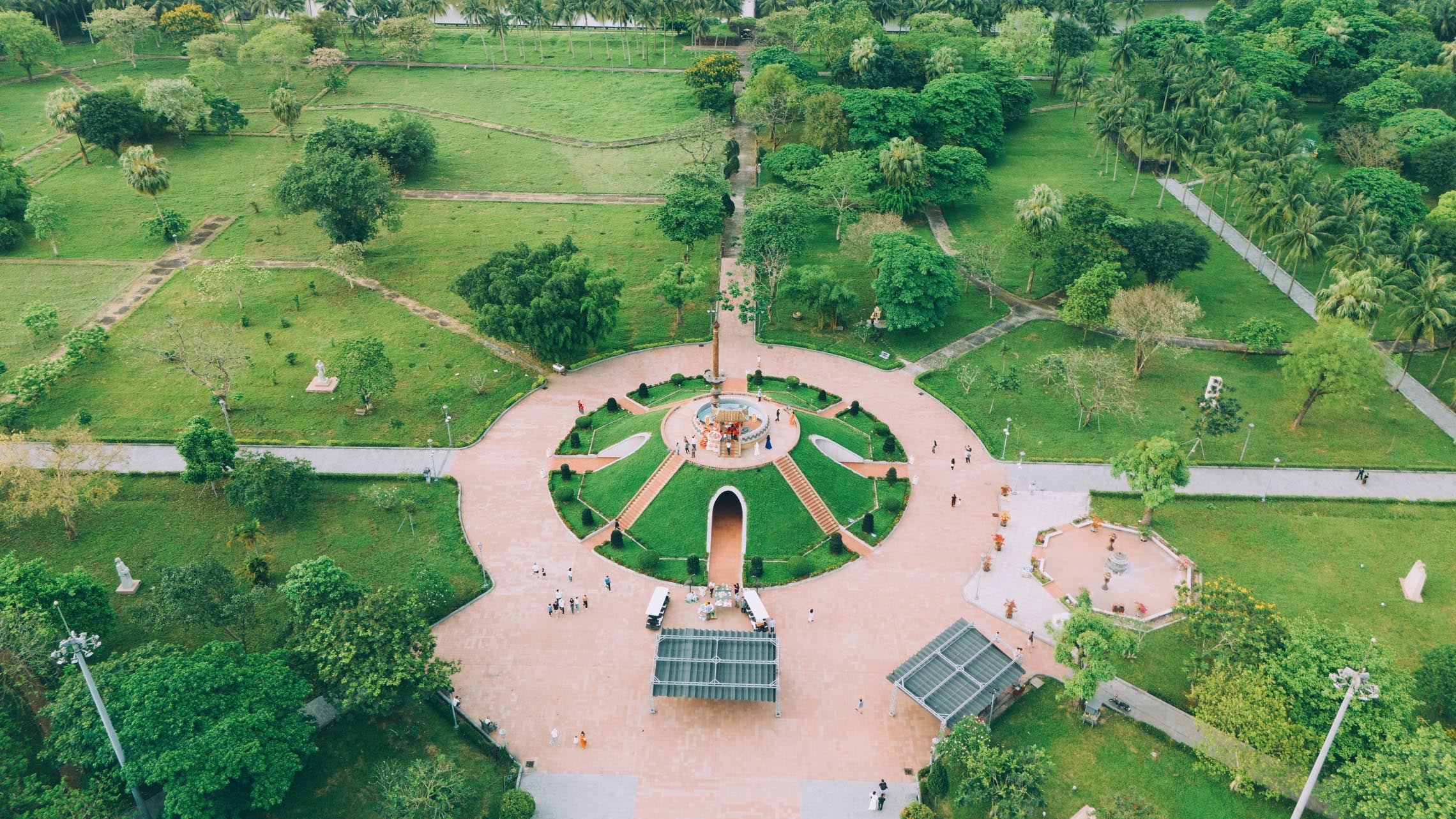
Originally constructed in the early 19th century under Nguyen Dynasty Emperors Gia Long and Minh Mang as the military fortress and administrative seat of Quang Tri, and for 81 days and nights in the summer of 1972, this historic stronghold became the centre of one of the fiercest battles in Vietnam’s struggle for independence and reunification. Today, the Ancient Citadel on the southern bank of the Thach Han River still rises quietly beneath the shade of old trees. Its surviving walls, memorial structures and open grounds stand beside the Thach Han River, whose waters once formed part of this perilous battlefield. The sparse remains make the scale of that struggle difficult to imagine, until a name on a memorial stone, a wreath of flowers or a curl of incense smoke draws the vast history back to one human life. In this setting, courage is remembered not through grandeur, but through the enduring dignity of sacrifice.

Late afternoon lends the grounds a deeper stillness, as amber light settles across the old masonry and incense drifts above the memorial altars. As a place of remembrance, the citadel calls for a quiet and respectful approach from those who visit, with appropriate clothing, low voices and discreet photography helping to preserve the solemnity of the memorial spaces. Visitors who pause to observe the surroundings and take in the silence can better appreciate the weight of the history preserved within the citadel, while the surrounding silence honours those who remained here until the final days.

Di tích Thành cổ Quảng Trị giữa khuôn viên xanh mát

Scenic view of Quang Tri Ancient Citadel and its surrounding landscape in Quang Tri

Experience Quang Tri Citadel through the landscape

The visit begins at the outer ramparts, where the citadel opens into a broad expanse of grass, old trees and open sky. From here, the path follows the perimeter, gradually revealing earthen embankments that appear and disappear beneath the foliage while the surrounding streets trace the geometry of the former fortress. Inside the museum, hand-drawn maps, black-and-white photographs and recovered personal belongings bring intimate details to a place otherwise defined by monumental history. Returning outdoors, the experience shifts from looking at exhibits to reading the landscape itself, following the contours of the grounds and listening to the sounds of present-day Quang Tri beyond the walls.

A visit can then continue towards Thach Han, where lotus lanterns sometimes drift downstream during commemorative ceremonies, their small flames moving across dark water beneath the evening sky. Among Quang Tri tourist attractions, the journey moves from the fortified grounds to the quiet river, where remembrance becomes more intimate through the gentle movement of lanterns across the water. Their warm glow leaves a quiet sense of peace and continuity, carrying the memory of the past into the stillness of the present.

Quick information

Frequently Asked Questions 

The dry season from March to August is generally best for exploring Quang Tri, with March to May bringing the most comfortable conditions for outdoor sightseeing. June to August is hotter, yet still suitable for visiting historical sites and coastal areas.

Modest, respectful clothing covering the shoulders and knees is recommended at historical and memorial sites. Avoid revealing outfits, short shorts and sleeveless tops, particularly when visiting cemeteries, temples and remembrance areas.

Yes. Quang Tri works well within a Central Vietnam itinerary linking Hue and Phong Nha, with one to two days enough to explore its principal historical sites, memorial landscapes and selected highland areas.

Tasting the quintessence of Quang Tri food

There is an old saying that to understand the soul of a land, one should taste its food. Few places make the wisdom of that idea as vivid as Quang Tri, where the character of the province emerges through flavours honed by a demanding climate, generations of ingenuity and a deep attachment to the land and sea.

Quang Tri food: A taste of Central Vietnam’s rustic culinary heritage

Quang Tri food begins with what the land and waterways readily provide: rice from coastal plains, freshwater fish from rivers and lagoons, shellfish from brackish waters, wild herbs and pungent condiments. Cooking remains direct, yet never careless, with broth, texture and seasoning carefully balanced.

Rice, river fish and herbs at the everyday table

Across the lowlands of Trieu Phong and Hai Lang, rice and freshwater fish are among the most familiar ingredients in everyday life, reflecting a landscape where rice fields, ponds and waterways have long supported local households. Rice defines the table, appearing as steamed grains, fermented sheets, noodles and cakes, while freshwater fish slips into fragrant soups and braises, and shellfish from the same waterways lends a delicate sweetness to dishes prepared with economy. Among these preparations, Banh Bot Loc My Chanh (My Chanh tapioca dumplings) stands out for its translucent wrapper and resilient bite, with a savoury filling that shows the balance of seasoning associated with the Trieu Phong area, while spring onions, wild herbs and aromatic leaves are added at the final stage to release their fragrance into the steam.

Quang Tri’s narrow coastal plain keeps paddies, ponds and waterways close together, while rivers descending from the western hills replenish the lowlands. This landscape encourages a cuisine that prizes fresh ingredients but also relies on drying, fermenting and salting to preserve seasonal abundance, with rice lending softness, fish and shellfish depth, fermented sauces intensity and herbs a final lift.

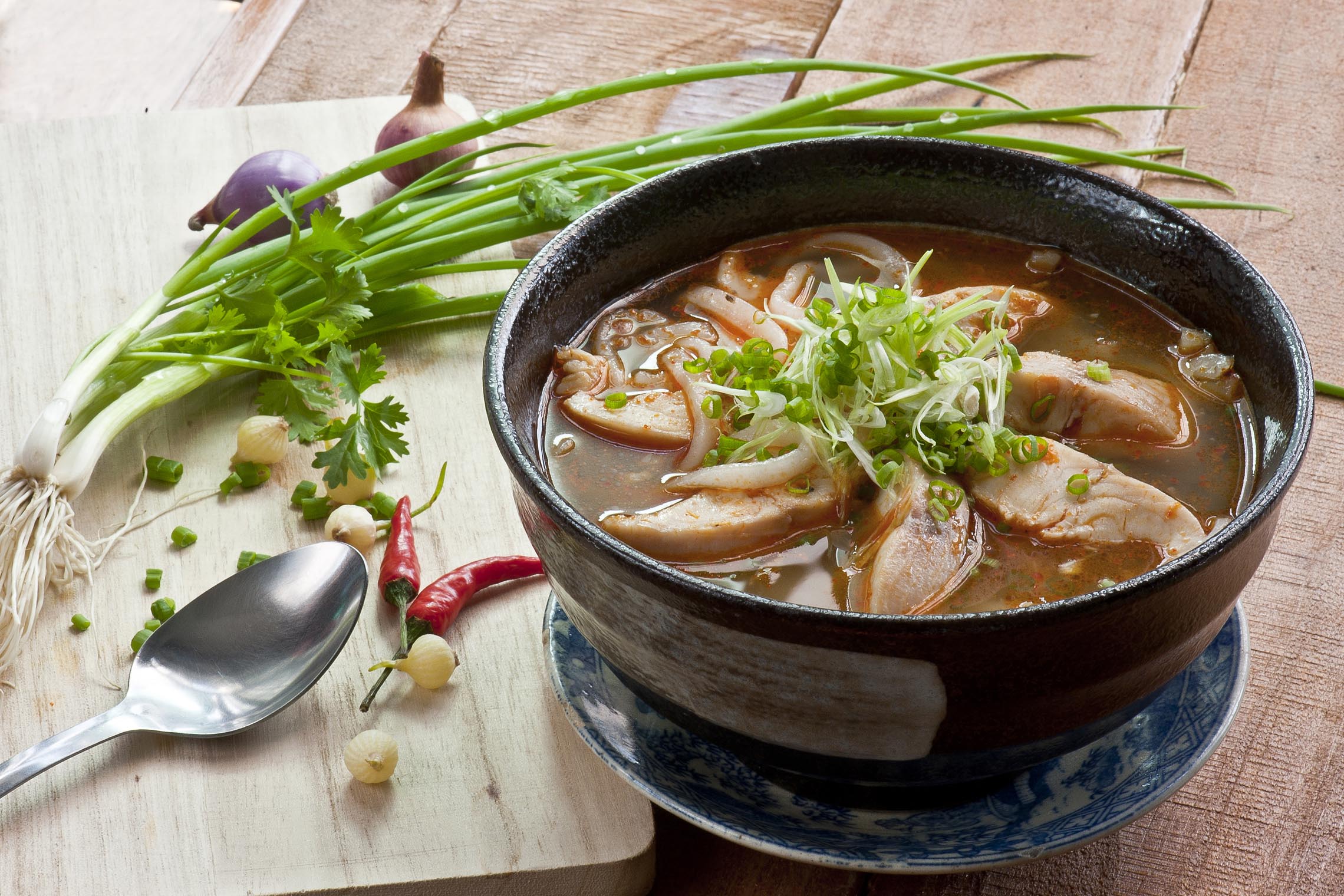
 Tô cháo Vạt giường nóng hổi cùng rau thơm và gia vị

Chao Vat Giuong (Vat Giuong porridge, a traditional rice noodle soup from Quang Tri

Where Quang Tri’s heat meets the art of fermentation

Under Quang Tri’s fierce summer heat, when the air hangs heavy with humidity and rice fields shimmer beneath the sun, chilli, salt and fermentation have long served both palate and pantry, preserving ingredients while lending simple meals a vivid intensity. This tradition is particularly evident in Hai Lang, where Mam Dam Tra Tri (Tra Tri fermented crab paste) begins with field crabs crushed and strained, then mixed with coarse salt and sealed in earthenware jars, where time slowly deepens its saline fragrance before the paste is seasoned with ripe chilli, ginger and spring onion. Spoonfuls are eaten with steaming rice, the sharp heat of chilli cutting through the dense umami while ginger adds warmth and fresh herbs lift the lingering savouriness.

Such flavours belong to the practical customs of households accustomed to a hot, humid climate, where salting and fermentation helped extend seasonal ingredients and condiments were prepared to accompany rice, vegetables and fish. At the table, amber fish sauce, scarlet chilli and fragrant herbs sit beside white rice, turning simple food into a vivid composition of heat, salt, acidity and fermented depth.

Fresh from the water with a fiery twist

Goi Tep Nhay Bau Trang (Bau Trang dancing prawn salad) is a local specialty that captures the freshness of Quang Tri’s freshwater cuisine, built around tiny prawns caught from the region’s waterways. At Bau Trang, these tiny prawns are lifted from the water and quickly rinsed before being tossed with green mango, aromatic herbs, pepper, garlic and sliced chilli, then flooded with fresh lime juice until the shells take on a delicate pink hue. The dish has been a local beloved delicacy for this immediacy, with each mouthful carrying the cool crunch of mango, the sweetness of just-caught prawns, the perfume of herbs and a sudden flare of chilli and mustard that rises through the nose. Wrapped in rice crackers with more herbs and dipped into a thick savoury sauce, the salad becomes a vivid expression of Quang Tri’s freshwater cuisine.

Such freshness also reflects everyday cooking shaped by the province’s rivers, ponds and coastal waters, where ingredients are often prepared soon after gathering and paired with herbs, lime, chilli and pungent condiments. At the table, crisp, sour and fiery flavours meet the clean sweetness of fish and shellfish, giving Quang Tri food a vivid immediacy.

What to eat in Quang Tri for a true local experience

To understand what to eat in Quang Tri, one must follow dishes back to the communities that have kept them alive.

Must-try dishes that speak to the land of Quang Tri

In Mai Xa, clam gathering has long been part of life along the waterways, with generations of villagers wading into the tidal shallows to rake up tiny clams that would later find their way into the family kitchen. That close relationship between the river and everyday cooking lives on in Bun Hen Mai Xa (Mai Xa mussel vermicelli) – a signature village dish actually made not with ordinary river clams, but with chat chat, a smaller, darker-shelled brackish-water bivalve native to the Thach Han River that yields a remarkably rich, sweet broth. The first spoonful of this dish carries the cool salinity of tidal water, with tiny clams simmered until their flesh turns tender and their liquor lends the broth a delicate sweetness. Silky vermicelli disappears beneath roasted peanuts, aromatic herbs and finely sliced chilli, creating a succession of textures from yielding shellfish to brittle crunch, while the fragrance of the river seems to linger through each mouthful.

From the river-fed lowlands of Mai Xa, the culinary landscape moves towards the rice fields of Phuong Lang, where the grain has long been woven into everyday village life. Banh Uot Phuong Lang (Phuong Lang wet rice pancakes) turns this everyday grain into one of Quang Tri’s most delicate specialties. The process begins with rice soaked until soft, then ground into a fine batter that is swept across a steaming cloth in one smooth motion, a technique passed from one generation to the next. Each translucent sheet is lifted while pliable, folded around herbs and vegetables and dipped into a pungent sauce whose saltiness settles into the warm rice. The craft has passed through generations of farming households, especially at family gatherings and festive occasions, when the steamer fills the kitchen with moist heat and the delicate sheets accumulate in fragrant layers.

The freshwater tradition of southern Quang Tri finds another expression in Chao Vat Giuong (Hai Lang snakehead fish noodle soup), where snakehead is simmered until its flesh loosens into pale flakes and the broth takes on the warmth of ginger, pepper and herbs. Rice noodles soften in the fragrant liquid, while chilli flashes across the palate, balancing the fish’s gentle sweetness and leaving behind a clean, aromatic finish rooted in the province’s rice fields and waterways.

Savouring Quang Tri food from morning markets to evening tables

Breakfast begins with the scent of Banh Canh Ca Loc (Snakehead fish thick noodle soup) drifting from kitchens before the streets gather their daytime bustle, its silky strands suspended in a peppery broth with flakes of freshwater fish and spring onion. For generations, such bowls have suited the early working hours of farming and fishing households, providing warmth and sustenance before paddies, boats and market stalls demand attention.

By afternoon, the table grows lighter, perhaps with Banh Khoai (Crispy rice pancake) arriving beside cool tea, its lacy edges crackling around shrimp, pork and bean sprouts as chilli fish sauce cuts through the richness. Small plates encourage grazing between errands, market visits and household tasks, reflecting the unhurried sociability of village life.

Dinner gathers everyone around steaming rice and Thit Trau La Trong (Fresh buffalo stir-fried or grilled with wild la trong leaves), its smoky fragrance mingling with herbs, chilli and fermented dipping sauce. For anyone considering what to eat in Quang Tri, these changing appetites trace a province where food follows work, weather and the intimate customs of everyday life.

Quick information

Frequently Asked Questions 

Yes. Vegetarian dishes are generally available, particularly around Buddhist festivals and religious occasions. Many everyday eateries can also prepare simple vegetable dishes, tofu or rice-based options on request.

Cash remains useful at small eateries, traditional markets and street-food stalls. Larger restaurants and contemporary cafes may accept cards or bank transfers, but carrying Vietnamese dong is recommended for everyday dining.

Yes. Small family-run eateries, market stalls and informal food vendors are an important part of Quang Tri’s everyday food culture, particularly for breakfast, snacks and simple noodle dishes.

How to get to Quang Tri by multiple routes

Quang Tri begins where the road leaves the coast and history grows tangible in rivers, old railway lines and mountain passes. Reaching the province can be as swift as a short flight followed by a road journey, or as unhurried as watching Central Vietnam slide past a train window.

Choosing the right transport option to get to Quang Tri

For anyone considering how to get to Quang Tri, rail, coach and private car each trace a route into the province, from the measured pace of the railway to the freedom of the open road.

Scenic rail journeys to Quang Tri via Dong Ha Station

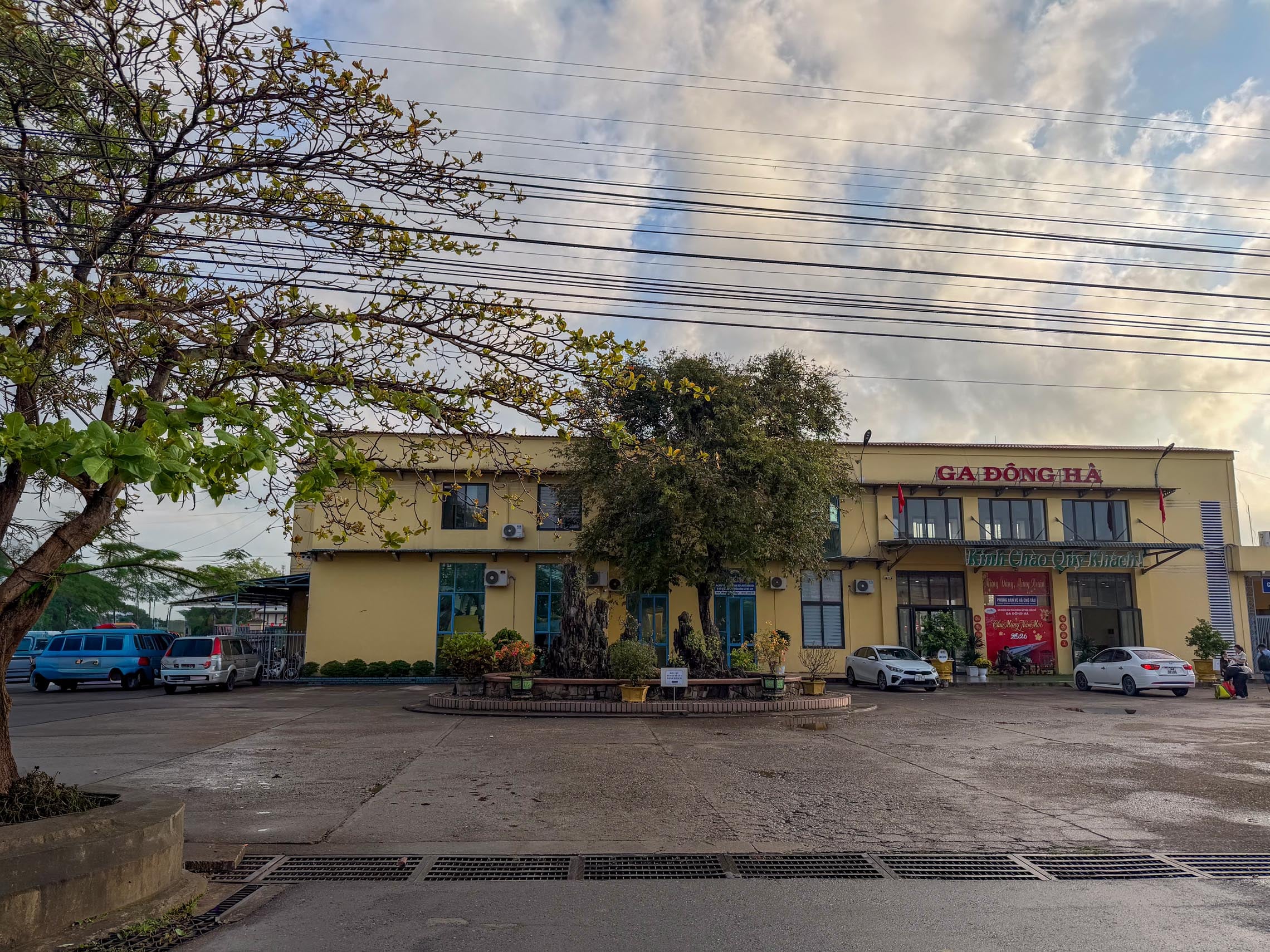
The Reunification Express is the most atmospheric rail option, with trains stopping at Dong Ha Station, the province’s principal railway gateway. From Hanoi, the journey takes roughly 12 – 14 hours, while services from Ho Chi Minh City generally require around 20 – 24 hours, making an overnight train a practical choice for longer routes. During daylight, the carriage window frames a succession of Central Vietnamese landscapes, from rice paddies and lagoons to fishing settlements and wooded foothills, while small stations bring brief glimpses of everyday commerce as baskets of produce, parcels and meals move between platforms. For anyone with time to spare, the train turns a long transfer into an extended passage through the geography of central Vietnam.

Entrance of Dong Ha Railway Station in Quang Tri

Entrance of Dong Ha Railway Station in Quang Tri

Flexible road journeys by intercity coach or private car

Coaches run between Quang Tri and major cities along Vietnam’s north-south corridor, with Dong Ha serving as the principal arrival point for long-distance services. From Hue, the journey generally takes around 2–3 hours by road, while the drive from Da Nang takes approximately 3–4 hours, depending on traffic and stops. Travellers who prefer greater flexibility can choose a private car, which allows them to set their own departure time and pause along the way, particularly when combining Quang Tri with Hue or continuing towards the coast and western highlands. As the road leaves the larger cities behind, the scenery gradually shifts to rice fields, village lanes and roadside kitchens, making the journey itself an opportunity to stop at historic sites, browse regional markets or settle down for a countryside meal.

Travelling to Quang Tri by air via Dong Hoi Airport and Phu Bai Airport

For travellers choosing air travel, Dong Hoi provides the nearest commercial airport for reaching Quang Tri, followed by a road transfer into the province.

Dong Hoi Airport: The northern aerial gateway to Quang Tri

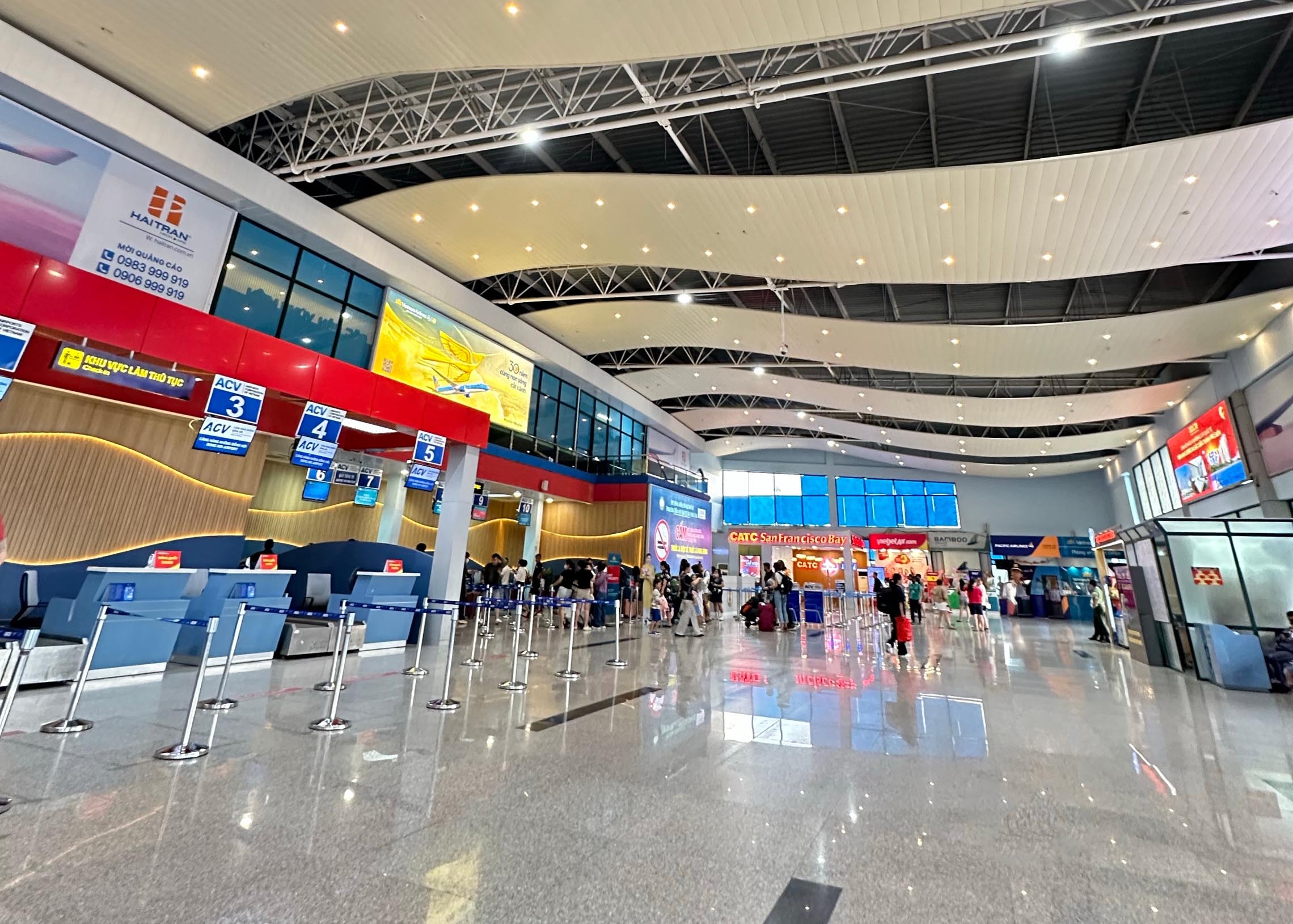
Dong Hoi Airport serves as the nearest commercial aviation gateway for reaching Quang Tri by air, with its location near National Highway 1 making the onward transfer relatively straightforward. The airport is around 6 km from central Dong Hoi and approximately 90 km from Dong Ha, while the road journey towards Quang Tri generally takes 1.5 – 2 hours depending on traffic and the final destination. The transfer can be arranged by taxi, private car or pre-booked vehicle, with private transport particularly useful when travelling with luggage or continuing directly to destinations outside Dong Ha.

Sảnh làm thủ tục tại sân bay Đồng Hới

Dong Hoi Airport terminal building and passenger facilities in Quang Tri

Starting the journey to Quang Tri from the skies

Direct domestic flights connect Hanoi and Ho Chi Minh City with Dong Hoi, with flight times of approximately 1–1.5 hours, making the route practical for travellers who prefer to reserve their longer journey for time spent exploring Quang Tri. Before departure, checking flight schedules and advance reservations on Vietnam Airlines’ official website helps organise the connection, while TripCARE insurance is available as an optional travel protection.

For journeys beginning in Hanoi, the short flight crosses the length of northern and central Vietnam before the road transfer introduces rice fields, waterways and settlements around the central coast. Meanwhile, from Ho Chi Minh City, flying replaces a substantially longer overland journey, leaving the final drive to trace the gradual transition from Dong Hoi towards Quang Tri.

From the airport to the landscapes of Quang Tri

Dong Hoi Airport’s passenger terminal provides the essential services needed for a domestic arrival or departure, with check-in and baggage facilities, waiting areas, information and travel assistance, dining and refreshment options, restrooms and designated pick-up points outside the terminal. After baggage claim, taxis and pre-arranged private vehicles can collect passengers, while travellers continuing towards Quang Tri can organise the onward transfer according to arrival time and final destination rather than relying on a single fixed transport option.

Once on the road, the journey gradually leaves Dong Hoi’s urban edge behind, passing agricultural fields, roadside settlements and stretches of open countryside before reaching Quang Tri. The route is particularly useful for understanding the province geographically, since Dong Ha sits within the central corridor while coastal destinations and the western districts require further road travel.

Quick information

Frequently Asked Questions

Advance booking is recommended during weekends, public holidays and peak travel periods. As Quang Tri has no commercial airport, visitors flying to Dong Hoi Airport should arrange a taxi, private car or transfer for the onward journey, especially when arriving late in the day.

Yes. Taxis, motorbike taxis and ride-hailing services are practical for short journeys around Dong Ha. Private cars become more convenient when visiting historical sites and other attractions spread across the province.

Yes. Quang Tri fits naturally into a Central Vietnam itinerary linking Quang Binh, Quang Tri and Hue. The route can connect the caves and karst landscapes around Phong Nha with Quang Tri’s wartime heritage before continuing south towards Hue’s imperial landmarks.

Hotels in Quang Tri and their hidden gems

Night settles differently across Quang Tri, because along the Thach Han, incense smoke drifts above the water while lanterns sometimes glimmer downstream; near the coast, fishing boats return under a salt-laden breeze; in Huong Hoa, the scent of roasted coffee hangs over red earth and forested slopes. A hotel here is not simply a room between excursions, it can also determine which landscape greets the window at dusk, which road begins the following morning and how much of Quang Tri remains after the sightseeing ends.

Choosing where to stay in Quang Tri by region and itinerary

The most useful base depends on the geography of the itinerary and the pace of each day, with Dong Ha serving historical routes, coastal stays slowing the tempo beside the sea and Dong Hoi working as an arrival point before the road continues north. A wide range of hotels spans these principal bases.

Central Dong Hoi for urban comfort and riverside walks

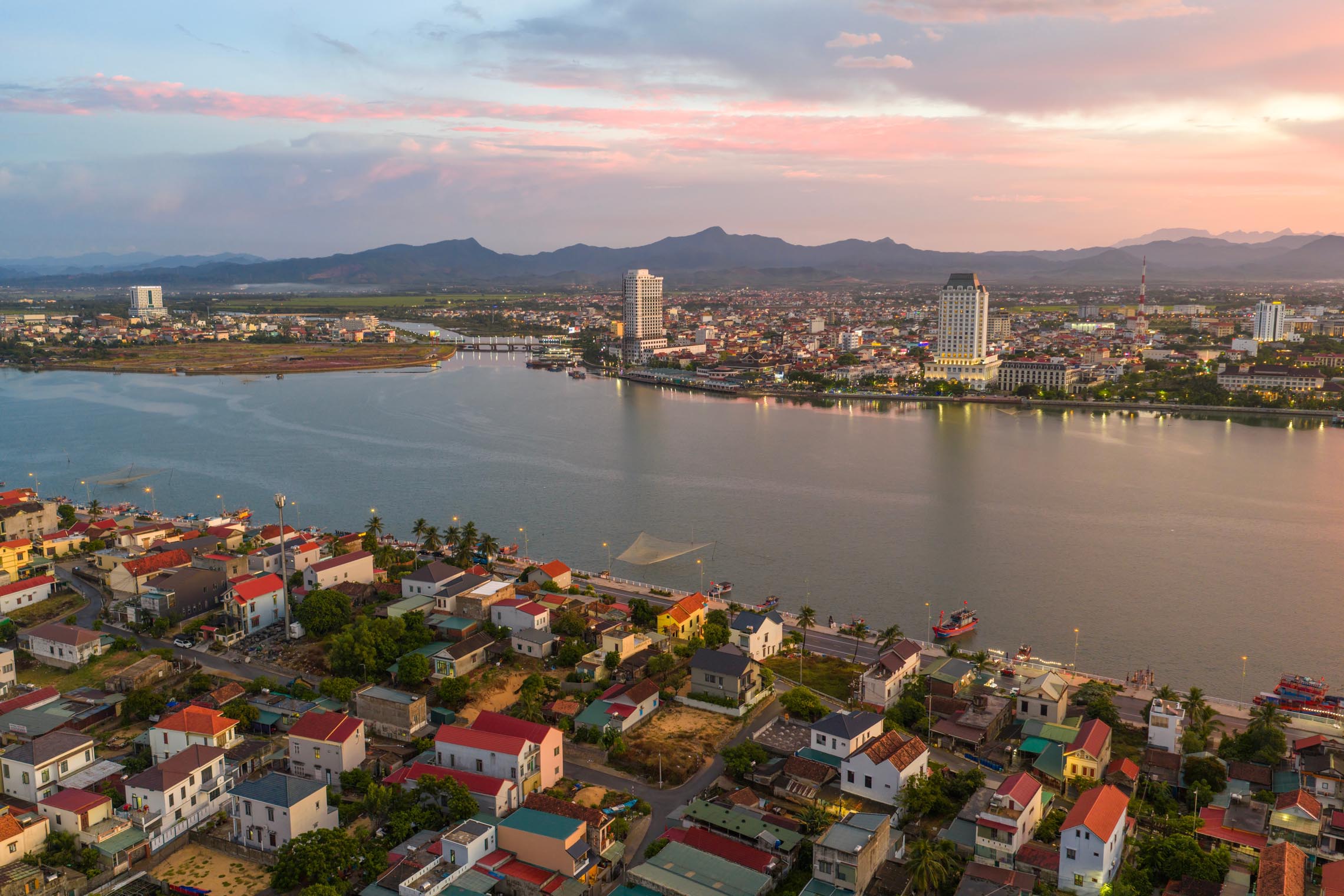
The first evening can begin in Dong Hoi, especially after a flight arrival, when the city’s riverside streets slowly fill with the fragrance of charcoal-grilled seafood, lemongrass and crushed chilli. Accommodation in the centre ranges from simple rooms to higher-end stays, with restaurants, cafés and transport connections close enough to keep the arrival uncomplicated before the northern drive begins.

As the waterfront darkens, fishing lights flicker in the distance and motorbikes stream towards the river, while food stalls arrange squid, prawns and fish over glowing braziers. With the evening settling into this lively riverside scene, staying overnight becomes a natural pause for those combining Quang Binh and Quang Tri in one route, leaving the following morning free for an unhurried drive towards Quang Tri rather than continuing on immediately after landing.

Scenic view of Dong Hoi city, Quang Tri, with urban streets and surrounding coastal  landscapes

Scenic view of Dong Hoi city, Quang Tri, with urban streets and surrounding coastal landscapes

Central Dong Ha for convenient access to historic landmarks

In Dong Ha, the day can begin with the first roads leading towards the Quang Tri Citadel, then continue through the countryside towards memorial grounds and the Ben Hai River before returning to the city after sunset. Hotels in Quang Tri here are particularly practical for historical itineraries, since Dong Ha occupies the central road network linking several significant sites across the province. Staying in the city also keeps visitors close to restaurants, local shops and everyday services, making it a convenient base between longer excursions.

After a day on the road, returning to a hotel in Dong Ha brings a welcome change of pace. Guests can retreat from the heat and distance of the countryside, cool down in their rooms, rest before the next excursion or spend the evening enjoying the quieter side of the city. The hotels here become a comfortable pause between days of exploration, giving visitors time to slow down before continuing their journey through Quang Tri’s historic landscapes.

Coastal stays along the Bao Ninh Peninsula and Nhat Le Beach

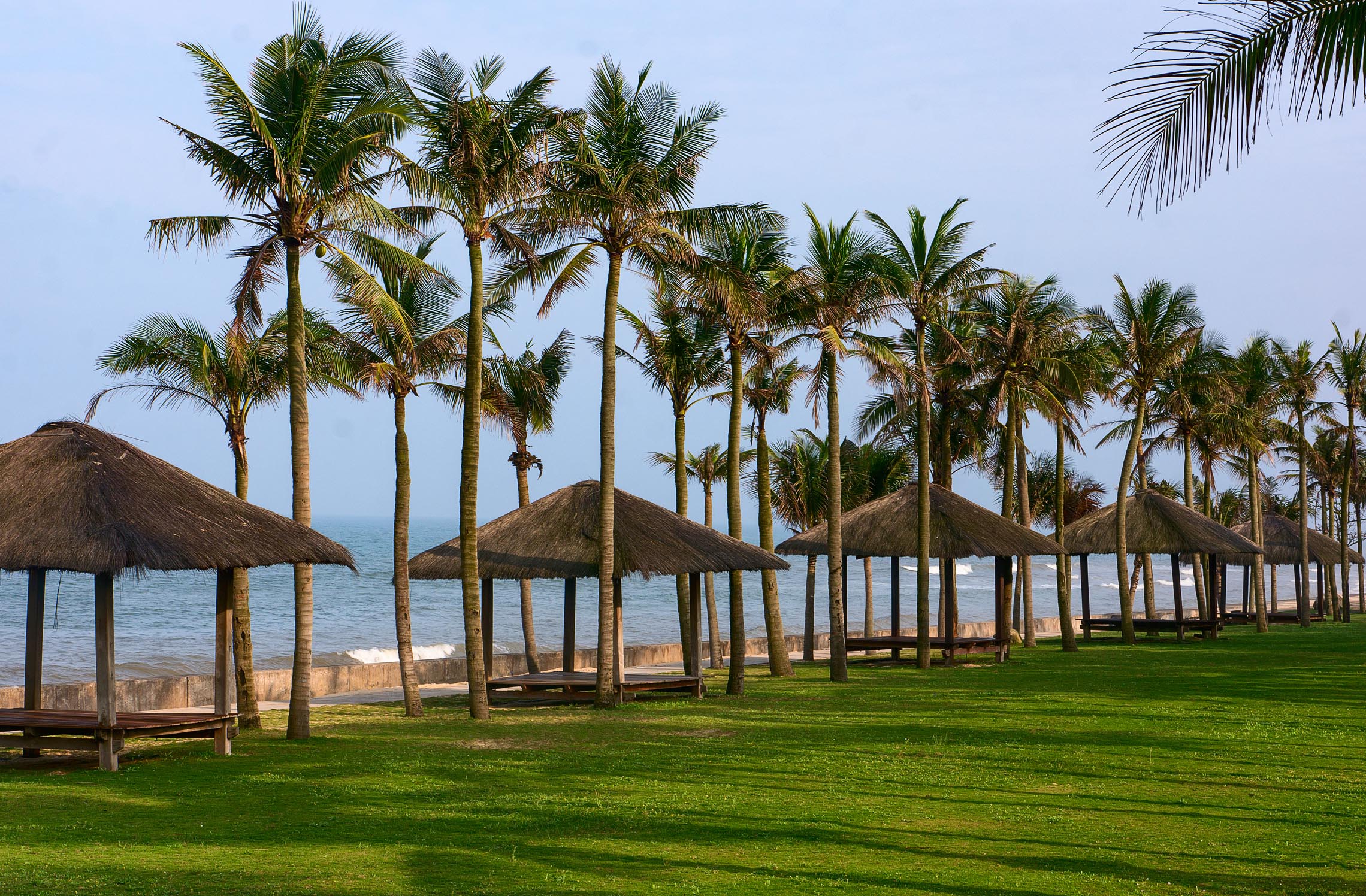
Across the Nhat Le River, the road enters Bao Ninh Peninsula, where the city gradually falls behind and the shoreline opens towards the East Sea. Resorts stretch along the coast with direct access to the sand, giving couples a secluded setting for a few unhurried days while families can move easily between the swimming pool, beach and spacious grounds. The short distance from central Dong Hoi makes the area particularly well suited to weekend getaways, with a Friday evening arrival enough to exchange urban traffic for sea air and the sound of surf.

As the day cools, the coast takes on a livelier character, with fishing boats hovering offshore while children play along the shallows and seafood kitchens prepare squid, prawns and fish over glowing charcoal. From a resort by the beach, guests can watch this working coastline come alive as salt hangs in the breeze, lime and chilli sharpen the evening meal and lights gradually appear on the darkening water. These small scenes remain close to the resort, allowing a stay in Bao Ninh – Nhat Le to feel connected to the coastline rather than separated from it, with the beach, local life and the sea becoming part of the experience itself.

Places to stay in Quang Tri for a memorable experience

Where travellers’ night is spent changes what remains of Quang Tri after the day’s exploration, whether the sound of surf lingers from Cua Tung, coffee-scented highlands surround Lao Bao, or village life continues quietly around Hai Lang. The choice between a resort, city hotel and guesthouse consequently depends on how deeply accommodation is woven into the pace of the itinerary.

Resort in Bao Ninh - Nhat Le

Resort in Bao Ninh - Nhat Le

Cua Tung resorts for sea views, seafood and slower stays

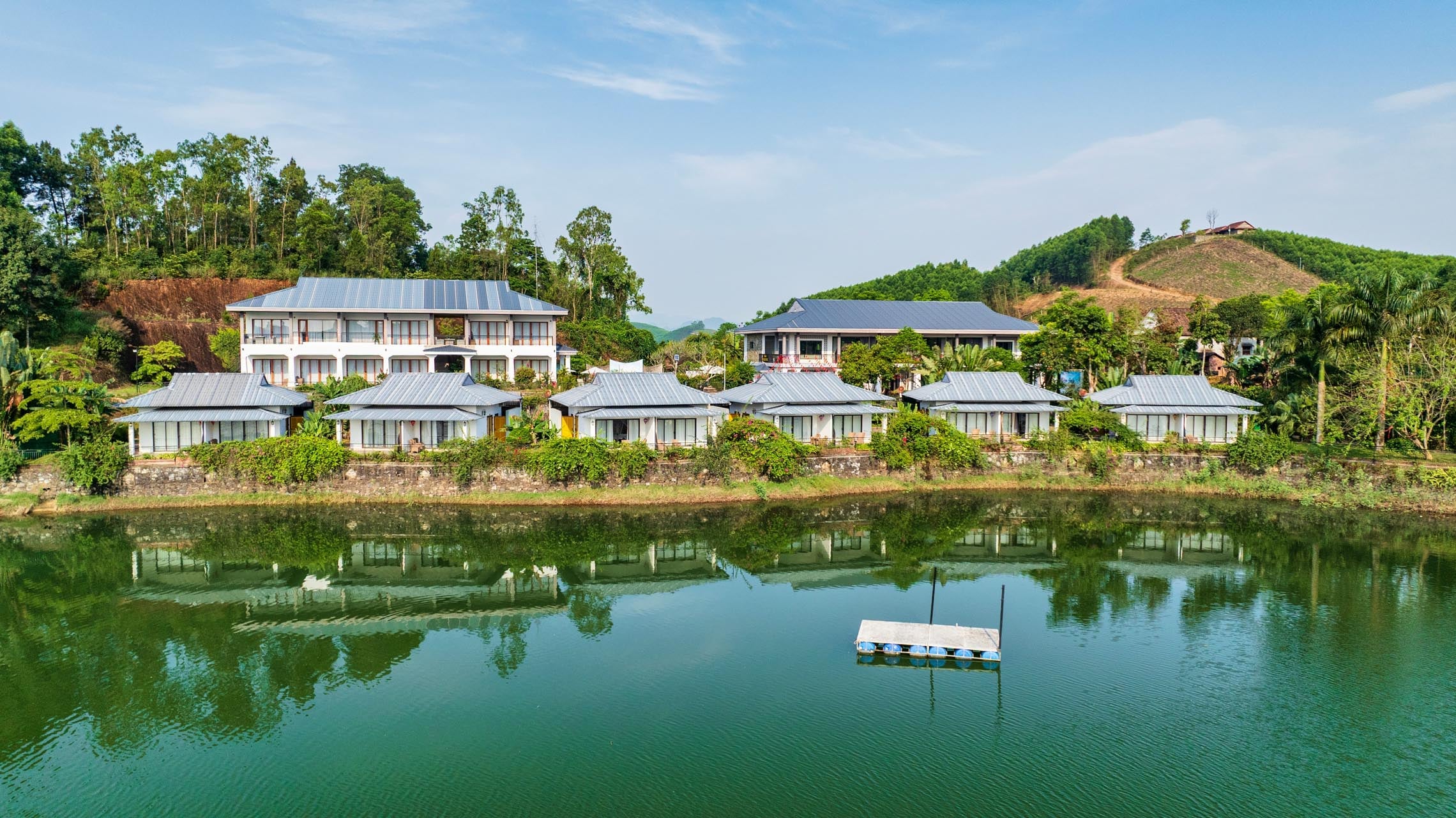
At Cua Tung, the shoreline opens into a broad sweep of pale sand, where small vessels move between the horizon and land as the scent of salt drifts inland on the breeze. Nearby, nets lie drying after the day’s work, boats rest on the sand and baskets of the morning catch make their way towards local kitchens, keeping the rhythms of a long-established fishing community visible in everyday life. Against this setting, upscale resorts pair uninterrupted sea views with spacious suites, infinity pools, private terraces, refined dining and wellness facilities, allowing the coast to remain central to the stay.

After visiting Quang Tri’s memorials and historic sites, the journey towards the coast brings a welcome change of pace. Warm sand replaces the roads beneath bare feet, while grilled squid with lime and chilli fills the air with the scent of the sea and the surf carries the evening away from the noise of traffic. As darkness settles, fishing lights scatter across the horizon, lending the shoreline a quiet luminosity while a sunset cocktail, spa treatment or dinner by the sea extends the evening in understated luxury.

Resort in Cua Tung with waterfront

Resort in Cua Tung with waterfront

Stay at Lao Bao city hotels to explore the western highlands

Route 9 is one of the main roads linking eastern Quang Tri with the western highlands and the Lao border. From Quang Tri, the road climbs westwards towards Lao Bao town, following an old corridor through which people, goods and ideas have travelled between Vietnam and Laos for generations. The town retains that frontier character through roadside commerce and market stalls, while contemporary city hotels provide air-conditioned rooms, modern bathrooms, restaurants, meeting facilities, fitness centres and secure parking, particularly useful for business groups, families and independent guests.

The landscape rises into the highlands of Huong Hoa, where red earth supports coffee gardens and forested slopes surround communities of Bru-Van Kieu and Ta Oi heritage. Handwoven textiles, communal houses, gong traditions and village gatherings preserve customs rooted in the uplands, while coffee roasting lends the air a deep, bittersweet fragrance. After a day travelling through these mountain landscapes and villages, a well-appointed city hotel provides a comfortable place to rest, with contemporary amenities that make longer stays and early departures easier.

Hai Lang budget guesthouses for rural exploration and everyday life

Around Hai Lang, modest guesthouses are found close to village roads, rice fields and small settlements, making the area a practical base for exploring the surrounding countryside. From here, visitors can follow roads between cultivated land, irrigation channels and garden plots, while the same fields and waterways reveal the everyday life of local communities, supplying rice, freshwater fish, herbs and other ingredients that appear in local cooking.

The day in Hai Lang begins with the sounds of everyday life, from motorbikes heading towards market stalls to ladles striking metal pots as rice steams in village kitchens. These morning’s simple scenes then lead travellers into a day spent visiting temples, following rural roads and passing through fields and waterways, before local dishes and quiet evenings bring the pace down again. A guesthouse fits naturally into this setting, providing a quiet place to rest while keeping the fields, waterways and village life of Hai Lang close at hand.

The most memorable stays leave room for Quang Tri itself to occupy the foreground, from the fragrance of a kitchen drifting through the evening air to the changing light across fields, rivers and distant hills. Among the places to stay in Quang Tri, the finest choice is one that gives the surrounding landscape, cuisine and cultural life enough space to linger long after the room has been left behind.

Quick information

Frequently Asked Questions

Book at least one to two months ahead, especially for weekends. Traveling from Monday to Thursday can help reduce costs, with mid-range rooms generally starting from around VND 800,000 – VND 1,500,000 per night, depending on the location, facilities and travel period.

Mid-range hotels and resorts generally include breakfast, while budget hotels and guesthouses may not. Local breakfast eateries are also widely available around urban areas.

Cua Viet is better suited to beach stays and resort facilities, while Dong Ha is more convenient for families planning historical sightseeing, dining and access to everyday city amenities.

Finding the best Quang Tri souvenirs

Quang Tri souvenirs rarely arrive as polished keepsakes, but come as roasted beans, jars of fermented seasoning, rice flour steamed into delicate cakes, mountain honey and handwoven textiles, each connected to a particular landscape and everyday habit.

Quang Tri souvenirs that reflect the province’s character

The finest Quang Tri local products preserve something intangible within their modest forms, a family recipe refined across generations, a craft sustained through patient hands, a harvest shaped by soil and season, or an old trading custom still woven into daily life.

Khe Sanh Arabica coffee from the misty red-basalt highlands of Huong Hoa

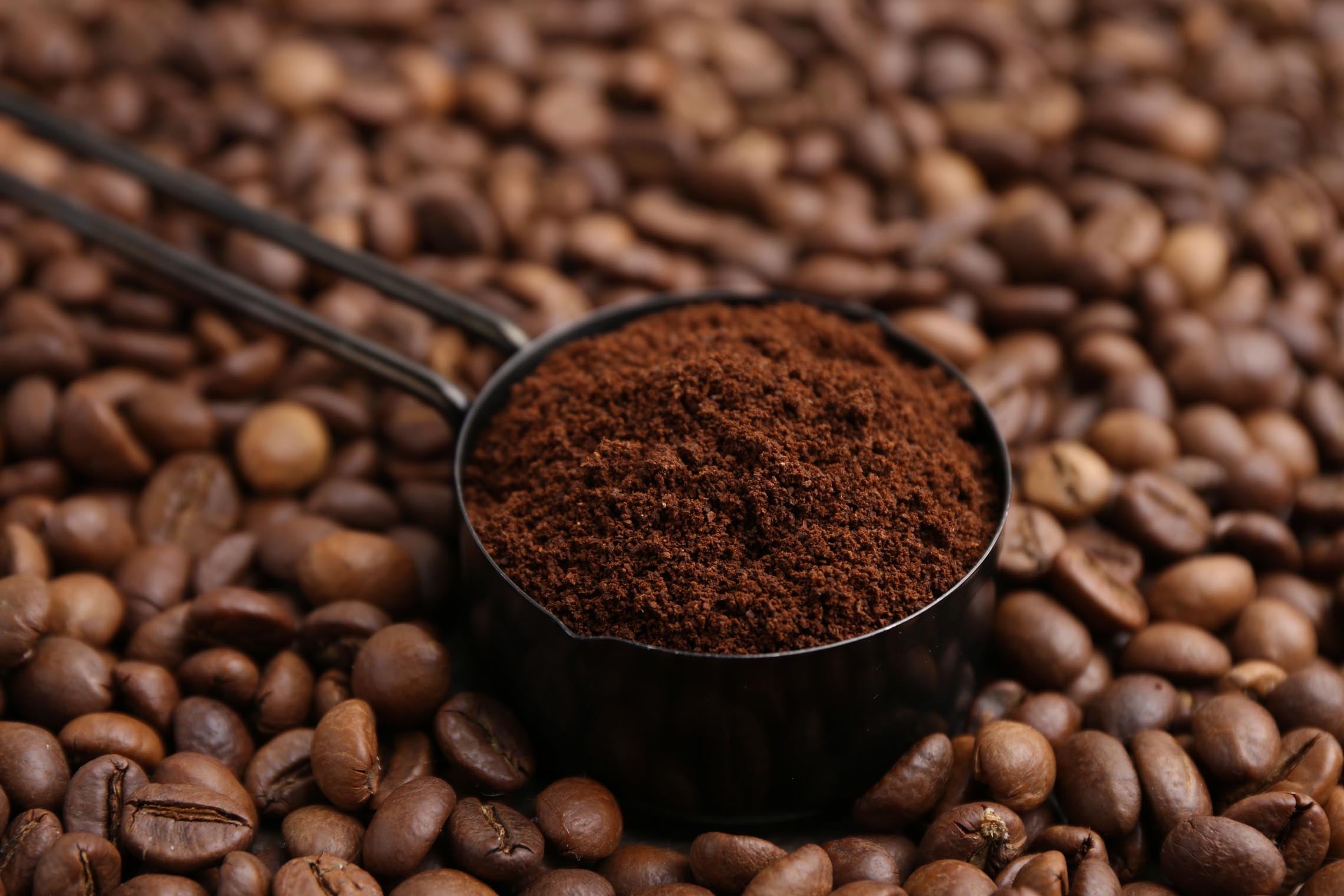
Ca Phe Khe Sanh (Khe Sanh coffee) begins among the red earth and cool mists of Huong Hoa, where Arabica coffee has been cultivated since the early twentieth century. Elevated terrain, shifting temperatures and mineral-rich soil create conditions for slow-ripening cherries, which are picked, processed and dried before roasting releases aromas of cacao, toasted nuts and dark fruit.

A packet of Khe Sanh coffee bought here recalls the highlands through aroma, colour and the quiet labour behind each cup. More than a local product, coffee produced here also belongs to the agricultural heritage of the western highlands, where generations of growers have adapted cultivation to the upland climate and passed farming knowledge through family fields. In village homes and small roasting workshops, cherries are sorted, dried, roasted and ground by hand, turning each harvest into a fragrant daily ritual.

Khe Sanh coffee, a specialty coffee in Quang Tri

Khe Sanh coffee, a specialty coffee in Quang Tri

Nuoc Mam My Thuy and the coastal art of traditional fish-sauce fermentation

Along the coast of My Thuy, the day’s catch once destined for immediate meals could also be preserved through salt and time, allowing families to keep the flavour of the sea long after the fishing boats had returned. That practice developed into a fish-sauce tradition maintained across generations. Fish is layered with salt in fermentation vessels, left to mature, then filtered repeatedly until the liquid runs clear and amber. Nuoc Mam My Thuy (My Thuy fish sauce) belongs to the culinary culture of coastal households, where fish sauce seasons almost every kind of meal, from rice and boiled vegetables to grilled fish. The concentrated first extract is valued for its depth and fragrance, while chilli, garlic and lime transform the finished sauce into a dipping condiment that accompanies everyday dishes.

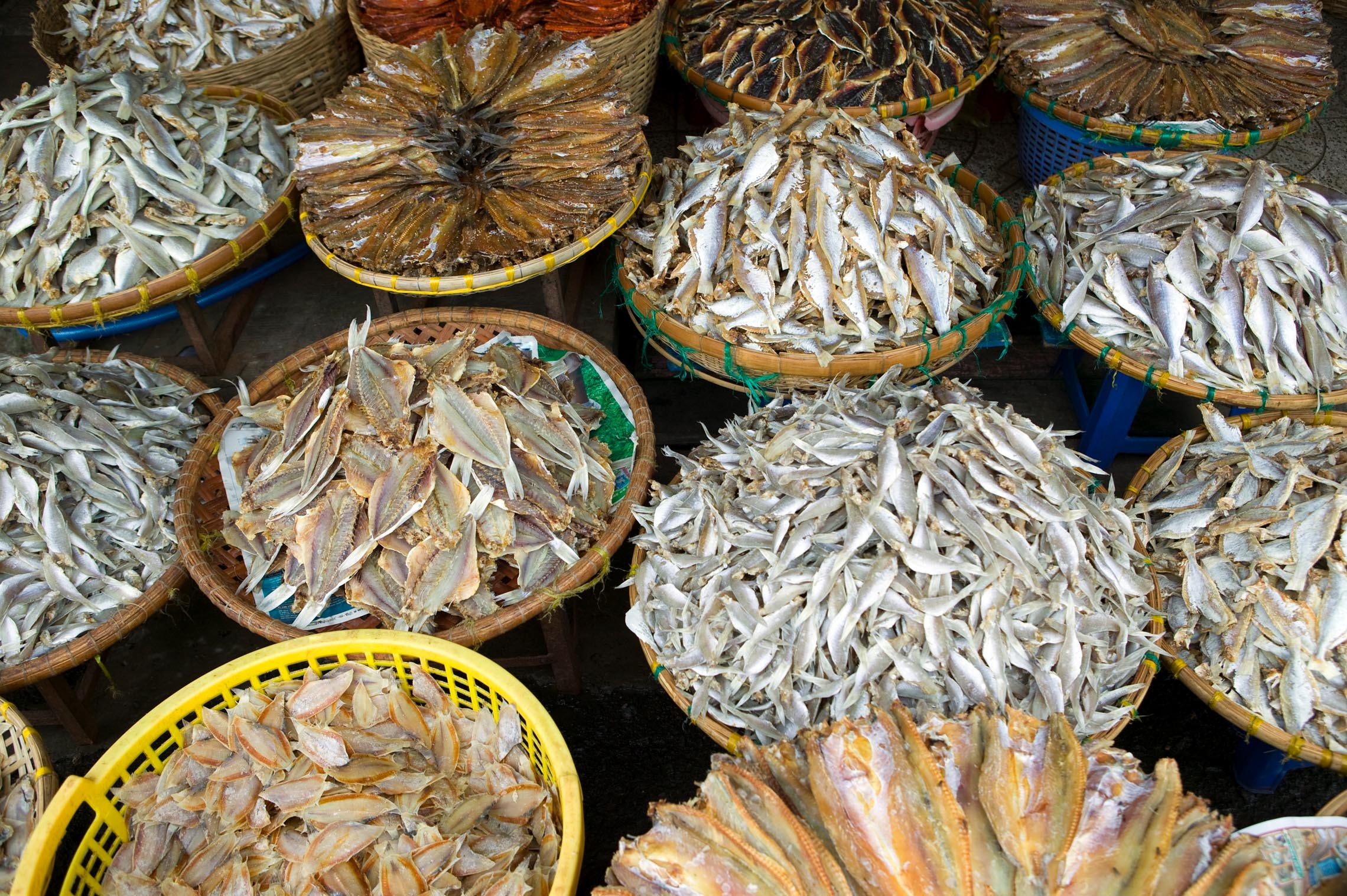
Dried seafood is among most beloved souvenir from Quang Tri

Dried seafood is among most beloved souvenir from Quang Tri

Sweet village traditions wrapped in Banh It La Gai

Banh It La Gai (Ramie Leaf Glutinous Rice Cake) is a traditional sweet in Quang Tri, made from glutinous rice flour, ramie leaves and mung-bean filling. Ramie leaves are washed and ground into a dark paste, then mixed with glutinous rice flour before dough is wrapped around mung-bean filling and steamed. This kind of cake is usually prepared in batches when relatives gather, with several hands involved in kneading, filling, wrapping and steaming. This shared preparation has kept Banh It La Gai closely associated with Tet, weddings and family offerings, when cakes become part of hospitality, ceremony and ancestral remembrance. Their dark colour, soft texture and earthy fragrance distinguish a delicacy rooted in domestic tradition, where preparing and sharing Banh It La Gai remains closely tied to family occasions.

Non La Tra Loc and the craft of Quang Tri conical hats

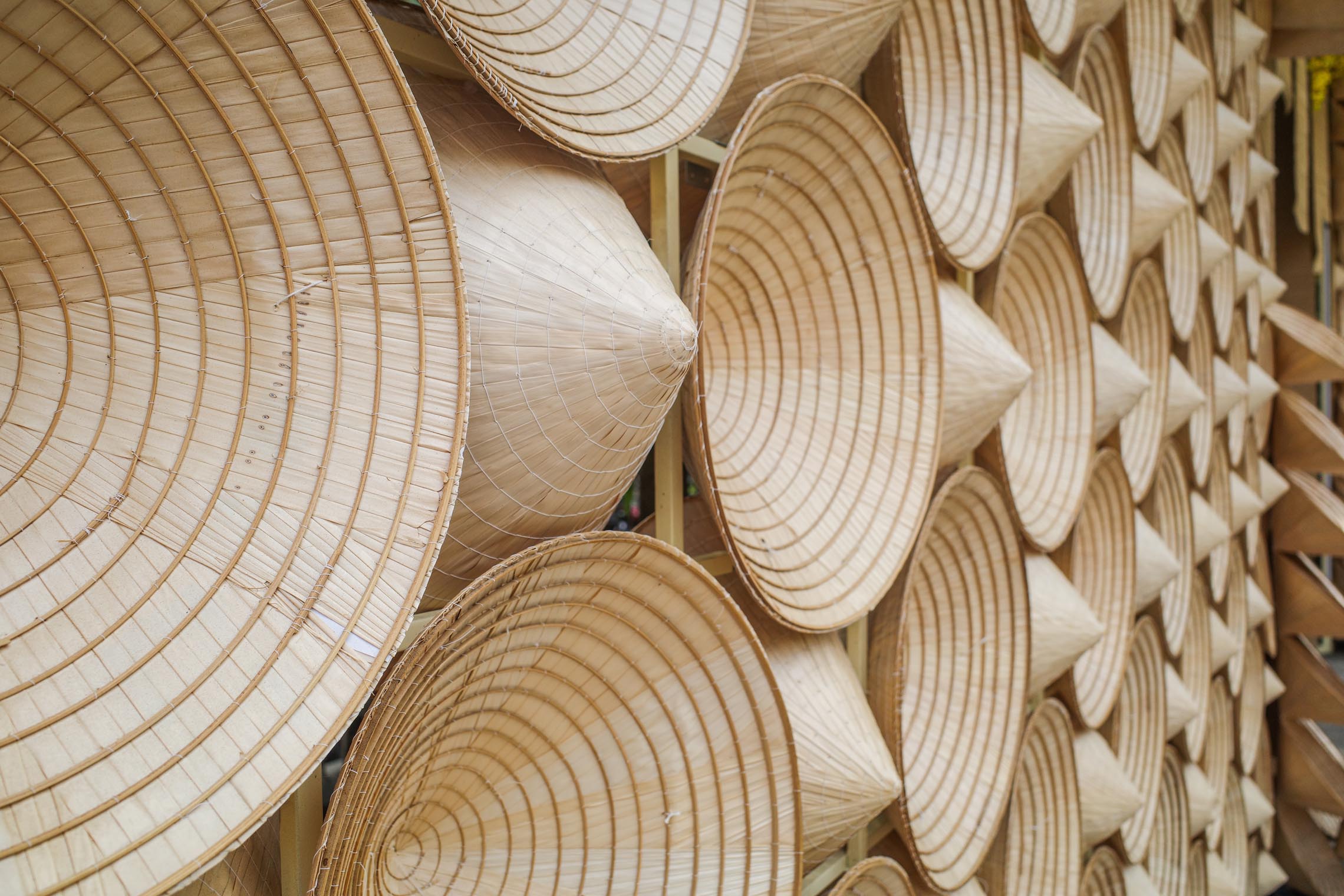
From rice fields and village markets to journeys along country roads, the conical hat has shielded farmers from tropical sun and sudden rain while becoming one of the most recognisable objects of Vietnamese culture. Among the traditional versions found across the country, Non La Tra Loc (Tra Loc conical hat) is a distinctive craft from Quang Tri, carrying forward a style that has accompanied Vietnamese life for generations. In the craft village of Tra Loc, palm leaves, bamboo and fine thread pass through skilled hands, with leaves selected, dried and trimmed before being arranged over slender bamboo ribs and secured with meticulous stitching.

The work demands an experienced eye for proportion and tension, since every rib and seam contributes to the hat’s lightness and graceful taper. Non La Tra Loc (Tra Loc conical hat) is distinctive precisely because the everyday Vietnamese symbol is also a product of local craftsmanship, with techniques passed between generations and the village’s identity preserved through each carefully finished hat.

Traditional Vietnamese conical hats displayed at a local craft shop

Traditional Vietnamese conical hats displayed at a local craft shop

What to buy in Quang Tri for different recipients

A small gift from Quang Tri preserves the atmosphere of its birthplace through flavour, fragrance, colour and texture, whether it arrives as a crisp snack beside a cup of tea, a pinch of fiery chilli salt, a jar of amber honey or a length of handwoven cloth marked with ancestral motifs.

Banh Chi An My makes a thoughtful gift for colleagues and friends

Tea is often accompanied by something small to nibble, and Banh Chi An My (An My snack cake) belongs to that tradition of informal hospitality. Crisp and savoury, the cakes are associated with An My and work naturally beside a pot of hot tea when relatives gather, guests arrive or conversation lingers after a meal. Their compact size makes them easy to divide among colleagues and friends, while the toasted fragrance and delicate crunch evoke village kitchens where snacks are prepared for sharing rather than display. A packet brought back to the office thus carries a distinctly Quang Tri flavour without demanding much space in a suitcase.

Muoi Ot Cau Nhi suits food enthusiasts who enjoy bold flavours

Green mango sliced into thin crescents, guava still firm beneath the knife, or a plate of steamed vegetables needs little beside a pinch of Muoi Ot Cau Nhi (Cau Nhi chilli salt). Coarse salt and chilli deliver a brisk combination of salinity and heat, recalling the Central Vietnamese preference for concentrated condiments that sharpen rice, vegetables and grilled dishes. The seasoning also belongs to the practical pantry culture of households where preserved salt and dried chilli remain useful long after harvest. Small, intensely flavoured and distinctly regional, it gives Quang Tri local products a culinary accent with plenty of personality.

Mat Ong Huong Hoa makes a practical gift for family and older relatives

Flowering plants around coffee gardens, forest edges and cultivated hills sustain bees through the seasons, giving Mat Ong Huong Hoa (Huong Hoa honey) its burnished amber colour and floral perfume. Each harvest varies according to the blossoms available, from lighter sweetness to deeper aromatic notes. At home, a spoonful of this honey dissolves into warm tea, accompanies breakfast or sweetens yoghurt, while older household traditions also use honey in simple remedies. The jar thus connects an everyday ingredient with the agricultural life of Huong Hoa and its highland environment.

Tho Cam Van Kieu connects a gift with highland heritage

Weaving has traditionally been passed through women’s hands within families, with techniques taught through practice rather than written instruction. Through this continued practice, deep indigo, crimson, black and cream meet in geometric bands on Van Kieu textiles, where colour and pattern belong to a long tradition of dress, domestic craft and ceremonial occasions.With each thread and motif, Van Kieu artisans preserve this meticulous workmanship in scarves, shoulder cloths and smaller textiles, keeping the visual language of highland dress and community heritage alive. Among what to buy in Quang Tri, it has a cultural resonance that remains visible long after the gift reaches its new home.

Quick information

Frequently Asked Questions

Whole beans retain freshness and aroma longer, especially during travel. Ground coffee is more convenient for phin brewing without a grinder, while vacuum-sealed packaging helps preserve quality.

Dried seafood can generally be packed in carry-on or checked luggage when vacuum-sealed and securely wrapped. Fish sauce is not permitted in carry-on luggage and may be subject to restrictions in checked baggage, so check your airline’s excess baggage information before packing.

Traditional markets, specialty food shops and producer outlets are practical places to look for regional goods. For edible gifts, choose items with clear origins, sealed packaging and visible product information.

Offers from Vietnam Airlines

Promotion List
Sorry, there are currently no promo codes matching the selected criteria!
Please search again with different criteria
Filters

Loading