
Things to do in Quang Ninh for its landscape and culture
The old people of the coast still tell of a time when invaders came by sea, and a mother dragon descended from the heavens with her children to defend the land. As the dragons fought, jewels and pearls fell into the water, becoming the islands and limestone towers of Ha Long Bay, while the mother dragon remained at Ha Long, “where the dragon descends”. The legend gives Quang Ninh a geography born from memory, while the province holds layers of history from generations of seafaring and coal mining to fishing communities, border mountains and Yen Tu, birthplace of Vietnamese Zen. For travellers seeking things to do in Quang Ninh, the journey moves through landscapes marked by heritage, resilience and the enduring relationship between people and the land.
From Ha Long Bay to peaceful island escapes
Quang Ninh’s coastal story begins with Ha Long Bay, but its character is easier to understand when the famous seascape is read together with the communities and islands around it.
Ha Long Bay – The timeless beauty of a UNESCO World Natural Heritage Site
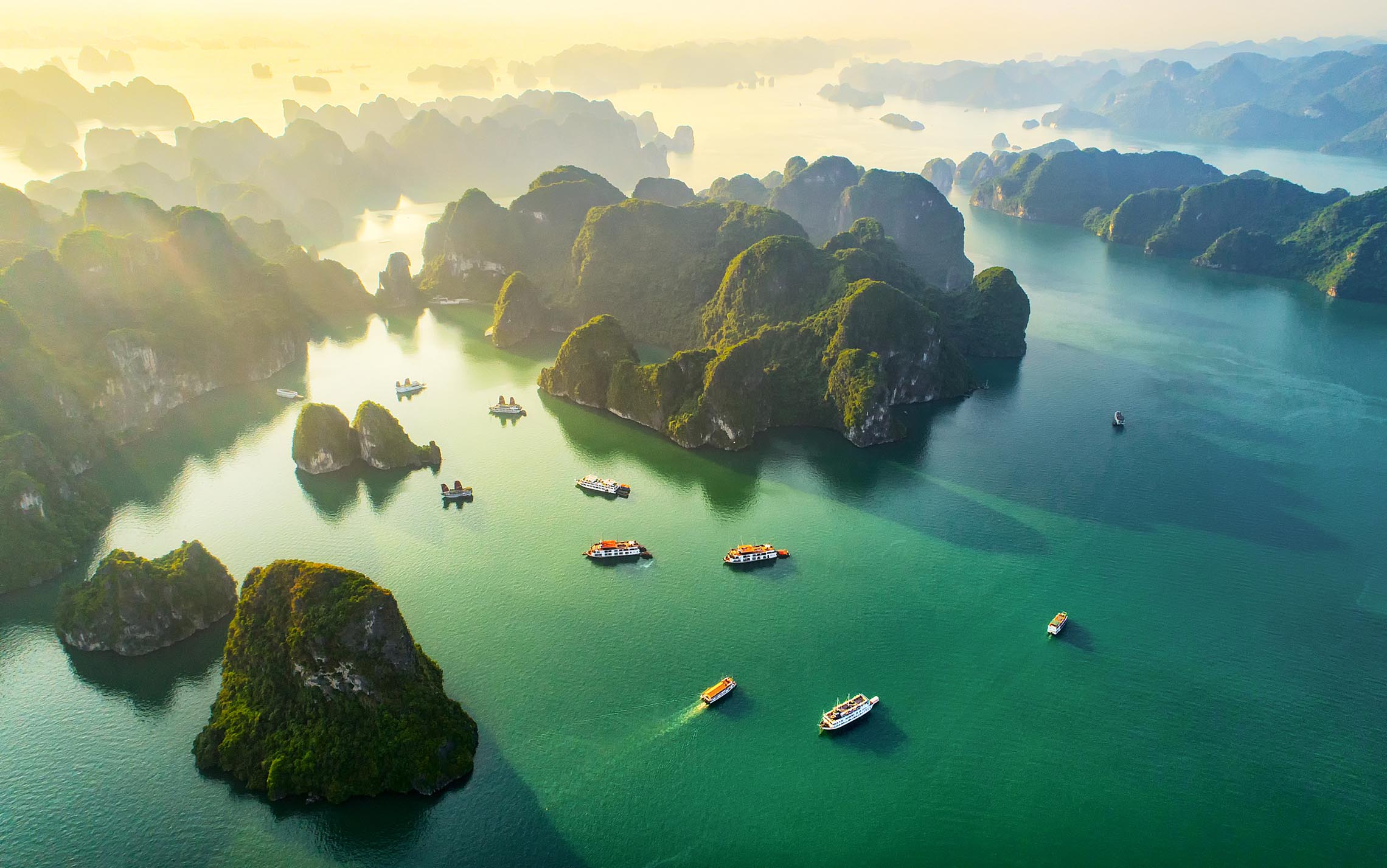
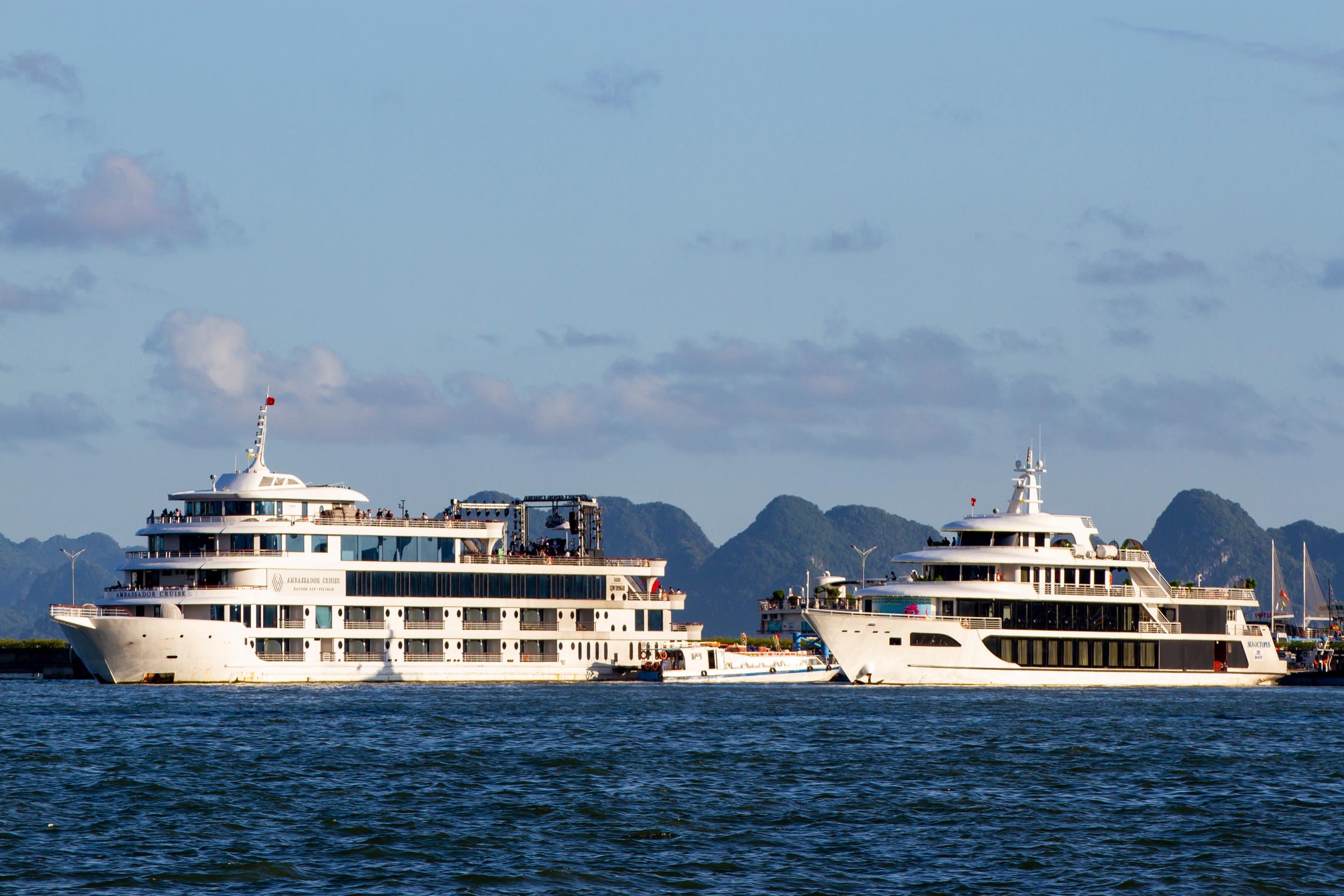
Ha Long Bay rises from the Gulf of Tonkin in an astonishing expanse of jade water and towering limestone, where karst islands stand like immense stone sentinels beneath a vast northern sky. As a boat moves between them, cliffs emerge from the haze, their sheer faces glowing silver in the sun before sinking into green shadow. Mist gathers around distant peaks as the water shifts with the light, giving the bay a dreamlike beauty that has inspired generations of poets and painters. Recognised by UNESCO as a World Natural Heritage Site in 1994 and 2000 (and expanded in 2023), Ha Long Bay encompasses nearly 2,000 limestone karst islands and islets alongside magnificent grottoes such as Sung Sot, Thien Cung and Dau Go caves, formed through hundreds of millions of years of geological evolution.
The waters also hold memories of communities who built their lives around the sea. At Cua Van, generations of fishing families, descended from older communities including Giang Vong and Truc Vong, once lived in floating houses, reading the movement of tides, storms and currents as naturally as a sailor reads a chart. Although the community later moved ashore, Cua Van retains its cultural heritage through preserved floating houses, a floating classroom, fishing tools and traditional love duet singing, while some families continue aquaculture.
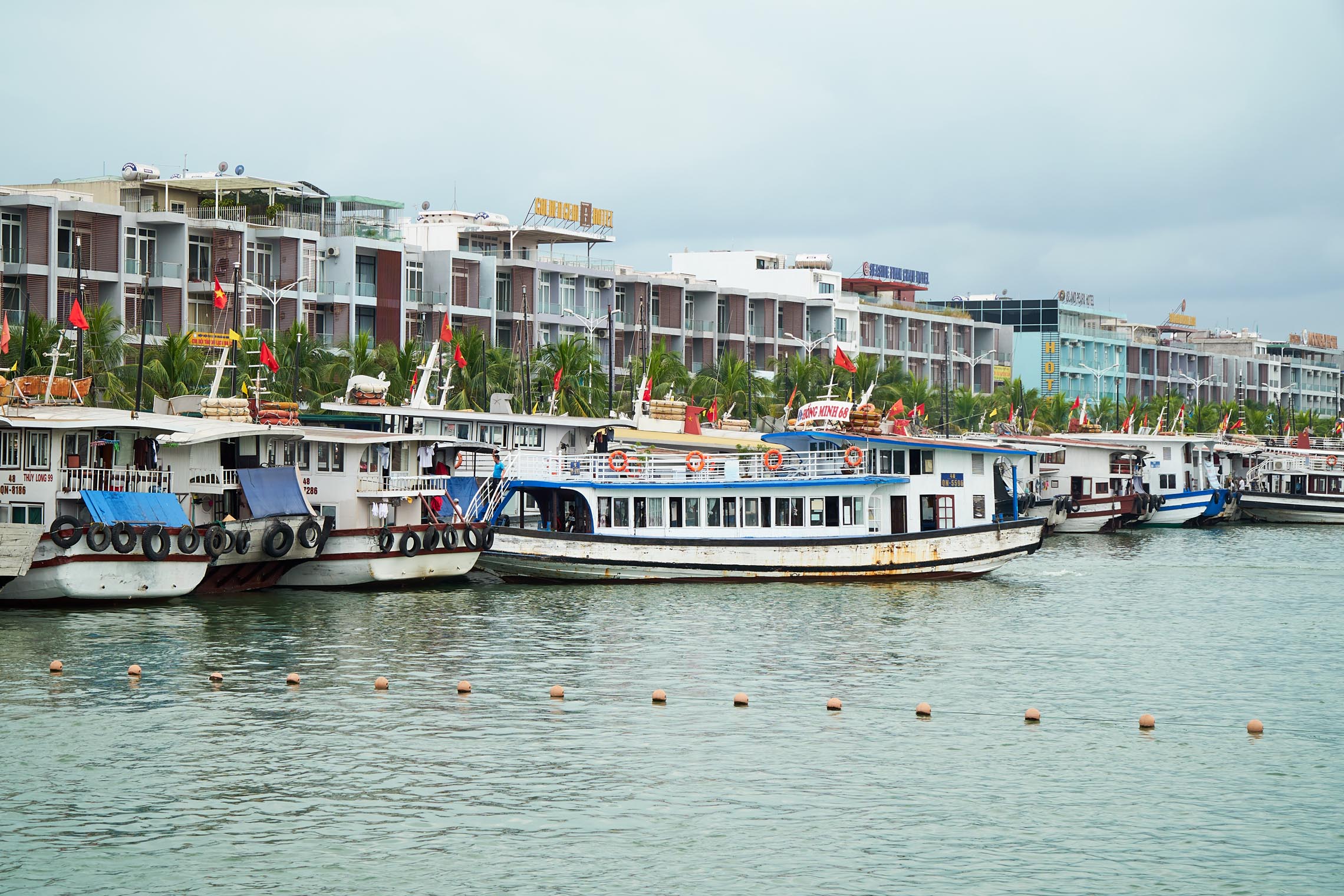
From the deck, limestone walls loom overhead, streaked with mineral colours, while caves plunge into cool darkness where droplets strike stone and echoes travel through vast chambers. Around Cua Van, painted boats and floating houses rest beneath the karsts, their reflections trembling across the water. Here, the grandeur of Ha Long Bay remains inseparable from the maritime life once lived upon its waters.






 Link opens in new window. Site may not meet accessibility guidelines.