Select region and language
Close button
Booking and service information for the selected country and language will be applied.
paradise

Da Lat travel and the romance of the city of flowers

Exploring things to do in Da Lat means discovering a city whose character has long been shaped by its cool mountain climate and horticultural heritage. The scent of pine mingles with freshly brewed coffee, while generations of flower growers and gardeners have cultivated a distinctive relationship with the surrounding landscape. This slower pace of life is perhaps most apparent in the city's café culture, where time seems to stretch through misty mornings and unhurried afternoons, revealing a Da Lat that is as evocative in its atmosphere as it is in its scenery.

Things to do in Da Lat to immerse in its romantic feeling

Fog drifts lazily across a narrow slope, carrying the scent of pine resin and roasted coffee as a distant market call fades into the cool mountain air. Following the winding streets between moss-covered walls and old villas, travellers find themselves wandering without hurry, lulled by the hush of pine trees and the soft veil of mist. This is where Da Lat feels dreamlike yet deeply rooted, as its Co Ho heritage, highland landscapes and French-era architecture lend each street a gentle, almost wistful romance.

Things to do in Da Lat to discover its highland identity

Few places in Vietnam turn a highland city into such a singular emotional landscape, where every street corner stirs curiosity about the past while gently drawing travellers into a present that feels incredibly dreamlike.

Cool air and mist turned a former hill station into a cultural muse

A walk along Da Lat’s gentle slopes reveals a landscape where flower-filled gardens, mist-covered houses and winding roads merge into the surrounding pine forests. As the fog drifts across the valleys and gathers along distant ridges, the changing light lends the city an ever-shifting beauty, with gardens glowing beneath pale skies and mountain peaks dissolving into silver clouds. It was this distinctive highland setting that first drew Doctor and explorer Alexandre Yersin to the Lam Vien (Lang Biang) Plateau in 1893, at an elevation of 1,500 metres above sea level. His expedition laid the foundation for Da Lat as a hill station, where the cool mountain climate and pine-forested scenery would eventually become inseparable from the city’s identity.

Living among flowers, forests and changing mountain light has nurtured a sensibility that feels graceful, contemplative and romantic. This connection with nature is woven into everyday life, from gardens beside local homes to flower and vegetable farms thriving in the cool highland climate. It has also made Da Lat a source of inspiration for generations of artists, finding expression in Han Mac Tu’s poem and the music of Trinh Cong Son, who spent time in the city during the 1960s, writing songs that carried the wistful spirit of the highlands.
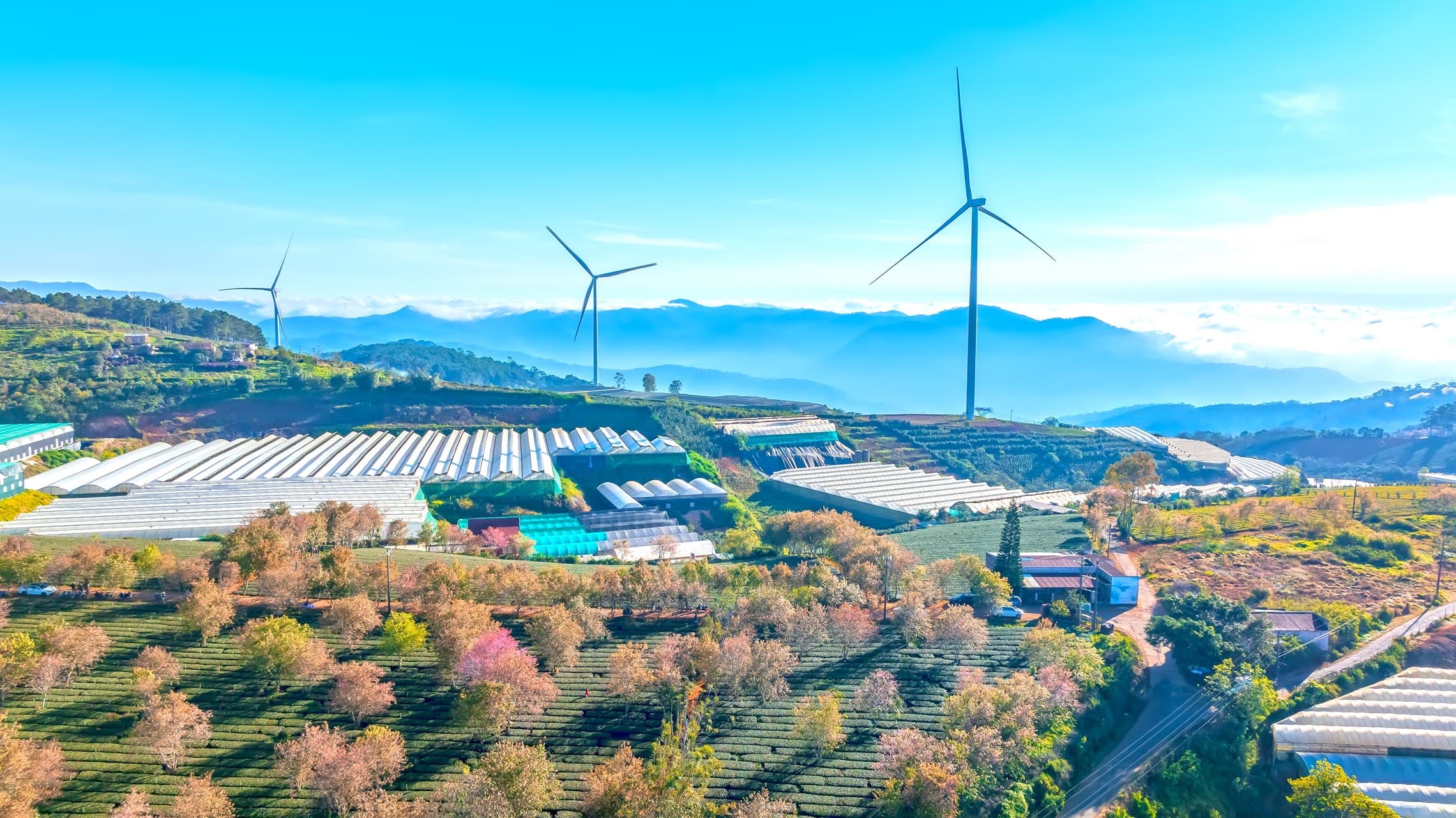
Nông trại với những nhà kính trồng rau và tua-bin gió giữa khung cảnh núi đồi ngoại  ô Đà Lạt

Greenhouses and wind turbines across Da Lat's cultivated highland hills

Da Lat has a way of loosening the grip of a hurried life, inviting each step to linger and each moment to be felt more deeply. As the pace slows, the city’s layers of history become part of the experience, blending nostalgia for the past with an appreciation of its quieter present, until Da Lat seems suspended in a dreamlike emotional landscape.

French-era architecture preserves the memories

Ask a local about one of the best things to do in Da Lat, and the answer may be as simple as wandering along the narrow roads uphill, where old villas emerge behind garden walls, lending the city the air of a French village nestled among the highlands. Around Tran Hung Dao, Tran Phu and Yersin, the streets reveal a collection of historic homes whose steep tiled roofs and shuttered windows appear softened by time, while verandas open towards leafy gardens and the surrounding hills.

Much of their charm lies in how these houses respond to the mountain climate. Sloping roofs shield them from persistent highland rain, while broad eaves shelter windows and chimneys rise above compact rooflines, recalling the cool conditions for which the hill station was conceived. Beneath these familiar silhouettes, local stone lends the buildings a sense of permanence, while timber and open verandas establish a closer connection with the gardens outside. This relationship between architecture and landscape was central to Ernest Hébrard’s urban plan, which positioned buildings among gardens and public spaces, allowing the growing town to develop in harmony with its mountainous setting.

The Lam Vien Plateau holds an older cultural landscape, home to Lach, Chil and Sre communities of the Co Ho people, whose knowledge of forests, mountains and cultivated land developed through generations. Vietnamese residents later adapted inherited villas and institutional spaces into homes, businesses and cultural landmarks – most notably King Bao Dai’s Palaces (Palaces I, II and III, the summer residences and working retreats of Vietnam’s last Nguyen Dynasty emperor) and the National Archives Center IV (housed inside a stately villa that preserves the UNESCO Memory of the World Nguyen Dynasty woodblocks) – allowing historic buildings to acquire deep meanings rooted in national heritage.

Xuan Huong Lake gives the city a shared green heart

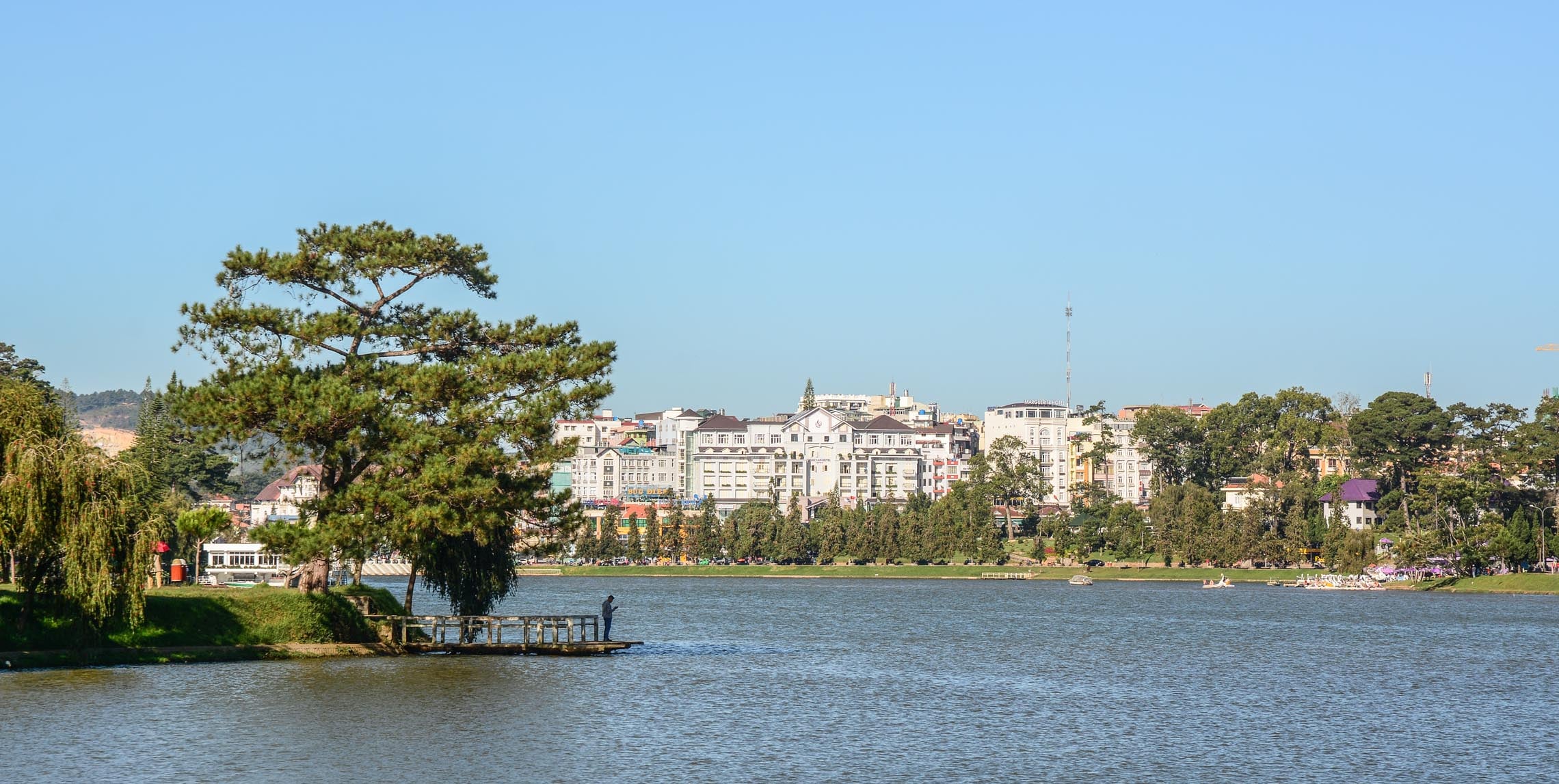
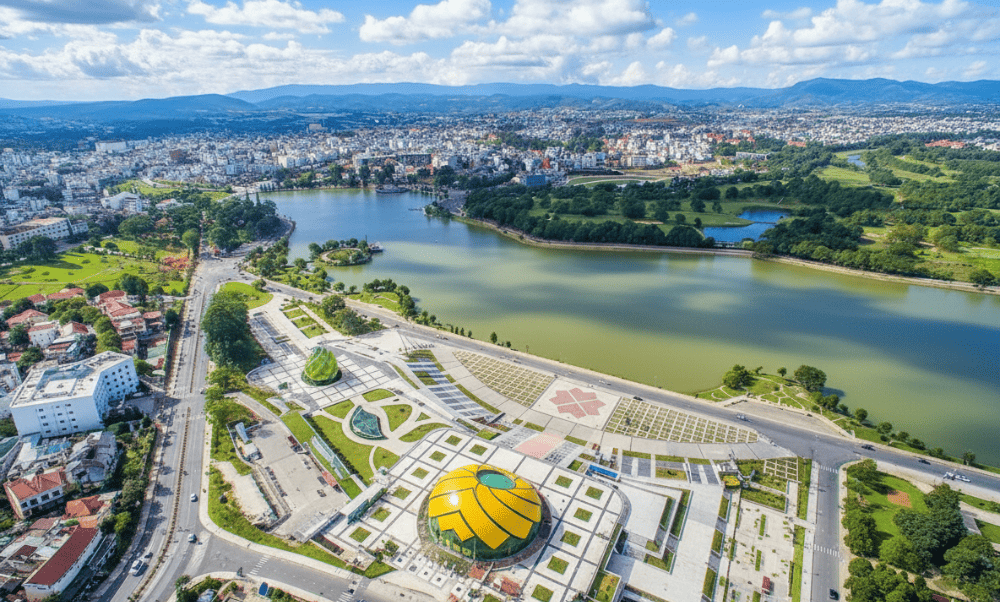
At the heart of Da Lat, Xuan Huong Lake opens up a rare expanse of greenery and water, where the surrounding streets seem to soften against the quiet of the highlands. Created through hydraulic works on the former Cam Ly stream, the lake gradually became an integral part of the city’s landscape, its pine-lined banks and flower gardens bringing a sense of nature into the urban centre.

A leisurely walk along Xuan Huong Lake is among the most memorable things to do in Da Lat, particularly in the early morning, when residents gather along the lakeside paths and the first light settles over the water. As afternoon approaches, couples linger by the shore, cyclists follow the waterfront and conversations stretch without urgency. There is an intimacy to these familiar scenes, as though the lake has quietly accompanied the private moments of countless lives.

Perhaps this is why Xuan Huong Lake occupies such a lasting place in Vietnam’s imagination of Da Lat. Its image recurs in photography and cinema, often recalling the tender romance of youth and the wistfulness of the highlands. More than a picturesque landmark, it has become part of how people remember the city, even long after they have left its shores.

Three days discovering things to do in Da Lat

Coffee aromas drift through the cool mountain air, evoking the agricultural heritage that has shaped Da Lat’s landscape and way of life. Over three days, the journey follows these cultural roots from the city’s French-era streets to the enduring traditions of the Co Ho people, revealing how the highlands have influenced Da Lat’s distinctive identity.

Day 1 exploring Da Lat’s urban history through its central districts

Da Lat’s central districts are best discovered on foot, where winding streets around Yersin, Tran Quoc Toan, the Hoa Binh Area and Tran Phu reveal the character of a mountain town shaped by successive generations. The walk naturally leads towards Lam Vien Square, where the giant stained-glass wild sunflower and 15-metre artichoke bud rise beside the crescent-shaped Xuan Huong Lake, creating a playful contrast with the surrounding pine-covered hills. From here, the streets lead towards Da Lat Cathedral, affectionately known as the Chicken Church for the alloy rooster perched atop its 47-metre Romanesque bell tower. Built between 1931 and 1942, the cathedral recalls the city’s French-era past, its architectural details lending a sense of old-world charm to a city that continues to feel both nostalgic and quietly alive.

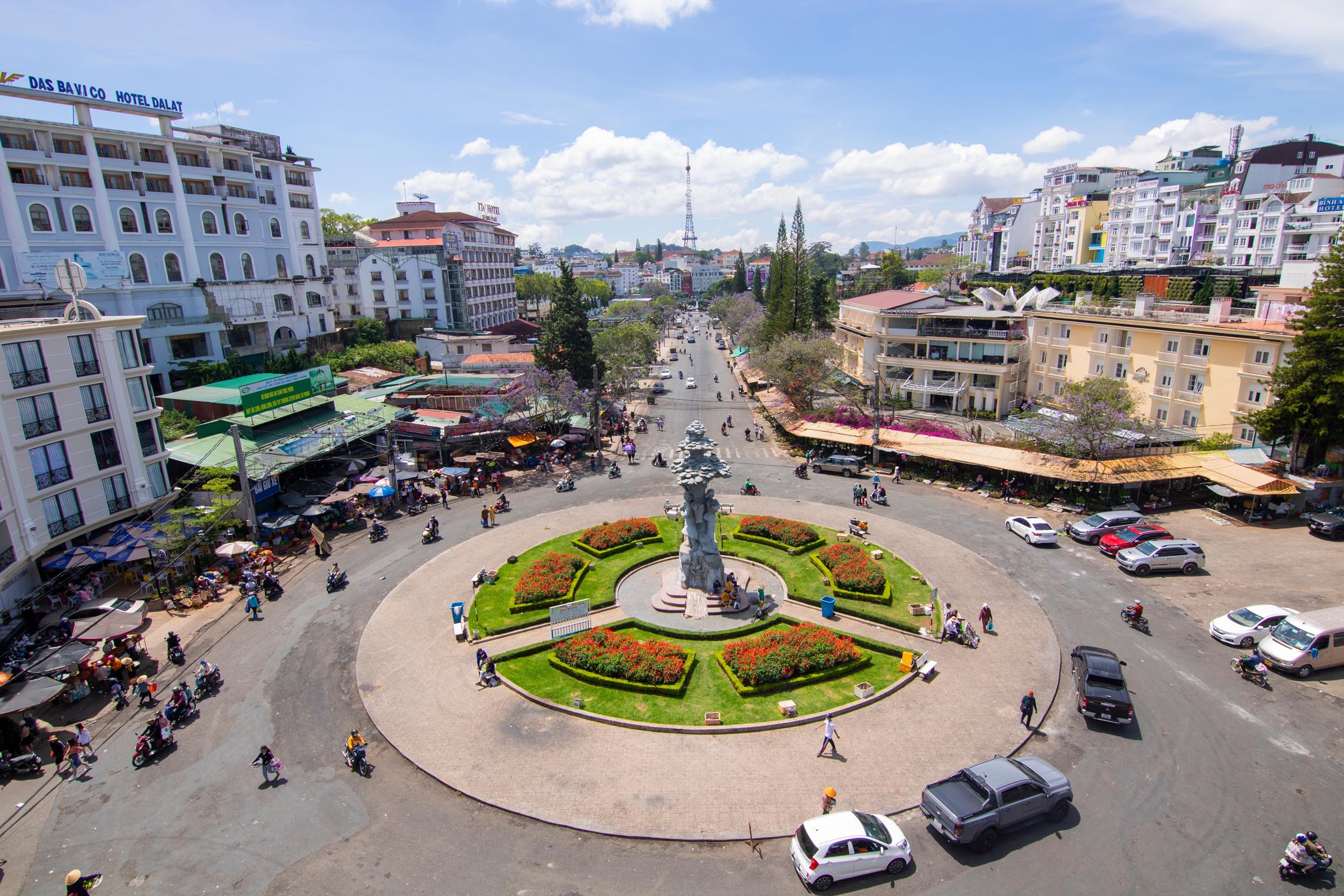
Vòng xoay trung tâm Đà Lạt giữa những dãy phố nhộn nhịp

A busy roundabout near Da Lat Market in the city centre

Walking here invites a closer reading of those layers rather than simply collecting landmarks, from an old roofline to a busy corner where local life has continued to evolve. Such evolution becomes equally tangible at Da Lat Central Market, where the agricultural heritage behind its urban growth remains part of everyday commerce. Strawberries, artichokes, avocados, vegetables and flowers arrive from farms across the plateau, while shelves of preserves and dried produce speak to generations of cultivation and the livelihoods built around it.

Da Lat’s connection with the wider region grew stronger with the Thap Cham – Da Lat cog railway and the construction of Da Lat Railway Station (1932–1938) – Indochina's oldest mountain railway station, designed in Art Deco style with three soaring pitched roofs stylized after the three peaks of Mount Langbiang. Together, these threads make things to do in Da Lat a deeper exploration of how infrastructure, agriculture and urban life became inseparable from the city’s identity.

Day 2 to follow the agricultural and spiritual heritage of Trai Mat and Cau Dat

The hills surrounding Da Lat reveal an agricultural identity shaped by cultivated terraces, flower gardens and tea estates, where highland soil, cool temperatures and generations of farming knowledge have transformed the plateau into one of Vietnam’s most productive agricultural regions. Around Thai Phien, Trai Mat, Xuan Truong and Cau Dat, greenhouses trace the slopes while flower gardens and tea estates lend the highlands their distinctive colours and textures. Among these cultivated hills, Trai Mat also rewards a visit to Linh Phuoc Pagoda, or the Glass Bottle Pagoda, whose intricate mosaics of porcelain, terracotta and glass culminate in a 49-metre dragon, revealing the same spirit of patience and craftsmanship found in the region’s long farming traditions.

Cau Dat holds an especially distinctive place in this heritage, with Cau Dat Tea Hill and its historic tea factory established in 1927 at an elevation of 1,650 metres above sea level recalling a century of commercial tea cultivation on the cloud-kissed plateau. Among tea rows, cultivation demands patience and precision, from selecting tender leaves to reading moisture, sunlight and soil conditions, knowledge refined through close attention to the land.

Visitors can settle at a café overlooking Cau Dat’s highland plantations, where locally grown coffee carries a deep fragrance and rounded flavour drawn from cool mountain slopes. As mist drifts across distant hills and cultivated rows recede into the landscape, each sip becomes a reminder of the fertile soil, generations of growers and agricultural knowledge behind Cau Dat’s coffee heritage.

Day 3 takes in Ta Nung’s lush forests and highland coffee farms

A road into Ta Nung leaves Da Lat’s familiar streets behind, climbing through pine-scented air towards valleys etched with coffee plantations, vegetable gardens and pockets of forest, where red earth darkens beneath coffee trees and mist hovers over distant ridges. Beyond the pass, adventurers can also conquer Langbiang Peak – the 'Roof of the Lam Vien Plateau' rising over 2,167 metres and steeped in the tragic K'Ho love legend of K'Lang and H'Biang – or marvel at the cascading waters of Datanla and the seven-tiered Pongour Waterfall.

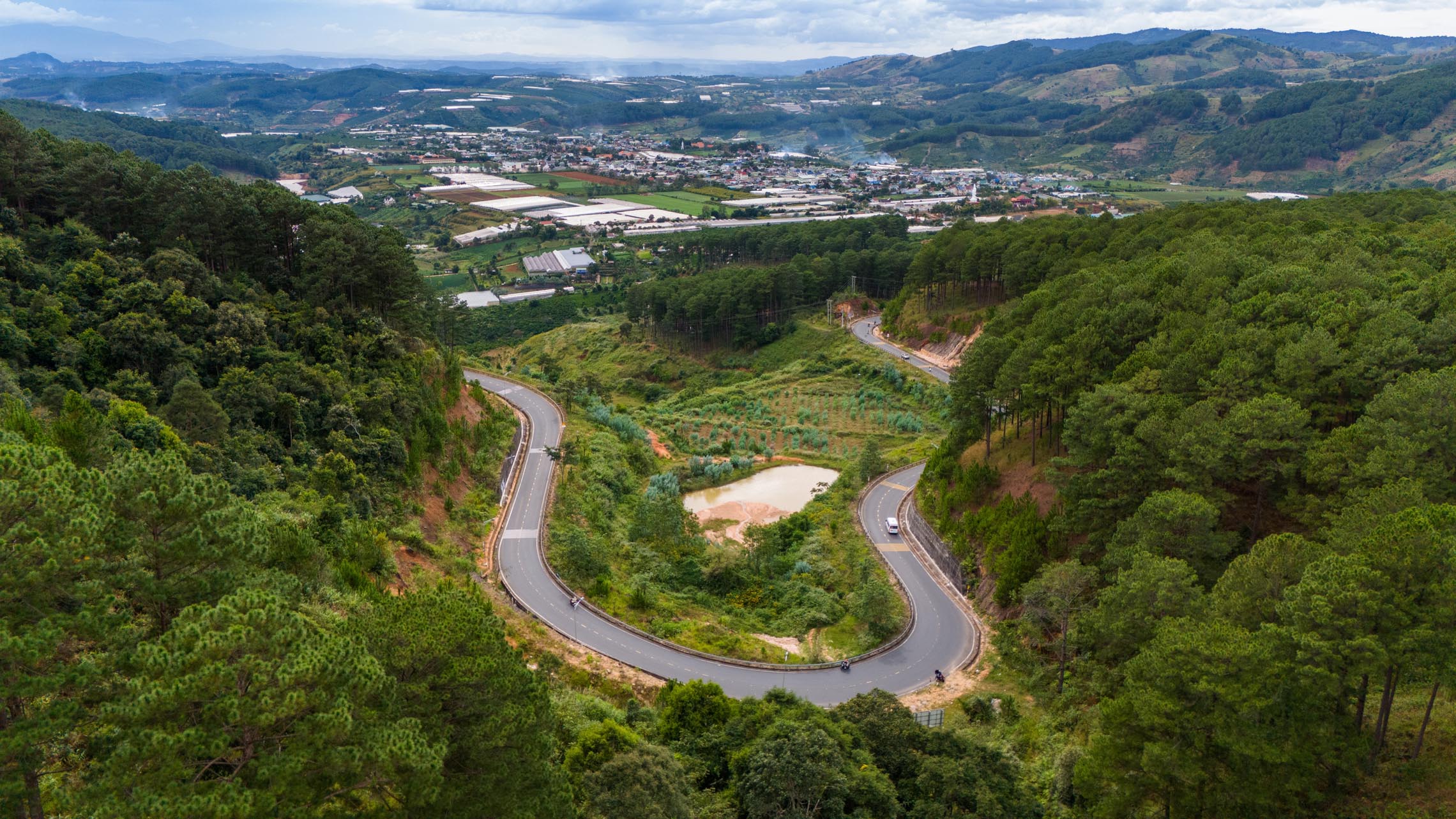
Cung đường đèo Tà Nung uốn lượn giữa rừng thông xanh

Winding roads through pine-covered hills along Ta Nung Pass

Visitors who venture into Ta Nung on foot or by bicycle find a countryside shaped by K’Ho knowledge and generations of cultivation, with coffee farms occupying fertile slopes beside woodland and smallholdings. Farmers read soil, rainfall and shade with remarkable precision, nurturing cherries whose fragrance and flavour carry traces of the highland terrain.

The routes through Ta Nung pass plantations and forest edges, where the scent of ripe coffee mingles with damp earth and pine resin, offering a closer look at the agricultural landscapes that define the highlands. Here, Da Lat’s celebrated flowers, gardens and coffee acquire a deeper context, rooted in surrounding mountains and communities whose agricultural knowledge remains inseparable from the land. A journey into Ta Nung leaves a lingering sense of how profoundly the highlands have shaped the city’s culture, economy and imagination.

Quick information

Frequently Asked Questions

November to March brings cool, crisp weather, while December is especially lively with the Da Lat Flower Festival, when flower displays, cultural programmes and artistic events animate the city.

Three days allows enough time to explore Da Lat’s central districts, agricultural areas and surrounding landscapes while leaving space for cafés, local experiences and unhurried walks.

Pack light layers, a warm jacket, comfortable walking shoes and a rain jacket, as Da Lat can feel chilly in the mornings and evenings, with changing conditions across the highlands.

The highland soul of Da Lat restaurants

Who could come to Da Lat and resist the dishes that have become part of its culinary culture, with every part of the day carrying a beloved flavour of its own? From Banh Can (Vietnamese rice cakes) to Banh Trang Nuong (Grilled rice paper), local favourites emerge from street stalls, market kitchens and family tables, shaped by the highland climate, agricultural abundance and generations of migration.

The food culture behind every Da Lat restaurant

A Da Lat restaurant is part of a food culture shaped by what residents have cooked, grown and shared across generations.

Comforting bowls define Da Lat’s cool-weather dining

At the foot of a Da Lat slope, a breakfast stall draws residents around steaming pans and pots, while scallion oil, toasted batter and savoury broth mingle in the crisp highland air. Banh Can, small rice-flour pancakes cooked in clay moulds, arrive with bronzed edges, quail eggs and scallions, while Banh Mi Xiu Mai (Vietnamese meatball bread) pairs tender pork meatballs with a fragrant broth. Around the stalls, steaming pans and pots fill the crisp highland air with the aromas of scallion oil, toasted batter and savoury stock, reflecting a culinary preference for warmth in a mountain city known for its cool climate.

That appetite for heat runs through Da Lat’s dining culture, from Lau Ga La E (Chicken hotpot), where free-range chicken simmers with bamboo shoots and lemony, to Banh Uot Long Ga (soft steamed rice sheets topped with shredded chicken, giblets and herbs). The city’s sweeter pleasures bring their own sense of comfort, whether in creamy Kem Bo (whipped highland avocado ice cream crowned with coconut ice cream), a glass of Sua Dau Nanh Nong (hot soy milk) or a bowl of Che Nong (hot sweet soup) enjoyed at an evening stall. As steam rises from bowls and the highland air turns colder after sunset, these familiar dishes become part of what makes eating in Da Lat so memorable, connecting visitors with the warmth of local hospitality and the simple pleasure of gathering over food.

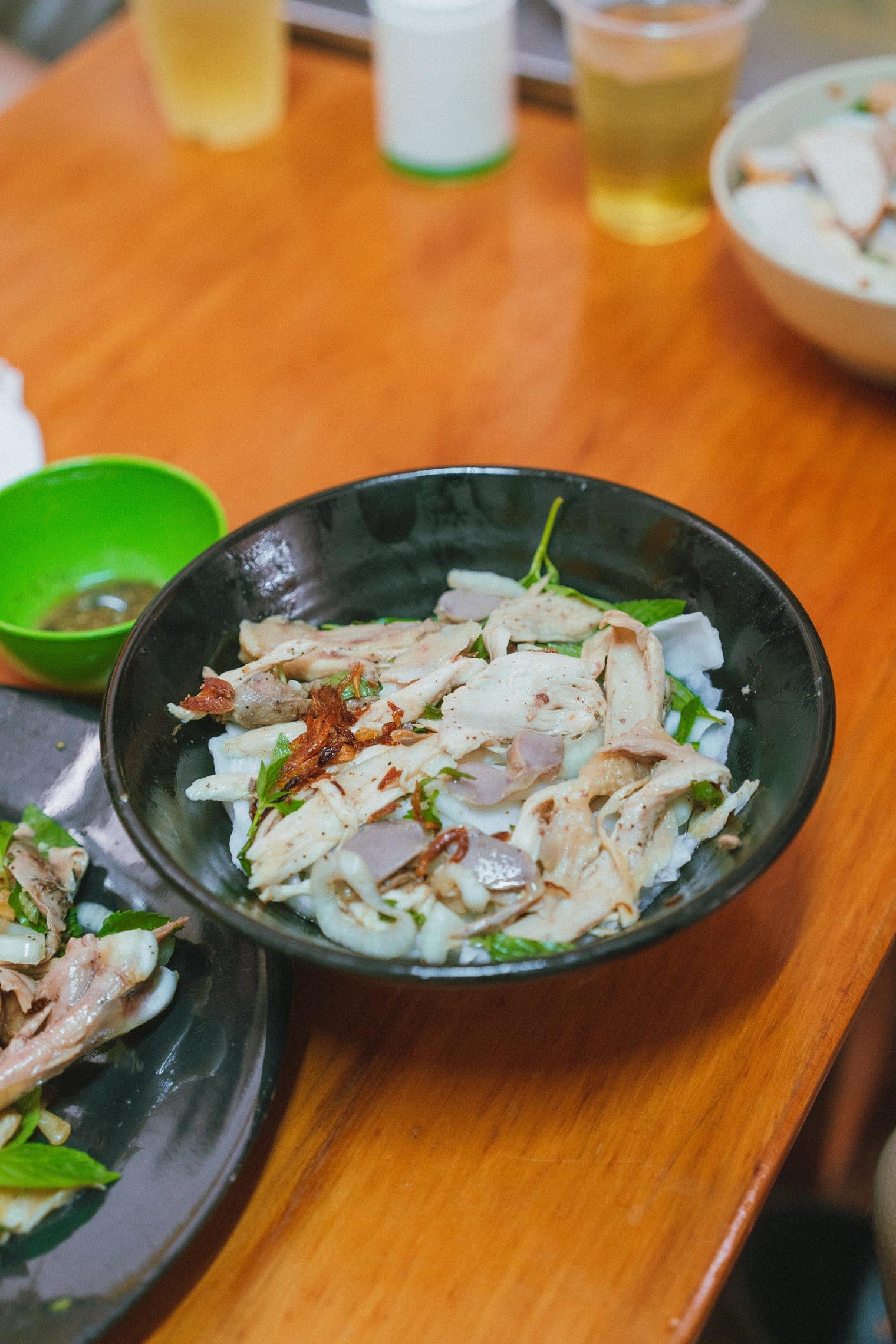
Bánh ướt lòng gà, món ăn sáng quen thuộc tại Đà Lạt

Banh Uot Long Ga with shredded chicken and fresh herbs, a Da Lat local favourite

Regional Vietnamese flavours find a home in Da Lat

Around Phan Dinh Phung, food in Da Lat reflects the culinary heritage of Central Vietnamese families who settled in the highlands, bringing recipes from their hometowns and adapting familiar flavours to a cooler agricultural landscape. Among these regional favourites, Mi Quang (Quang-style turmeric noodles), with turmeric-stained noodles, herbs and concentrated broth, shares this heritage with Banh Beo (Steamed rice cakes) and Bun Bo Hue (Hue-style beef noodle soup), dishes whose flavours remain closely associated with Central Vietnam and Hue.

As these recipes took root in Da Lat, produce from the surrounding plateau became part of their expression, with crisp lettuce, fragrant herbs, mushrooms, avocado and strawberries entering local kitchens. Food in Da Lat consequently reflects a meeting of migration and agriculture, allowing regional traditions to acquire a distinct highland sensibility without losing their origins.

Da Lat restaurants filled with flavours for vegetarian diners

Along Nguyen Van Troi and other streets in Da Lat, vegetarian kitchens turn familiar Vietnamese favourites into satisfying plant-based dishes, drawing on the cook’s understanding of texture, seasoning and the produce of the highlands. Pho (Vietnamese rice noodle soup), Banh Mi (Vietnamese baguette) and Com Nha (Vietnamese home-style rice meals) all appear in accomplished meat-free versions, refined through carefully selected ingredients and techniques that preserve the essence of each dish.
To recreate the depth and character of traditional recipes without meat, cooks turn to mushrooms, tofu, artichokes, beans, leafy greens and mountain herbs to become the vocabulary for broths, fillings and savoury sauces. Buddhist culinary traditions add another source of knowledge to this practice, enriching Da Lat’s vegetarian culture with an approach that values balance, seasonality and thoughtful preparation. Da Lat’s vegetarian cooking is closely connected to its pagodas and communities that observe plant-based meals, yet its appeal reaches well beyond religious dining. For those exploring food in Da Lat, these restaurants demonstrate how culinary knowledge can transform humble vegetables into dishes with depth, fragrance and unmistakably Vietnamese flavour.

Generations of Da Lat restaurants

Around Da Lat, restaurants span generations and styles, from neighbourhood eateries and garden tables to villa dining rooms and contemporary kitchens, each shaped by its setting, heritage and the people gathered around its tables.

Family-run eateries keep regional recipes close to home

Banh Xeo (Vietnamese crispy pancake) is known for its delicate crunch, best enjoyed wrapped in fresh lettuce and herbs, then dipped into a tangy fish sauce. The dish carries the culinary memory of Central Vietnam, where families moving towards the Lam Vien Plateau brought familiar recipes and adjusted them to the ingredients and tastes of their new highland home.

That same continuity gives Da Lat’s family-run eateries their abundance, from specialist stalls devoted to one regional dish to modest kitchens serving recipes gathered across generations. The kitchen remains close enough for cooking sounds to become part of the meal, with an aunt tending the pan, a father preparing dipping sauce and young hands carrying plates between tables. Family roles become part of the dining experience, preserving techniques through practice and shared labour. For diners, these kitchens provide a glimpse into how regional Vietnamese cooking remains rooted in household knowledge while acquiring a distinctly Da Lat identity.

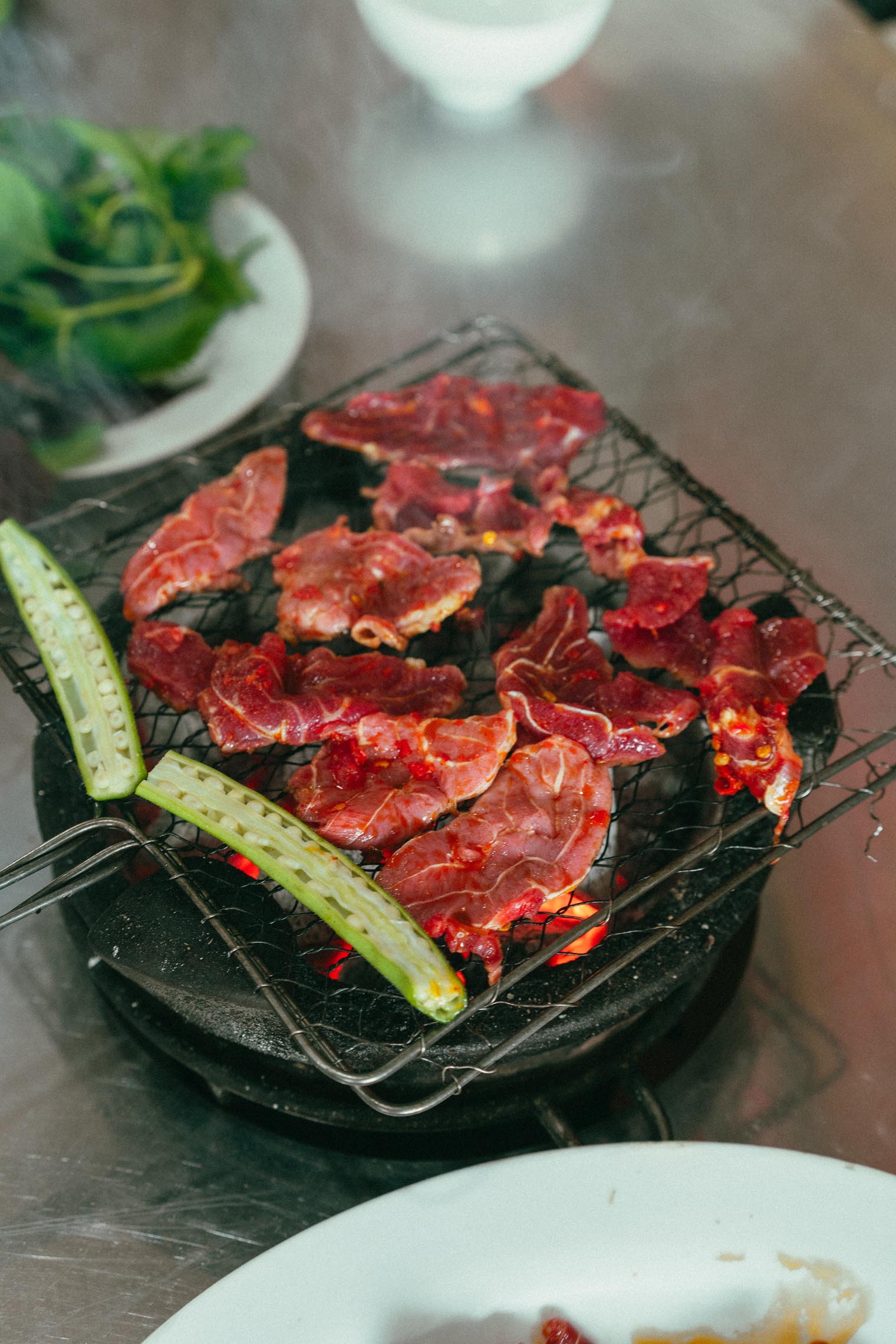
Những lát thịt bò nướng trên bếp than cùng rau củ tại nông trại

Grilled beef at a local eatery in Da Lat

Garden restaurants turn a meal into a highland escape

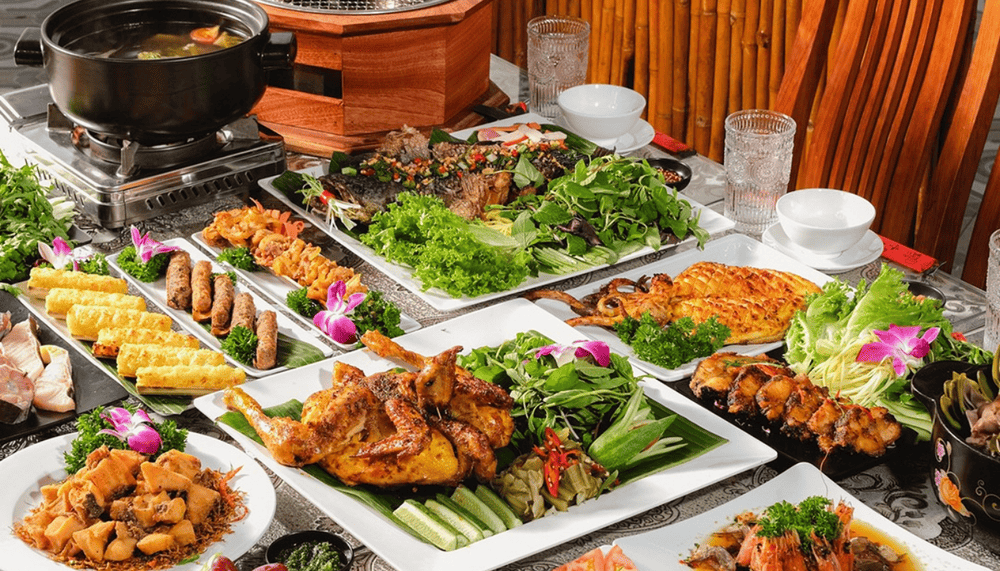
Around Tuyen Lam, garden restaurants blur the boundary between dining room and landscape, with timber shelters, flower beds and broad terraces opening towards pine-covered hills. In these garden settings, Ga Nuong (Grilled chicken) arrives as a dish to share, its savoury richness balanced by garden herbs and vegetables, while a communal table gathers friends and families around the same meal.

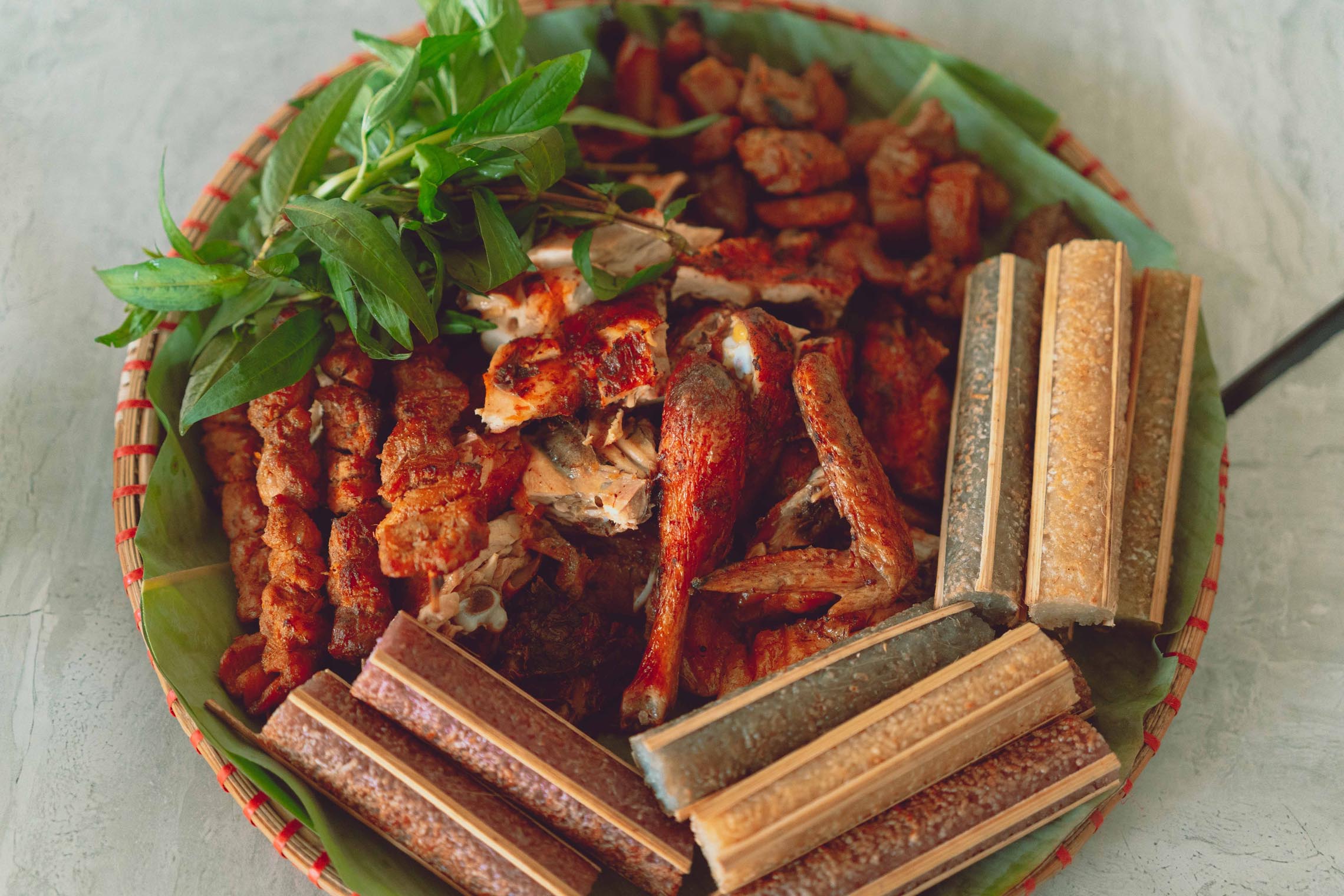
Ga Nuong with Com Lam and fresh herbs, a highland dining favourite

Ga Nuong with Com Lam and fresh herbs, a highland dining favourite

The pleasure lies in eating close to the landscape, listening to birdsong and distant conversation while cool air moves through the garden and dishes are passed around the table. For visitors, a garden restaurant becomes a place to slow down, linger over conversation and experience Da Lat through food, foliage and togetherness.

Contemporary kitchens turn highland produce into a local signature

A handful of small Da Lat restaurants led by younger chefs are giving Da Lat’s produce a new culinary vocabulary, with compact dining rooms and concise menus that leave room for experimentation. Crisp lettuce, asparagus, artichokes, berries and aromatic herbs find their way into thoughtful combinations, where contrasting textures and delicate flavours invite diners to appreciate the character of each ingredient. There is a quiet confidence in this approach, allowing the richness of the highland’s ingredients to speak through every plate without relying on elaborate presentation.

The significance of these kitchens lies in their willingness to interpret Da Lat through a younger perspective, connecting the plateau’s agricultural abundance with techniques gathered from different culinary traditions. Some draw on European methods, others revisit Vietnamese flavours through unfamiliar combinations, yet both approaches keep local produce at the heart of the plate. Together, they are expanding Da Lat’s food culture, giving its agricultural identity a contemporary voice while encouraging diners to discover familiar ingredients through new culinary ideas.

Villa dining carries traces of Da Lat’s European past

Along Tran Hung Dao, former European-style villas have found a second life as intimate dining destinations, where the city’s architectural heritage meets a contemporary appreciation of food. Their pitched roofs, fireplaces, stonework and garden verandas retain the character of an earlier era, while Vietnamese cooks reinterpret European culinary influences with ingredients cultivated across the plateau.

For food in Da Lat, these dining rooms reveal how a foreign architectural vocabulary entered local life and acquired new meaning. A European-style interior might frame Vietnamese dishes, while bread, pastries or sauces once associated with French cuisine appear alongside mushrooms, vegetables and fruit grown in the highlands. Rather than replicating Europe or preserving it as a museum piece, these restaurants express a distinctly Da Lat sensibility in which architecture, cuisine and local memory share the same table.

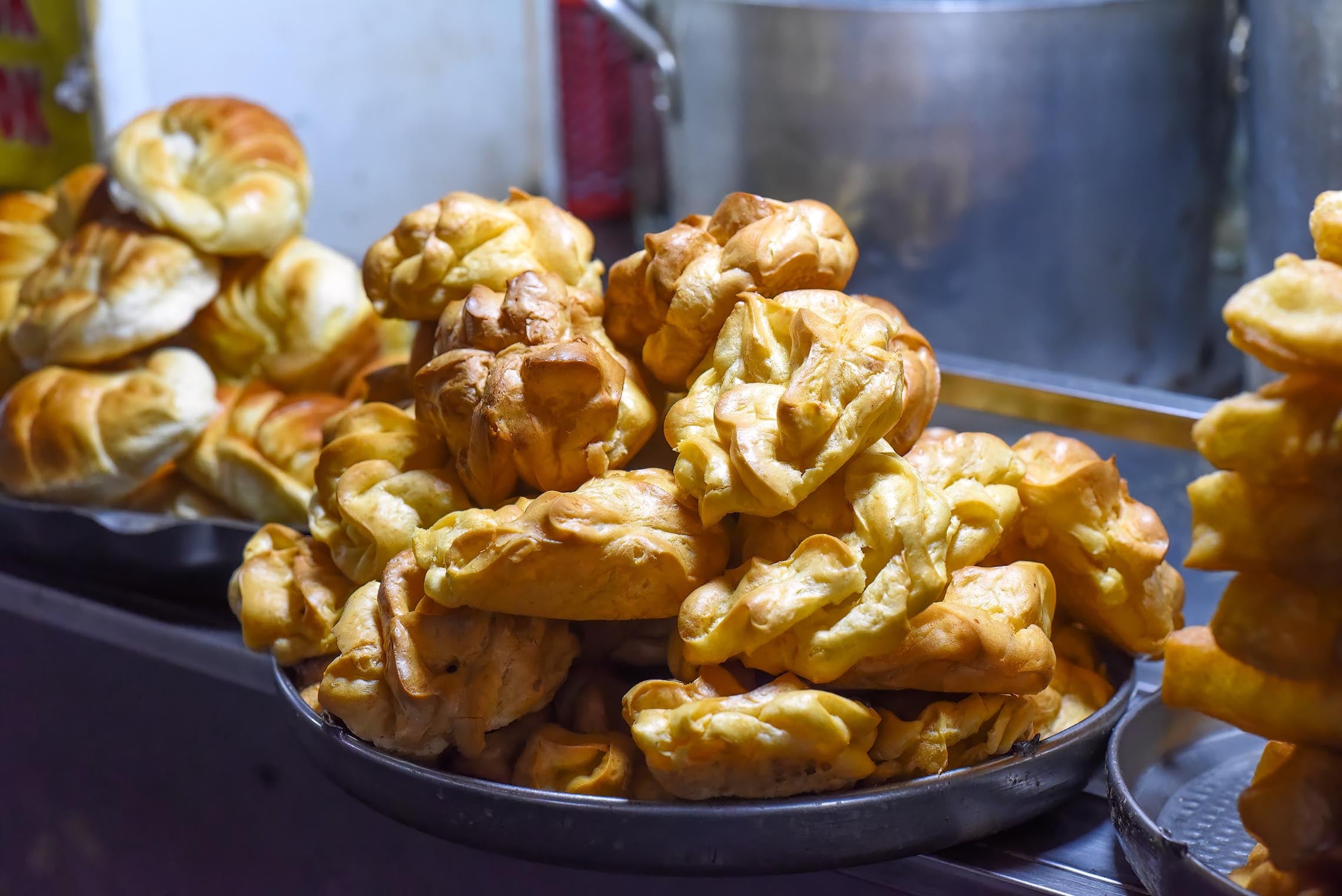
Những chiếc bánh ngọt tại khu ẩm thực chợ đêm Đà Lạt

Golden custard-filled pastries sold at Da Lat Night Market

Quick information

Frequently Asked Questions

A casual local meal usually costs around VND 40,000 – VND 100,000 per person, while hot pot, barbecue and contemporary restaurants can range from VND 150,000 – VND 400,000 per person, depending on the menu, ingredients and dining setting.

Small family-run eateries generally do not require reservations, while garden restaurants, contemporary dining spaces and popular dinner spots can become busy on weekends and holidays, making advance booking useful for larger groups or preferred dining times.

Dinner usually begins around 6:00 PM – 7:00 PM, when cooler temperatures make hot pot, grilled dishes and warming soups particularly appealing. Local food stalls often remain active until around 10:00 PM or later, especially around busy evening areas.

Starting the journey at Da Lat Airport (Lien Khuong Airport)

Arrivals at the airport in Da Lat begin with a different kind of welcome: cool air through the terminal doors, the scent of damp soil after rain, and a winding road carrying passengers toward a city known for gardens, pine-covered slopes and old villas.

Da Lat Airport (Lien Khuong Airport), the gateway to Vietnam’s central highlands

As the aircraft descends towards the highlands, rolling hills and expanses of green begin to appear beyond the window, offering an early glimpse of the landscapes that define Da Lat.

Lien Khuong Airport connects Da Lat with the highlands and beyond

Located in Duc Trong District approximately 28 – 30km south of Da Lat city centre, Lien Khuong International Airport serves as the primary air gateway to the Lam Vien Plateau. The journey to the city centre takes roughly 35 – 50 minutes by car, depending on traffic and weather. Serving both domestic and international flights, the airport provides facilities for check-in, security and baggage claim. Passengers can also consult the airport map before departure to identify key areas and designated pick-up points, making it easier to navigate the airport.

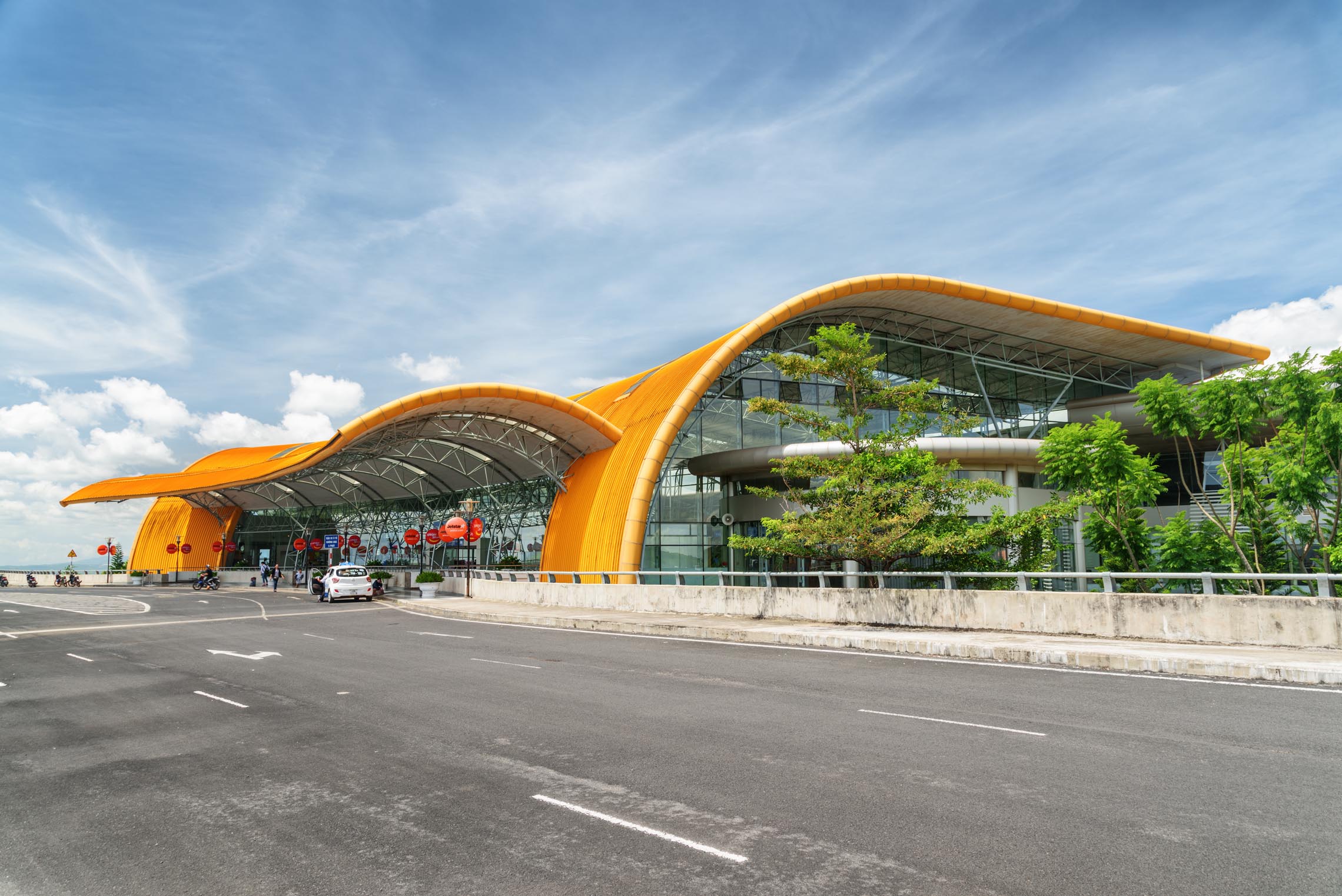
Nhà ga sân bay Liên Khương với mái vòm lấy cảm hứng từ hoa dã quỳ

Lien Khuong Airport terminal with its distinctive yellow wild sunflower-inspired roof

Designed with the silhouette of the yellow wild sunflower, the terminal gives a distinctly highland identity to the arrival experience, its broad roof visible from above like a flower opening across the landscape. The two-storey terminal serves both domestic and international passengers, with check-in counters, baggage handling, security, immigration, waiting lounges, restaurants, shops, restrooms and free Wi-Fi. The ground floor accommodates arrivals and baggage services, while the upper level houses departure procedures, boarding lounges and VIP facilities.

Choosing the right transfer from Lien Khuong Airport

The route from Lien Khuong Airport to central Da Lat introduces visitors to the landscape beyond the terminal, moving from cultivated fields and open countryside towards denser settlements and rising terrain. Rather than simply covering the distance between airport and hotel, the drive provides an early glimpse of the agricultural communities, highland roads and changing scenery that frame Da Lat’s setting.

With flights and travel arrangements organised in advance, visitors can plan a smoother arrival. Travellers can use the ticket booking page to arrange their journey, while TripCare travel insurance can be considered as part of the wider travel plan.

The journey from Lien Khuong Airport to central Da Lat can be tailored to luggage, group size and preferred level of convenience. Airport buses suit solo travellers and those carrying light luggage, while taxis provide a direct ride to accommodation. For families and larger groups, private cars are particularly practical, especially when the airport transfer forms part of a wider Central Highlands itinerary.

Getting around Da Lat

Da Lat rises and falls across a highland landscape, with roads climbing hillsides, dipping into valleys and connecting neighbourhoods scattered among gardens and pine-covered slopes. Getting around becomes part of discovering the city, as walking, riding or taking a car reveals different contours of its streets and surrounding countryside.

Private cars make longer journeys more comfortable

For families and groups, private cars provide ample luggage space and greater freedom when travelling between central Da Lat and outlying attractions. This proves especially convenient for itineraries linking the city with farming communities, lakes and mountain landscapes, where several separate journeys can form part of one day.

The practical comfort comes with a scenic advantage. Beyond the central streets, roads open towards cultivated hills and rural settlements, exposing the productive terrain that underpins Da Lat’s reputation as one of Vietnam’s major highland agricultural centres. Fields of vegetables, flower farms and distant greenhouses gradually replace dense urban streets, giving passengers a vivid glimpse of the landscape that sustains the city’s economy and culinary culture.

Motorbikes bring a closer view of the city

Motorbikes appeal to independent travellers drawn to Da Lat’s smaller streets, hillside lanes and scattered neighbourhoods, giving them freedom to pause wherever the landscape catches their attention. The terrain requires care, however, with steep inclines, tight bends and sudden rain capable of changing riding conditions within minutes, while mist can obscure visibility on elevated roads.

Taxis and ride-hailing simplify shorter trips

Taxis and ride-hailing services suit short urban journeys, particularly when shopping bags, luggage or rain make walking inconvenient. They allow visitors to move between neighbourhoods without navigating unfamiliar slopes or searching for parking, leaving the route effortless.

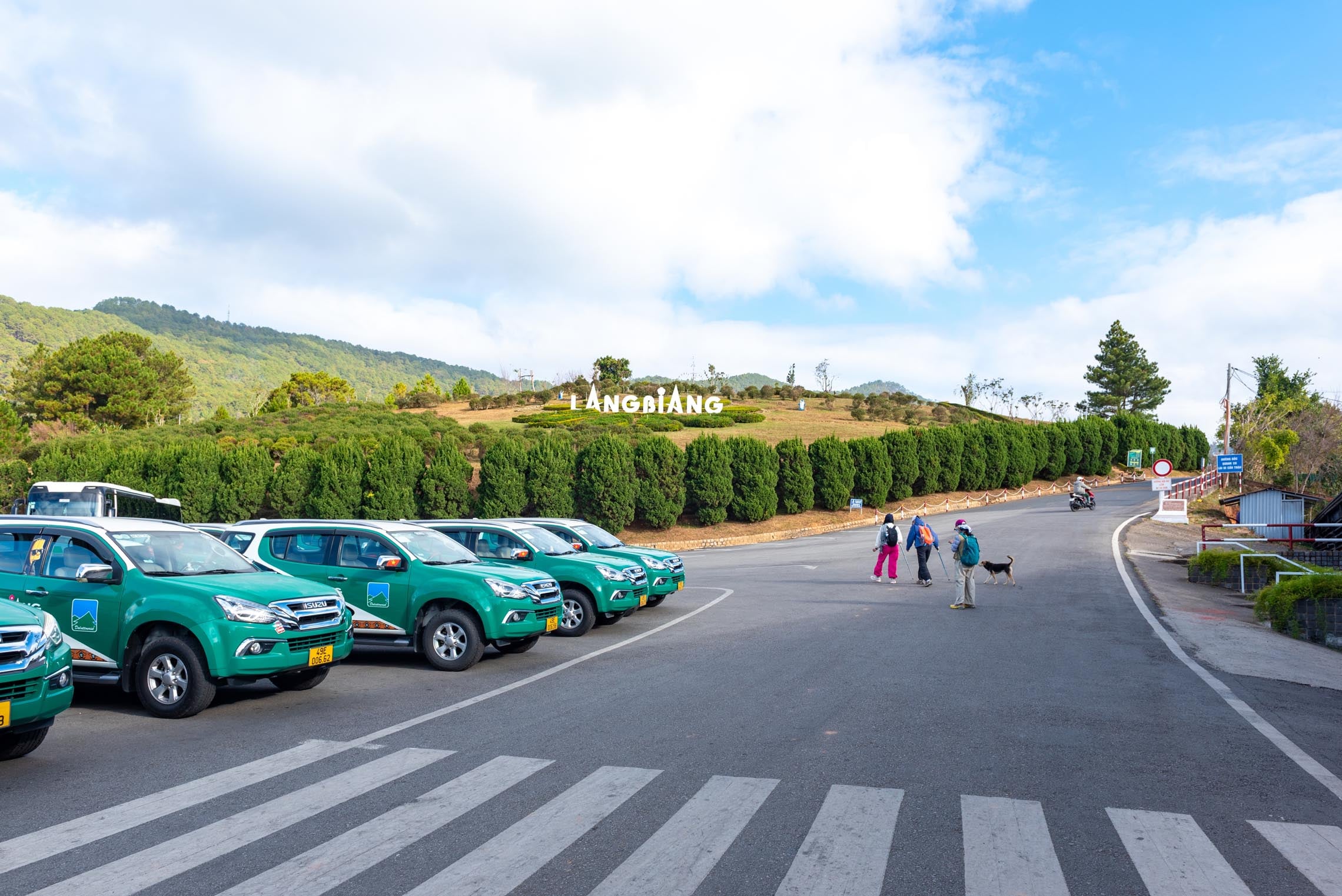
Dãy xe du lịch đậu bên đường tại khu vực Langbiang, Đà Lạt

Taxis parked along a hillside road for convenient travel around Da Lat

For visitors staying around the central districts, this flexibility keeps the itinerary fluid: walk through one area, pause for coffee or sightseeing, then arrange a direct ride to another part of the city without committing to a vehicle for the entire day. It works especially well for connecting markets, restaurants and attractions scattered across Da Lat’s hillside streets.

Local buses reveal Da Lat through everyday routines

Local buses give travellers an economical way to cover selected routes while sharing the road with residents moving through their daily routines. Students, workers, market vendors and shoppers carrying fresh produce occupy the same rows of seats, giving each journey a distinctly local atmosphere that private transfers rarely capture.

For those curious about Da Lat beyond its postcard scenery, a bus ride brings a glimpse of everyday life, passing local markets, residential streets and familiar neighbourhoods where the city’s daily routines unfold.

Quick information

Frequently Asked Questions

An airport shuttle usually costs around VND 40,000 – VND 60,000 per person, while a taxi typically costs around VND 250,000 – VND 350,000 per trip. Private cars generally start from around VND 300,000 – VND 500,000, depending on vehicle type and destination.

For domestic flights, arriving around two hours before departure is generally practical, while international flights require more time for check-in, security and immigration. Arriving around three hours before an international departure provides a more comfortable buffer.

Motorbike rental is more commonly arranged in Da Lat city rather than directly at the airport. Travellers can take an airport transfer first, then collect a motorbike from a rental service near their accommodation or in a central neighbourhood.

Hotels in Da Lat for a refined highland retreat

Choosing a hotel in Da Lat from its many options lets visitors choose how they enter the city’s story, whether through historic villas, a homely neighbourhood, pine forests beside the lake or agricultural hills extending beyond the centre.

Hotels in Da Lat for every way of experiencing the city

A guesthouse once stood as a practical refuge for travellers reaching a remote plateau, its rooms answering a simple need for shelter after difficult journeys. As Da Lat developed into a resort, hospitality acquired a more social role, with grand hotels hosting receptions and private gatherings while smaller establishments welcomed many travellers to the city. Over time, this variety became part of the city’s character, creating a hospitality landscape where different generations of visitors have found their own reasons to return. Today, hotel doors open onto very different versions of Da Lat, from old villas with creaking timber floors to small properties above neighbourhood shops and secluded retreats surrounded by vegetable farms, each carrying a distinct sense of place.

Heritage hotels turn architecture into part of the stay

Da Lat’s early development as a hill station left a distinctive architectural legacy, particularly around Tran Phu, Le Dai Hanh and the railway quarter, where former villas have found a second life as heritage hotels. Timber floors, shuttered windows, fireplaces and verandas preserve the character of these historic residences, allowing guests to experience the architecture as part of their stay rather than simply admire it from the outside. Inside, high ceilings, old staircases and garden-facing rooms retain traces of domestic life from another era, lending each property a sense of continuity with the city’s past. Nearby, Da Lat Railway Station adds another layer to this heritage, its three steep peaks recalling Langbiang and Central Highland communal houses, while connecting the historic hotel quarter with the wider cultural landscape of the region.

Homestays make the experience intimate and residential

A house can welcome travellers while retaining the habits of the family that lives there, a quality that distinguishes Da Lat’s homestays from conventional accommodation. Along Le Hong Phong and its surrounding residential lanes, homestays often occupy old villas and modest family houses, where guest rooms are integrated into existing domestic spaces rather than separated from them. The city enters through small details, from Vietnamese dishes prepared in a family kitchen to motorbikes gathering beneath the staircase and potted herbs growing beside the doorway. Some properties preserve traces of earlier households, while hosts introduce visitors to neighbourhood life through meals, local routes and conversations at home. The experience offers a rare sense of participation, allowing travellers to understand how Da Lat is inhabited rather than simply visited.

Homestay tại Đà Lạt quanh khu vực gần hồ Xuân Hương

Homestays in Da Lat near Xuan Huong Lake

A lakeside retreat among Tuyen Lam’s pine forests

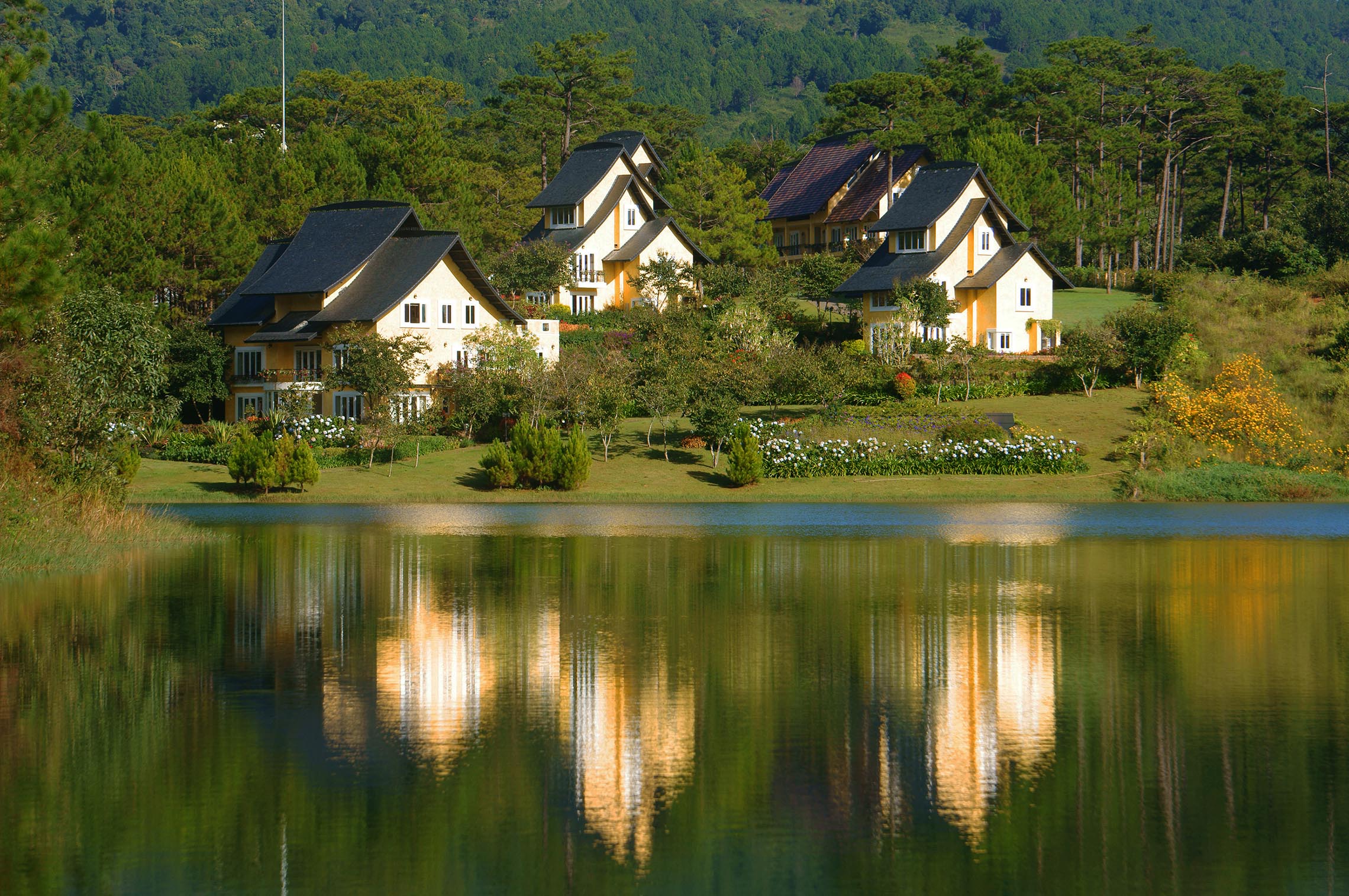
The area around Tuyen Lam Lake has long been shaped by its natural surroundings and agricultural past. Before the valley became a reservoir, a French settler farmed the land near Tia Stream, raising livestock among the forested slopes. Today, this meeting of water, woodland and cultivated land defines one of Da Lat’s most distinctive settings for a nature-focused stay. Resorts and villas are nestled among pine-covered hills, with views extending towards the lake and surrounding forests. A short distance above the water, Truc Lam Zen Monastery adds a contemplative aspect to the landscape, its pagoda rising among the trees on Phung Hoang Mountain. Together, the lakeside setting, forest retreats and nearby monastery make staying around Tuyen Lam an opportunity to experience Da Lat at a slower pace, closer to the highland environment.

Những căn nhà nghỉ dưỡng bên hồ, bao quanh bởi rừng thông Đà Lạt

Lakeside villas surrounded by pine forests for a peaceful stay in Da Lat

Outlying stays connect travellers with Da Lat’s farming culture

The fields around Da Lat hold the agricultural history beneath the city’s romantic resort image, from tea planted in Xuan Truong to cinchona cultivated for medicine and coffee established across the eastern hills. Staying in these outlying areas places travellers closer to the people who cultivate the plateau, with farmhouses, garden stays and small retreats surrounded by working fields. Here, the connection with local agriculture extends beyond the view from a bedroom window. Vegetable harvesting, flower picking and coffee cultivation become part of the experience, offering a closer understanding of the farming traditions that sustain Da Lat and its surrounding communities.

Hotels in Da Lat for different types of travellers

Some travellers choose a hotel for the streets waiting outside its door, others for the distance from city noise or the landscape framed by its windows.

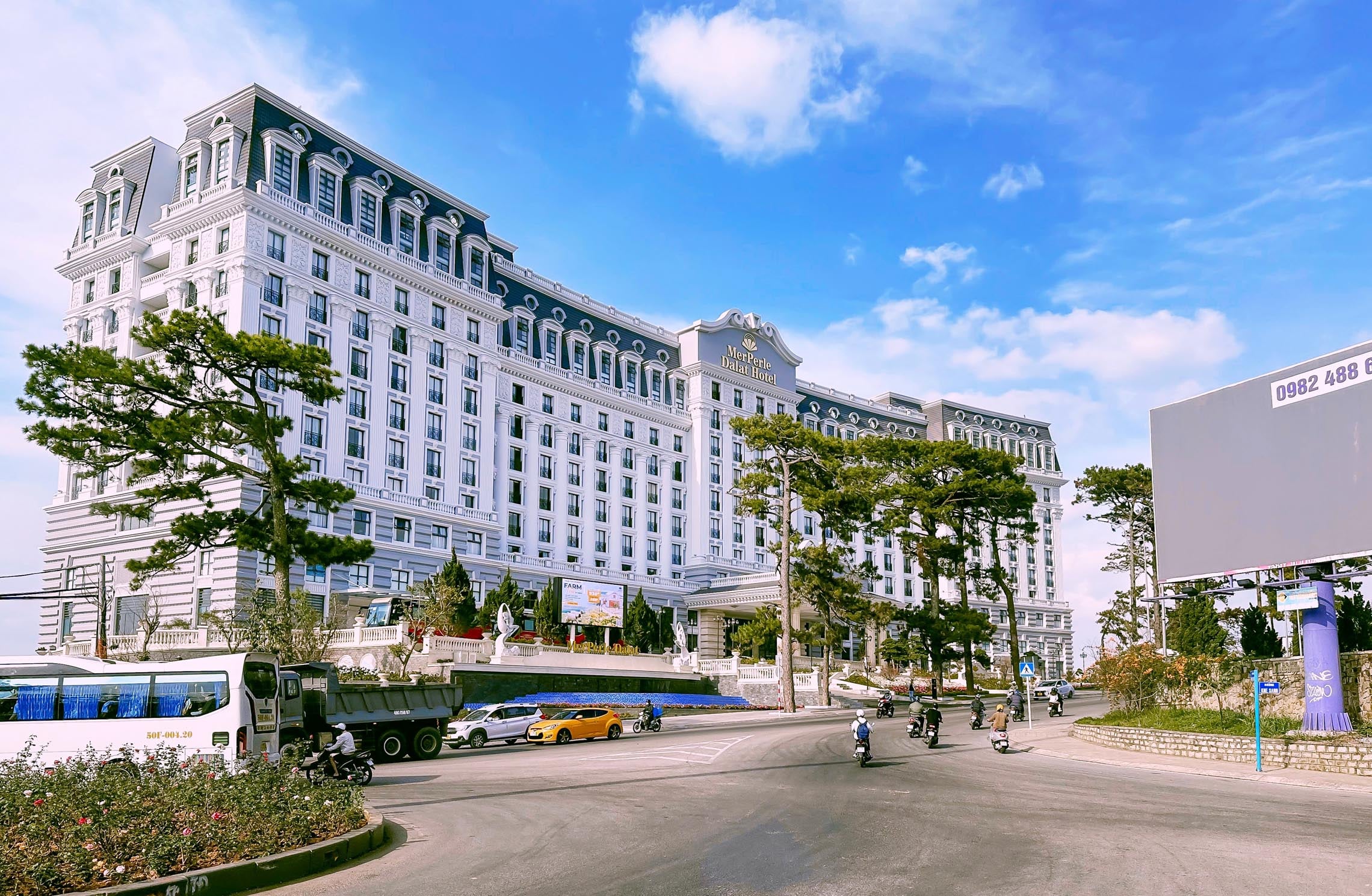
Khách sạn cao tầng mang phong cách Châu Âu giữa trung tâm Đà Lạt, thuận tiện cho  hành trình tham quan

A large hotel in central Da Lat offering convenient access to city attractions

A central stay for solo traveller near Hoa Binh and Da Lat Market

For solo travellers, the area around Hoa Binh and Da Lat Market makes a convenient base, with compact hotels and guesthouses placing much of the city centre within walking distance. The neighbourhood grew around Cho Cay (Cay Market), which began as a timber market in 1929 and laid the foundation for the commercial quarter around Hoa Binh. Today, food stalls, cafés and narrow streets give the area a lively local character, with Banh Can sizzling nearby and vendors arranging fresh produce for market trade. Staying here makes it easy to explore independently, moving between breakfast spots, local shops and central streets while leaving plenty of room for spontaneous detours through the surrounding lanes.

A romantic Da Lat stay near Phan Dinh Phung and Nguyen Van Troi

For couples seeking a more intimate side of Da Lat, the neighbourhoods around Phan Dinh Phung and Nguyen Van Troi provide a setting defined by leafy streets, small cafés and quiet residential lanes. The area has long been associated with an older café culture, where writers, artists and young lovers once lingered over conversations at small tables beneath dim lamps. Boutique hotels and intimate guesthouses place couples close to this atmosphere while keeping them away from the bustle of the central market. A shared bowl of hot food, Vietnamese coffee by a rain-streaked window or a slow walk beneath the trees can become cherished moments of a stay shaped by affection, conversation and Da Lat’s enduring reputation as a city for lovers.

Finding the right family stay in central Da Lat

Around Bui Thi Xuan and Xuan Huong Lake, broad pavements, open lawns and the lakefront give family stays a rare sense of space in central Da Lat. Hotels in this quarter keep families close to parks, restaurants and central attractions, reducing the need for lengthy journeys with children. The setting leaves room for shared meals, outdoor play and relaxed walks, while the lake provides a familiar landmark that makes navigating the city easier for younger travellers and parents alike.

Groups of friends can consider Khe Sanh and the southern side

A shared villa changes the texture of a group trip, giving friends a common base rather than separate hotel rooms scattered across the city. For groups who value both time together and easy access to outdoor activities, Khe Sanh and Da Lat’s eastern side are particularly appealing, with larger villas and spacious retreats set close to the surrounding hills. Spacious properties with kitchens, terraces and communal rooms allow everyone to gather between excursions, while the surrounding roads lead towards Prenn Pass, Datanla Waterfall and Robin Hill. Pine forests, waterfalls and the cable-car route add variety to the itinerary, giving friends a setting that combines shared accommodation with access to Da Lat’s wilder southern landscape.

Luxury stays in Da Lat’s historic Palace quarter

Once established as a prestigious highland retreat, the Da Lat Palace quarter became synonymous with an elevated style of hospitality, welcoming distinguished visitors to an atmosphere of formal dining, private salons and European-influenced service. That heritage still distinguishes this quarter, where luxury hotels in Da Lat place guests close to the historic core while pairing spacious suites with refined dining, wellness facilities and attentive service. A stay here centres on polished hospitality, generous private spaces and discreet service, with historic gardens and grand avenues providing an elegant setting for travellers who value comfort, privacy and the ceremonial side of Da Lat’s resort heritage.

Quick information

Frequently Asked Questions

Budget hotels generally range from around VND 300,000 – 700,000 per room, while mid-range stays typically cost VND 700,000 – 1,500,000. Boutique hotels, villas and luxury resorts can reach VND 2,000,000 or more, depending on the season, location and room category.

Yes. Three to four days can cover the central market, cafés, local food, historic architecture and selected attractions around the city, while adding a day in areas such as Tuyen Lam or the surrounding agricultural hills allows travellers to experience Da Lat at a gentler pace.

Book two to four weeks ahead for weekends and holidays, and earlier for December’s Da Lat Flower Festival or the cherry blossom season, usually from January to February, when accommodation can fill quickly.

The endless shopping experience at Da Lat market

A knife strikes a wooden board somewhere inside the market, followed by the rustle of flower stems, the clatter of metal baskets and a vendor calling out the price of a basket of strawberries. Each sound belongs to a familiar scene of market life, where generations of vendors and shoppers have shared the same daily rituals. Outside, the smell of grilled corn mingles with coffee and woodsmoke, while knitted jackets move through the cool air, bringing a sense of warmth to the highland morning. At the centre of this scene stands Da Lat market, a place where produce from the surrounding hills, family recipes, old trading customs and the social life of the highland city meet under one roof, leaving visitors with a glimpse of the everyday connections that make Da Lat feel so familiar and inviting.

Da Lat market at the heart of the city

Da Lat central market has a history that reaches into the city’s earliest urban development. In 1929, a wooden market with a corrugated-metal roof was built in what is now the Hoa Binh area, replacing an earlier open-air trading ground in the Anh Sang settlement. Locals called it Cho Cay, or the “Cay Market”, a name that remained in local memory even after fire destroyed the structure in 1937. The rebuilt market became an important civic landmark, while the modern market complex introduced a distinctly Vietnamese interpretation of mid-century modernism, designed and developed under the direction of renowned Vietnamese architect Ngo Viet Thu, with its grand staircase, pedestrian bridge and surrounding urban spaces establishing the market as one of Da Lat’s defining architectural landmarks.

Da Lat market is closely tied to the everyday life of the highland city

Da Lat market comes alive through the knowledge of people who know exactly what belongs on a family table. Housewives examine leafy vegetables for tender stems, flower sellers arrange blooms by colour and freshness, while traders stack dried fruits, mushrooms and preserved foods prepared for household kitchens. This familiar exchange carries the memory of the Lang Biang highlands, ancestral home of the Lach people, whose communities traded agricultural produce from the uplands for salt, iron, cloth and other necessities brought from lower regions. Such trade connected mountain settlements with distant sources of goods, turning commerce into a practical bridge between communities and an essential part of highland life. The market continues that tradition, giving travellers a vivid glimpse of how food, farming and local knowledge remain woven into the city's daily life.

The daytime market shows the agricultural character of Da Lat

Step into the produce sections and Da Lat’s farming culture becomes almost tangible. Lettuce, cabbage, herbs, strawberries, flowers and other cool-climate crops appear in dense arrangements, their colours sharpened by the mountain air. Nearby stalls carry jams, dried fruit, tea and preserved foods, reflecting a highland food culture built around the abundance of cultivated land. The market becomes an edible map of the plateau, with each basket pointing towards a farm, greenhouse, orchard or hillside community somewhere outside the urban core.


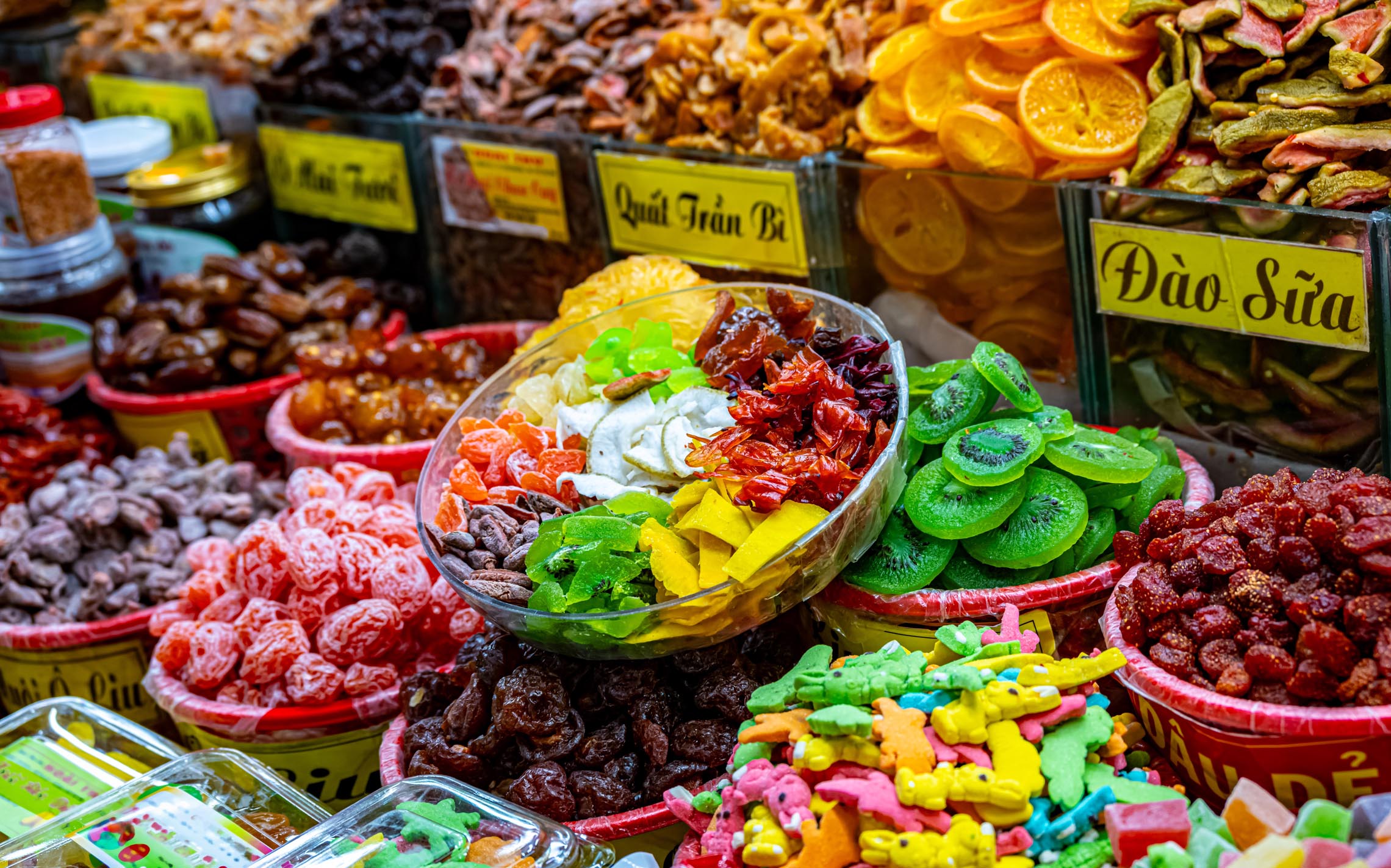
Các loại trái cây sấy và bánh mứt, những món đặc sản Đà Lạt làm quà

Colourful dried fruits and sweet treats displayed at Da Lat market

The connection between market and countryside reaches into Da Lat’s agricultural communities, where generations of farmers have cultivated vegetables and flowers in the cool volcanic soil. Produce moves from fields and greenhouses into the city through an established network of growers, traders and households, linking rural labour with urban kitchens. For travellers, the market becomes a vivid portrait of Da Lat’s agricultural identity, with every basket revealing the richness of the highlands.

Da Lat market becomes a food destination

Food takes centre stage when the highland temperature falls, with charcoal glows beneath Banh Trang Nuong, corn turns golden over the fire, and cups of Sua Dau Nanh Nong (Hot Soy Milk) send fragrant steam into the evening air. Grilled meat and warm sweet treats reflect Da Lat’s enduring fondness for food that brings warmth to the table and comfort to cool-climate living.

The market’s food stalls also preserve a distinctly social tradition, with friends sharing small portions between conversations, families gathering around compact tables and vendors preparing each dish within sight of passing shoppers. For travellers, these humble foods open a window onto Da Lat’s everyday culture, where agricultural abundance, highland weather and communal eating converge in one of the city’s most memorable culinary settings.

The Da Lat night market extends into the surrounding streets

The night market extends Da Lat’s commercial heart into a lively pedestrian quarter, where woollen clothes, scarves, flowers, souvenirs and street food fill the streets around the central market. Locals call it Cho Am Phu, or “Hell Market”, a playful name born from the unusual atmosphere created by stalls glowing against the darkness and the constant movement of shoppers. Far from suggesting anything sinister, the name has become part of Da Lat’s vernacular, reflecting the local habit of giving familiar places memorable identities.

The market also preserves a social landscape rooted in everyday commerce. As the evening progresses, the streets become a meeting place for different generations, with young people browsing for winter clothes and families pausing over familiar street snacks. The easy exchanges between shoppers and vendors lend the market a welcoming character, where even small purchases become part of the pleasure of spending an evening in Da Lat. For travellers, this lively quarter provides a glimpse of Da Lat as a lived-in city, where shopping remains closely connected to local habits, conversation and community life.

The streets around Da Lat market offer more local shopping

The commercial landscape continues through Nguyen Thi Minh Khai and Phan Boi Chau, where cafés, small shops, food stalls and everyday businesses extend the market experience into neighbourhood streets, allowing visitors to move from the central trading hall into a more intimate network of local commerce where family-run shops and independent vendors serve residents alongside travellers. Even as shopping extends into these surrounding streets, the market itself remains a landmark of local identity, with its architecture carrying cultural details that are easy to overlook amid the bustle of commerce.

Da Lat specialties as thoughtful gifts for different recipients

Shopping at Da Lat market becomes a way to choose gifts with a sense of place, where everyday goods acquire personal meaning through the people who prepare, package and recommend them.

Cau Dat Arabica makes perfect gift for coffee lovers

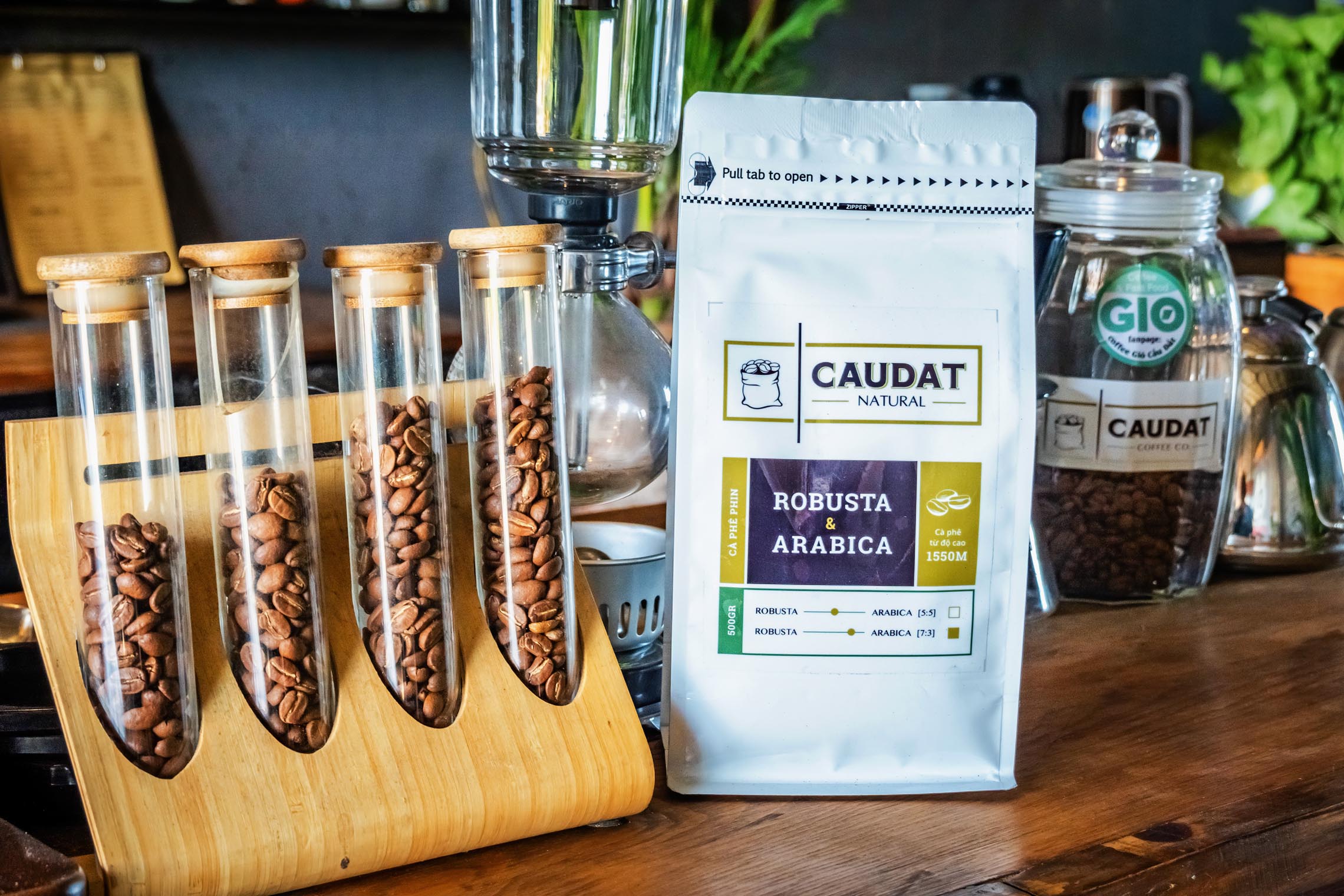
A carefully roasted packet carries the distinctive flavours of Da Lat’s highlands into a home brewing ritual, making it a thoughtful choice for anyone who appreciates a well-crafted cup. French settlers introduced coffee cultivation to the Central Highlands, yet Cau Dat eventually developed an Arabica reputation that reached well beyond Vietnam, thanks to its elevation, cool climate and mineral-rich volcanic soil. Grown around Xuan Truong, the beans benefit from the dramatic temperature range between highland days and nights, which encourages slower maturation and concentrated flavour in the cherries. These growing conditions contribute to a delicate fragrance, bright acidity and layered notes of citrus, flowers and ripe fruit, with a clean finish that distinguishes Cau Dat Arabica from heavier Robusta varieties.

Các loại cà phê đóng gói và hạt cà phê được trưng bày tại cửa hàng đặc sản Đà Lạt

Packaged coffee and coffee beans displayed among Da Lat's local specialties

Da Lat artichoke tea for the elderly

For older family members who appreciate familiar herbal drinks, a neatly packaged box of Da Lat artichoke tea makes a considerate gift with a strong connection to the highlands. Artichoke cultivation became synonymous with Da Lat’s cool upland climate, while the plant gradually found a place in Vietnamese households as a familiar herbal infusion. The tea has a mellow, subtly sweet flavour with delicate vegetal and faintly earthy notes, producing a clear amber-gold liquor that feels light and soothing on the palate. Made from dried leaves and stems, it is easy to brew and naturally restrained, qualities that appeal to older drinkers accustomed to traditional herbal beverages. Presented in elegant packaging, this distinctive highland crop becomes a comforting addition to the family tea table, bringing back memories of Da Lat’s cool hillsides and cultivated gardens.

Da Lat wind-dried persimmons for colleagues

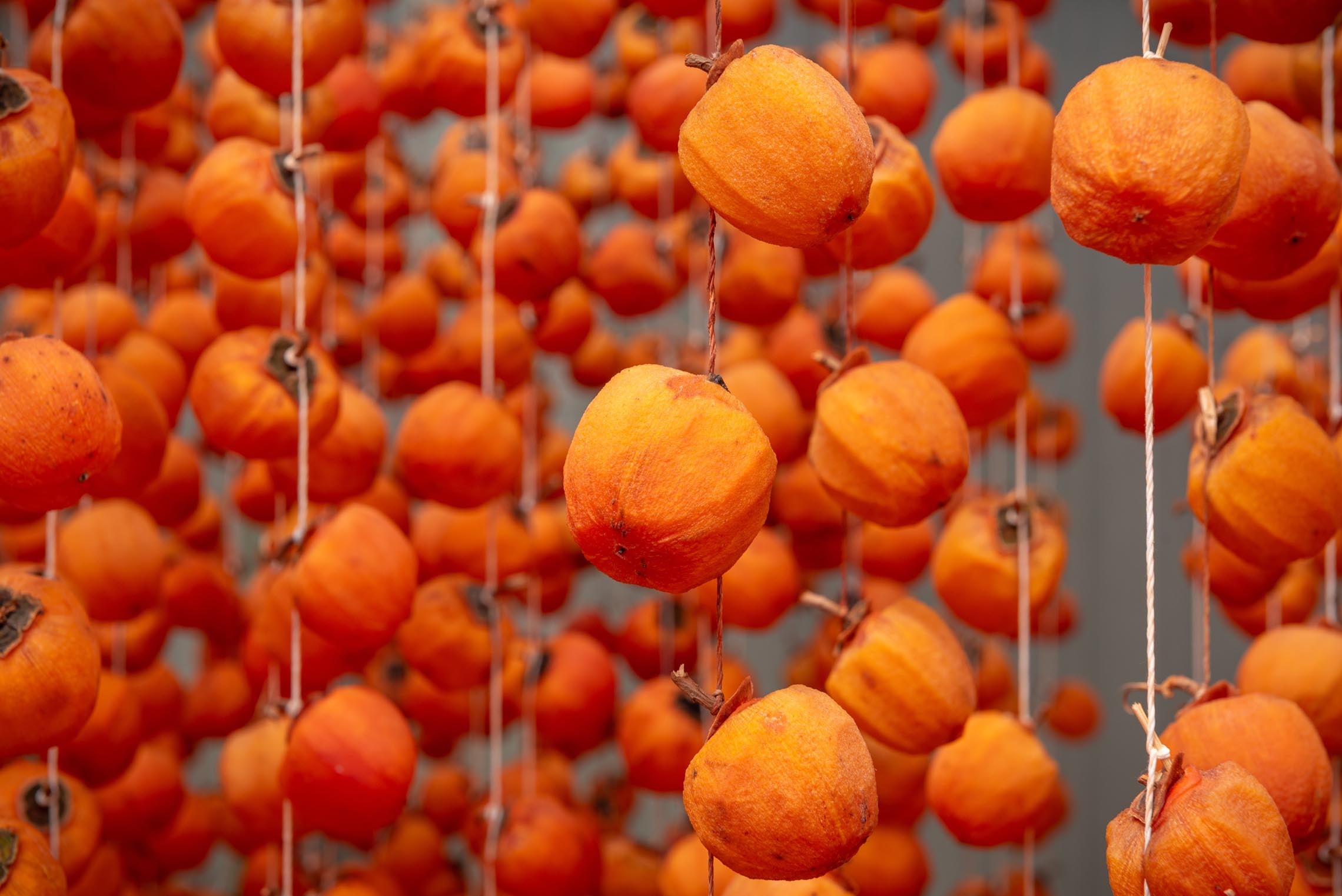
Da Lat’s wind-dried persimmons began with a simple act of preservation, as growers learned to coax a fragile autumn fruit into something richer, denser and remarkably enduring. Ripe persimmons are peeled by hand, their skins removed to expose firm, honeyed flesh before the fruit is suspended in the crisp highland air. Gradual drying draws out moisture while deepening the fruit’s sweetness, producing a supple texture and flavours reminiscent of caramel, malt, dried apricot and brown sugar. Gentle handling remains crucial, since too much moisture can spoil the fruit while excessive drying leaves it tough and brittle. The finished persimmon carries the character of Da Lat’s orchards in a compact form, making it an elegant gift for colleagues, easy to share over conversation while introducing them to a distinctive piece of the city’s agricultural heritage.

Những quả hồng treo gió, đặc sản Đà Lạt thích hợp làm quà tặng

Da Lat wind-dried persimmons hanging in rows as a traditional highland specialty

For friends or as a snack: Da Lat honey sweet potatoes

Da Lat honey sweet potatoes capture the unpretentious pleasure of a highland harvest, with golden-orange flesh that becomes tender and fragrant under heat, releasing a mellow sweetness reminiscent of caramel and toasted chestnut. Their flavour is gentle rather than sugary, with a creamy interior that contrasts beautifully with the slightly crisp skin, making them an appealing snack for friends who enjoy discovering local produce through taste. Behind this humble tuber lies the agricultural character of Da Lat, where cool temperatures and fertile soils nurture crops that become part of everyday Vietnamese cooking as well as the city’s gift culture. Easy to share and simple to enjoy, honey sweet potatoes make a warm-hearted souvenir whose appeal comes from honest flavour rather than elaborate presentation.

For travellers buying coffee, tea, dried fruit or other packaged specialties in larger quantities, checking the latest excess baggage information is useful before heading to the airport.

Quick information

Frequently Asked Questions

Many vendors let shoppers sample dried fruits, jams, coffee or tea, giving you a better sense of flavour, freshness and quality before choosing a product.

Prioritise sealed products with clear labels, dates and storage instructions. Dried goods travel easily, while fresh produce and delicate foods need more careful packing and temperature control.

VND 30,000 – VND 100,000 is enough for small packs, while premium coffee, wind-dried persimmons and curated gift boxes typically range from VND 100,000 – VND 300,000 or more.

Offers from Vietnam Airlines

Promotion List
Sorry, there are currently no promo codes matching the selected criteria!
Please search again with different criteria
Filters

Loading