Select region and language
Close button
Booking and service information for the selected country and language will be applied.
paradise

Things to do in Hue for a journey through Vietnam’s imperial heart

The best things to do in Hue lead from the monumental Imperial City and royal tombs into garden houses, craft villages and riverside life along the Huong River, tracing the former imperial capital through dynastic architecture and living traditions. Curiosity and admiration begin inside the citadel, then settle into a slower, more reflective connection with Hue’s gardens, river and surrounding heritage landscapes.

Things to do in Hue for the city’s nature and heritage

What lingers most in Hue is its rare sense of slowness, found in cyclos easing along tree-lined streets, elderly locals lingering over newspapers and coffee, a timeless Trinh Cong Son melody drifting from a riverside café, or incense glowing before a pagoda. Few cities leave such generous spaces between one experience and the next, allowing the Imperial City, Huong River, garden houses and craft villages to unfold within a landscape where architecture and nature coexist with remarkable ease. Hue does not ask to be rushed into; through things to do in Hue, it draws travellers into its cadence, until discovering its landscapes and legacies becomes an inward journey as much as an exploration of place.

Essential attractions in Hue

Vermilion lacquer catches the light across carved dragon screens, temple bells mingle with market calls, and faded royal seals recall the Nguyen court. Essential attractions in Hue trace a capital shaped by emperors, Buddhist devotion and river trade, with citadel walls, mausoleums, pagodas and markets preserving distinct chapters of its past while remaining woven into the city’s living cultural fabric.

Inside the Imperial City of Hue – The ceremonial heart of the Nguyen Dynasty

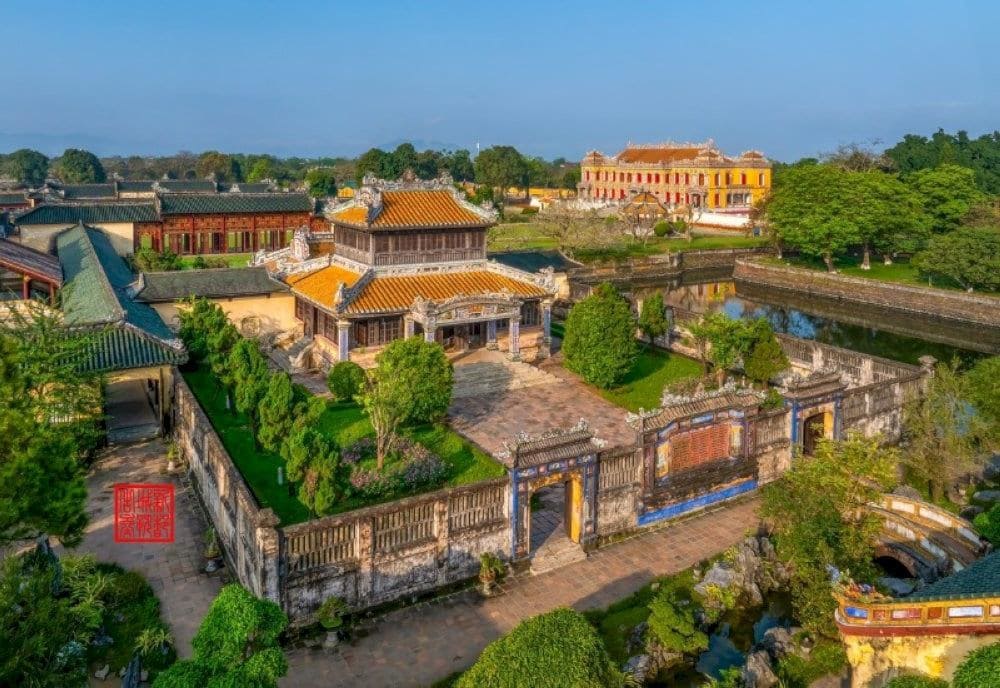
Set on the northern bank of the Huong River inside the outer ramparts of the historic Capital Citadel (Kinh Thanh Hue), the Imperial City – known locally as Dai Noi – encompasses both the administrative Imperial Enclosure (Hoang Thanh) and the private Forbidden Purple City (Tu Cam Thanh) reserved for the monarch and royal family. Constructed in the early 19th century and inscribed as a UNESCO World Heritage Site in 1993, this vast compound served for 143 years (1802 – 1945) as the supreme political, ceremonial and spiritual centre of the Nguyen Dynasty, Vietnam’s final royal house. Its north-south axis, concentric enclosures, watchtowers and monumental gates expressed a court culture deeply influenced by Confucian principles, with architecture carefully ordering relationships between the emperor, court officials and sacred spaces. Within its walls, royal ceremonies, ancestral worship, music, poetry, court dress and decorative arts developed into a distinctive cultural tradition, much of which remains visible in surviving palaces, temples and ornamental details today.
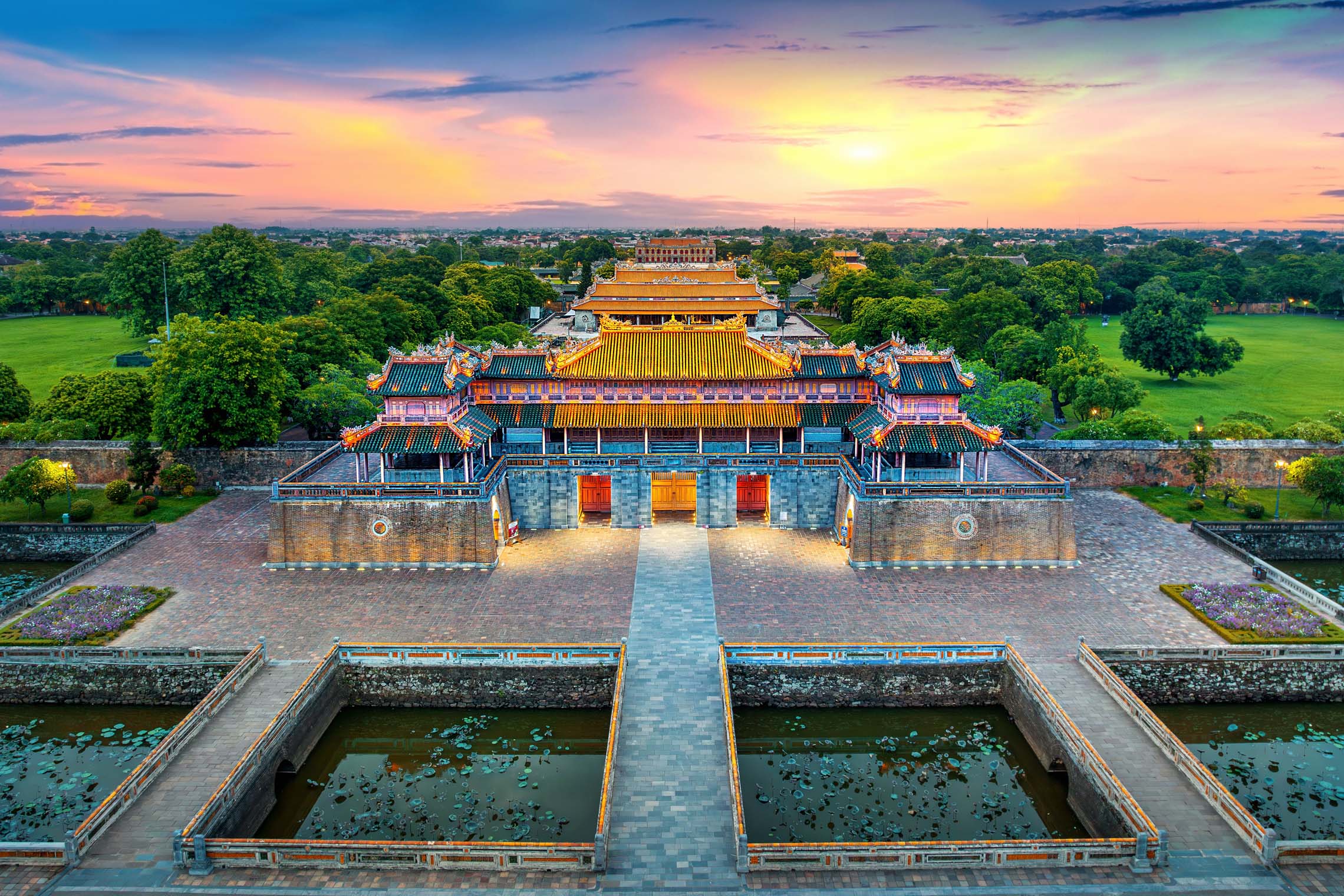
Imperial City of Hue, Vietnam, viewed from above with its historic palaces, courtyards and surrounding greenery

Imperial City of Hue, Vietnam, viewed from above with its historic palaces, courtyards and surrounding greenery

At Thai Hoa Palace, gilded dragons rise above timber columns where emperors received mandarins and foreign envoys; nearby, the Mieu Temple preserves dynastic worship, while the Nine Dynastic Urns cast the kingdom in bronze through intricate depictions of mountains, waterways, creatures and vegetation. Within the Forbidden Purple City, the historic Royal Theatre (Duyet Thi Duong) once hosted classical Vietnamese opera and court music. Walking these precincts brings the Nguyen court’s hierarchy into focus, yet gardens, shaded pathways and glimpses of the Huong River draw attention beyond the palace walls. What begins as fascination with imperial grandeur becomes an invitation to understand how architecture, water and cultivated greenery shaped Hue’s enduring sense of place.

Sacred pagodas and royal mausoleums beyond the palace walls

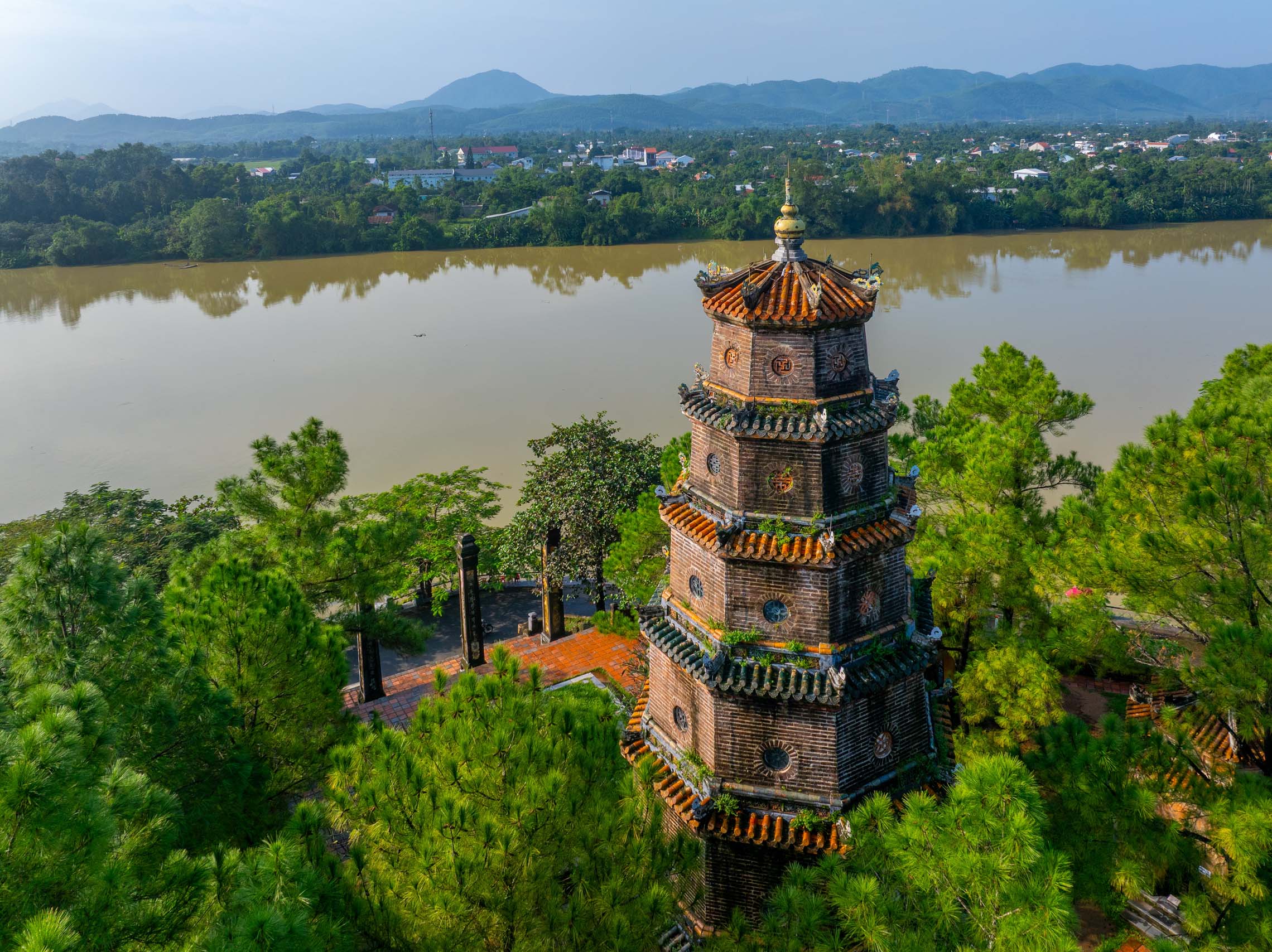
A woman in red is said to have appeared on Ha Khe Hill, telling Lord Nguyen Hoang that a sacred site would rise there to secure his dynasty. The legend gave birth in 1601 to Thien Mu Pagoda, Hue’s oldest and most revered riverside monastery, where the iconic seven-storey Phuoc Duyen Tower gazes out towards the Huong River and the historic Dai Hong Chung – a monumental bronze temple bell weighing over two tonnes and standing 2.5 metres tall, cast in 1710 under Lord Nguyen Phuc Chu – still resonates across the water. From this hilltop, Hue unfolds as a landscape where faith, royal ambition and the river have long belonged to the same story.

Aerial view of Thien Mu Pagoda nestled among lush greenery in Hue

Aerial view of Thien Mu Pagoda nestled among lush greenery in Hue

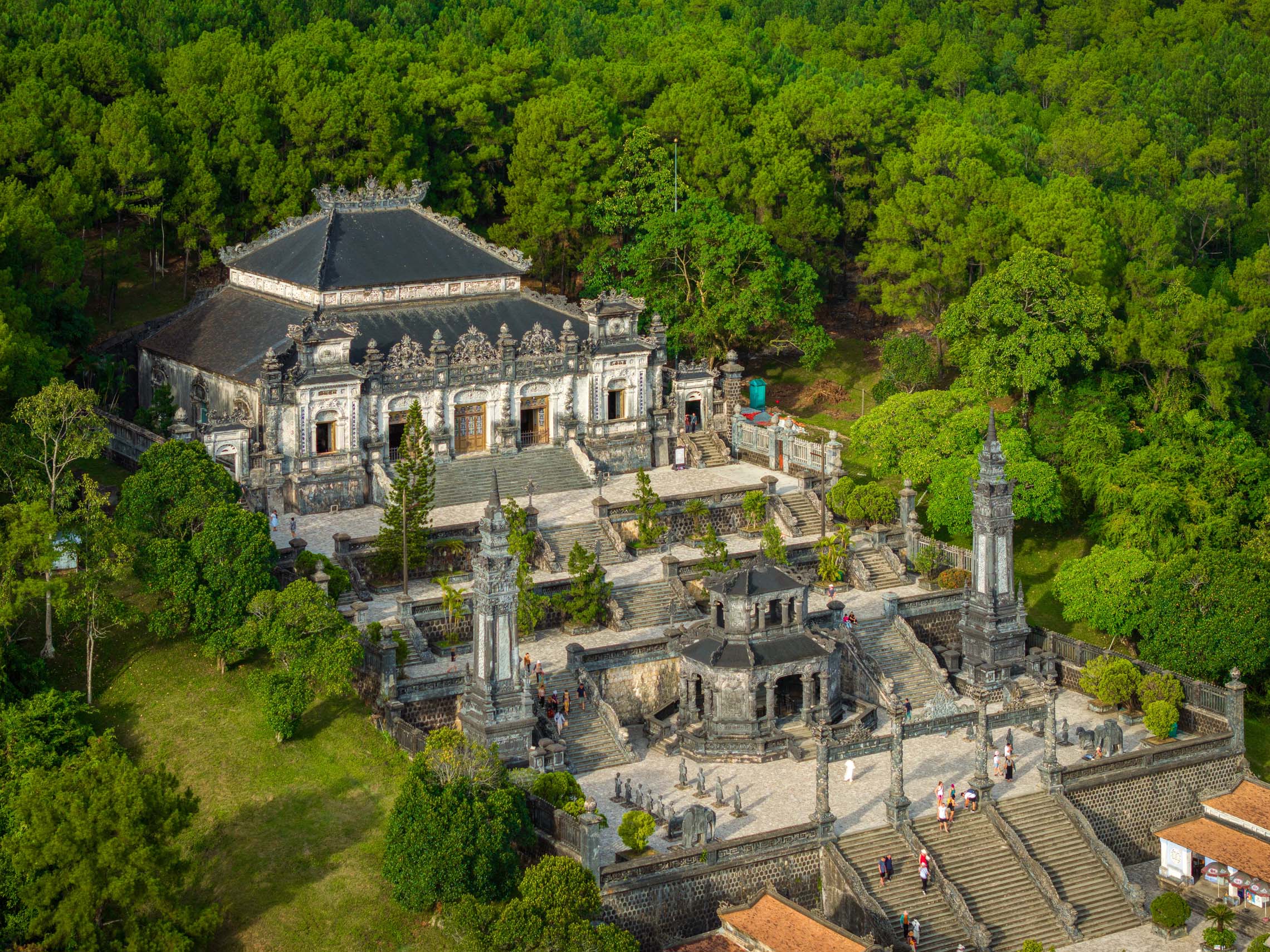
That connection becomes even more intimate at the royal tombs, where each emperor left a personal imprint on the hills beyond the capital. Each mausoleum mirrors the reign and personality of the monarch buried within: the Tomb of Emperor Minh Mang (Hieu Lang) – honouring the second Nguyen ruler (reigned 1820 – 1841), who consolidated Vietnam’s imperial administration – aligns 40 monuments along a majestic symmetrical axis framed by lakes and pine hills; the Tomb of Emperor Tu Duc (Khiem Lang) – built by the dynasty’s longest-reigning monarch and poet-king (reigned 1847 – 1883) as both a living retreat and final resting place – unfolds like a tranquil landscape poem of lotus ponds and timber pavilions; while the Tomb of Emperor Khai Dinh (Ứng Lăng) – commissioned by the twelfth Nguyen emperor (reigned 1916 – 1925) during an era of East – West cultural encounter – rises dramatically up a steep hillside, its concrete exterior and opulent palace interiors glittering with intricate porcelain and glass mosaics. Reaching the tombs also reveals how closely Hue’s historic landscape is tied to the countryside around it, as roads leave the central city behind and pass through pine groves, garden houses, cultivated plots and quiet village settlements before arriving at the monumental entrances.

An aerial view of Khai Dinh Tomb nestled among the green hills of Hue

An aerial view of Khai Dinh Tomb nestled among the green hills of Hue

Living heritage across Hue’s tranquil countryside

Across Hue’s rural edges, ancestral homes, family workshops and craft communities preserve stories passed through generations, inviting travellers to discover the living traditions behind the imperial capital.

Cycling past covered bridges, garden houses and riverside lanes

Bicycle bells mingle with birdsong around Thanh Toan, where lanes pass rice paddies, vegetable gardens and timber houses. Its covered bridge carries a story of a woman who wished to ease villagers’ journeys across the water, turning a crossing into a cherished gathering place. Cycling here brings a sense of discovery, with fresh earth, green fields and village life unfolding around every bend.

From these lanes, the journey opens onto the Huong River, where willow branches, temple roofs and garden walls frame the water. Fishing boats, royal barges and court music belong to its long cultural memory, while poets have drawn inspiration from its banks. A boat ride lets travellers drift beneath overhanging foliage, listening to oars dip softly into the current as incense and flowers scent the breeze. The river can feel unexpectedly enchanting, leaving a sense of calm that lingers after stepping ashore.

In Kim Long, Phu Mong and Thuy Bieu, that tranquillity continues through Hue’s garden houses. Brick gateways, screen walls, ornamental ponds and timber-framed houses sit among fruit trees; at An Hien, carved beams and tiled roofs recall the refined domestic world of imperial-era families. Walking these gardens leaves travellers relaxed, immersed in Hue’s graceful union of home, heritage and landscape.

Traditional craft villages that give Hue its richest cultural textures

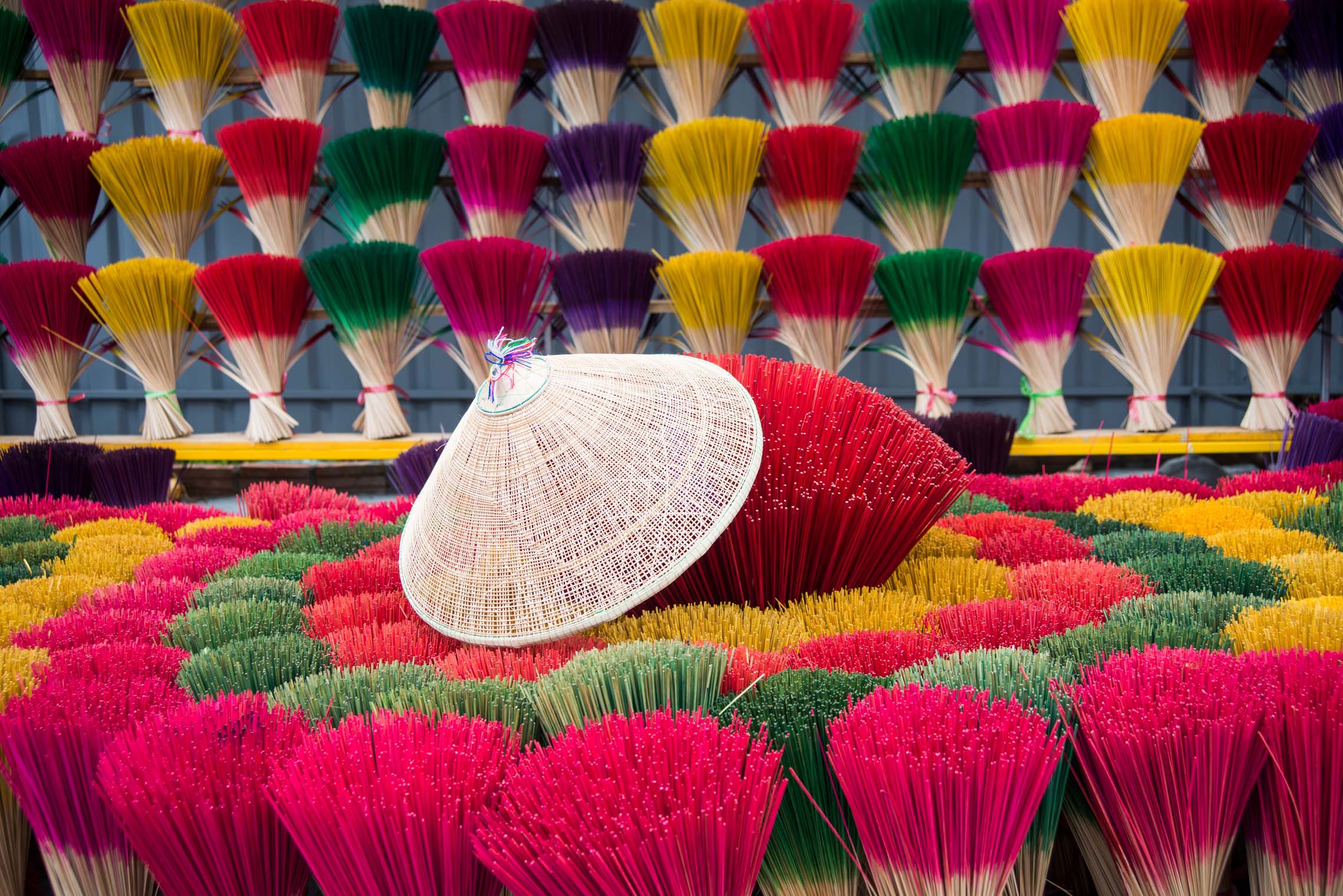
Thuy Xuan incense village in Hue, Vietnam, with rows of colourful incense sticks arranged across the landscape

Thuy Xuan incense village in Hue, Vietnam, with rows of colourful incense sticks arranged across the landscape

An old tale seems to linger in the villages around Hue, carried by bamboo groves, river reeds, fragrant herbs and rich clay. These humble resources nurtured a remarkable tradition of craftsmanship, refined through generations and once prized by royal households, mandarins and aristocratic families for ceremonial objects and domestic wares. Today, the same ingenuity invites travellers to see how rural hands helped shape the elegance associated with the former imperial capital.

In Thuy Xuan, fragrance becomes the first invitation. Cinnamon, agarwood and herbs perfume bundles of incense spread across the ground in crimson, yellow and violet, their brilliant colours rooted in Buddhist worship, ancestor veneration and household prayer. Along the lower Huong River, Thanh Tien turns paper and slender bamboo into lotus and chrysanthemum flowers for Tet altars, their fragile petals carrying wishes for renewal and prosperity. Watching these forms emerge by hand makes the rituals of Hue feel wonderfully close.

For travellers considering things to do in Hue, the trail continues towards Sinh Village, famed for folk paintings pressed from carved blocks and coloured with leaves, burnt straw and crushed brick for religious rites and village festivals. Further north, Phuoc Tich carries the craft tradition into pottery, its local clay shaped into graceful vessels and traditionally fired with rice straw. Together, these villages create moments of curiosity, delight and quiet wonder, as each handmade object becomes a tactile connection between Hue’s countryside, royal heritage and the people who keep its artistry alive.

Infographic Hanoi

Frequently Asked Questions

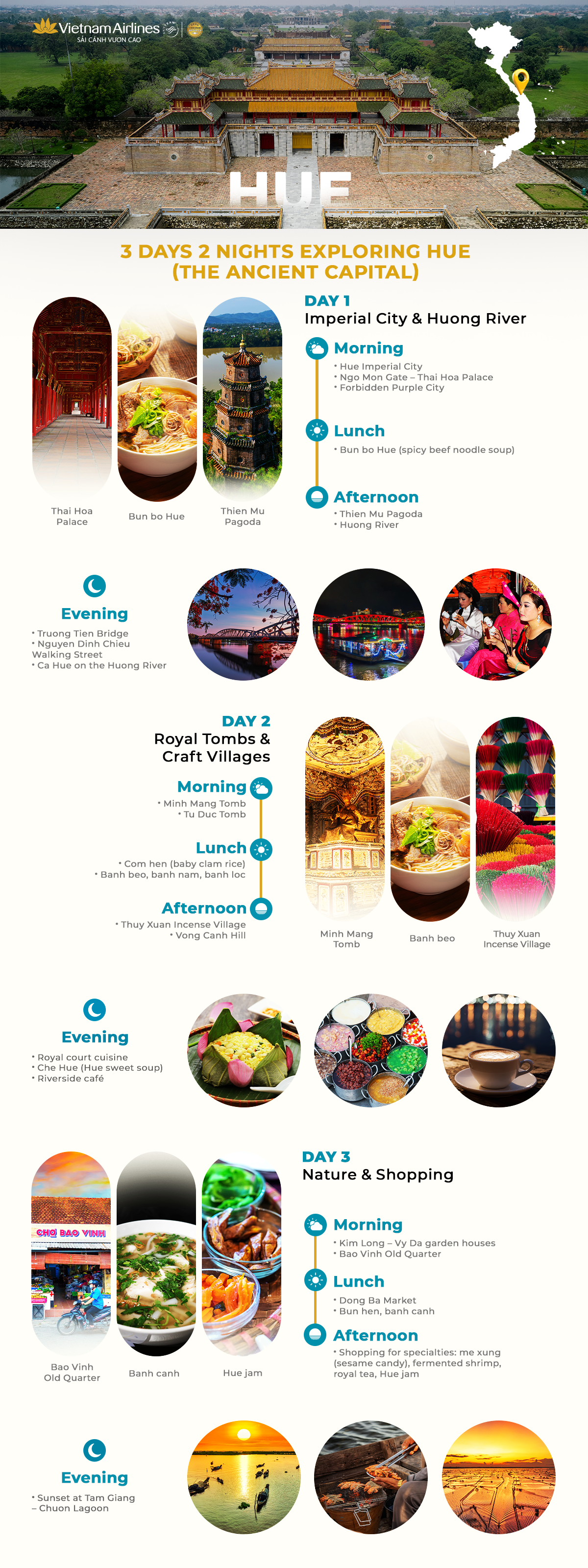
Two full days give enough time to experience Hue’s essential heritage, from the Imperial City and royal tombs to the Huong River, pagodas and a traditional craft village, without turning the itinerary into a race between monuments. A third day allows the pace to soften, with time for garden houses, countryside cycling, craft villages or a longer excursion towards Lang Co.

Cycling is one of the most rewarding ways to experience Hue, particularly once the busy central streets give way to quieter lanes beside rice fields, garden houses and village workshops. The mostly flat terrain makes longer rides manageable, while routes around the Huong River, Thanh Toan and the countryside connect heritage sites with scenes of everyday life that are easy to miss from a car.

January to April is generally the most comfortable period for exploring Hue, when cooler temperatures and drier weather make long walks through the Imperial City, royal tombs and riverside sites easier to enjoy. Spring also lends a gentler atmosphere to the city, with clearer days for cycling through the countryside and visiting craft villages before the heavier heat and rainfall arrive later in the year.

The distinct flavours of food in Hue

There is a playful saying in Hue that if good food is the goal, arriving early is essential, because the dishes people love will soon be gone. Behind the joke lies a deep attachment to flavour, nurtured from childhood and carried through generations. The fragrance of lemongrass, chilli, roasted shallots and fermented shrimp drifts through market lanes as bowls clink and vendors call across the stalls. Such devotion to taste speaks to Hue’s refined culinary sensibility, shaped by royal kitchens, ancestral rituals and an almost poetic attention to colour, aroma and balance, opening an intimate way into the city’s food culture.

Experiencing the signature local delicacies of food in Hue

Hue’s cuisine is remembered for intensity in delicate portions: deep, aromatic broths, finely sliced herbs, fermented notes, crisp textures and chilli-bright sauces. These hallmarks converge in the city’s most celebrated delicacies, each carrying its own fragrance, texture and ritual.

Bun Bo Hue, the soul of Hue in a bowl

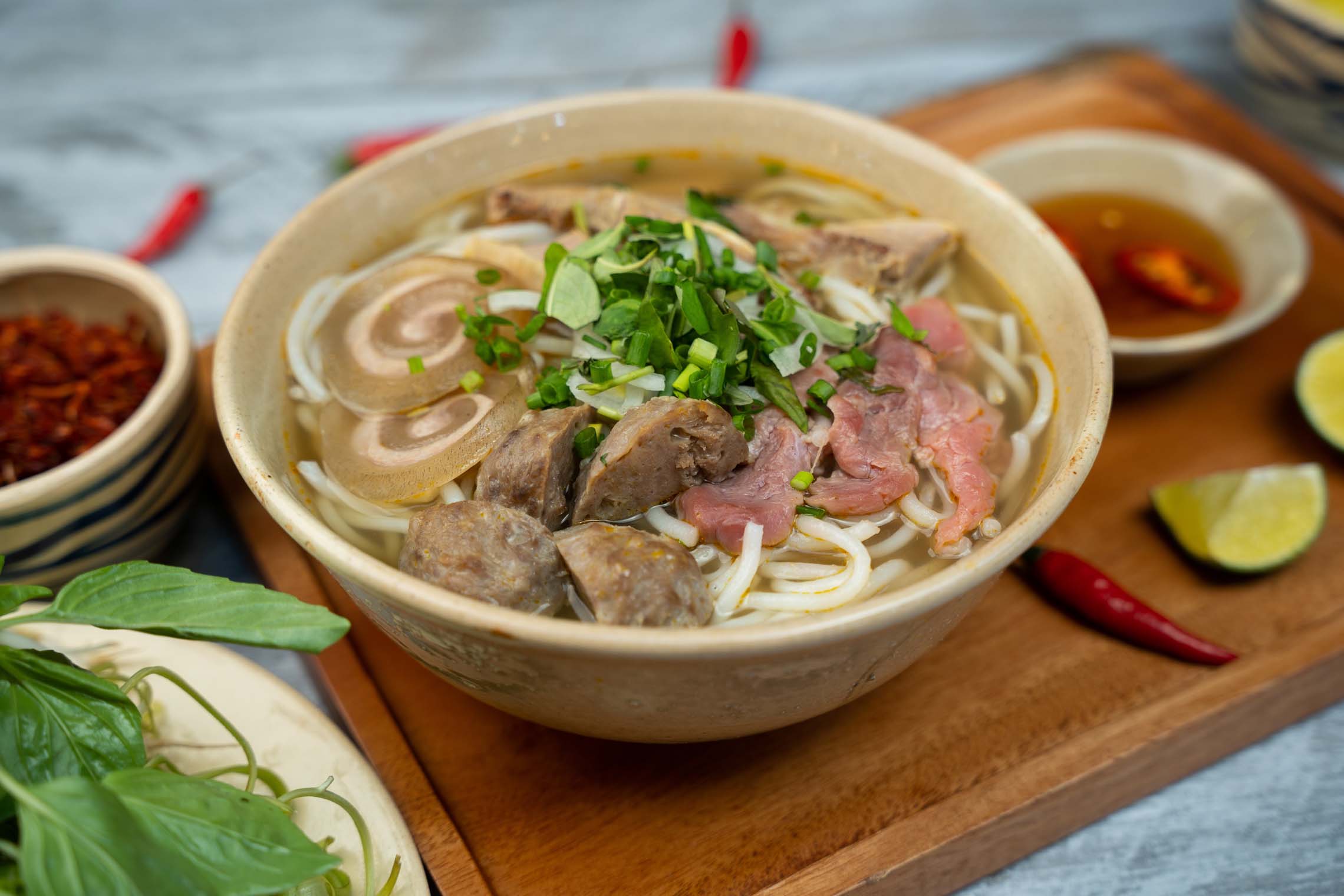
Steam rises from a deep bowl of Bun Bo Hue (Hue beef noodle soup), carrying the perfume of lemongrass, beef bones and fermented shrimp paste through the street. Born from the kitchens of Central Vietnam and refined in Hue, this beloved noodle soup embodies the region’s culinary ingenuity, turning humble ingredients into a broth of remarkable complexity. Over generations, it has become part of everyday life in Hue, served in small family-run eateries and morning food stalls where a bowl of bún bò carries the distinctive flavours of the former imperial capital into ordinary meals.

Tô bún bò Huế với thịt bò, rau thơm và các loại gia vị ăn kèm

Bun Bo Hue (Hue beef noodle soup) a traditional spicy beef noodle soup served with herbs and fresh vegetables in Hue

Beef bones simmer slowly with lemongrass, chilli and spices, while thick rice noodles, tender beef, pork and delicate crab cakes create a generous interplay of textures. Fresh herbs lend lift to the richness, with chilli leaving a lingering warmth across the palate. For Hue residents, the bowl belongs to both ends of the day, enjoyed as a sustaining breakfast or a deeply comforting evening meal. Around Dong Ba Market, Vy Da and the streets along both banks of the Huong River, small local eateries are particularly associated with the dish, where recipes passed through generations remain closely tied to neighbourhood life. One spoonful moves from savoury depth to fragrant spice, then into a gentle sweetness, leaving a sense of warmth and contentment that makes the dish impossible to forget.

Com Hen, a taste of Hue’s river heritage

From Con Hen, the river island famed for its tiny clams, comes Com Hen (Baby clam rice), a dish that carries the river heritage into every mouthful. Warm rice mingles with tender clams, roasted peanuts, sesame, fragrant herbs and crisp pork skin, while a bowl of richly seasoned clam broth waits alongside. The first bite is wonderfully alive, nutty, briny and herbaceous, with a crackle of pork skin and a gentle chilli heat, followed by the deep, almost smoky savouriness of the broth. A sip cools the palate, then another spoonful awakens curiosity and pleasure. Generations of river families have kept Com Hen close to the heart of Hue’s food culture, preserving an everyday dish whose fragrance, freshness and lively contrasts leave diners feeling comforted, intrigued and deeply satisfied.

Hue’s savoury steamed cakes: Delicate culinary artistry on a plate

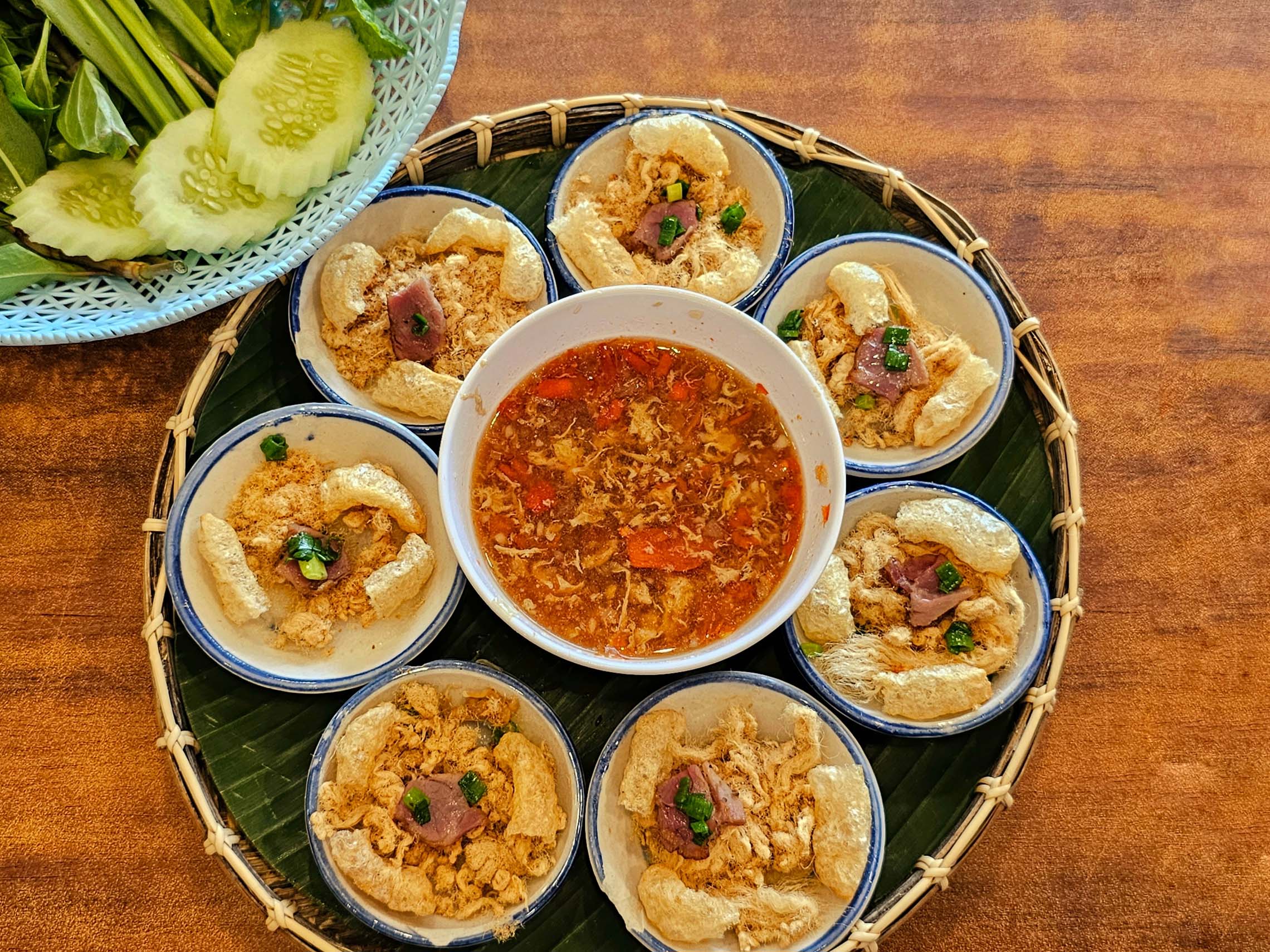
Hue’s steamed cakes express a graceful restraint rooted in careful handwork. Banh Beo (Steamed rice cakes) arrives in tiny ceramic dishes, its yielding surface dusted with dried shrimp and fried shallots before seasoned fish sauce lends savoury brightness. Banh Nam (Flat steamed rice dumplings) is folded in banana leaf, its delicate rice sheet concealing fragrant shrimp, while Banh Bot Loc (Tapioca dumplings) has a springy, translucent casing enclosing shrimp and pork. Behind these modest portions lies considerable skill, from milling rice into fine batter to folding each leaf and judging the steamer’s heat. Together, these small cakes tell a larger story about Hue’s food culture, where the refined presentation associated with Nguyen court cuisine gradually became part of everyday eating, preserving an appreciation for small portions, careful preparation and subtle detail.

Around Dong Ba Market, the Huong River and Nguyen Cong Tru Street, family-run eateries and market stalls serve these traditional Hue cakes throughout the day, keeping them firmly rooted in everyday local food culture. Sitting down to a selection reveals a pleasure of contrasts, from soft to supple and fragrant to savoury, while the careful preparation behind each cake recalls a culinary tradition that has long connected Hue’s royal past with everyday family cooking.

Crisp Banh Khoai and smoky Nem Lui: Street snacks not to be missed

In Chi Lang, Gia Hoi and around Truong Tien Bridge, small local eateries serve Banh Khoai (Hue crispy pancake) alongside skewers of Nem Lui (Lemongrass pork skewers), two dishes closely associated with Hue’s casual food culture. Shrimp and pork nestle beneath Banh Khoai’s golden crust, while minced meat wrapped around lemongrass stalks takes on a gentle char over hot coals. Rice paper gathers pieces of pancake, grilled meat, cucumber, herbs and green mango into each parcel, which is then dipped into fermented sauce whose sweet-salty tang and faint pungency sharpen the palate. Brittle pancake meets succulent meat, cool greens and tart fruit, creating a lively succession of sensations that makes the meal as engaging to share as it is to eat. Rolling each wrap by hand, passing the plate around and lingering over conversation capture the sociable character of Hue’s food culture.

Choose the best restaurants in Hue (Viet Nam) for each travel style

Finding the best restaurants in Hue (Viet Nam) means looking past famous names to understand how the city eats. Each neighbourhood brings its own character, from bustling market stalls and family kitchens to elegant riverside dining.

Dong Ba Market and the North Bank for first-time visitors

For a first visit, start at Dong Ba Market, where food and daily commerce converge in one of Hue’s most vivid introductions. Morning stalls glow with herbs, spices, seafood and fresh produce, while vendors call across crowded aisles and steam rises from pots of broth. From here, market lanes lead towards riverside landmarks and modest dining rooms, giving newcomers a way to taste local specialities while learning how Hue seasons, shares and savours its food as part of everyday life.

Street-food lovers follow Hue’s flavours into Vy Da

Vy Da draws street-food lovers with its concentration of small eateries, pavement stalls and family kitchens, serving dishes that arrive straight from the pan, pot or charcoal grill. Handmade cakes, steaming noodle soups and smoky skewers make it easy to sample several local favourites in one outing, often at modest prices. Sitting among residents rather than inside formal dining rooms gives visitors a direct taste of Hue’s everyday food culture, from familiar family recipes to the lively exchange between vendors and regulars.

Những chén bánh bèo Huế phủ tôm, bày trên mẹt tre cùng nước mắm

Banh Beo (Steamed rice cakes) traditional Hue rice cakes topped with shrimp and crispy pork cracklings

Kim Long turns dining into a memorable experience for slow travellers

Shaded lanes and old garden homes make Kim Long especially appealing to travellers who enjoy lingering over lunch, tea and conversation. Meals unfold among timber houses and leafy courtyards, with carefully arranged dishes encouraging an unhurried appreciation of Hue’s domestic traditions. The neighbourhood retains strong links to the city’s aristocratic past, when garden residences expressed refinement in everyday life. Dining here invites travellers to notice details often missed elsewhere, from leaves rustling overhead and porcelain touching a tray to incense drifting from a nearby family altar.

An Cuu brings a table made for sharing within families

A family meal feels especially generous when several plates gather at the centre, inviting everyone to reach, taste and compare. An Cuu suits this style with welcoming restaurants, broad menus and ample portions that accommodate different ages and appetites. Bowls and dipping sauces pass between parents, children and grandparents, while familiar dishes sit alongside new flavours. Dining here captures Hue’s convivial side, shaped by family habits and generations eating together.

Premium travellers dining with Hue’s imperial elegance

Polished service, thoughtful presentation and locally sourced ingredients give dining around the Citadel a distinctive sense of occasion. Refined restaurants pair contemporary technique with recipes rooted in the Nguyen court, while heritage architecture adds depth to the experience. Against weathered walls and historic structures, an elegant meal becomes a dialogue between eras, allowing discerning diners to appreciate Hue through craftsmanship, culinary heritage and a distinctly modern expression of hospitality.

The art of Hue royal cuisine

Hue royal cuisine preserves a rare chapter of Vietnam’s gastronomic history, born from a court that treated dining as an expression of culture, status and cultivated taste.

Royal dining and the Nguyen court

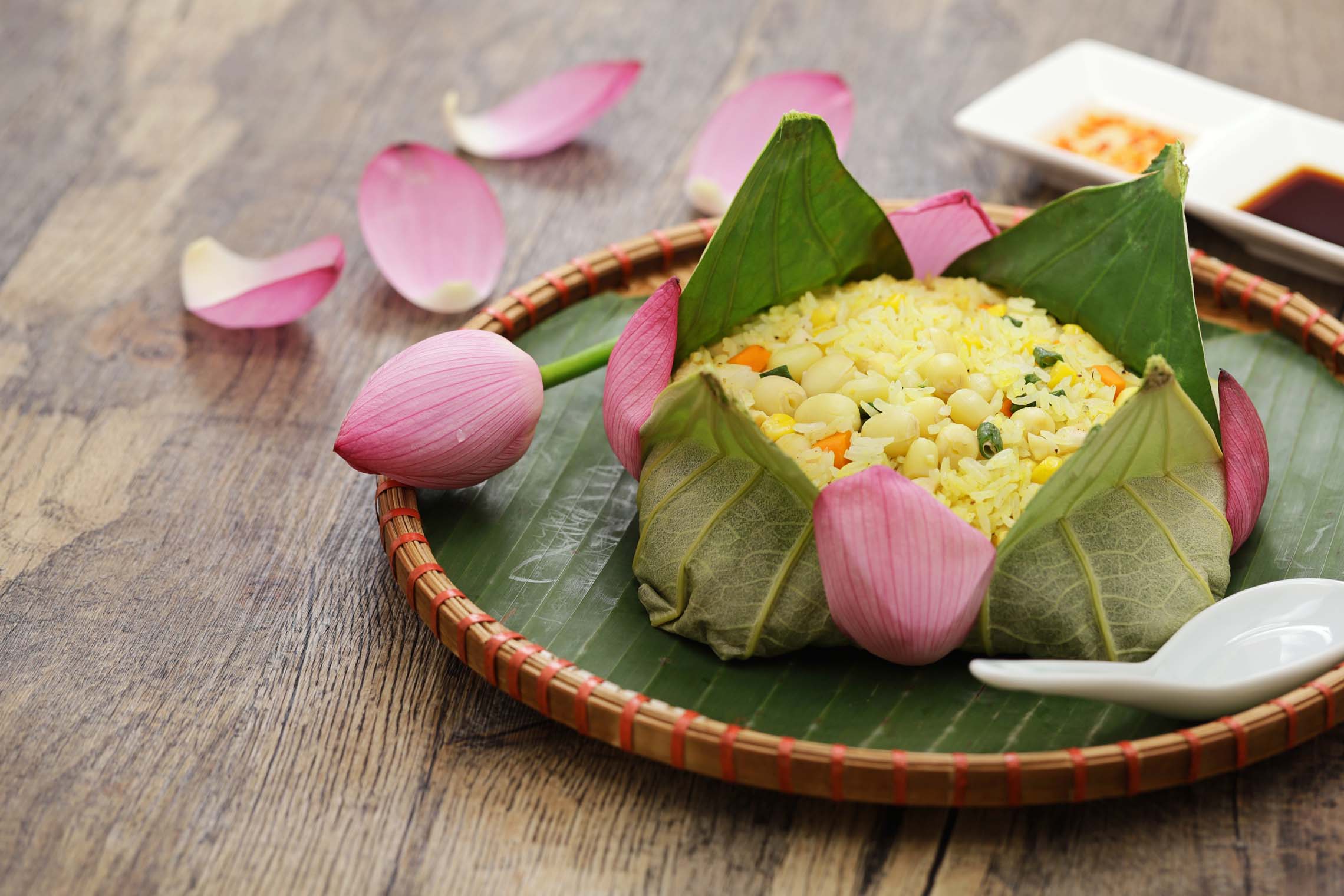
Under the Nguyen dynasty, dining at court followed an elaborate code in which food carried meanings far greater than nourishment. Seasonal ingredients were selected with care, dishes appeared in prescribed sequences, and auspicious motifs expressed wishes for longevity, prosperity and harmony. Skilled cooks carved vegetables into flowers, birds and mythical creatures, then arranged them on lacquered trays beside fine vessels and porcelain. Such feasts transformed the dining table into a stage for imperial taste, combining ceremony, craftsmanship and visual splendour. Every garnish had its place, every course contributed to the spectacle, and culinary skill became another expression of the refinement expected within the royal household.

Món cơm gói lá sen được bày trên mẹt tre

Steamed sticky rice with lotus seeds wrapped in banana leaves, a traditional Hue royal dish

Balance in flavour, colour and texture

Hue royal cuisine rests on a delicate equilibrium, allowing sweet, salty, sour and spicy notes to meet without one overwhelming the others. Small portions leave room for nuance, while vivid garnishes lend colour and intricate forms give the eye as much to savour as the palate. Nem Cong (Peacock spring rolls) and Cha Phuong (Phoenix meatloaf) embody this aesthetic through auspicious imagery shaped with remarkable patience and dexterity.

Yet the artistry becomes most moving at the table, when fragrance rises from the dish, crispness yields to tenderness and subtle seasoning unfolds across the tongue. For diners today, these sensations can create an unexpected intimacy with Hue’s imperial past. A beautifully arranged plate no longer feels distant or ceremonial; through taste, colour and texture, history becomes something felt, savoured and remembered.

Quick information

Frequently Asked Questions

Absolutely. Spice is part of Hue’s culinary character, but it does not have to dominate every meal. At many local eateries, fresh chilli and chilli paste are served separately, so diners can adjust the heat to their own preference. You can also ask for less chilli or no chilli while still enjoying the fragrant herbs, savoury broths and delicate textures that define food in Hue, Viet Nam.

For a taste of Hue royal cuisine, look around the heritage areas and the South Bank of the Huong River, where traditional dining settings recreate elements of imperial-era meals.

Very much so. Hue’s food moves through an unusually rich range of experiences. Few Vietnamese cities compress so much culinary history into such a compact landscape, making Hue particularly rewarding for travellers who plan their journey around what they will eat next.

Arriving at Hue Airport (Phu Bai International Airport)

Low mountains, rice fields and the humid light of Central Vietnam frame the approach to Hue Airport (Phu Bai International Airport), offering a first glimpse of the former imperial capital. As the aircraft descends, the airport marks the transition from countryside to a city steeped in history, with its architecture providing the first hint of Hue’s cultural identity.

Exploring Hue Airport (Phu Bai International Airport): Where heritage meets modern aviation

Arriving at Phu Bai International Airport introduces Hue through an architectural language drawn from the city’s mountains, waterways and imperial heritage, creating a thoughtful sense of place even before the road reaches the historic centre.

A convenient gateway just south-east of the historic capital

Officially known as Phu Bai International Airport, Hue Airport is a gateway that lies south-east of Hue, around 13 – 15km from the city centre. The journey by road usually takes roughly 20 – 30 minutes, depending on traffic and where you are heading. That short distance creates an appealing transition, and within minutes of leaving the terminal, the polished efficiency of an international gateway gives way to Hue’s visual language, with broad roads, garden vegetation, distant hills and the muted colours associated with the former imperial city.

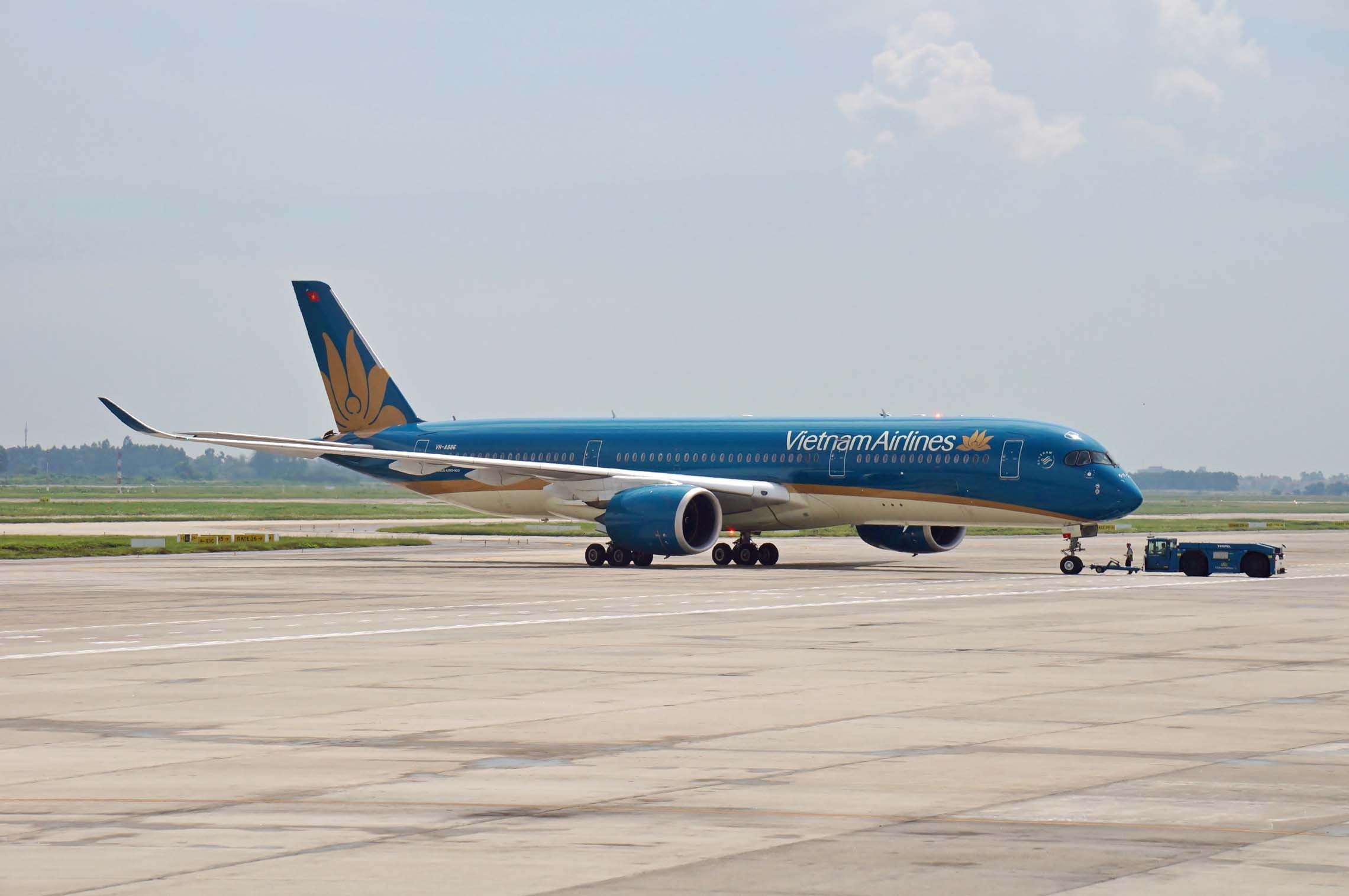
Máy bay Vietnam Airlines trên đường băng sân bay quốc tế Phú Bài, Huế

Vietnam Airlines aircraft on the runway at Phu Bai International Airport in Hue

Terminal 2: Award-winning architecture inspired by the Nguyen royal court

Terminal 2 has earned the Gold Prize at the National Architecture Awards for a design that translates Hue’s geographical and cultural identity into a contemporary airport. Its design draws directly on the Imperial City and Thai Hoa Palace, reinterpreting the layered royal rooflines, proportions and distinctive architectural character of these historic structures into a contemporary airport design. That connection becomes apparent overhead, where overlapping rooflines recall the silhouettes of imperial architecture, while broad eaves and skylights allow daylight to wash through the passenger areas. Moving through the terminal, these details create a sense of continuity between the airport and the city awaiting outside.

A particularly distinctive feature is the 54-metre skylight running along the upper level, guiding passengers through the building while drawing daylight deep into its interior. Below, the arrival level takes inspiration from the landscape of the Huong River, extending the architectural narrative from the terminal towards the city.

Modern passenger amenities and the heritage lounge experience

For travellers with access to premium waiting areas, the airport provides a polished introduction to Hue before the city begins in earnest. After collecting their luggage, guests can retreat to a well-appointed lounge or waiting area, where the rush of arrival gradually gives way to a quieter moment to check messages, meet a driver or prepare for the journey into the city. This sense of calm and order echoes an aspect of Hue’s imperial culture, where ceremony, presentation and attention to detail were integral to court life. In this contemporary setting, the airport carries that sensibility into the arrival experience, allowing the first moments in Hue to begin with the same sense of care and composure. Along with self check-in kiosks, complimentary Wi-Fi and local specialty shops across the concourse, travellers booking flights with Vietnam Airlines can also add TripCARE travel insurance for extra peace of mind throughout their journey.

From Hue airport to the city centre: Choosing transport by travel style

Once outside the terminal, the choice of transport can influence the first impression of Hue.

Taxi or ride-hailing for couples and independent travellers

With a taxi or ride-hailing car, the journey into Hue unfolds without much planning, leaving room to settle into the scenery after the flight. As the airport recedes, gardens, fields and distant hills pass through the window, gradually replacing the polished atmosphere of the terminal with the softer landscape surrounding the former imperial capital. The ride feels pleasantly unhurried, whether conversation fills the back seat or the road becomes a moment for quiet observation.

Private or hotel transfer for families and premium travellers

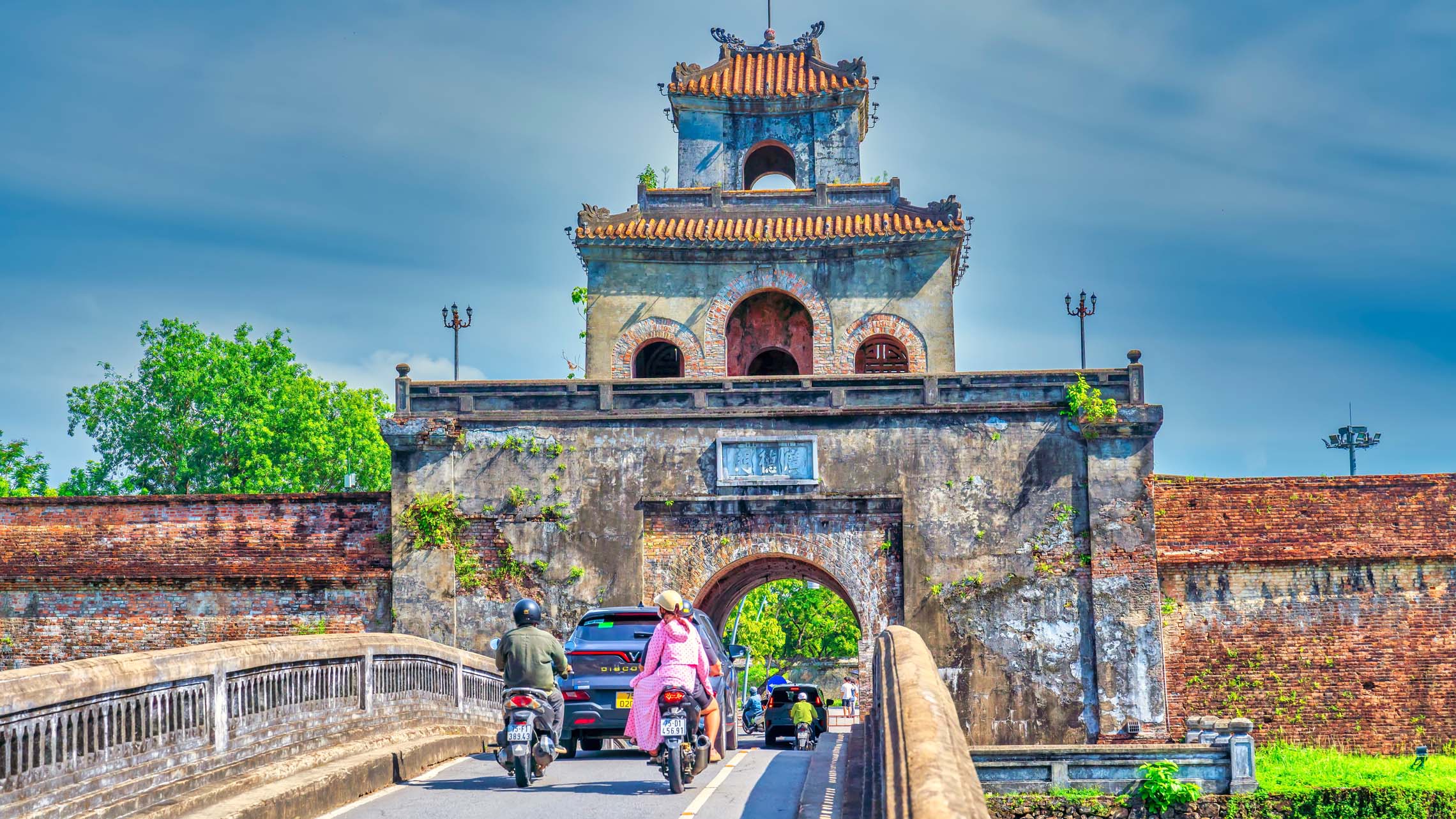
Ô tô di chuyển qua cây cầu dẫn vào cổng thành cổ tại Huế

Private transfer in Hue’s city street

A private or hotel transfer lends the arrival a sense of ease that begins before the wheels leave the airport. Luggage can be arranged without navigating queues or negotiating onward transport, while everyone settles into the same vehicle after a long flight. For families, the extra space and privacy can make the first kilometres noticeably more comfortable, while premium travellers may appreciate the continuity between airport, hotel and the city ahead.

Shared shuttle for solo travellers who want convenience at a lower cost

A shared shuttle introduces a different energy to the road into Hue, with fellow visitors sharing the same route and occasional conversations breaking the solitude of the journey. The experience retains the convenience of travelling directly towards your accommodation while keeping the cost below that of a private car. There is also something engaging about arriving among people who are discovering Hue at the same moment, whether conversation begins naturally or everyone simply watches the landscape pass outside.

Public bus for budget-conscious travellers

A public bus places the journey closer to the everyday tempo of Hue, trading speed and privacy for a more immediate view of local life. The longer ride and need to manage routes and luggage require patience, yet the reward comes through the changing scenery outside the window. Local commuters share the road, neighbourhoods gradually replace the open landscape around the airport, and familiar details of daily life emerge along the way. By the time the bus reaches the city, Hue has already begun to feel lived and familiar, rather than simply a destination waiting at the end of the journey.

Quick information

Frequently Asked Questions

Pre-booking your Hue Airport transfer is a smart choice, particularly if you arrive late, travel with family or have several pieces of luggage. Taxis are available at Phu Bai International Airport, but arranging a transfer in advance means your journey into Hue can begin without waiting or negotiating after landing. It is also useful when you want to know your transport cost before leaving the terminal.

Yes, currency exchange and ATM facilities are available at Phu Bai International Airport, although the choice may be more limited than in central Hue. It is practical to exchange a small amount for immediate expenses such as transport, coffee or snacks, then compare rates at banks or authorised exchange points in the city if you need more Vietnamese dong.

For a smoother departure, allow around 90 minutes before a domestic flight and two hours before an international flight. This leaves enough time for check-in, baggage drop and security without turning the final moments of your Hue journey into a rush. If you arrive early, you can slow down with a coffee and take in the terminal’s contemporary interpretation of the city’s heritage before boarding.

Finding the ideal hotels in Hue City (Viet Nam) for your stay

Royal barges once moved along the Huong River carrying emperors, mandarins and court musicians towards the citadel. Today, that same river threads through garden houses, ancient streets and lively markets, while hotels gather around these distinct pockets of urban life, each revealing a different side of Hue.

Hue grew through distinct urban layers, from the walled imperial capital to the colonial-era streets south of the river, each shaped by a different chapter of the city’s history. That legacy still influences where most hotels gather today, whether around heritage landmarks, commercial streets or established residential quarters.

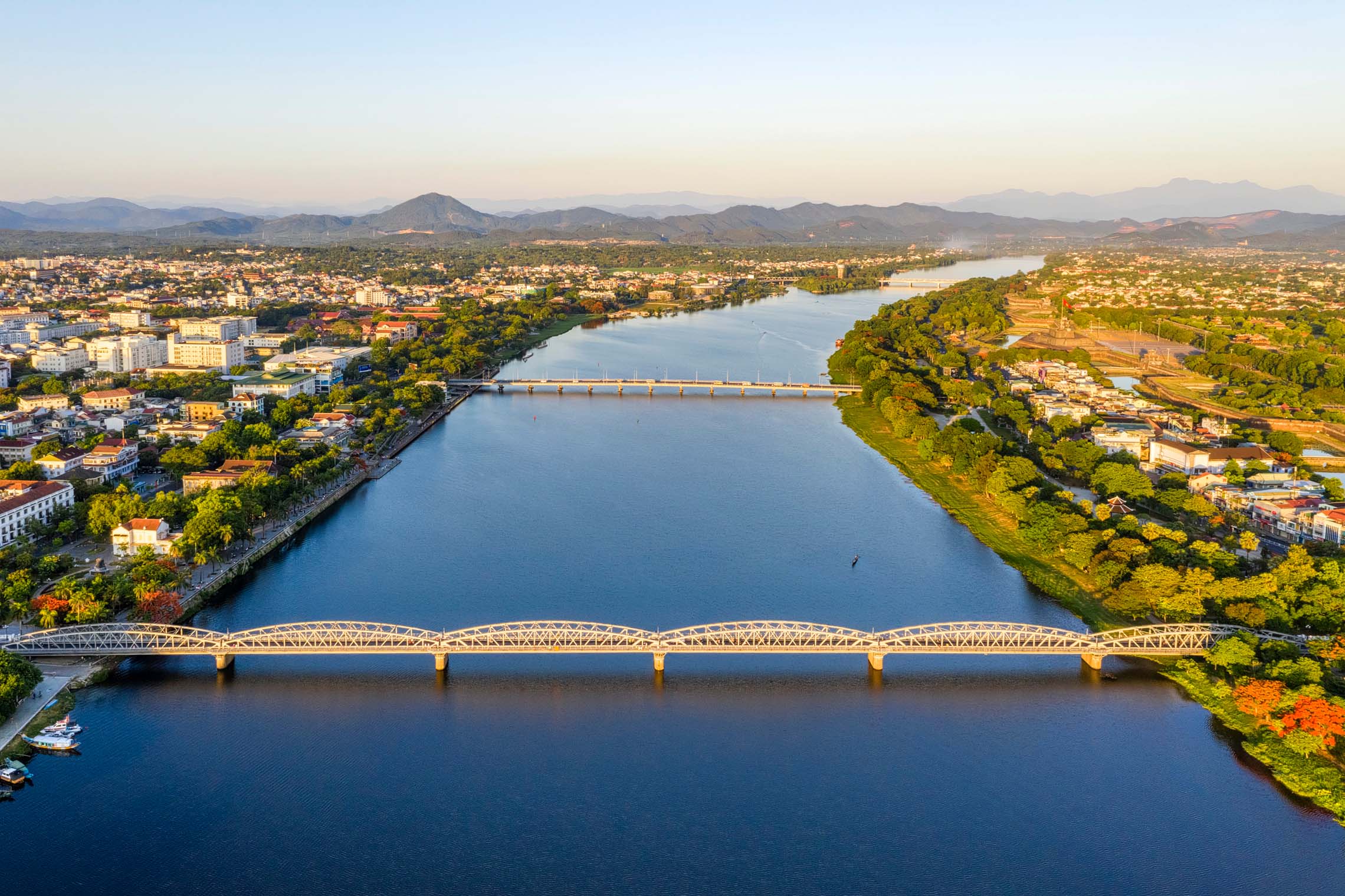
Toàn cảnh sông Hương và cầu Trường Tiền nhìn từ trên cao

Aerial view of Trang Tien Bridge and Hue city, with hotels and riverside accommodation near the city centre

The concentration of hotels here ranges from practical city stays to polished properties, giving newcomers flexibility without sacrificing location. Pham Ngu Lao and Vo Thi Sau add casual restaurants, cafés and evening activity, while major attractions remain straightforward to reach from the southern bank. Choosing accommodation in this central pocket works particularly well for a first Hue trip, when convenient access helps balance sightseeing, dining and spontaneous walks without spending much of the day in transit.

The Citadel area for heritage-focused travellers

A faint trace of incense lingers in the air around the Imperial Citadel, where old brick walls and leafy lanes run alongside the residential streets that surround the former royal compound. This character is particularly evident around Cua Ngan and Dang Tran Con streets, where hotels place guests among quiet local neighbourhoods while keeping the Imperial Citadel and its historic landmarks within easy reach.

Traditional houses, quiet garden walls and modest food stalls continue around the accommodation, bringing guests closer to the everyday character of the neighbourhood. The setting connects the historic atmosphere of the former royal quarter with the simple routines of local life. Smaller hotels and guesthouses around this area can deepen that sense of place, particularly for travellers who value heritage, architecture and neighbourhood atmosphere over nightlife or commercial convenience.

Riverside stays for atmosphere and slower travel

Fragrant gardens, leafy lanes and river air surround accommodation in Vy Da, particularly around Nguyen Sinh Cung Street and the smaller roads leading towards the water. Hotels and guesthouses here appeal to slow travellers who want their accommodation to feel immersed in residential Hue rather than surrounded by constant activity.

Water has long influenced life along the Huong River, carrying boats, nourishing settlements and inspiring Hue’s poets and artists. Riverside properties and garden guesthouses let travellers experience that heritage through open spaces, flowering plants and the gentle movement of air around traditional homes. This area rewards longer stays, when mornings can begin with coffee in a garden, afternoons can unfold at an unhurried pace and returning to the hotel feels part of the journey itself.

The best areas to stay in Hue, Viet Nam for every travel style

So, where is the best area to stay in Hue, Viet Nam? The answer depends on how you imagine spending your time between breakfast and sunset.

Couples seeking romantic getaways

A garden gate half-hidden by foliage, the scent of frangipani drifting from an old courtyard and rain glistening on tiled roofs give Kim Long an atmosphere made for couples seeking intimacy. Boutique hotels, garden villas and heritage residences suit this mood, especially for those who would rather wake to greenery, linger over breakfast and spend an evening walking through lanes associated with Hue’s historic garden houses than stay amid nightlife.

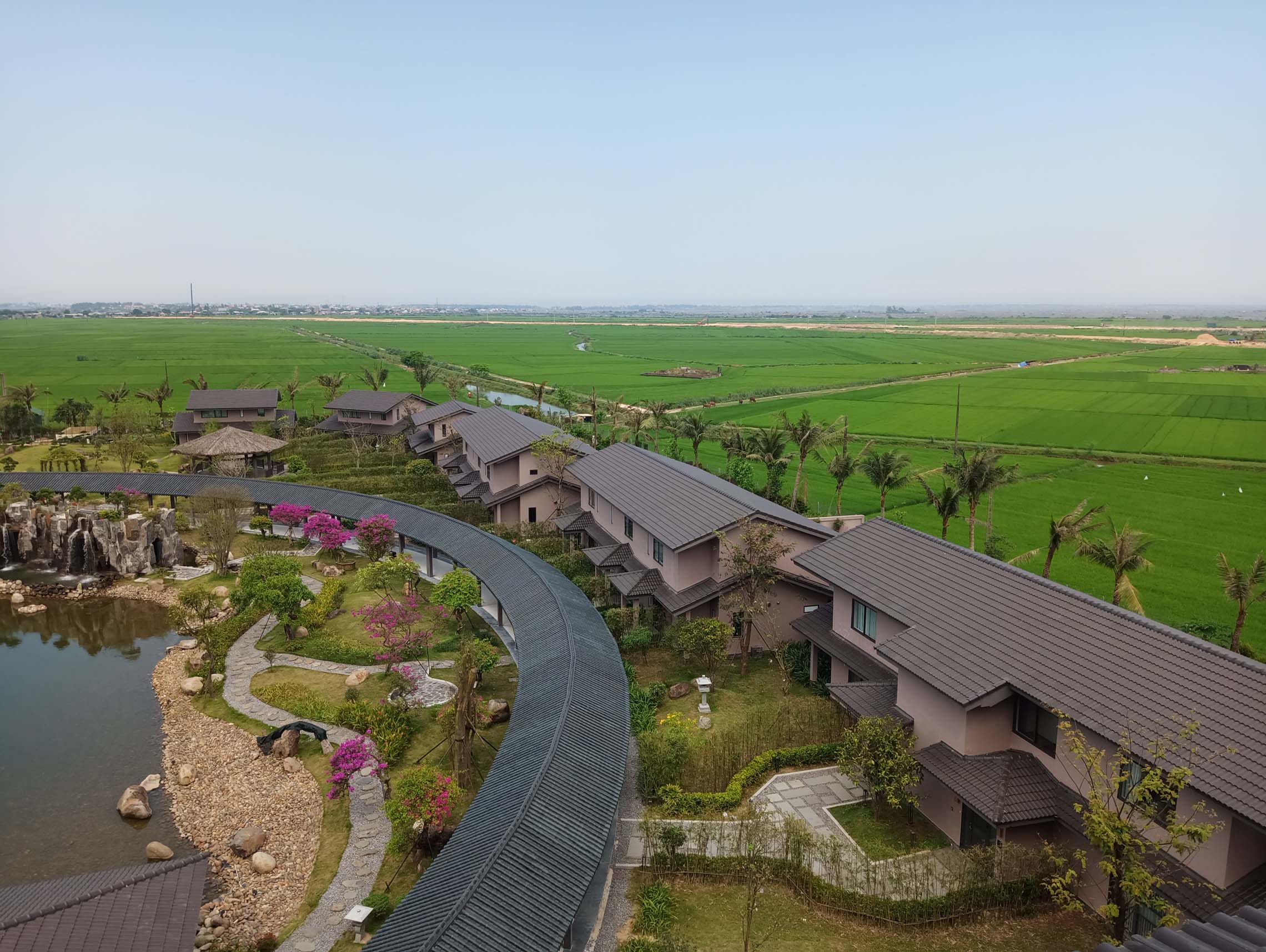
Khu biệt thự nghỉ dưỡng giữa đồng lúa xanh ở vùng ven Thành phố Huế

Suburban Hue villas beside rice fields, showcasing a peaceful accommodation setting near Hue’s countryside

Kim Long’s connection with royal relatives and court officials adds another layer to a romantic escape. Accommodation here can feel almost private and residential, allowing couples to savour long conversations, leisurely meals and peaceful evenings together, with the surroundings providing a graceful backdrop rather than competing for attention.

For families travelling with children

The practical pleasures of a family stay become especially apparent around An Cuu, where wider streets, supermarkets, local eateries and everyday services make accommodation easier to manage with children. Family-friendly hotels, serviced apartments and properties with larger rooms give parents greater flexibility, particularly when a trip involves early nights, extra luggage or different eating habits.

An Cuu also keeps families close to ordinary Hue life, away from the concentration of major heritage attractions. Parents can pick up fruit and snacks nearby, choose familiar meals when children are tired and return easily after a day of sightseeing. That combination of space, convenience and independence allows the hotel to function as a comfortable family base rather than simply a place to sleep.

A refined retreat amid heritage for luxury travellers

Along Minh Mang Street and the southern heritage belt, luxury accommodation takes on a more secluded expression, with resorts, garden retreats and high-end boutique properties surrounded by landscaped grounds. Spacious rooms, private terraces, pools, spa facilities and attentive service appeal to travellers who see the hotel itself as an important part of the journey, not merely a base between excursions.

The setting adds cultural depth to that experience. The royal tombs nearby were positioned according to Nguyen-era principles of geomancy, with hills, water and vegetation carefully considered in their composition. Staying in this part of Hue allows luxury to be experienced through privacy, architecture, landscape and proximity to one of Vietnam’s most distinctive imperial legacies.

Budget and solo travellers stay social and flexible

Phu Hoi has a social character that works particularly well for solo travellers who want affordable accommodation without feeling isolated. Hostels, guesthouses and compact budget hotels cluster around Vo Thi Sau and Chu Van An, with shared spaces and informal common areas creating easy opportunities to meet people between excursions.

The neighbourhood also gives independent travellers freedom to shape each day spontaneously. Street food stalls, small cafés and inexpensive restaurants make it possible to eat well without planning ahead, while the concentration of casual accommodation keeps costs manageable. For someone travelling alone, that combination can turn an unfamiliar city into a place where new conversations, unexpected meals and unplanned walks become part of the adventure. Ultimately, the best hotel in Hue City (Viet Nam) is the one that matches the experience you want to remember, because in Hue, where to sleep quietly determines how the city first speaks to travellers each day.

Quick information

Frequently Asked Questions

For a hotel in Hue City (Viet Nam), booking around 2 – 4 weeks ahead is a sensible approach, particularly during the busier travel months from January to April or around major festivals such as Festival Hue.

Many mid-range and luxury hotels in Hue can arrange private transfers to and from Phu Bai International Airport, usually with advance notice. Some properties may include airport pickup in selected room packages, while others charge separately. If arriving late or travelling with children, arranging the transfer before departure can make the first moments in Hue considerably easier.

Swimming pools are relatively common among 4-star and 5-star hotels, while some boutique properties also have smaller pools.

The impeccable experience of shopping in Hue

Across Hue’s craft villages, skilled hands turn bamboo, paper, clay and fragrant herbs into objects that carry generations of craftsmanship. Shopping in Hue is like browsing centuries of local artistry and tradition, from Thuy Xuan incense and Thanh Tien paper flowers to Phuoc Tich pottery, with each purchase carrying the spirit of the former imperial capital and the hands that keep its heritage alive.

The hum of bargaining mingles with the rustle of baskets and the rich scents of food at Dong Ba Market, where generations of Hue residents have gathered to trade, eat and exchange news, continuing a market tradition that has served the city since the Nguyen era. As one of Central Vietnam’s great trading hubs, Dong Ba Market draws goods and people from across the region, while An Cuu, Tay Loc and neighbourhood markets extend this lively exchange into everyday life, showcasing the flavours, customs and craftsmanship that have long travelled through Hue.

Royal herbal tea, sesame candy and fermented delicacies to bring home

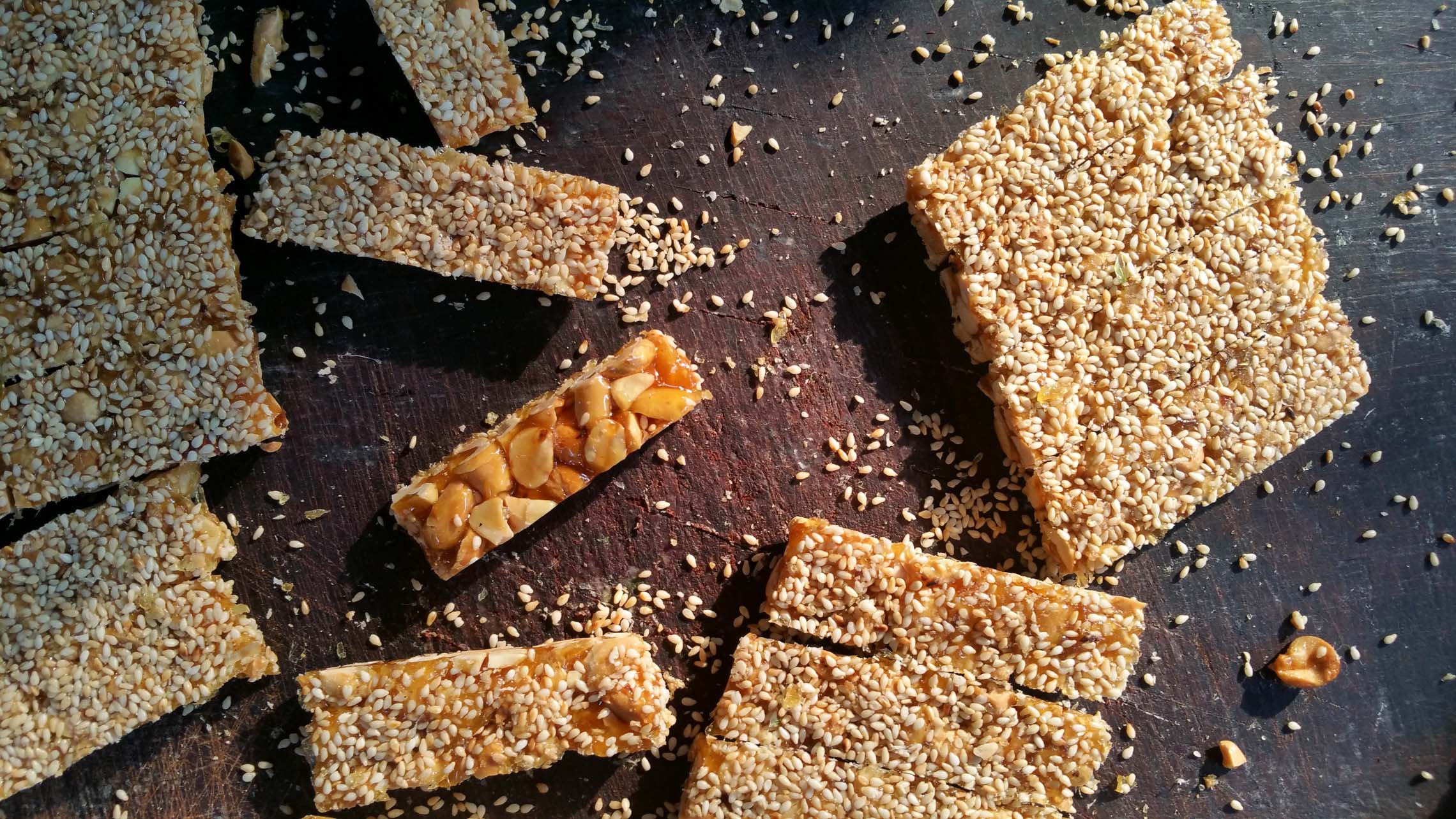
The fragrance of roasted sesame and malt rises from a small tray of sweets beside a pot of tea, recalling the old Hue custom of welcoming guests with something modest yet thoughtfully prepared. Me Xung (Sesame candy) grew from this gentle hospitality, its glossy layers of malt, peanuts and sesame appearing at family gatherings, wedding visits and festive occasions, when a small box of sweets could express affection without elaborate words. That familiar gesture helped turn Me Xung into one of Hue’s most cherished gifts, passed from one household to another and eventually beyond the city.

Những miếng Mè xửng phủ mè và lạc rang, đặc sản truyền thống của Huế

Close-up of Keo Me Xung (Sesame candy), a traditional Hue sweet snack

The same intimacy surrounds Tra Cung Dinh (Royal tea), whose name recalls the Nguyen court and its appreciation for carefully blended flowers and herbs. Lotus held particular significance in Hue, from the ponds of Tinh Tam to the tea tables of the royal household, where fragrance mattered as much as flavour. Drinking the tea today still evokes a vivid impression of courtly life, allowing a modest packet to become a thoughtful reminder of Hue’s elegance and hospitality.

Mam Ruoc Hue (Hue fermented shrimp paste) tells a stronger, earthier story, rooted in the coastal abundance and preserving traditions of Central Vietnam. Its pungent aroma and savoury depth belong to the kitchens of ordinary households, where fermentation transformed humble seafood into an essential seasoning. Taken home, these flavours become personal souvenirs of Hue, allowing the recipient to taste something deeply local and remember the generosity, refinement and everyday warmth that define the former imperial capital.

Poem conical hats, fragrant incense and artisan keepsakes

The sound of bamboo splitting under a knife, the scent of incense and the soft pull of thread through fabric lead into another chapter of Hue’s heritage, preserved in villages where craft has passed from parent to child. Non La Hue (Hue conical hat) grew from this patient handwork, while the Non bai tho (Poem conical hat) added a distinctly Hue touch by concealing verses and delicate images between layers of leaves, visible only when held towards the light. A simple hat thus becomes a quiet meeting of craft, poetry and landscape, recalling the Huong River and the literary sensibility of the former capital.

At Thuy Xuan, incense-making turns fragrance into an expression of devotion, with vivid bundles prepared for Buddhist worship and ancestral altars. Nearby traditions of embroidery and textile work continue through the graceful lines of Ao Dai (Vietnamese traditional dress), where colour, fabric and painstaking needlework speak through the hands of the maker. These are gifts with intimacy at their heart, chosen not simply for their beauty but for the human labour, beliefs and memories they allow someone to carry home.

What souvenirs to buy in Hue for every recipient

The best souvenir depends on who will receive it, how far it has to travel and whether the recipient values food, design or cultural meaning. Hue makes this particularly interesting because its shopping choices range from compact sweets to handmade pieces that carry much more visual and cultural weight.

Traditional pantry gifts make thoughtful choices for family

A bowl of lotus seeds simmering in a sweet soup, or a plate of sweetened ginger beside a pot of tea, recalls the quiet generosity of Vietnamese family life. Hat Sen (Lotus seeds) have long appeared in nourishing dishes and festive preparations, while Mut Gung (Ginger preserves) bring gentle heat and sweetness to tea gatherings, particularly when relatives come together. These familiar flavours carry an affection that feels especially appropriate for parents and older family members, evoking home cooking, childhood memories and the pleasure of sharing something simple around the table. Food stalls in Dong Ba Market, the An Cuu area and Tay Loc Market provide a practical place to seek these pantry gifts, with the atmosphere of everyday commerce adding another layer to the experience.

Bold fermented flavours make memorable gifts for food lovers

A small jar of Tom Chua (Sweet-and-sour fermented shrimp) can provoke immediate curiosity, its lively combination of shrimp, sweetness, acidity and chilli revealing how confidently Hue handles strong flavours. Fermentation has deep roots in Central Vietnamese kitchens, where preserving seafood was closely tied to local foodways and the need to make seasonal ingredients last. That history gives the speciality an identity far richer than its compact packaging suggests, making it particularly appealing to food lovers who enjoy tracing a region through its palate. Specialty sellers around Thuan Hoa, Vy Da and Phu Hau are useful places to look for Tom Chua alongside other locally made condiments, with small food stalls offering a closer sense of the flavours that remain part of everyday Hue cooking.

Wearable craft gives fashion lovers a graceful connection to Hue

Fine stitching, handwoven surfaces and the intricate patterns of embroidered textile bags speak to a side of Hue where beauty often resides in patient handwork rather than elaborate ornament. Local embroidery has long been associated with household textiles, clothing and decorative pieces, with generations of artisans refining techniques through careful needlework and an eye for balanced colour. A beautifully finished bag can therefore feel personal without becoming overly formal, carrying a touch of Hue into everyday life while remaining practical enough for regular use. Apart from the famous Dong Ba Market, the craft shops and small workshops around Phu Cam and Kim Long are worth exploring for embroidered textiles, handmade bags and other locally crafted accessories, with each area offering a different glimpse into Hue’s continuing traditions.

Compact sweets make easy gifts for friends and colleagues

Few gifts travel through a group as easily as something sweet enough to share. Banh Dau Xanh (Mung bean cake) recalls the Vietnamese custom of serving small treats with tea, where conversation matters as much as the food itself. Its compact portions make it practical for colleagues and friends, while the familiar texture and gentle sweetness keep the gesture approachable. Around Phu Hoi, Le Loi Street and Vo Thi Sau Street, local shops and food sellers make it easy to assemble several small gifts without filling a suitcase, turning a simple purchase into something that can be opened together over coffee, passed around an office or shared at home.

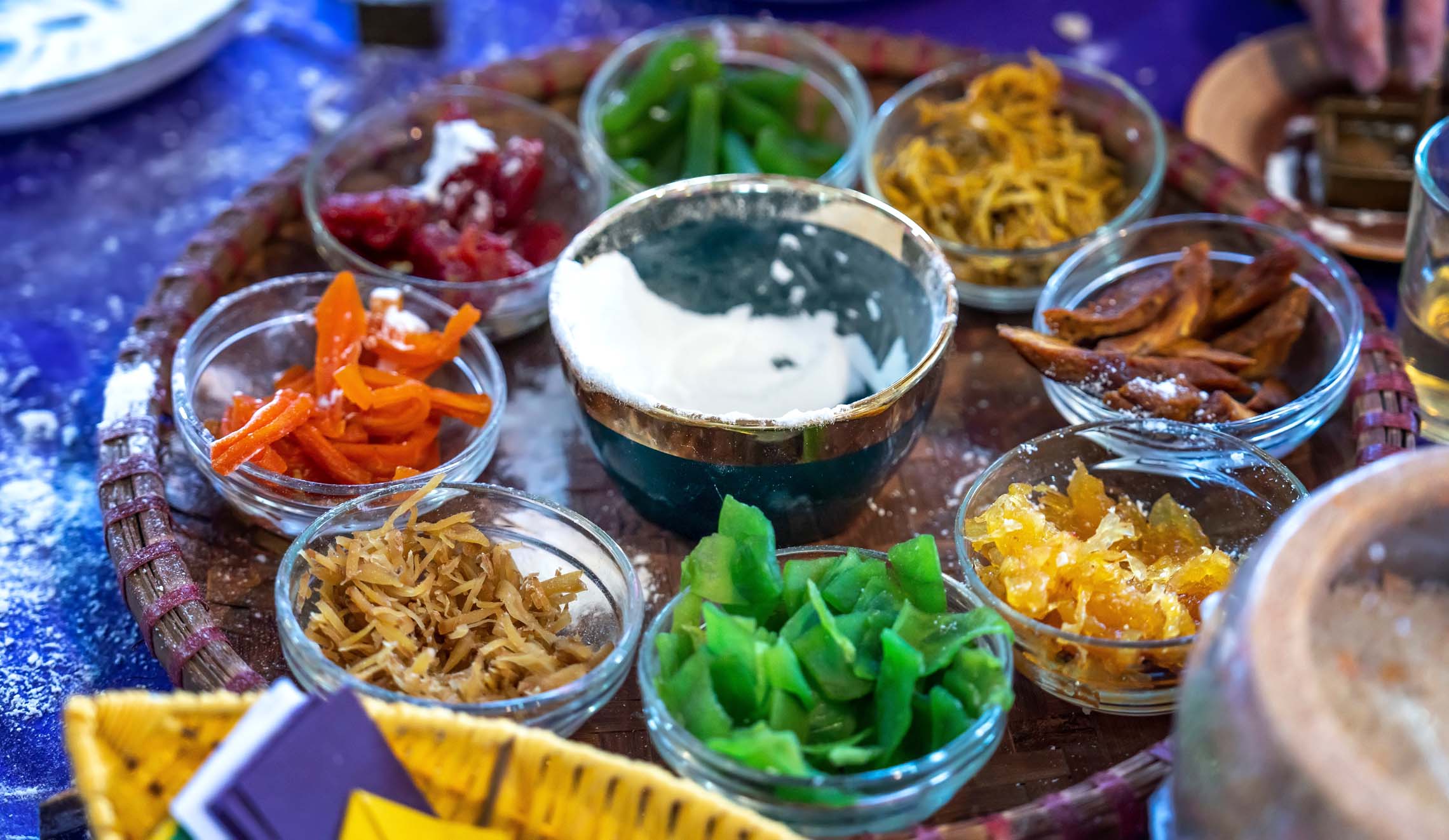
Các món mứt truyền thống Huế

Authentic Bat Trang ceramics serve as a truly meaningful keepsake, beautifully encapsulating the quintessential cultural essence of Hanoi

Handmade keepsakes give meaningful gifts a story to remember

The marks left by a carving knife, the irregularity of hand stitching and the grain of bamboo can say something that a factory-made souvenir cannot. Hand-carved wood, embroidery and bamboo crafts preserve techniques passed through families and village workshops, with Kim Long particularly associated with garden houses and the domestic craft culture of old Hue. This connection with traditional workmanship can be explored around Thuy Xuan and the area near the Tomb of Tu Duc, where craft workshops and small artisan stores display handmade pieces alongside the tools and materials used to produce them. For someone who values objects with individuality, a modest handmade piece can hold unusual emotional weight because its material, technique and place of origin give the recipient something tangible to discover. The finest gift may be small, yet the hands behind it make its meaning difficult to forget.

Quick information

Frequently Asked Questions

Cash (VND) remains the most common payment method for everyday shopping in Hue, particularly at traditional markets, street stalls and local venues such as Dong Ba Market. Major hotels, restaurants, and established souvenir shops generally accept credit cards, but carrying small cash notes is still useful for buying street food, local specialties, and handmade crafts from smaller vendors.

The best time of day for shopping in Hue is during the cooler morning hours, from around 8:00 AM to 10:30 AM, or in the late afternoon from 4:00 PM onward. An early market visit helps you avoid the strongest midday heat while also giving you a chance to see vendors arranging their goods and local shoppers beginning their daily routines.

Yes, Dong Ba Market is one of the best places to shop if you are wondering what souvenirs you should buy in Hue. Its stalls carry a wide selection of local specialties, sweets, textiles and handicrafts at varied prices, while gentle bargaining is generally appropriate when buying fabrics, clothing or handmade items. If you purchase fermented specialities such as Tom Chua or Mam Ruoc, note that liquids and strong-smelling items are restricted in carry-on luggage, so check Vietnam Airlines’ baggage regulations before packing.

Offers from Vietnam Airlines

Promotion List
Sorry, there are currently no promo codes matching the selected criteria!
Please search again with different criteria
Filters

Loading