Select region and language
Close button
Booking and service information for the selected country and language will be applied.
paradise

Can Tho travel, first step to the soul of the Mekong Delta

Can Tho travel follows waterways into a city shaped by orchards, floating markets and riverside communities, where Kinh, Khmer and Hoa heritage lives alongside everyday culture in the Mekong Delta. Dawn boats, fruit-laden gardens, old houses and temple courtyards reveal a slower pace, while the scent of ripe fruit, calls from the river and quiet garden paths create an easy sense of warmth and connection.

Things to do in Can Tho to emerge into Mekong Delta’s life

As a boat slips away from the busy quay, the city recedes into a quieter world of garden paths and village lanes, where a shared bowl of noodles, a conversation with a market vendor or a pause beneath an old fruit tree can leave a quiet sense of connection and ease. The city was known as Tay Do, the “Western Capital”, a name that marked its importance as a commercial centre where merchants, produce and stories from across the Delta converged. Its identity lives through river journeys, garden paths and familiar flavours, revealing a place shaped by water, commerce and generations of local memory.

Things to do in Can Tho, a city along the Hau River

Along the Hau River, generations have preserved customs rooted in riverbank communities, from ancestral altars in family homes to offerings prepared for seasonal harvest rituals. Such traditions lend the landscape a distinctive cultural texture, where waterways become part of devotion, heritage and belonging.

River culture and the relaxed pace of Mekong life

The Hau River sweeps through Can Tho in wide, ochre currents, its heavy alluvial silt continually enriching orchards, vegetable gardens and cultivated banks. Along the shoreline, untamed nipa palms, water grasses and thick foliage press close to modest houses and timber landing stages, giving the waterway a sense of wildness without feeling remote. Residents live with this landscape as part of ordinary life, tending fruit trees, sorting produce, meeting over coffee and travelling between neighbourhoods by boat, yet the pace remains markedly gentler than in the Delta’s larger urban centres. There is little separation between the river and the routines of the people beside it. Children play near the water, elders sit beneath garden trees, and boats pass quietly through the foreground, leaving visitors with a rare feeling of spaciousness, ease and unhurried belonging.
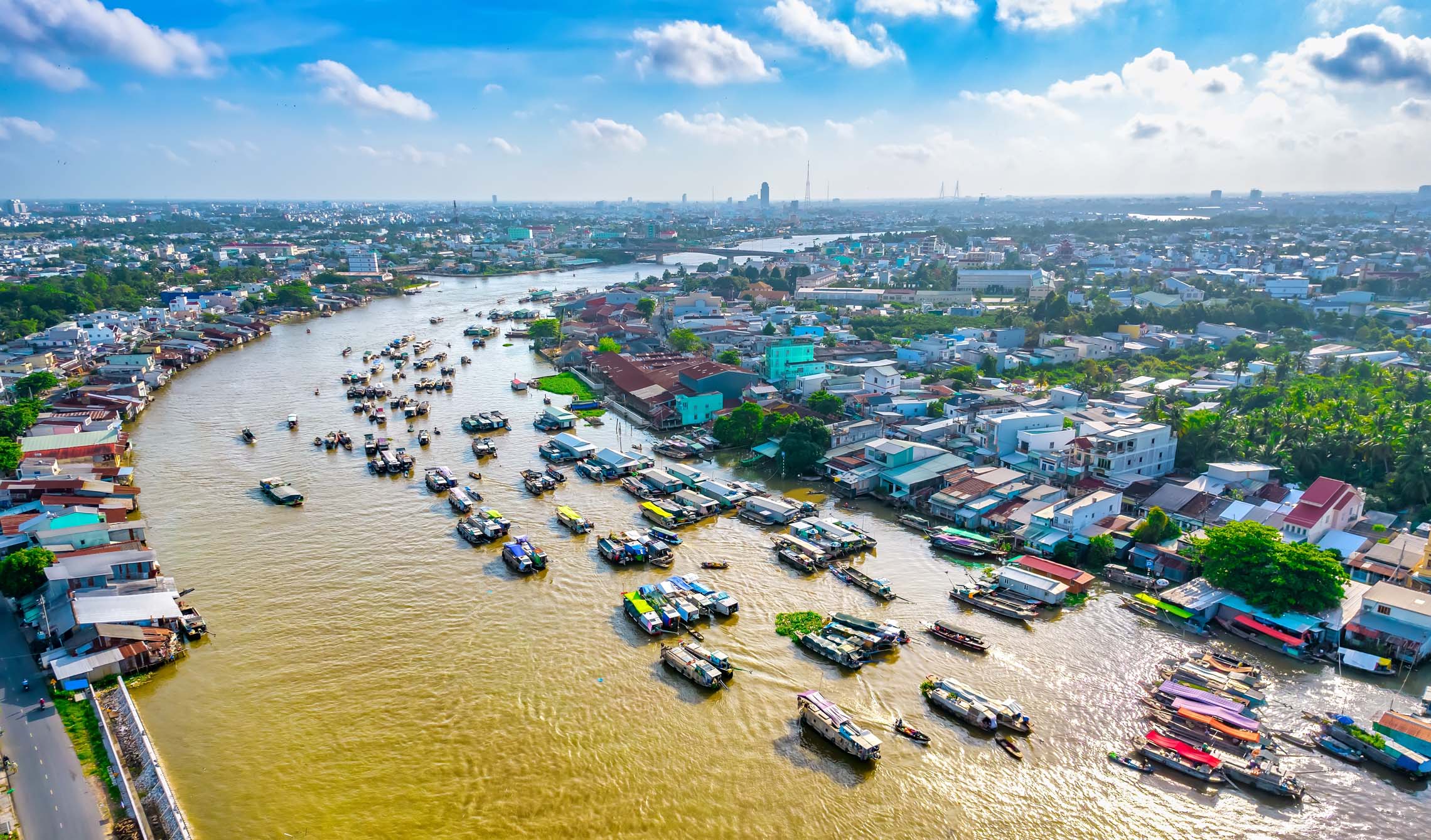
Aerial view of Can Tho's waterways, with boats and riverside buildings

Aerial view of Can Tho's waterways, with boats and riverside buildings

Cultural diversity across Kinh, Khmer and Chinese communities

The plucked strings of Don Ca Tai Tu, or Southern Vietnamese amateur chamber music, hint at the cultural diversity embedded in Can Tho’s social fabric. Kinh settlers cultivated the fertile plains, Khmer communities maintained longstanding roots across the Delta, while Chinese migrants and merchants became part of the river towns that grew around trade. Their presence was never confined to separate quarters. Families lived, worked and formed relationships across linguistic and ethnic lines, allowing customs and beliefs to pass between generations while retaining their own character. Over time, these encounters produced a cultural landscape with distinct yet closely connected layers, from Khmer heritage and southern Vietnamese traditions to Chinese influences that became deeply rooted in local society. Can Tho’s identity is therefore the inheritance of many peoples, preserved through generations and still legible in the city’s social fabric, giving its cultural heritage an enduring depth and a distinctly plural character.

Traditional craft villages and inherited skills

Traditional craft villages around Can Tho preserve a distinctly Delta form of creativity, turning rice, bamboo, rattan and river resources into things people eat, use, trade and pass down. The experience becomes richer when a visit moves from a Hu Tieu (Southern Vietnamese rice noodle soup) workshop in Cai Rang, where rice batter is steamed, dried and cut into silky strands, to handwoven baskets and fishing nets once essential to life along the waterways, then into the vivid flower gardens of Pho Tho – Ba Bo. At Thuan Hung, rice-paper makers transform locally grown rice into translucent sheets through techniques recognised as national intangible cultural heritage. Visitors can watch, taste and try these processes themselves, discovering the precision behind seemingly simple work and the imagination required to adapt humble materials to everyday needs. Each workshop becomes a living lesson in how local ingenuity turns ordinary resources into enduring heritage.

Best things to do in Can Tho through cultural landmarks

Can Tho’s cultural landmarks form a vivid snapshot of historical and cultural layers, intertwined through landscape, religion and the lived traditions of generations. Following those destination is one of the best things to do in Can Tho to grasp the spirit of its people.

Southern architecture and cultural heritage

Southern architecture comes into focus through the interplay of vernacular design, spiritual symbolism and craftsmanship adapted to life along the waterways. Binh Thuy Ancient House exemplifies the region’s garden-house tradition, where spacious courtyards, timber detailing and ornamental interiors create an architectural language rooted in Southern domestic life. Nearby, Binh Thuy Communal House represents the village communal house, a sacred civic setting dedicated to the tutelary deity and associated with worship, festivals and collective affairs. Religious architecture takes another form at Truc Lam Phuong Nam Zen Monastery, where timber halls, layered roofs, carved ornament and Buddhist imagery draw on established Vietnamese pagoda traditions. Moving through these spaces, visitors can linger over intricate details, quiet courtyards and devotional imagery, gradually sensing the grace of Southern architecture and the beliefs that have given it enduring cultural resonance.

Nature and historical memory

The waterways around Can Tho have long shaped a relationship with nature that extends beyond cultivation, linking livelihoods, local knowledge and beliefs rooted in the surrounding terrain. At Son Islet, that relationship takes a playful form through fish farming and the jumping snakehead fish, an unusual local practice that turns knowledge of river species into a lively visitor experience among orchards and household gardens. The same intimacy with the land takes on a more solemn character at Gian Gua Historical Site, where immense banyan roots conceal traces of wartime resistance alongside sacred associations held by local communities. Here, the countryside becomes more than scenery, with water, vegetation and human resilience converging in places that invite travellers to pause, look closer and appreciate how deeply nature is embedded in local history and belief.

Khmer Buddhist heritage around Soc Trang

The former Soc Trang area (now part of Can Tho) carries a profound Khmer imprint, with Theravada Buddhism anchoring religious practice, artistic expression and communal life. Doi Pagoda and Kh’Leang Pagoda are distinguished by gilded ornament, tiered roofs, sculpted naga motifs and richly decorated sanctuaries, their grounds animated by offerings, chanting, ceremonial gatherings and Khmer festivals. Kh’Leang, among the oldest Khmer pagodas in the Mekong Delta, stands as a reminder of the region’s longstanding Khmer presence and the central role of monastic institutions in community life. Sunlight catches the goldwork beneath palm-fringed courtyards, saffron-robed monks pass beneath shaded galleries, and the measured cadence of Buddhist ritual lends the surroundings a contemplative stillness. The experience leaves the architecture inseparable from the devotion, artistry and communal customs that animate these sacred spaces.

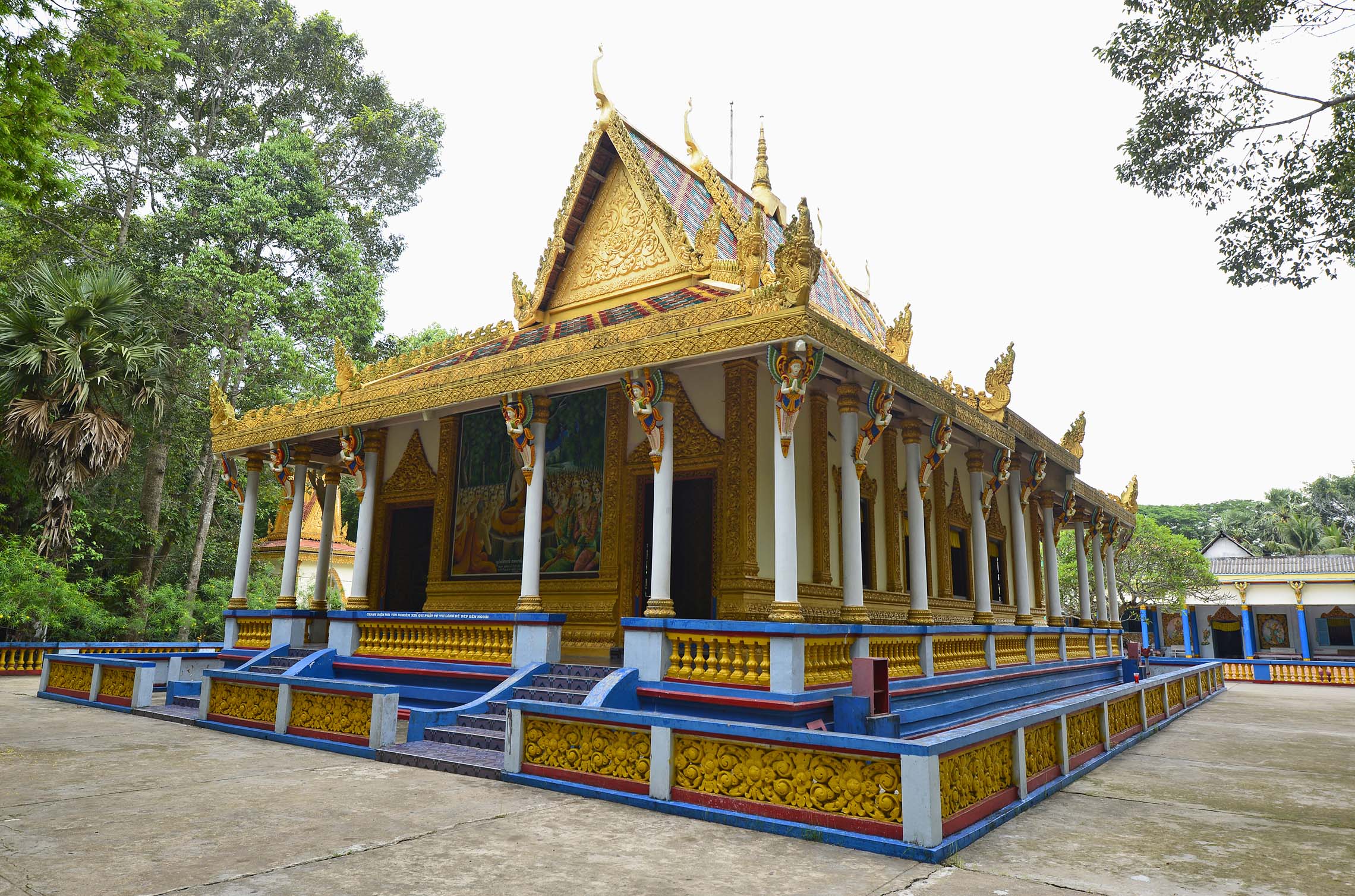
Doi Pagoda with its multi-tiered Khmer roof and intricate decorative patterns

Doi Pagoda with its multi-tiered Khmer roof and intricate decorative patterns

Ninh Kieu Wharf and Cai Rang Floating Market

Can Tho’s public life feels even more animated by the river, with boats, vendors, produce and passing crowds creating a vivid picture of everyday life shaped by trade.

Ninh Kieu Wharf brings tourist to the local life

At Ninh Kieu Wharf, a boat horn cuts across the broad brown water as flower sellers arrange vivid bouquets, ferries ease against the quay and families lean over the railings to watch the traffic, continuing a riverside scene rooted in the history of a place once known as Hang Duong Wharf before taking the name Ninh Kieu in 1957, after a patriotic figure in Vietnamese history. Visitors can linger over coffee while listening to vendors chat with familiar customers, watching children wave at passing boats as river breeze mingles with engine noise and bursts of colour along the promenade. These details draw travellers into a distinctly Southern scene, where Can Tho’s river culture feels close enough to touch, hear and savour.

Cai Rang Floating Market and the language of trade

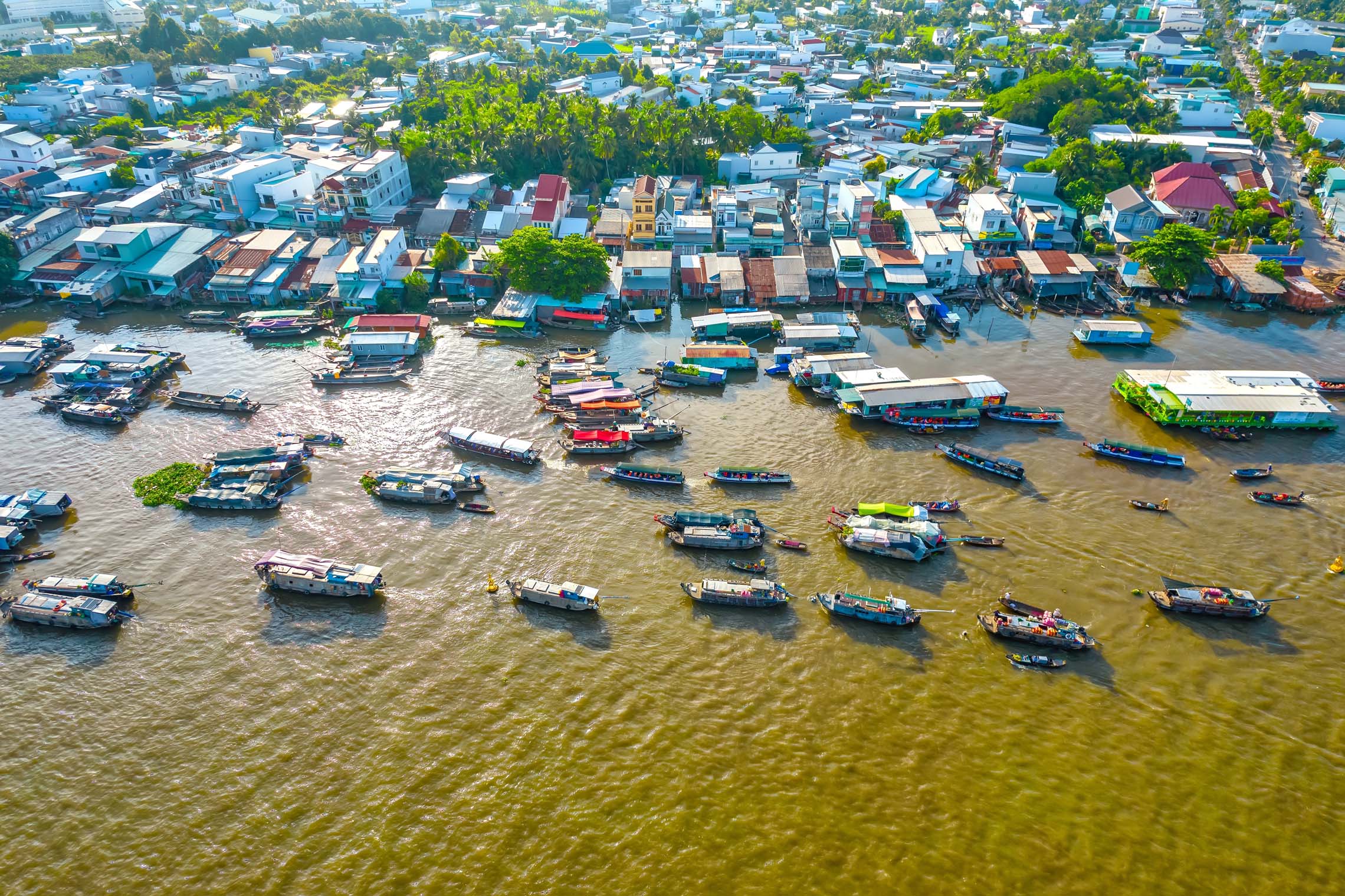
At Cai Rang, the early market gathers inches above brown alluvial water, with wooden boats nudging hulls as engines thrum, vendors call across the channel and Southern voices rise through the bargaining. The scene has become one of the Delta’s most recognisable images, yet its roots lie in an older trading culture when waterways linked orchards, hamlets and market towns, turning boats into stalls, warehouses and transport. Each vessel carries a cay beo, a bamboo pole hung with pineapples, gourds or other produce, functioning as a floating signboard visible from afar. From a low seat near the bow, visitors become part of this aquatic theatre, surrounded by fruit-laden poles, steaming coffee and the mingled scents of river silt, ripe pineapple, hot broth and diesel.

A panoramic view of Cai Rang Floating Market, with boats gathered on the Hau River and riverside neighborhoods

A panoramic view of Cai Rang Floating Market, with boats gathered on the Hau River and riverside neighborhoods

And that image near the water is a perfect closing scene for a journey through the Mekong Delta, as the last boat slips towards the horizon and the city seems to fold its colours, voices and river-born stories into the fading light.

Quick information

Frequently Asked Questions

The dry season from December to April is generally comfortable for exploring Can Tho, while the fruit season from May to August adds another sensory layer, with orchards filled with tropical produce and local gardens at their most abundant.

Arrive around 5 AM – 7 AM to see the market at its most animated, when boats gather along the river, produce changes hands and breakfast is served from floating kitchens amid the sound of engines and conversation.

Two to three days allow enough time to experience the city’s river culture, heritage sites, Cai Rang Floating Market, orchard communities and distinctive Southern cuisine without rushing from one experience to the next.

Can Tho restaurants for a taste of the Mekong Delta

Along the Hau River, the fragrance of grilled pork, river fish, caramelised garlic and ripe fruit drifts through the streets, while bowls of noodles arrive with herbs still bright from nearby gardens. Can Tho restaurants are best understood with this sensory landscape, where food carries the character of the Mekong Delta and the intertwined histories of its communities.

Can Tho restaurants reflect the culture of local dining

Can Tho’s dining culture grew around the exchange between river trade and the kitchen, as produce arriving by boat found its way into noodle stalls, family eateries and market tables, where cooks adapted what was available into dishes passed between generations.


Local vendors preparing traditional Mekong Delta food on a wooden boat

Local vendors preparing traditional Mekong Delta food on a wooden boat

Mekong Delta flavours and the abundance of the river garden

A meal in the Mekong Delta often begins with what can be lifted from a pond, picked beside a canal or gathered from the garden, a practical food culture that has shaped Southern cooking for generations. Ca Loc Nuong Trui (Grilled snakehead fish), Canh Chua Ca (Sour fish soup) and Kho Ca Loc (Caramelised snakehead fish) pair freshwater catch with tart fruit, leafy greens and fragrant herbs, balancing smoky, sour and savoury notes without masking the character of each ingredient. Around Phong Dien, garden restaurants place these dishes among orchards and waterways, giving diners a closer sense of how agricultural abundance enters the kitchen and how local cooks turn everyday produce into deeply distinctive regional cuisine.

A meeting of Kinh, Hoa and Khmer culinary cultures

Can Tho restaurants bring several culinary traditions to the same table, particularly around Ninh Kieu, where family kitchens, noodle shops and casual dining rooms serve dishes rooted in Kinh, Hoa and Khmer communities. Banh Hoi Heo Quay (Rice vermicelli with roast pork) pairs fine rice vermicelli with richly seasoned pork, while Mi Hoanh Thanh (Wonton noodles) introduces the supple noodles, delicate dumplings and savoury broth associated with Chinese culinary traditions. Further into the Southwest, Bun Nuoc Ken (Khmer-style fish curry noodles) shifts the palate towards freshwater fish, coconut and aromatic herbs. Such dishes give local restaurants a distinctive culinary repertoire, shaped through centuries of settlement and commerce. Kinh households contributed the rice-based cooking and freshwater ingredients familiar across Southern kitchens; Hoa merchants established culinary businesses around trading centres, where noodle-making and roasted meats became part of urban food culture; Khmer communities preserved their own flavours through village life, religious gatherings and family cooking.

In Can Tho, these influences meet in practical, unpretentious settings, where a noodle counter may stand beside a roast-meat shop and a family restaurant serving dishes associated with the wider Khmer culinary landscape. The Can Tho restaurants scene becomes a place where different histories share the same dining geography, giving each meal a subtle sense of the communities, commerce and culinary exchanges that have shaped the Southwest.

Seasonal ingredients from the Mekong floodplain

When the Mekong’s floodplain spreads across fields and channels, two ingredients become emblematic of Southern cuisine, Ca Linh (Mekong freshwater fish) and Bong Dien Dien (Sesbania flowers). Their pairing in Canh Chua Ca Linh (Sour fish soup) brings together silvery fish, yellow blossoms, tamarind broth and fresh herbs, a combination closely associated with the waters that nourish the Delta’s fields and waterways. Ca linh was traditionally gathered from floodwaters, when fish moved into flooded fields and canals, while Bong Dien Dien grew along riverbanks, its flowers becoming a familiar ingredient in household cooking.

Around Cai Rang, restaurants specialising in Mekong Delta dishes translate this seasonal knowledge into cooking, where the fish lends delicate savouriness and the flowers contribute faint bitterness and floral fragrance to the broth. The dish belongs to a wider Southern habit of cooking according to what the river and countryside provide, rather than treating ingredients as a fixed repertoire. For diners, a bowl of Canh Chua evokes flooded fields, flowering banks and the agricultural knowledge that has long connected Southern kitchens with waterways.

The best food in Can Tho (Viet Nam)

The best food in Can Tho (Viet Nam) is often found in dishes that seem modest at first glance, then reveal layers of technique, regional history and local habits.

Local noodle and snack staples around Ninh Kieu and Xuan Khanh

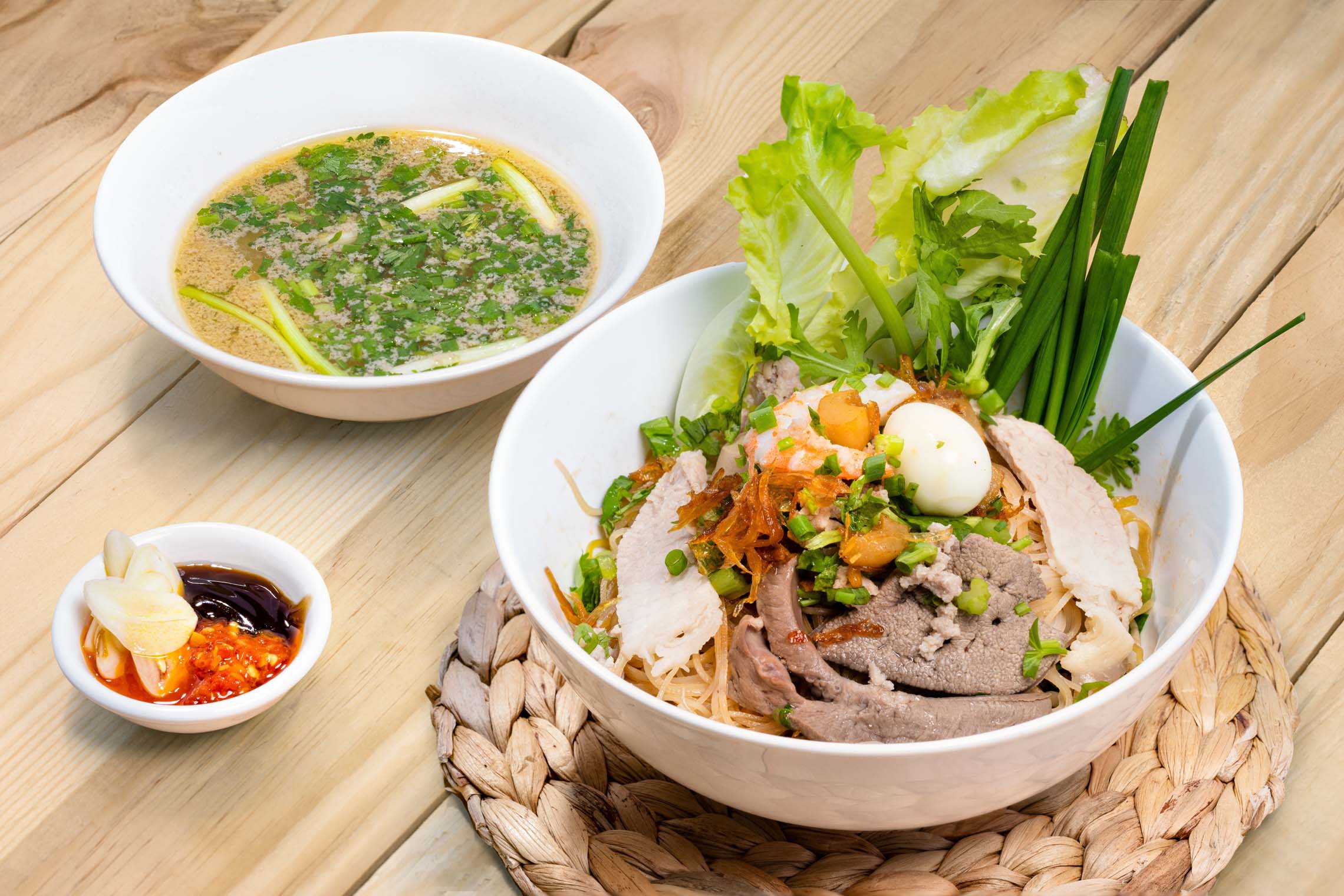
Hu Tieu (Southern Vietnamese rice noodle soup) is prized for its limpid broth, supple rice noodles and finely calibrated mix of meat, seafood, scallions and herbs, with each spoonful balancing savoury depth against the freshness of greens. Around Ninh Kieu and Xuan Khanh, the fragrance of simmered stock drifts through compact eateries, where bowls arrive generously assembled and garnished with crisp bean sprouts, leafy herbs and sliced chilli.

A bowl of hu tieu noodle soup topped with pork, shrimp, quail eggs, and fresh herbs, served with broth and dipping sauce

A bowl of hu tieu noodle soup topped with pork, shrimp, quail eggs, and fresh herbs, served with broth and dipping sauce

Banh Cong (Crispy shrimp and mung bean fritters) takes a more robust approach, combining mung bean, taro and rice flour around a whole shrimp before frying the mixture in a small ladle-shaped mould. Its ridged golden crust gives way to a tender, earthy interior and succulent shrimp, while herbs and fish sauce cut through the richness. Together, the two dishes create a compelling contrast between silken broth and crackling crust, delicate fragrance and deep savouriness, giving Southern street food its characteristic interplay of texture, freshness and richness.

Southern street food and the pleasure of eating with bare hands

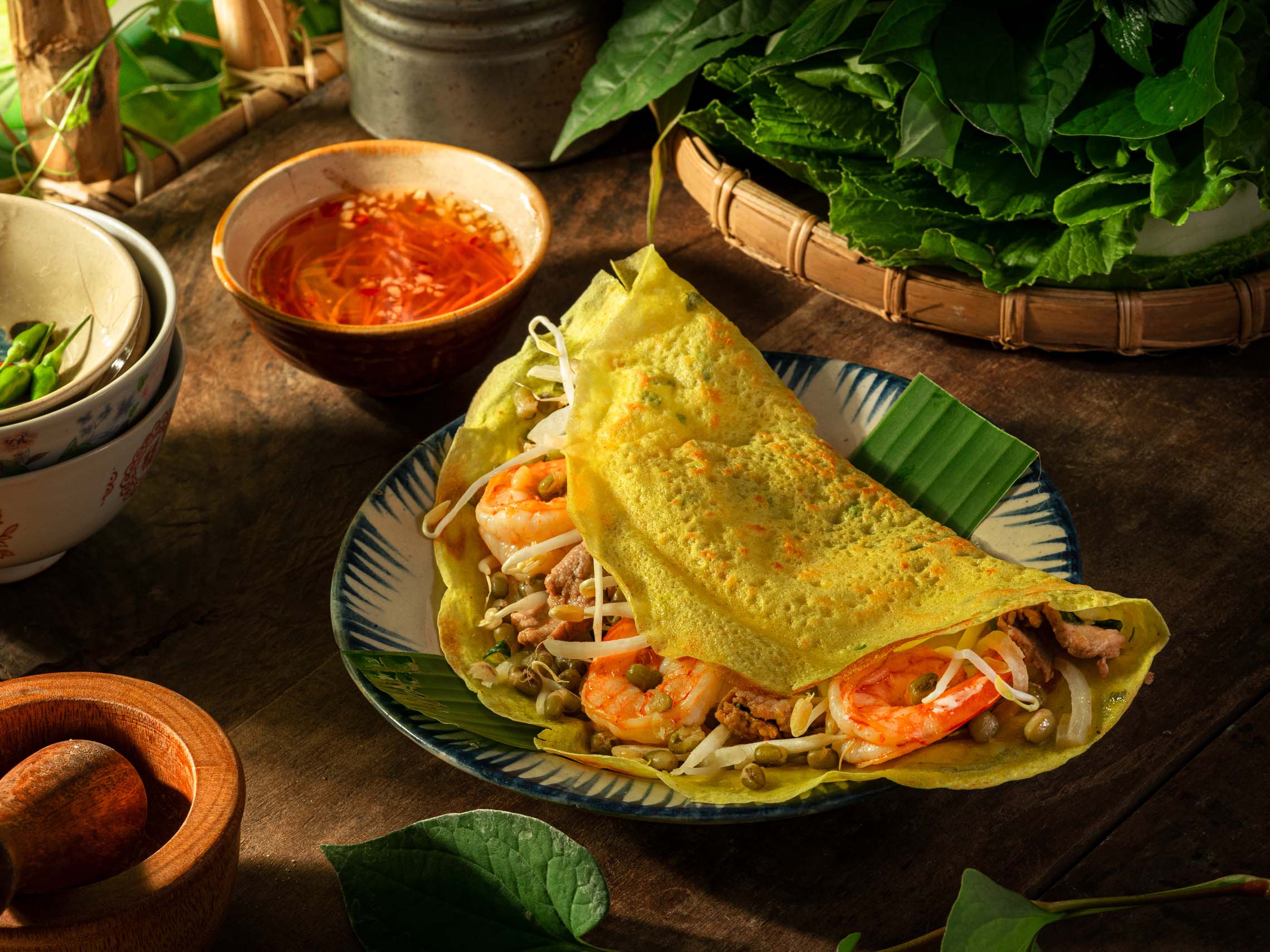
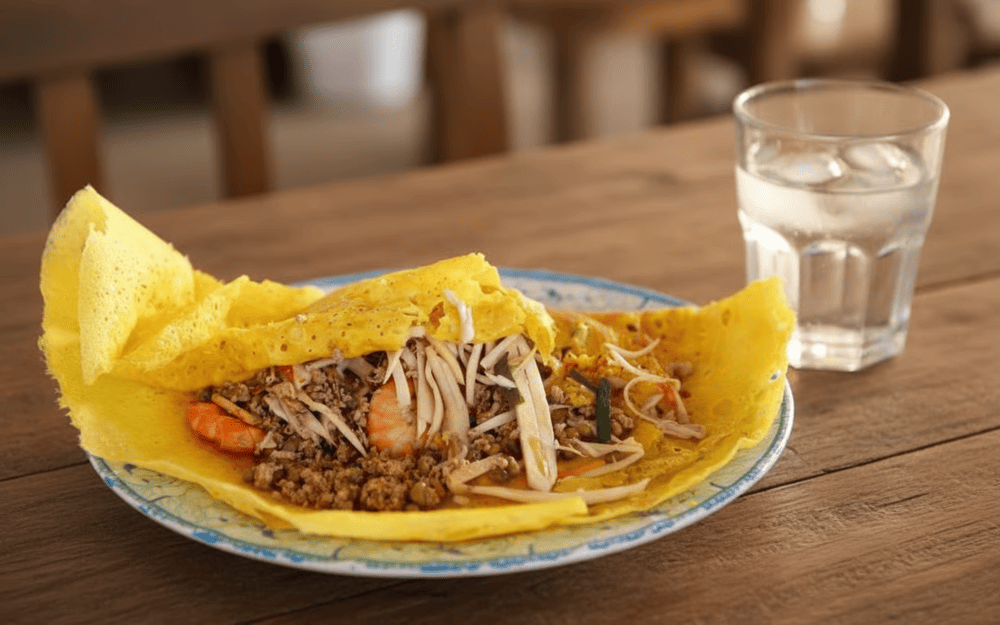
Around the central market, Banh Xeo (Vietnamese crispy crepes) announces itself with a sharp sizzle as turmeric-tinted batter spreads across the hot pan. The Mekong version comes generously stuffed with pork, shrimp and bean sprouts, its brittle edges folded around lettuce and fragrant herbs, then torn by hand and dipped into nuoc cham. Banh Dan Gian (Traditional Southern folk cakes) such as Banh It Tran (Glutinous rice dumpling) and Banh Da Lon (Layered steamed rice cake), collectively known as Banh Dan Gian, moves into softer territory, combining rice flour, coconut and mung bean with banana leaves, producing little cakes that range from tender to pleasantly chewy. Holding the warm crepe between your fingers, feeling the crisp shell fracture against the herbs and tasting the bright, salty dip, diners experience a kind of immediacy that makes Southern street food feel playful, generous and wonderfully unrestrained.

Vietnamese Banh Xeo filled with shrimp and bean sprouts and dipping sauce

Vietnamese Banh Xeo filled with shrimp and bean sprouts and dipping sauce

Rich Mekong flavours around Cai Khe and Ninh Kieu

From the crisp street bites found around Ninh Kieu, dining in Cai Khe and Ninh Kieu turns towards richer preparations built around fermented fish, freshwater catch and abundant river vegetables. Lau Mam (Fermented fish hotpot) arrives with an assertive fragrance from fermented fish paste, its broth deepened with freshwater fish, shrimp, vegetables and herbs until the initial intensity settles into savoury, earthy complexity. Ca Tai Tuong Chien Xu (Crispy fried elephant ear fish) brings another signature of Mekong cooking, the whole fish fried until its scales form a crisp golden crust while the flesh beneath remains moist and delicate. Around these districts, restaurants serve the fish with cucumber, herbs, pickled vegetables and rice paper, allowing diners to layer crisp skin, tender flesh, cool greens and sharp acidity into each bite.

Khmer culinary heritage from the former Soc Trang area

The former Soc Trang area has one of the clearest Khmer culinary signatures in the southern Delta, where generations of Khmer households have preserved distinctive ways of seasoning, preparing and sharing food. Bun Nuoc Leo (Khmer-style fish noodle soup) is among the most recognisable dishes, built around a fragrant broth of freshwater fish and fermented ingredients, then layered with shrimp, pork, herbs and shredded banana blossom over rice noodles. Bun Goi Da (Khmer-style noodle soup) follows a different culinary logic, bringing together noodles, vegetables, herbs and seasoned ingredients in a more textured combination. Fermented fish, freshwater produce and garden-grown aromatics remain central to this repertoire, linking restaurant kitchens with the foodways of the former Soc Trang area (now part of Can Tho).

In Can Tho today, these dishes lend the dining scene a distinctly Khmer accent, with flavours that speak to the region’s freshwater bounty, fermented pantry and centuries-old culinary exchange across the southern Delta.

Quick information

Frequently Asked Questions

For the freshest local flavours, follow the rhythm of everyday dining: start early with breakfast, seek out seasonal specialities, and leave time for small neighbourhood eateries where local families gather.

Early morning is ideal for breakfast dishes and floating-market food, while late afternoon and evening are well suited to grilled dishes, hotpot and relaxed neighbourhood dining.

A dish at a casual local eatery generally costs around VND 30,000 – VND 100,000, while a meal at a sit-down restaurant typically ranges from around VND 150,000 – VND 300,000 per person.

How to get to Can Tho through the roads and waterways

Can Tho occupies a strategic position in the heart of the Mekong Delta, where major roads and waterways converge to connect the city with provinces across the Southwest. This geography gives travellers several ways to reach Can Tho, from direct road journeys to routes shaped by the region’s intricate river network.

How to get to Can Tho from nearby destinations

Regional buses connect Can Tho with other provinces

Regional buses remain one of the most familiar ways to reach Can Tho from Ho Chi Minh City and neighbouring provinces. The journey gradually leaves dense streets behind for rice fields, fruit gardens and canals, offering a first glimpse of the delta’s agricultural identity through the bus window. For many local residents, this is simply part of everyday mobility; for visitors, the changing landscape becomes an introduction to the Mekong Delta long before arrival.

A private car offers more flexibility for families and groups

A private car allows families and small groups to travel at their own pace, particularly when exploring the countryside around Phong Dien. The road can become part of the experience, with pauses beside fruit orchards, village markets or quiet stretches of canal where vendors arrange tropical produce in vivid pyramids. These unscheduled moments reveal a quieter Can Tho, shaped by gardens, waterways and agricultural traditions rather than major attractions.

A motorbike opens up the road to smaller towns

For confident riders, a motorbike creates a closer connection with the landscape around Thot Not and the northern outskirts. Smaller roads pass vegetable gardens, modest bridges, riverside homes and local markets, where the scent of grilled food mixes with wet earth and tropical foliage. The route becomes a sensory journey through southern rural life, with the landscape changing at the pace of the road rather than through a fixed itinerary.

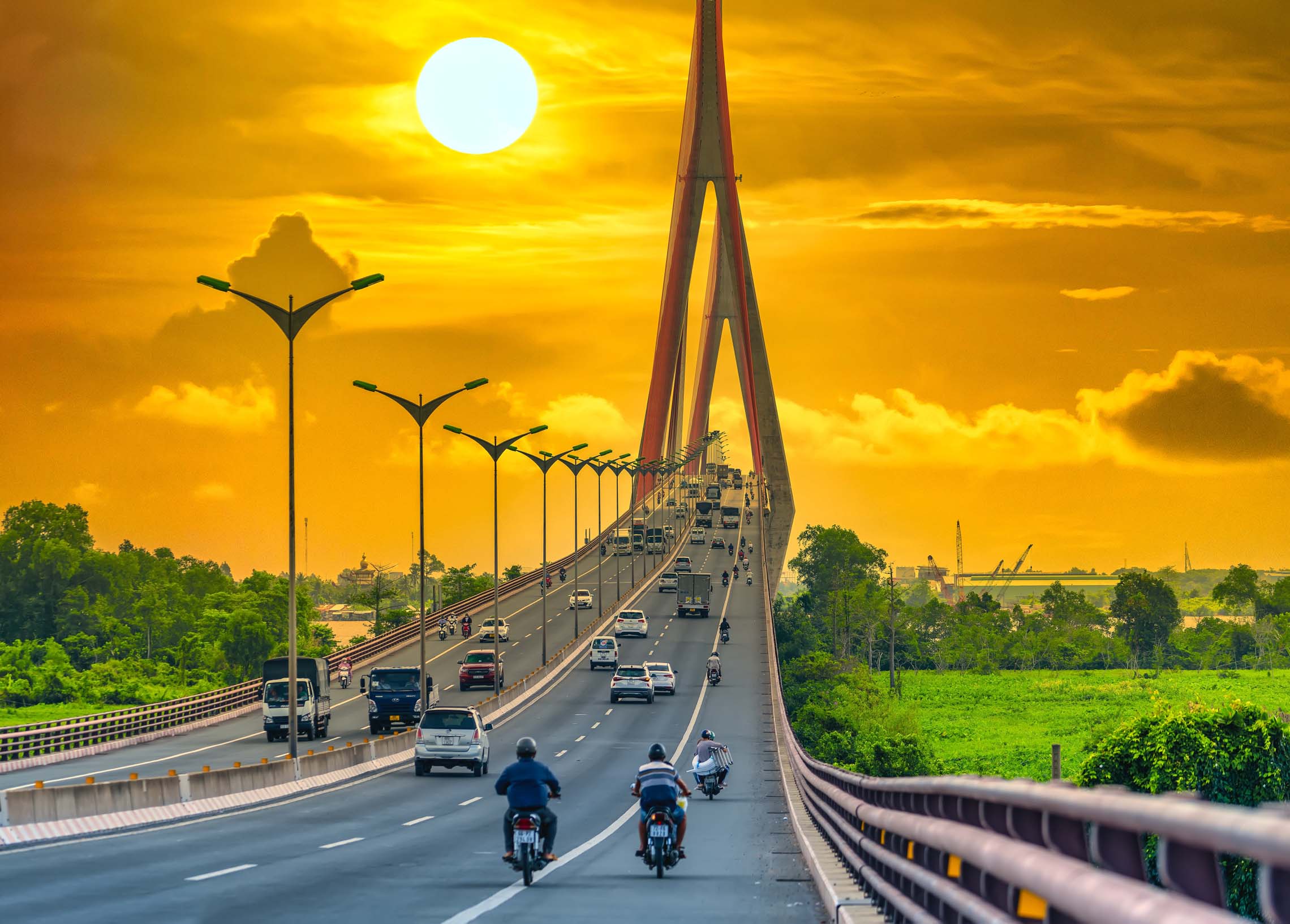
Vehicles crossing Can Tho Bridge over the Hau River at sunset

Vehicles crossing Can Tho Bridge over the Hau River at sunset

Flying makes more sense for longer journeys

For travellers coming from Hanoi or central Vietnam, flying can significantly shorten the journey and leave more time for exploring the delta. Air connections also reinforce Can Tho’s role as a regional gateway, linking the southwest with other parts of Vietnam while preserving the city’s distinct identity as a river-based commercial centre.

Travel to Can Tho can starts with its airport

Can Tho International Airport makes travel to Can Tho easier

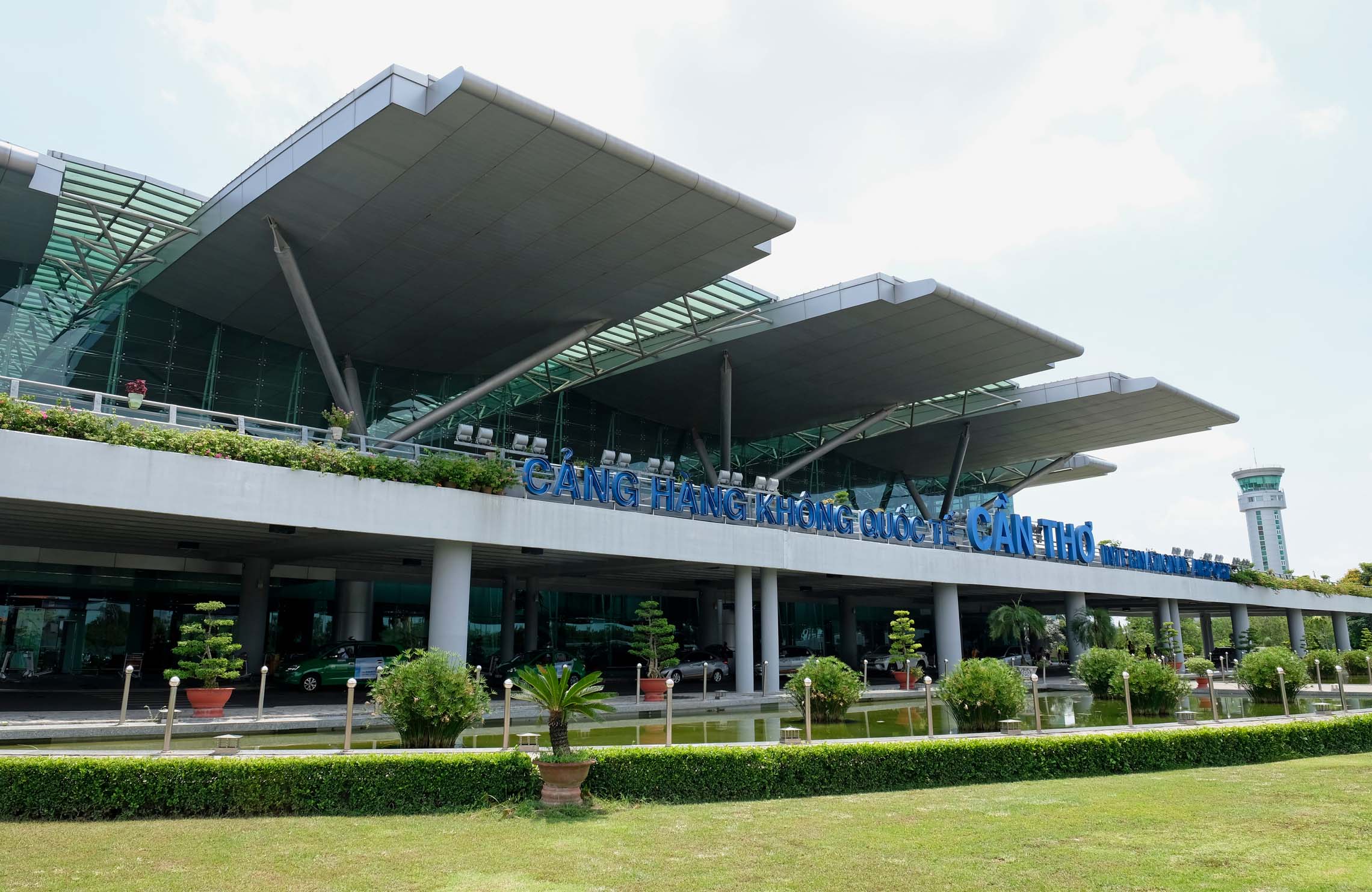
Can Tho International Airport in Binh Thuy is the city’s principal air gateway, approximately 7km from central Can Tho. The terminal has essential facilities including restaurants, ATMs and passenger services, giving passengers the basic conveniences needed before departure or after landing. As the main airport serving the Mekong Delta’s largest urban centre, it handles both domestic arrivals and departures, providing air connections between Can Tho and major Vietnamese cities. Its role is particularly useful for visitors travelling from Hanoi, Da Nang or other parts of the country who want to reach the Delta without first travelling through Ho Chi Minh City. For air travel, passengers can check available routes and make reservations through flight booking, while TripCare travel insurance can be added when arranging the journey.

Exterior of Can Tho International Airport's passenger terminal

Exterior of Can Tho International Airport's passenger terminal

Getting from the airport to the city is straightforward

Taxis, ride-hailing services and private transfers provide the most practical ways to travel from Can Tho International Airport into the city, with central districts such as Ninh Kieu generally taking around 20 – 30 minutes by road, depending on traffic. The relatively short distance means the transfer is more than a simple airport connection, as the route moves from Binh Thuy’s quieter streets towards the denser urban fabric around the riverfront, passing local shops, markets, residential lanes and canals along the way. For first-time visitors, this gradual change in scenery offers a useful sense of Can Tho’s geography: the city centre is closely connected to the surrounding districts, while waterways remain woven into the roads, neighbourhoods and everyday movement across the Delta.

Ways of moving around Can Tho

Motorbikes for exploring beyond the centre

Motorbikes are practical for reaching orchards, rural communities and attractions around Son Islet, where households combine fruit cultivation, fish farming and community-based tourism. Smaller roads also make it easier to reach garden homes, local food stops and riverside communities that are less accessible by car, giving riders a closer view of the agricultural landscape surrounding Can Tho. For independent journeys, a motorbike provides greater flexibility when routes branch away from the main roads towards canals, orchards and villages.

Taxis and ride-hailing for city trips

Taxis and ride-hailing services are convenient for journeys between hotels, restaurants, markets and riverside areas, particularly around Ninh Kieu and the central districts. They are useful when carrying luggage, travelling during hotter periods or visiting several places across the city without worrying about parking. For short urban trips, these services also make it simple to connect the riverfront with restaurants, shopping streets and local markets.

Boats for river-based experiences

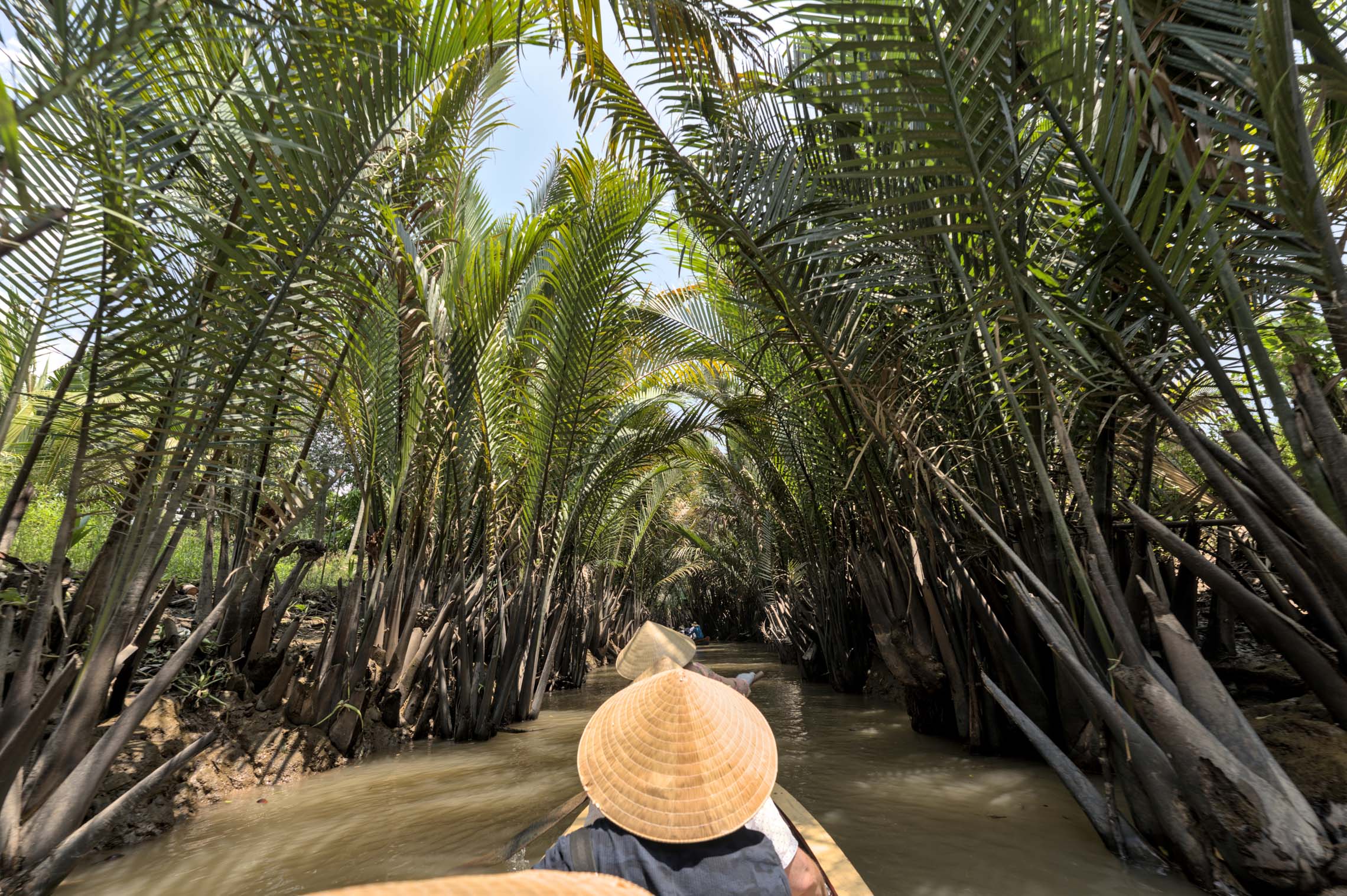
Boats provide access to a different side of Can Tho, where canals branch from the main river towards orchards, garden homes and agricultural areas beyond the central districts. Small boats can take visitors through narrower waterways lined with coconut palms, fruit trees and riverside households, while larger vessels are used for experiences such as Cai Rang Floating Market. These routes reveal how closely transport, farming and daily life remain connected across the Delta, with waterways functioning not only as scenic routes but also as practical links between the city and its surrounding countryside.

A passenger boat traveling through the waterways of the Mekong Delta

A passenger boat traveling through the waterways of the Mekong Delta

Quick information

Frequently Asked Questions

From Ho Chi Minh City, a coach ticket generally costs around VND 150,000 – VND 250,000 per person, while private car prices vary according to the vehicle type and number of passengers.

Yes. Can Tho can be combined with destinations such as Ben Tre, Vinh Long or Chau Doc, depending on the preferred route, transport and length of the trip.

For regular weekdays, booking a few days ahead is generally sufficient, while weekends, public holidays and peak travel periods are better planned one to two weeks in advance.

Hotels in Can Tho (Viet Nam) for a river escape

A room in Can Tho opens onto the river culture that has sustained the city for generations, with each setting revealing a different thread of life along the Hau River. From a riverside balcony, boat engines murmur towards quarters once supplied by waterborne cargoes of fruit, rice and household goods; among orchard gardens, guava foliage, damp earth and ripening fruit mingle with the smoke of charcoal stoves preparing breakfast. Together, these details connect the city’s waterways with its markets, kitchens and homes, so the choice between a riverside hotel and an orchard homestay also determines which side of this enduring landscape becomes part of the stay. A diverse selection of hotels in Can Tho makes that choice easier to shape around the experience sought.

Hotels in Can Tho for every traveller type

In Can Tho, different accomodation lend themselves to different kinds of travellers, from a first introduction to the city to slower stays centred on food, heritage and the countryside.

A central mid-range hotel for first-time travellers

A central mid-range hotel in Ninh Kieu gives first-time travellers a natural starting point, where the day can begin with coffee and breakfast near the hotel before leading towards Ninh Kieu Wharf, Ong Pagoda and the busy lanes around the market. An early boat then carries the journey out towards Cai Rang Floating Market, while Binh Thuy offers a quieter afternoon among old houses and leafy streets, all without lengthy transfers between stops. With restaurants, shops and transport links close by, this kind of stay leaves more time for discovering the city at street level.

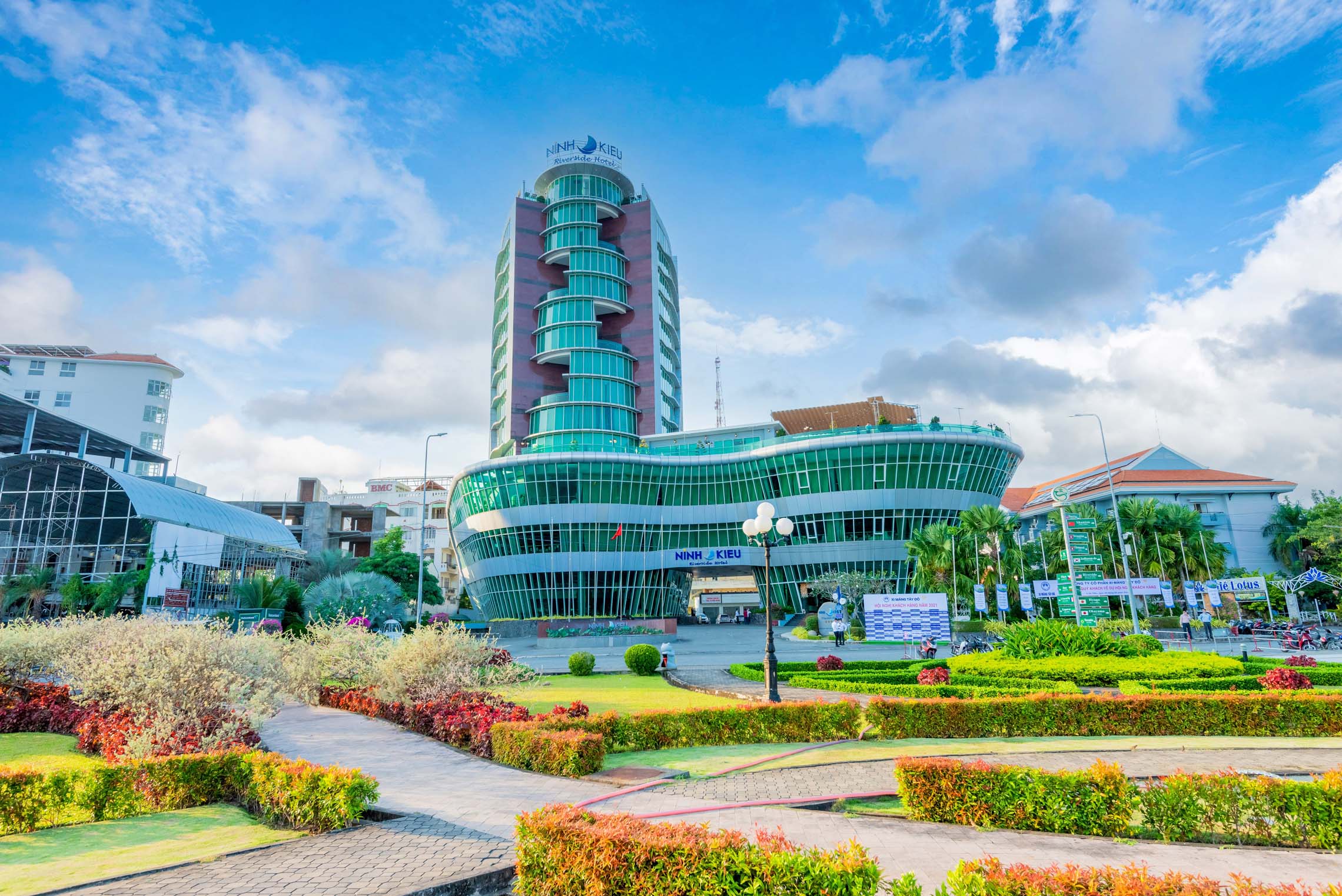
Modern hotel building surrounded by landscaped gardens in Can Tho

Modern hotel building surrounded by landscaped gardens in Can Tho

Ninh Kieu itself carries traces of an older trading world, when boats laden with produce moved along the Hau River and turned the waterfront into a centre of exchange. For a first-time visitor, staying here means seeing that history unfold naturally through the places encountered along the way.

A riverside homestay suits a slower holiday

Around Phong Dien, homestays beside canals and gardens encourage visitors to spend more time close to where they stay, with narrow lanes leading past fruit trees and bicycles carrying produce between homes. Instead of moving from one attraction to another, a morning can linger over freshly picked fruit, garden work and traditional Southern folk cakes prepared in family kitchens, while the canals and orchards remain close throughout the day.

Son Islet takes that slower pace further through family-run tourism, allowing visitors to stay among fruit gardens and learn about farming and traditional folk-cake making from the people who live there. Its fertile alluvial land in the Hau River keeps these activities close to home, while Vi Thanh provides a base for exploring the agricultural landscape of the former Hau Giang area (now part of Can Tho).

Families and groups suits areas around Cai Khe

Cai Khe gives families and groups a practical base for exploring a part of Can Tho where the modern city still carries traces of its trading past. The neighbourhood grew around waterways that once carried produce, goods and passengers between the city and the surrounding river settlements, turning the area into an important link in Can Tho’s commercial life. Those old routes have since been absorbed into the urban landscape, yet the connection between water, trade and daily movement remains visible in the streets and riverfront around Cai Khe. Staying here allows larger parties to explore that history together, with enough space at their accommodation to gather, rest and continue discovering the city. Naturally, guesthouses, homestays, villas and hotels in Can Tho here give families and groups different ways to stay close to the riverfront and explore the city at their own pace.

Best place to stay in Can Tho for different interests

The best place to stay in Can Tho follows the landscape and history each journey seeks, because a riverside address leads into the city’s trading heritage, while an orchard homestay can traces the waterways, gardens and agricultural traditions.

Stay near Ong Pagoda to discover Can Tho’s heritage

Around Ong Pagoda, the story of Can Tho’s Hoa community remains visible in vivid temple colours, carved details and incense curling through the courtyard. Founded by Chinese-Vietnamese residents in the nineteenth century, the pagoda preserves southern Chinese religious architecture while standing amid a neighbourhood shaped by generations of trade, migration and exchange.

Staying nearby leads naturally towards Can Tho Museum, traditional markets and the older commercial quarter, where shopfronts, food stalls and temple courtyards reveal connections between commerce and community. For travellers drawn to local culture, this part of the city places history within walking distance of street food and daily life.

Lung Ngoc Hoang area and a closer look into wetland culture

Garden retreats near Lung Ngoc Hoang, located in the former Hau Giang area and some distance from the city centre, draw their character from canals, Melaleuca groves and low-lying fields stretching around the reserve. Shaded verandas look towards reeds rising from dark water, while narrow paths disappear beneath foliage alive with birdsong and native wildlife. Such surroundings echo the wetland system that has supported cultivation and settlement across the southwest, where channels carry water between forest, farmland and scattered rural communities. A stay here keeps those elements in view, replacing the density of central Can Tho with open greenery, winding canals and the distinctive ecology of the delta.

Stay near Kh’Leang Pagoda to explore Khmer heritage

Khmer heritage runs deep through the former Soc Trang area, where Theravada Buddhism has influenced the architecture and cultural traditions of local Khmer communities for generations. Kh’Leang Pagoda expresses this heritage through tiered roofs, gilded ornament and naga figures, while Doi Pagoda adds another distinctive chapter with fruit bats nesting among its trees. The streets around these temples continue the same cultural thread through Khmer markets, regional dishes and religious customs, creating a neighbourhood where temple life extends into the surrounding community. Hotels and guesthouses nearby keep this heritage within reach, linking a stay with the Khmer culture that defines the area.

Explore traditional river commerce near Nga Nam Floating Market

Nga Nam grew where several waterways converge, turning this meeting of currents into a trading hub for rice, fruit and other produce moving between farming communities. Riverside hotels and small lodges follow the same geography, with rooms facing wooden jetties where cargo is loaded and traders exchange goods across the channels. From a balcony above the water, the floating market comes alive through laden sampans, creaking piers and calls exchanged between vendors, while the channels stretch towards farms and settlements inland. Such a riverside stay keeps the market’s working life woven into the scenery beyond the room.

Around Con Au for a secluded luxury escape

Con Au is emerging as a refined river-island retreat, with luxury resorts tucked among palms, orchards and broad waterways. A villa screened by greenery, a private pool facing the river and the soft hush of water beyond the garden create an immediate sense of separation from mainland Can Tho, allowing the mind to settle into the stillness of the island. That feeling deepens as the river becomes the day’s quiet companion, glimpsed between trees or heard from the terrace, while boats trace the channels beyond the resort grounds. Surrounded by orchards and fertile banks, the stay carries the intimacy of island life into a distinctly Mekong setting.

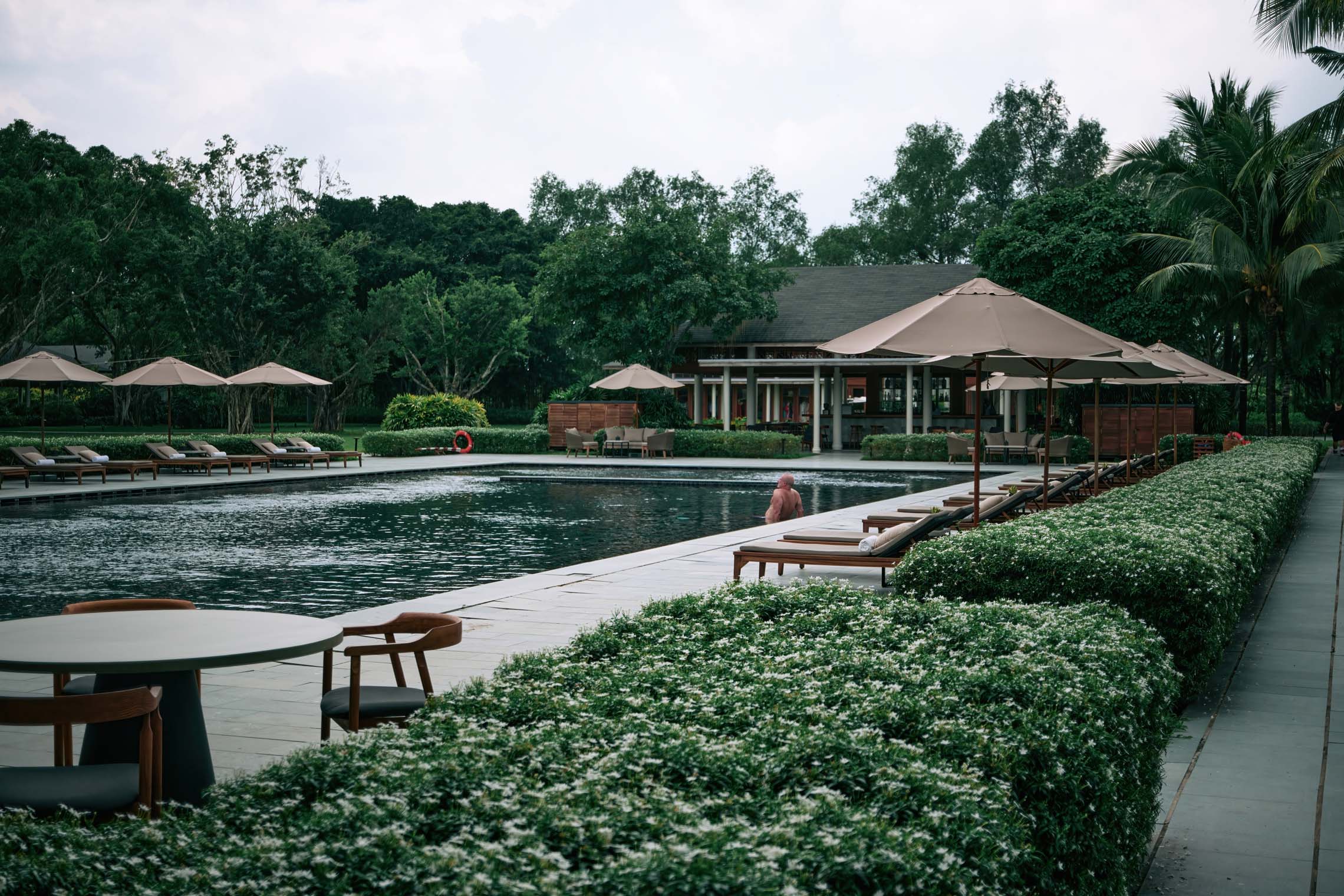
Outdoor swimming pool surrounded by tropical greenery at a resort

Outdoor swimming pool surrounded by tropical greenery at a resort

Quick information

Frequently Asked Questions

Budget rooms generally start around VND 200,000 – VND 400,000 per night, while mid-range hotels often cost around VND 400,000 – VND 800,000. Upscale and luxury accommodation can start from around VND 2 million per night, depending on the property and season.

For weekends, public holidays and periods of higher demand, booking one to two weeks ahead is advisable. Regular weekdays generally provide more flexibility, although popular accommodation can still fill up during major local events.

Yes. A longer stay allows visitors to combine city sightseeing with slower days exploring orchards, waterways and nearby cultural areas. Hotels with larger rooms, gardens, pools or resort-style facilities can make several nights more comfortable.

Can Tho Markets: A living culture of the Delta

Can Tho’s markets speak through details rarely found in guidebooks, from baskets of freshwater fish and bunches of rau dang to pyramids of mangos, star apples and pomelos stacked beside trays of freshly prepared food. Their customs grew from household commerce, with produce passing between growers, boat traders, cooks and families before reaching the kitchen. Cai Rang preserves this exchange on the river, while Tan An and Xuan Khanh extend it into neighbourhood streets, where shopping remains woven into the social fabric of everyday life.

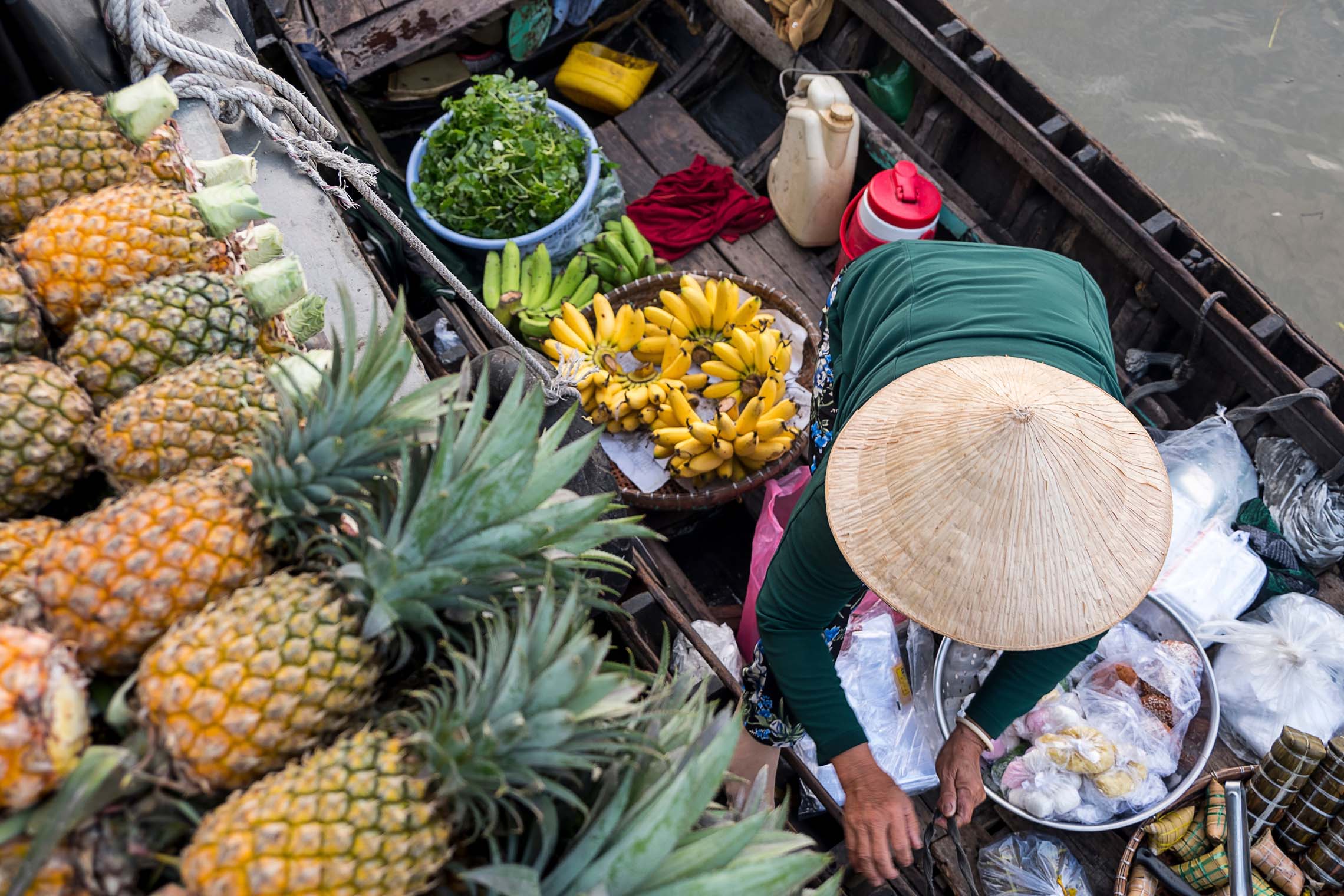
Wooden boats gathered for trading at a floating market in the Mekong Delta

Wooden boats gathered for trading at a floating market in the Mekong Delta

Visit Can Tho market for a closer look at local customs

A Can Tho market is defined by understated rituals, from carefully arranged produce to familiar greetings between vendors and regular customers. Bargaining, selecting ingredients and exchanging local news turn each purchase into a small act of everyday social life.

Markets in Ninh Kieu and Tan An reveal the city’s everyday energy

Familiarity is part of the daily commerce in markets around Ninh Kieu and Tan An, where buying food often involves recognition as much as selection. A vendor here may know which fish a regular customer prefers, how much coriander belongs in a bowl of noodles or which vegetables arrived from nearby gardens. Such knowledge grows from repeated exchanges, linking individual preferences with produce arriving from orchards, canals and fishing communities across the Delta. Baskets of leafy greens, silver-scaled fish, shallots and chillies fill the stalls with colour, while fried shallots, lemongrass and roasted meat lend the surroundings a savoury fragrance. Walking among these stalls, visitors may feel the distance between observer and daily life disappear, replaced by the warmth of familiar voices, spontaneous smiles and a city experienced at close range.

Markets around Xuan Khanh and Vi Thanh carry regional food traditions

Xuan Khanh brings the familiar sweets of Southern households into the market scene, where Banh It Tran (Glutinous rice dumpling) pairs tender glutinous rice with a gently sweet mung bean centre, while Banh Da Lon (Layered steamed rice cake) builds delicate layers from rice flour, coconut milk and pandan. Their soft textures and restrained sweetness give visitors a glimpse of the patient handiwork associated with family gatherings and festive occasions. That domestic food culture extends into Vi Thanh, where the agricultural landscape of Hau Giang influences the produce and flavours found in local cooking. Taken together, these places allow visitors to trace how food changes across the Southwest, with each stop introducing a different taste, texture and cultural influence.

Take home the flavours of the Mekong Delta

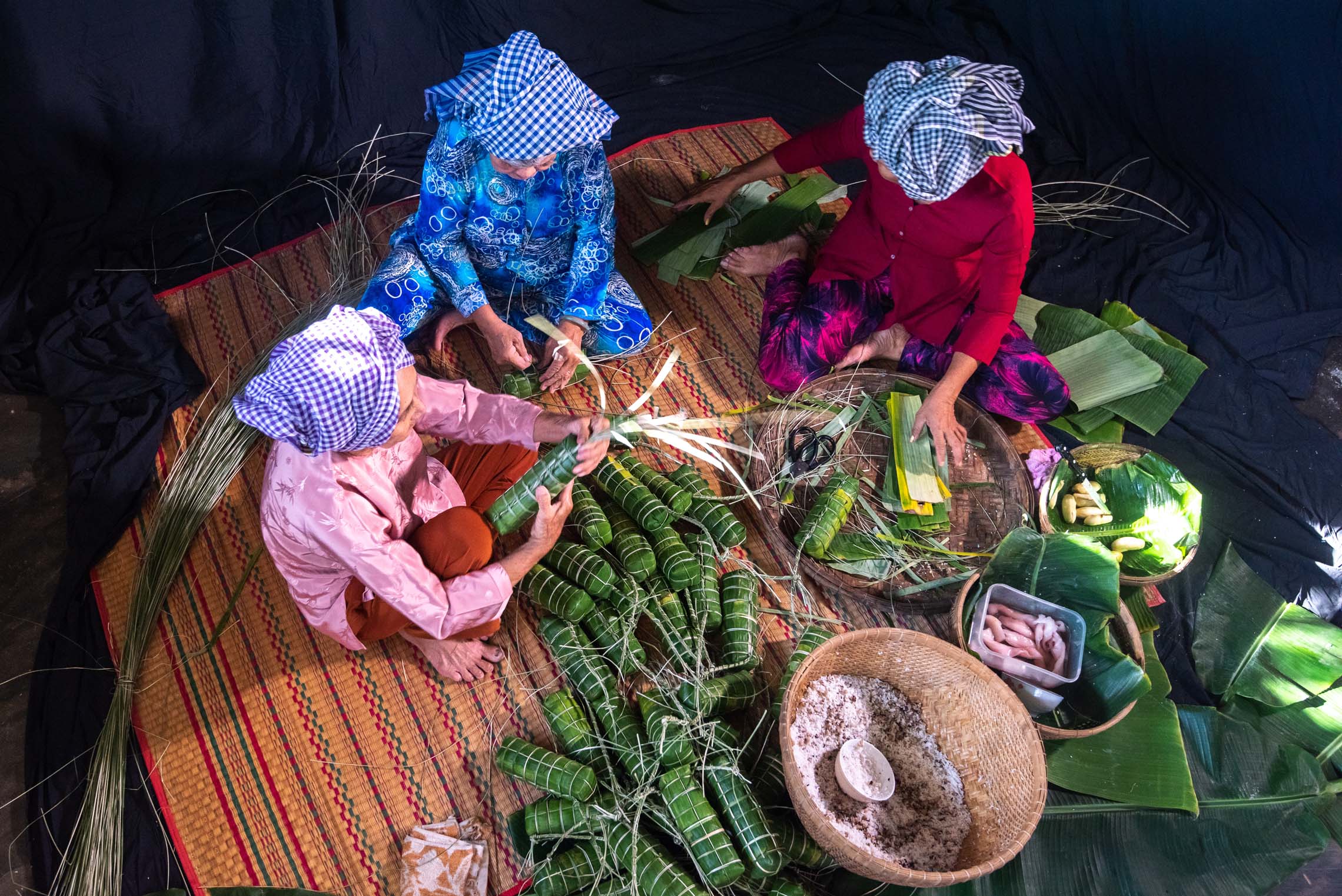
Some of Can Tho’s most evocative souvenirs found in its local markets are wrapped, dried or carefully packed, preserving flavours that speak to the Delta’s riverine way of life. Banh Tet La Cam (Purple sticky rice cake) expresses this connection through Southern festive customs, with its violet colour and glutinous texture recalling the rice-based fare prepared for family celebrations. The same practical relationship with the waterways appears in Kho Ca Loc (Dried snakehead fish) and Kho Ca Sac (Dried gourami), where salting and drying preserve freshwater catch for households along rivers and canals. Banh Pia (Mung bean and durian pastry), closely associated with the former Soc Trang area, extends this repertoire with flaky pastry, smooth mung bean filling and an unmistakable durian fragrance. Long after leaving Can Tho, these flavours can return in a bite, bringing back the scents, textures and culinary impressions gathered along the journey. And, for travellers buying those packaged specialties in larger quantities, checking the latest excess baggage information is useful before heading to the airport.

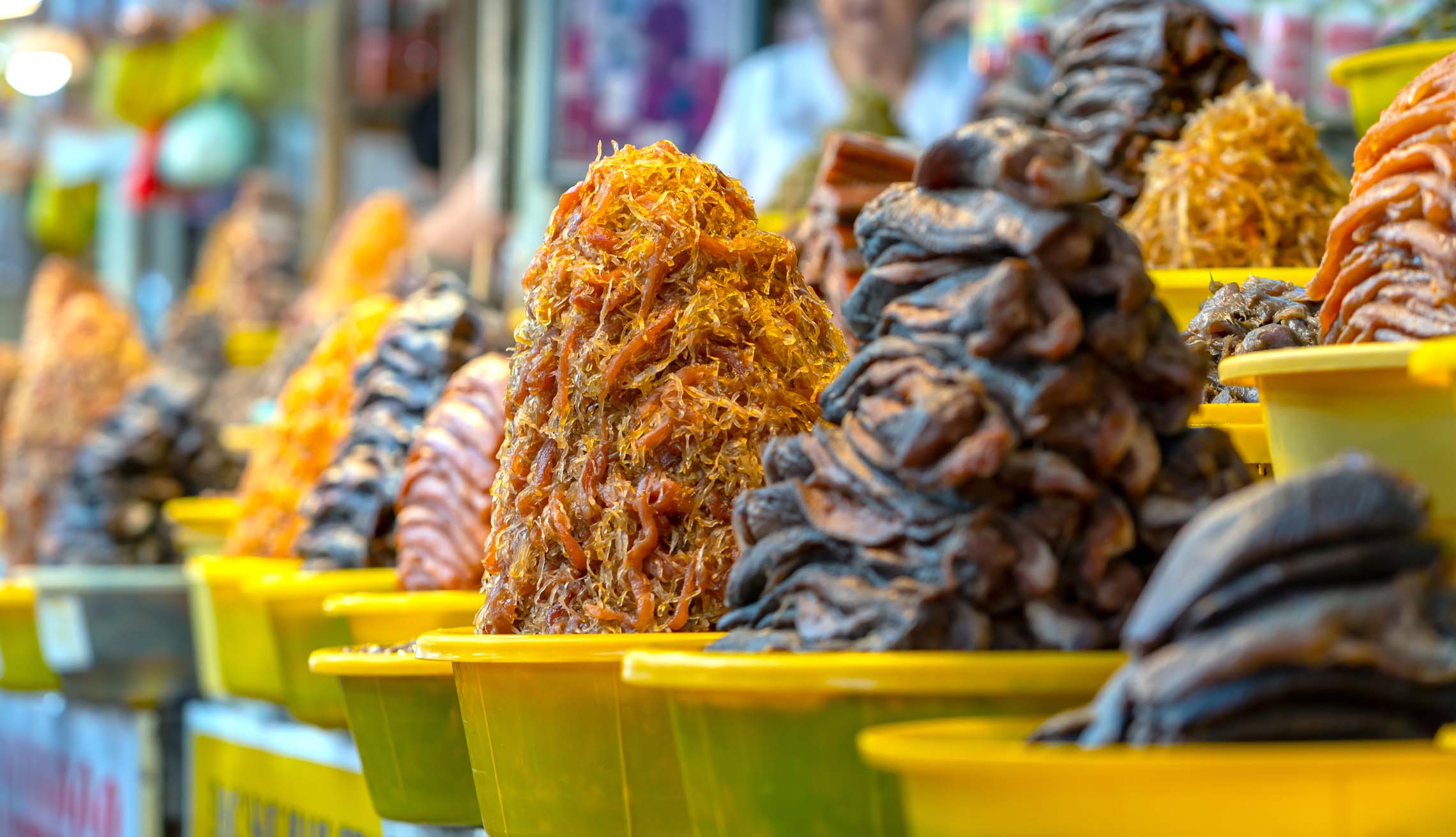
Assorted dried seafood and local specialities displayed at a market stall

Assorted dried seafood and local specialities displayed at a market stall

The snapshot of Cai Rang Floating Market in Can Tho

A Cai Rang Floating Market experience reveals a different kind of marketplace, where the river becomes the incredible setting for commerce, and boats function as stalls, kitchens and meeting points.

Cai Rang Market grew from the river’s trading culture

Engines thrum across Cai Rang floating market as wooden boats cluster on brown water, their hulls crowded with pineapples, gourds and leafy produce while vendors call between vessels. The scene feels almost cinematic, yet its choreography grew from a practical trading culture rooted in the Delta’s waterways.

Before modern roads connected scattered settlements, boats linked growers, merchants and communities along canals and rivers, transporting agricultural goods and household necessities. That legacy remains visible in the market’s floating stalls and in the tall cay beo pole, a bamboo advertising pole displaying samples of goods for sale above each boat. From the water, visitors can watch this ingenious visual language at work, with colour, movement and engine noise turning commerce into a vivid portrait of a river-based economy in motion.

Shopping in Cai Rang Market is how to read the river

At Cai Rang, shopping begins with a glance rather than a queue, as buyers scan hulls, cargo and the small signals that distinguish one trader from another. A boat stacked with pineapples speaks immediately of its speciality, while neatly arranged gourds, watermelons or coconuts announce another kind of harvest without a handwritten price board. This visual language turns observation into part of the purchase, asking buyers to notice quality, quantity and provenance before approaching a vessel. The custom reflects an older mercantile culture in which familiarity with produce mattered as much as the ability to negotiate. For visitors, the pleasure lies in decoding these subtle cues, watching a transaction take form through gestures, glances and exchanged words, then realising that Cai Rang is a marketplace understood as much through observation as through buying.

Breakfast boats preserve a floating social culture

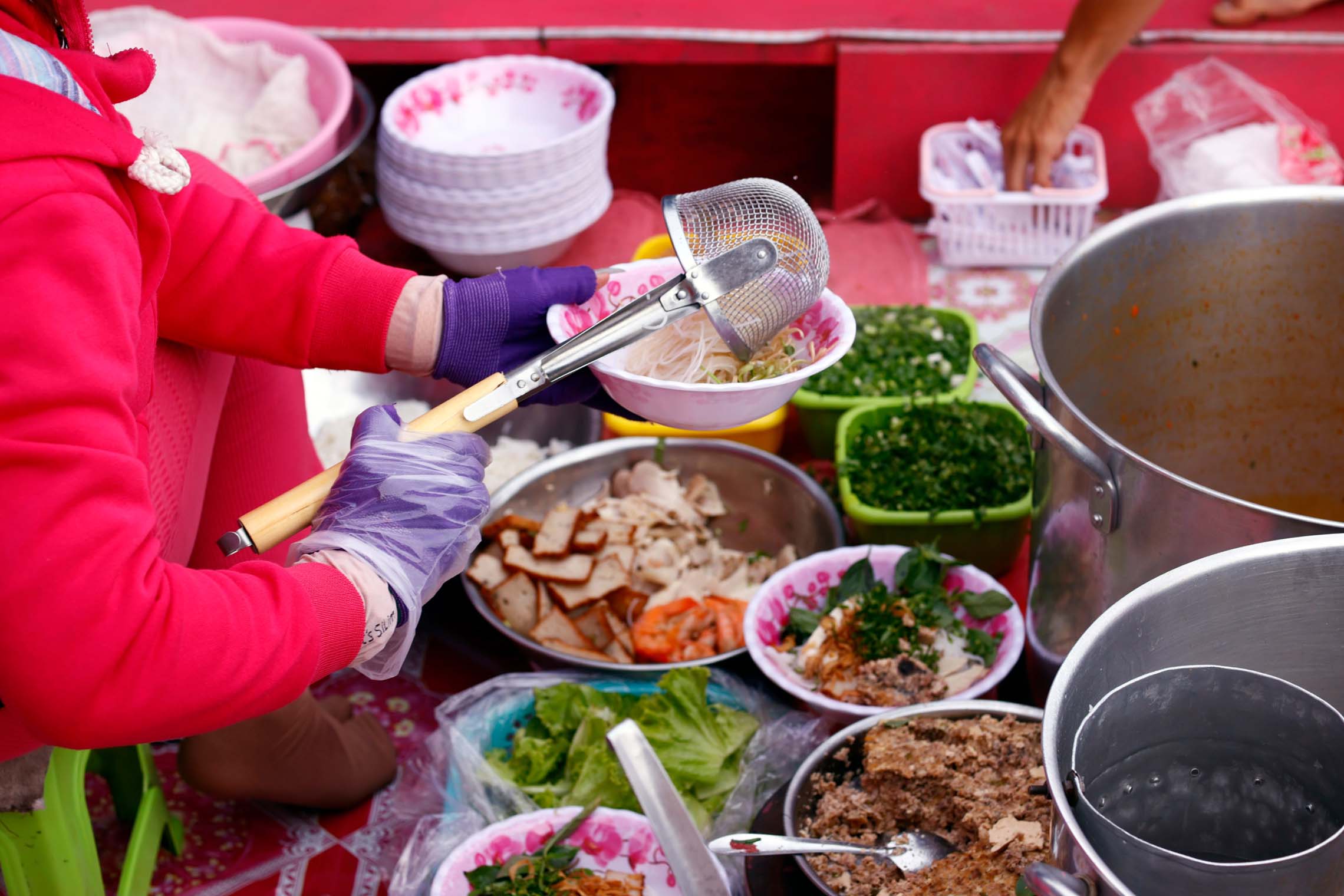
A vendor preparing bowls of Vietnamese noodle soup at a floating market

A vendor preparing bowls of Vietnamese noodle soup at a floating market

To understand the spirit of Cai Rang, set an early alarm and head to the market for breakfast, when the river is already stirring with boats, steaming bowls and animated voices. Hu Tieu (Southern Vietnamese rice noodle soup) arrives fragrant with pork, herbs and scallions, served from a floating kitchen while coffee sellers drift between vessels with cups balanced in their hands. The pleasure lies in eating where the market’s social life is unfolding around you, with chopsticks tapping porcelain, vendors calling across the water and laughter rising from nearby boats as breakfast passes effortlessly between strangers and regulars. River silt, roasted coffee and simmering broth mingle in the humid air, creating an atmosphere impossible to reproduce on land. Sitting with a warm bowl in hand, it becomes easy to forget the role of observer and simply savour the sounds, flavours and conviviality surrounding the boat, discovering a side of Cai Rang that feels spontaneous, generous and deeply human.

Quick information

Frequently Asked Questions

Fresh produce and snacks usually cost around VND 20,000 – VND 70,000, while packaged specialities and dried foods generally range from VND 50,000 – VND 300,000.

Cash remains the most practical payment method at traditional markets, particularly for small purchases, although some larger stalls and specialty shops may accept bank transfers or electronic payments.

Yes. Traditional markets have a wide range of regional products, from Banh Tet La Cam (Purple sticky rice cake) and dried fish to packaged fruit and other Mekong Delta specialities that are easy to carry home.

Offers from Vietnam Airlines

Promotion List
Sorry, there are currently no promo codes matching the selected criteria!
Please search again with different criteria
Filters

Can Tho Travel Guide

Cẩm nang du lịch Hà Nội

Loading