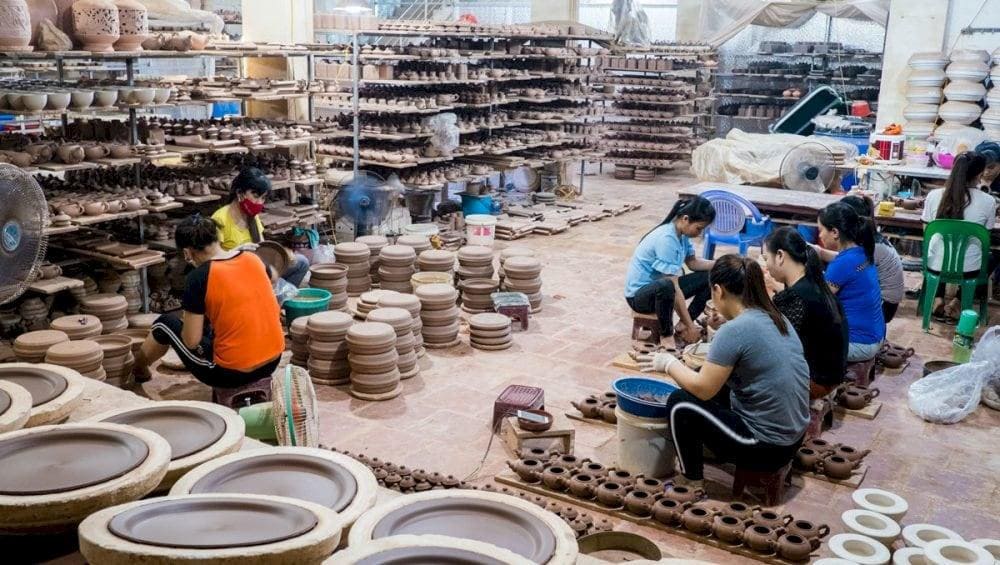
1. The History of Bat Trang Ceramic Village in Vietnam
The history of Bat Trang dates back over 1,000 years, during the Ly Dynasty (11th century), when pottery and ceramics first started to emerge in the region. According to historical records, Bat Trang was founded by a family of skilled potters who settled along the Red River, taking advantage of the rich clay deposits found there. The village's name, "Bat Trang”, which means "pottery kiln" in Vietnamese, reflects its long association with ceramic production.
Over time, Bat Trang's pottery gained recognition, particularly due to its fine craftsmanship and the use of local materials. During the 16th and 17th centuries, Bat Trang’s ceramic industry flourished, and the village became one of the most important pottery centers in Vietnam. As trade routes expanded, Bat Trang’s products began to reach markets beyond Vietnam, even finding their way to China, Japan, and other parts of Southeast Asia.
Bat Trang's ceramics were initially made for everyday use, such as bowls, vases, and dishes. However, as the village's craft developed, artists began to create more intricate and decorative pieces, including elaborate porcelain figurines and fine pottery.
2. Where is Bat Trang Ceramic Village? 3+ Ways to Get There
Bat Trang Ceramic Village is located in Gia Lam District, Hanoi, Vietnam, approximately 13 kilometers (8 miles) southeast of central Hanoi, along the Red River. Visitors can get to Bat Trang from Hanoi by various means of transportation.
- By motorbike or car: Follow Nguyen Khoai Street or Long Bien Bridge towards Gia Lam, then take Bat Trang Road. The journey takes about 20 - 30 minutes from Hanoi’s Old Quarter.
- By bus: Take Bus No. 47 from Long Bien bus station directly to Bat Trang. The ride takes about 40 minutes and is a budget-friendly option.
- By boat (Red River Tour): Some tour services offer boat trips from Hanoi along the Red River, stopping at Bat Trang. This is a scenic way to visit the village which takes about 1 hour.