

The event gathered representatives from government agencies, experts, and domestic enterprises to discuss and consult on policy solutions for implementing carbon credit trading mechanisms suitable for Vietnam’s context.
At the workshop, Ms. Hà Thị Thu Hằng – Head of the Secretariat for the Sustainable Development Steering Committee and Deputy Head of Planning & Development at Vietnam Airlines – delivered a presentation on the airline’s efforts to reduce greenhouse gas emissions, while contributing recommendations for national carbon trading policies.
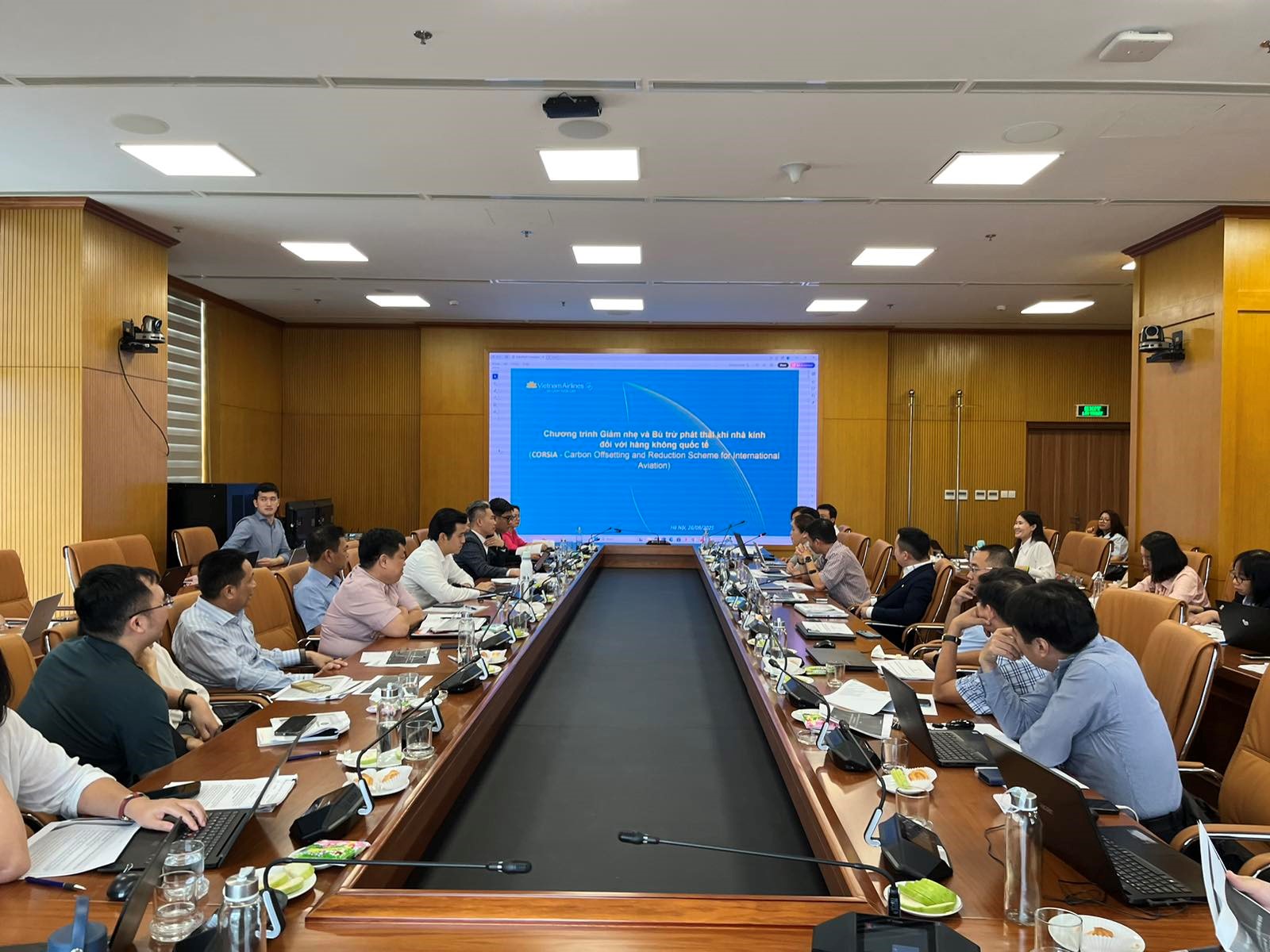
Overview of the conference. (Photo: VNA)
In her remarks, Ms. Hằng introduced CORSIA (Carbon Offsetting and Reduction Scheme for International Aviation) – an initiative launched by the International Civil Aviation Organization (ICAO) to mitigate greenhouse gas emissions in international aviation.
Vietnam will officially join CORSIA in 2026, marking an important step in international integration and reaffirming the aviation industry’s commitment to global emission reduction goals. This means that Vietnam Airlines and other domestic carriers must prepare sufficient carbon credits to meet international compliance requirements.
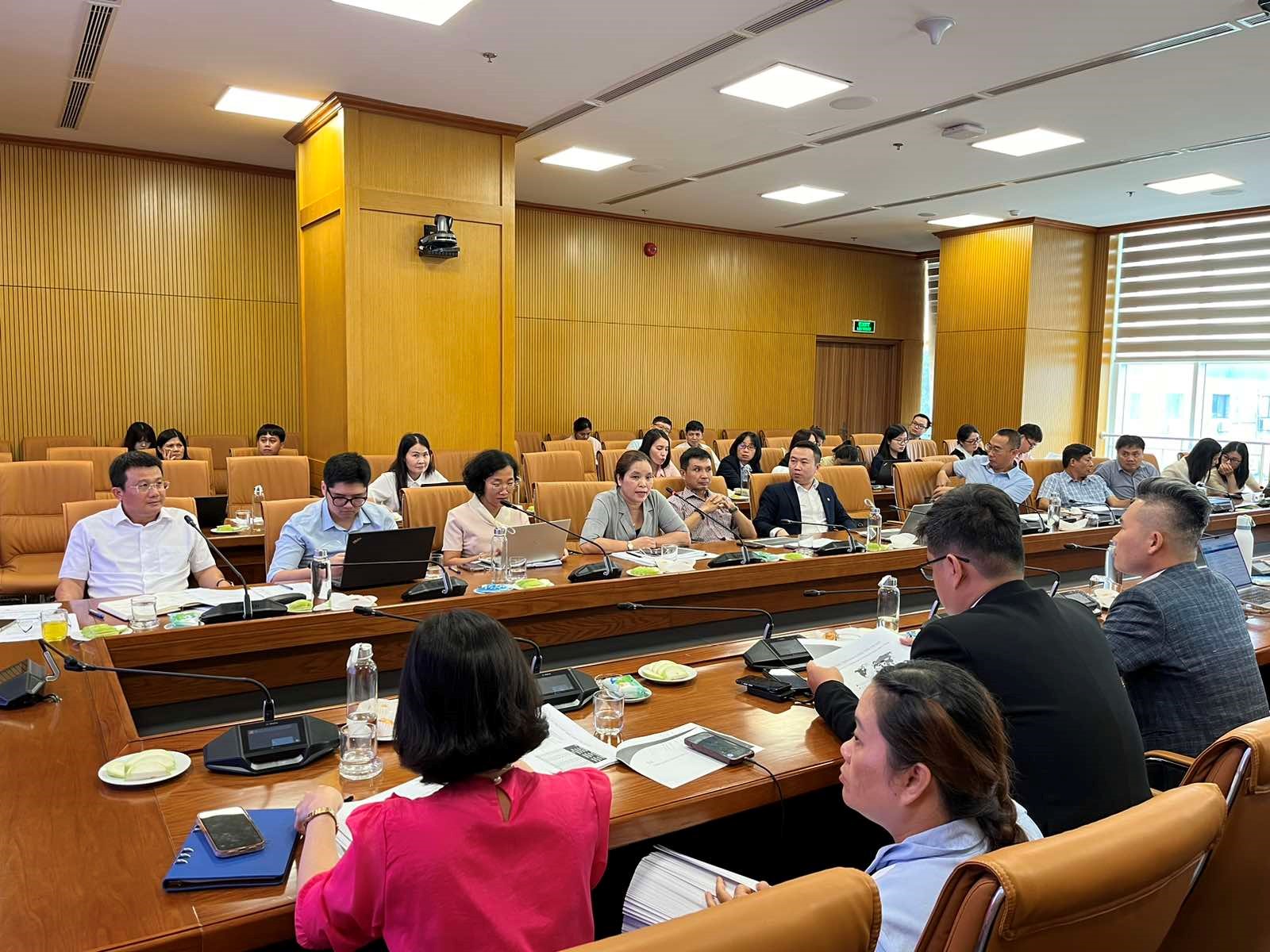
According to forecasts from IATA (International Air Transport Association), the amount of emissions subject to offsetting will increase sharply in the coming years. Starting in 2026, Vietnam Airlines is expected to offset around 400,000 carbon credits, with the figure potentially exceeding 1 million credits per year after 2030. This presents a major financial challenge but also motivates the airline to proactively engage with the carbon market to ensure compliance and maintain its competitive standing in the global aviation industry.
Alongside CORSIA preparations, Vietnam Airlines is actively pursuing “green flight operations” through multiple initiatives. The airline continues to expand its modern, fuel-efficient fleet while optimizing flight operations and fuel management to further reduce fuel consumption and greenhouse gas emissions. Additionally, Vietnam Airlines has begun using Sustainable Aviation Fuel (SAF) on select routes in Europe and Indonesia, demonstrating its strong commitment to sustainable aviation and long-term environmental responsibility.
The airline also presented key recommendations to the Ministry of Agriculture and Environment and the Government, highlighting regulatory challenges and the practical needs of the aviation sector. These inputs focused on refining the legal framework and carbon credit trading mechanisms to ensure Vietnam’s readiness for CORSIA implementation in 2026.
Under the close direction of the Board of Management, led by the CEO and the Sustainable Development Steering Committee, with Deputy CEO Mr. Đinh Văn Tuấn serving as Standing Deputy Head, Vietnam Airlines continues to carry out research and initiatives promoting environmental sustainability. These efforts are not only aimed at fulfilling international commitments such as CORSIA and the adoption of SAF, but also at establishing Vietnam Airlines as a pioneering national carrier on the green journey toward a sustainable future.