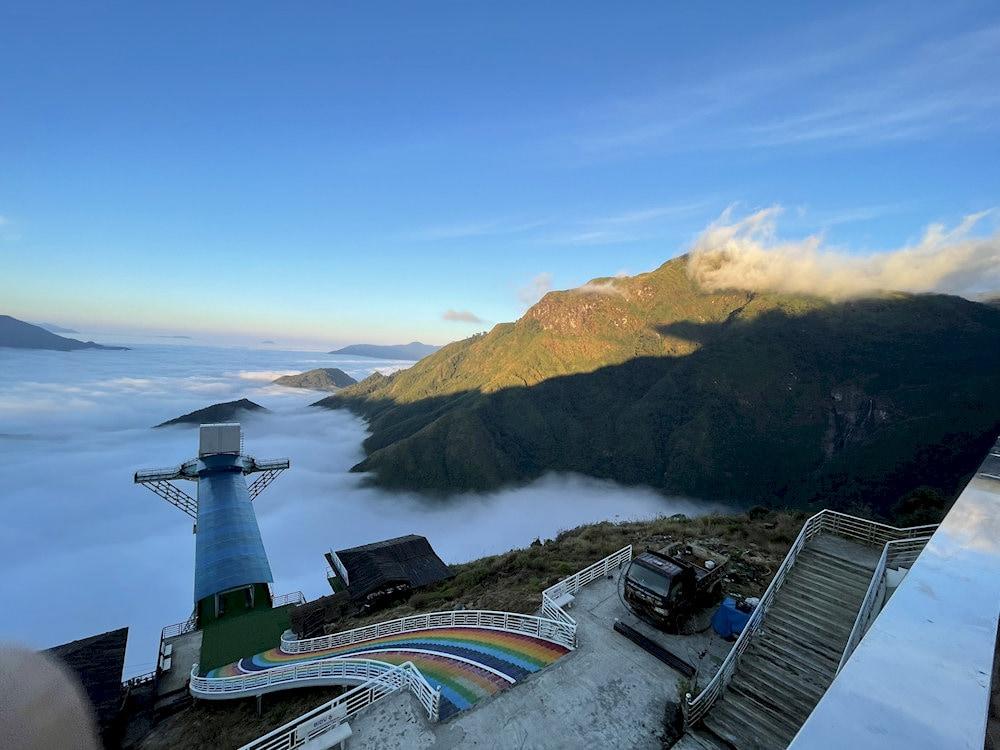
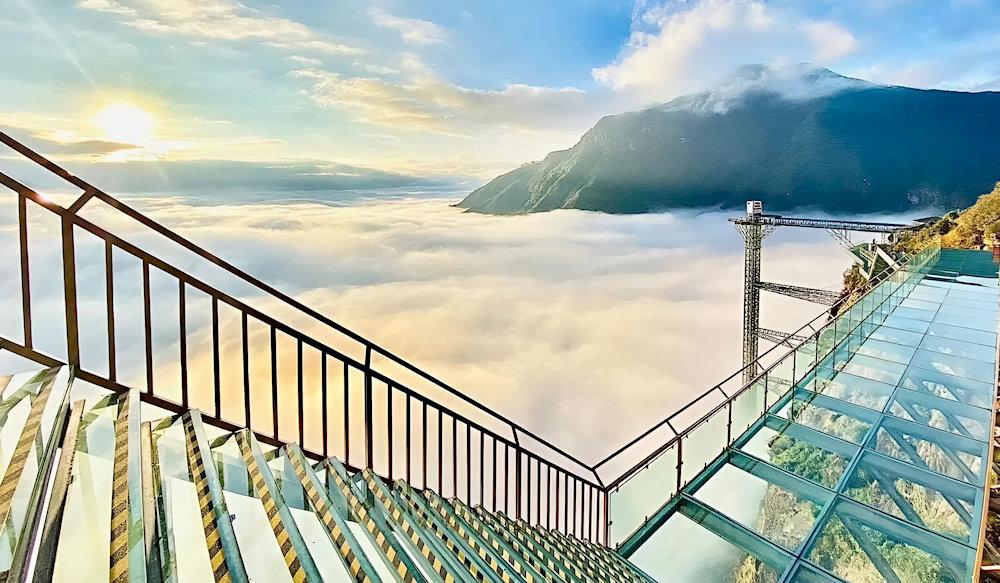
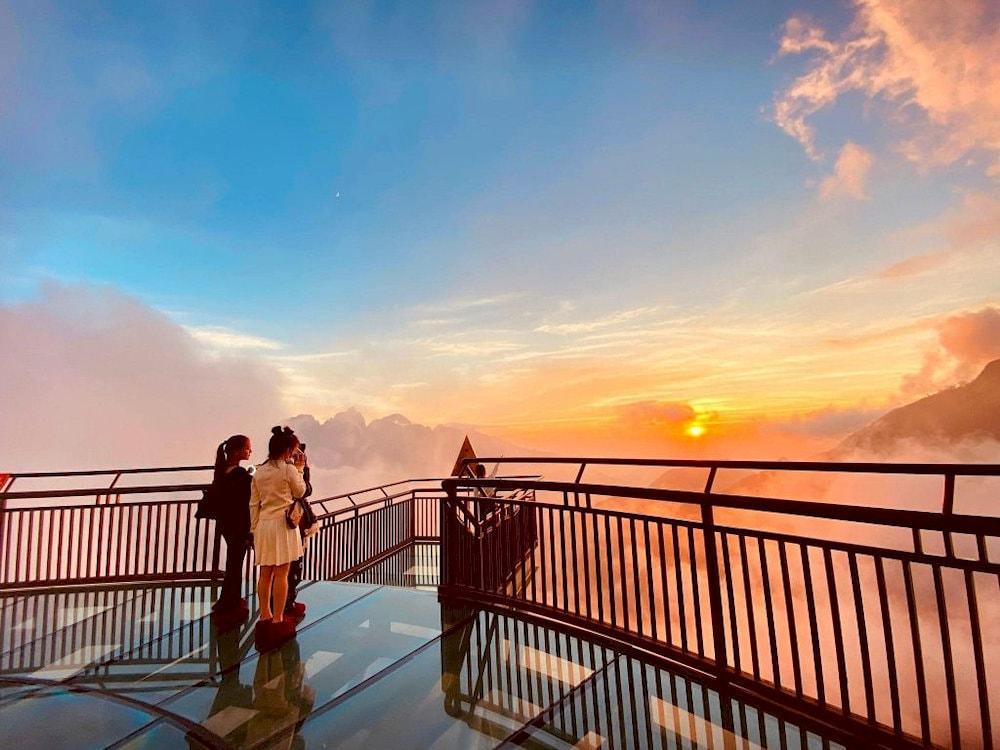
Visitors will feel as if they are walking among the clouds
2. How to Get to Rong May Glass Bridge?
1- Traveling from Hanoi to Sapa The most common way to reach Sapa from Hanoi is by taking an overnight train or a sleeper bus to Lao Cai, followed by a transfer to Sapa town. The journey usually takes around 8 to 9 hours which costs about VND 300,000 per person.
2- Getting from Sapa Town Center to Rong May Glass Bridge Visitors can choose to rent a motorbike or a self-driven car to reach Rong May Glass Bridge. Alternatively, hiring a round-trip taxi is recommended, as one-way taxi services can be difficult to find for the return trip.
3- Once You Arrive at the Foot of Rong May Glass Bridge There are two main options to get up to the bridge:
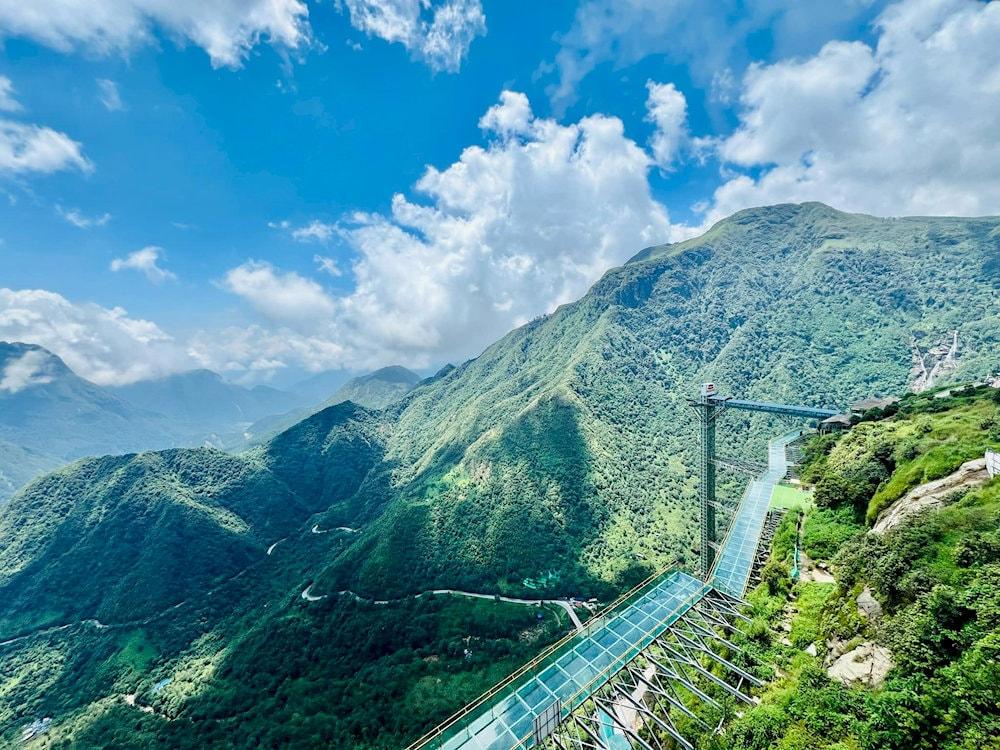
- Taking the glass elevator, which provides a quick and scenic ascent.
- Hiking up to the bridge via a trekking path that takes approximately 3 hours, offering an adventurous route through nature.
3. Is Rong May Glass Bridge Safe?
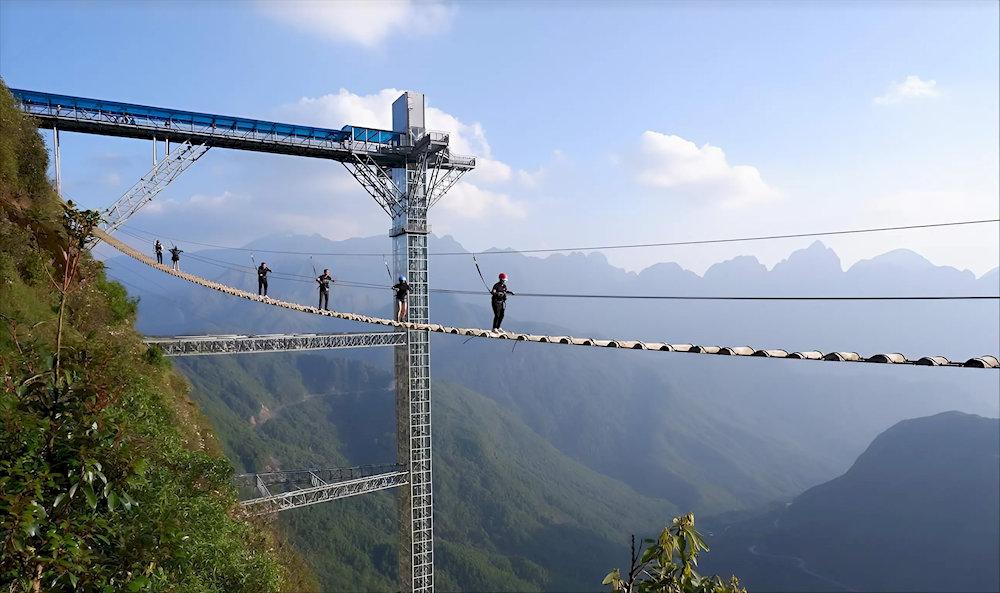
The Rong May Glass Bridge is designed with safety as a top priority, constructed using high-strength tempered glass to ensure durability and stability. The bridge's structure has been rigorously evaluated to meet international safety standards, providing visitors with a secure experience while enjoying the breathtaking views.
The bridge is built with transparent tempered glass panels, each approximately 3cm thick, totaling a combined thickness of 7cm. This multi-layered design enhances the bridge's strength and resilience, allowing it to support a significant number of visitors simultaneously. The use of tempered glass ensures that, in the unlikely event of a breakage, the glass shatters into small, blunt pieces rather than sharp shards, minimizing injury risks.
In early 2022, a video surfaced showing a cracked glass panel on the bridge, causing concern among viewers. Upon investigation, it was revealed that the cracked panel was intentionally designed as a visual effect to enhance the visitor experience. The panel was constructed with multiple layers of tempered glass and bulletproof film, ensuring that even with the simulated cracks, the structural integrity remained uncompromised. The tourism site clarified that the cracks were a deliberate feature and not a result of structural failure.



 Link opens in new window. Site may not meet accessibility guidelines.