

Vietnam Airlines’ New and Modern Aircraft.


Select region and language

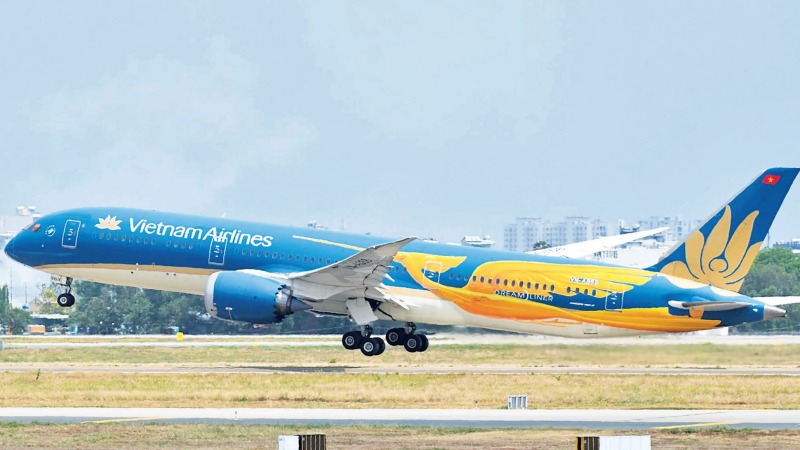
As the flag carrier of Vietnam, Vietnam Airlines stands as a prime example of leadership, innovation, and resilience in this new development phase—where digitalization and green growth are both an urgent mission and a strategic commitment.
A Core Force in Building a Modern, Integrated Aviation Industry
Founded in 1959 as the 919 Transport Air Regiment, the first air transport unit of the Vietnam People’s Army, Vietnam Airlines has been deeply intertwined with the nation’s history. Through wartime and peace, it carried out thousands of critical missions—transporting weapons, troops, and supplies to the frontlines, conducting reconnaissance, and performing medevac operations—making vital contributions to Vietnam’s independence and national defense.
After reunification, the unit continued its mission by restoring air transport infrastructure and reconnecting remote and mountainous regions, laying the foundation for the establishment of Vietnam Airlines as we know it today—a resilient, enduring enterprise tied closely to the nation’s progress.
Since its official formation in 1995, Vietnam Airlines has become one of the country’s economic mainstays. With a network spanning all three regions of Vietnam and dozens of international destinations, the airline has contributed approximately VND 68 trillion to the state budget over the past three decades while boosting trade, tourism, investment, and global integration.
Vietnam Airlines also fulfills vital political and social missions—including transporting high-ranking officials, supporting national defense, and operating humanitarian repatriation flights. These responsibilities reflect the trust and capabilities uniquely held by a national carrier.
Alongside Vietnam Airlines, the Airports Corporation of Vietnam (ACV) plays a critical role in connecting regions and strengthening strategic infrastructure through the management of 22 civil airports. Major projects such as the expansion of Noi Bai and Tan Son Nhat International Airports, and the construction of Long Thanh International Airport, form the backbone of Vietnam’s vision to operate 33 airports by 2050, ensuring that 97% of the population lives within 100 km of an airport.
Building on this foundation, Vietnam Airlines is steadily realizing its goal of becoming a regional and global aviation hub. The airline’s membership in the SkyTeam alliance, strategic partnership with ANA (Japan), expansion of direct routes to the U.S. and Europe, and exploration of new markets in Africa and South America demonstrate its determination to achieve global reach.
In parallel, Vietnam Airlines leads in adopting international corporate governance standards. Its equitization process and attraction of strategic investors have enhanced capital strength, operational efficiency, and competitiveness in an industry characterized by strict standards and high technological requirements.
At the Scientific Symposium on the Role of SOEs in Key National Industries – The Aviation Perspective, Mr. Dang Anh Tuan, Deputy CEO of Vietnam Airlines, emphasized:
“Vietnam Airlines is fully aware of its role as a frontrunner in the aviation ecosystem. This is not just a position—it is our responsibility and our commitment to the nation, to our passengers, and to the future of Vietnam’s aviation industry.”
Leading the Way in Digital Transformation and Green Development
Digital transformation has become a strategic imperative, and Vietnam Airlines is at the forefront of this journey with its vision of becoming a “digital airline.”
During the 2024 Digital Transformation Day, CEO Le Hong Ha affirmed:
“Digital transformation is a matter of survival—it is essential for Vietnam Airlines to strengthen its position and optimize operations.”
The airline is implementing a long-term digital strategy focused on three pillars: digital technology, digital data, and digital culture. These form the foundation for modernizing its management systems, streamlining operations, and enhancing customer experience.
From AI applications, cloud computing, automated check-in, e-wallets, to digital boarding passes, Vietnam Airlines continues to innovate to improve efficiency, safety, and sustainability. Thanks to these efforts, the airline has been rated a 4-Star Airline by Skytrax and recognized by APEX as a Five-Star Global Airline, reflecting its commitment to continuous improvement.
In pursuing sustainable growth, Vietnam Airlines is actively building its image as a “green airline.” The company has invested in a new-generation fleet—Boeing 787, Airbus A350, and A321neo—which are more fuel-efficient and environmentally friendly. The airline also leads in plastic waste reduction, weight optimization, route efficiency, and the testing of Sustainable Aviation Fuel (SAF).
Globally, SAF is expected to account for 65–70% of total aviation fuel by 2050, supporting the industry’s Net Zero emissions goal. Despite its high cost, Vietnam Airlines remains a pioneer in SAF adoption, underscoring its leadership and environmental commitment.
Simultaneously, ACV is implementing “green airport” initiatives—installing solar energy systems, adopting electric ground vehicles, and constructing energy-efficient terminals with modern waste and water management systems. These steps not only reduce operating costs but also align with Vietnam’s National Green Growth Strategy.
However, achieving true digital and green transformation requires strong human capital. SOEs must focus on training and attracting high-tech talent, fostering a culture of innovation, and overcoming resistance to change. Institutional support—such as tax incentives for biofuel, carbon credit systems, and emission standards—will also be key to accelerating sustainable progress.
Associate Professor Dr. Vu Van Phuc, former Editor-in-Chief of Communist Review, emphasized:
“Vietnam Airlines must invest in modern infrastructure, develop a team of skilled and passionate professionals, elevate its service culture, and foster soft skills, professionalism, and empathy—to not only keep pace but also lead the way forward.”
Vietnam Airlines continues to affirm its role as a national leader—pioneering innovation, driving digital and green transformation, and contributing to a sustainable and prosperous future for Vietnam.
RELATED NEWS
Note:  Link opens in new window. Site may not meet accessibility guidelines.







© 2025 Vietnam Airlines JSC
Contact Center for calls within Vietnam (24/7): 1900 1100
For Lotusmiles members: 1900 1800
For calls from outside Vietnam (24/7): +84 24 38320320
Email: Telesales@vietnamairlines.com
Certificate of Business Registration - No.: 0100107518, Initial registration made on 30 June 2010, the 10th registration of changes made on 24 July 2025.




You are about to leave Vietnamairlines.com

You will be redirected to a website that is not owned by Vietnamairlines and is not within our control. The site may not follow the same accesibility polices as Vietnam Airlines.
Would you like to continue?
Would you like to continue?
Notice

According to regulations of the Ministry of Finance, E-VAT invoices are only issued for payment in VND. In case of paying by other currency, please change website country/region.