

Select region and language



A 5-hour race against time to organize a relief flight to Venezuela
To operate the flight carrying personnel and relief supplies to Venezuela, Vietnam Airlines had just over five hours to formulate an operational plan and secure flight permits through 29 countries.
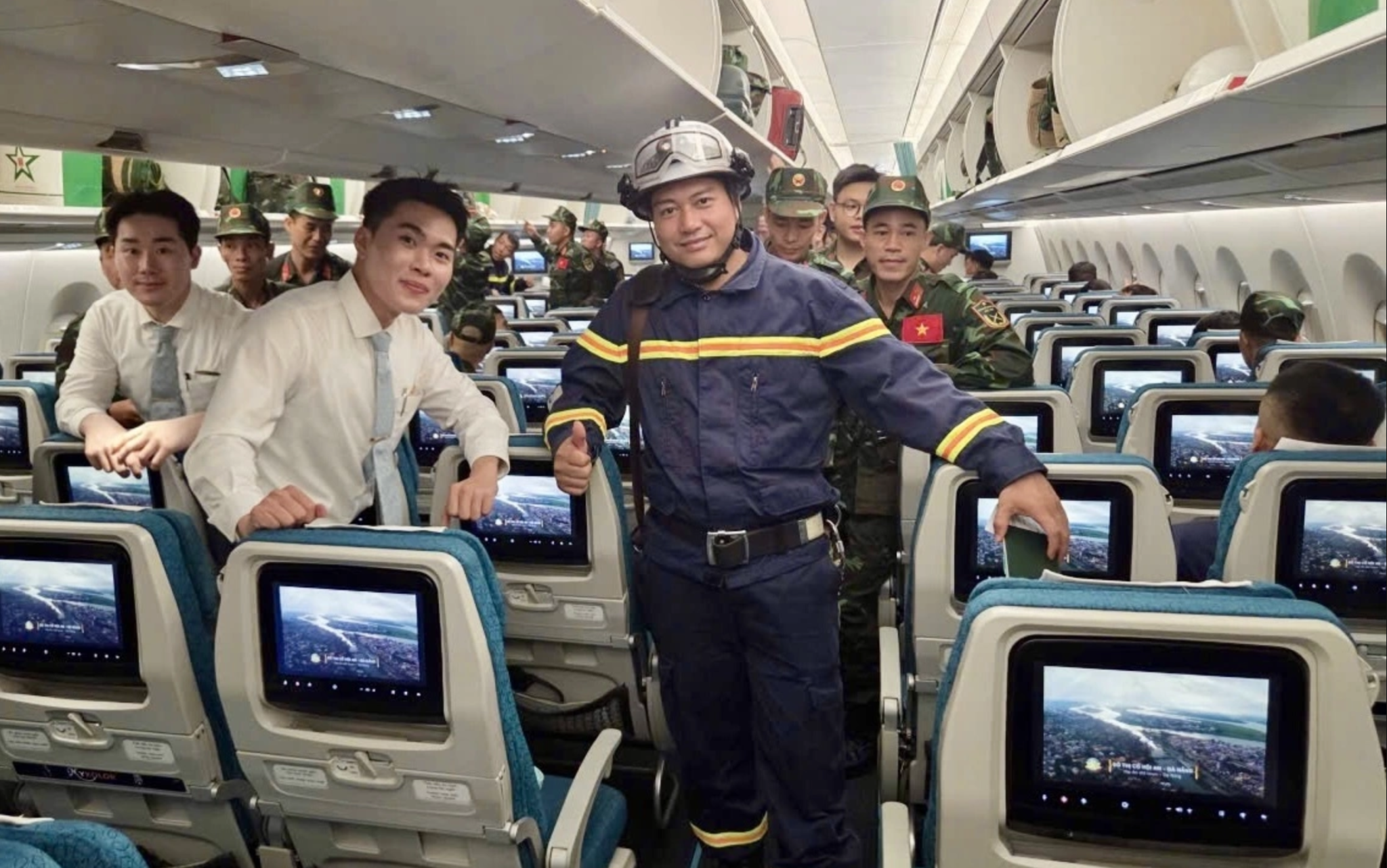
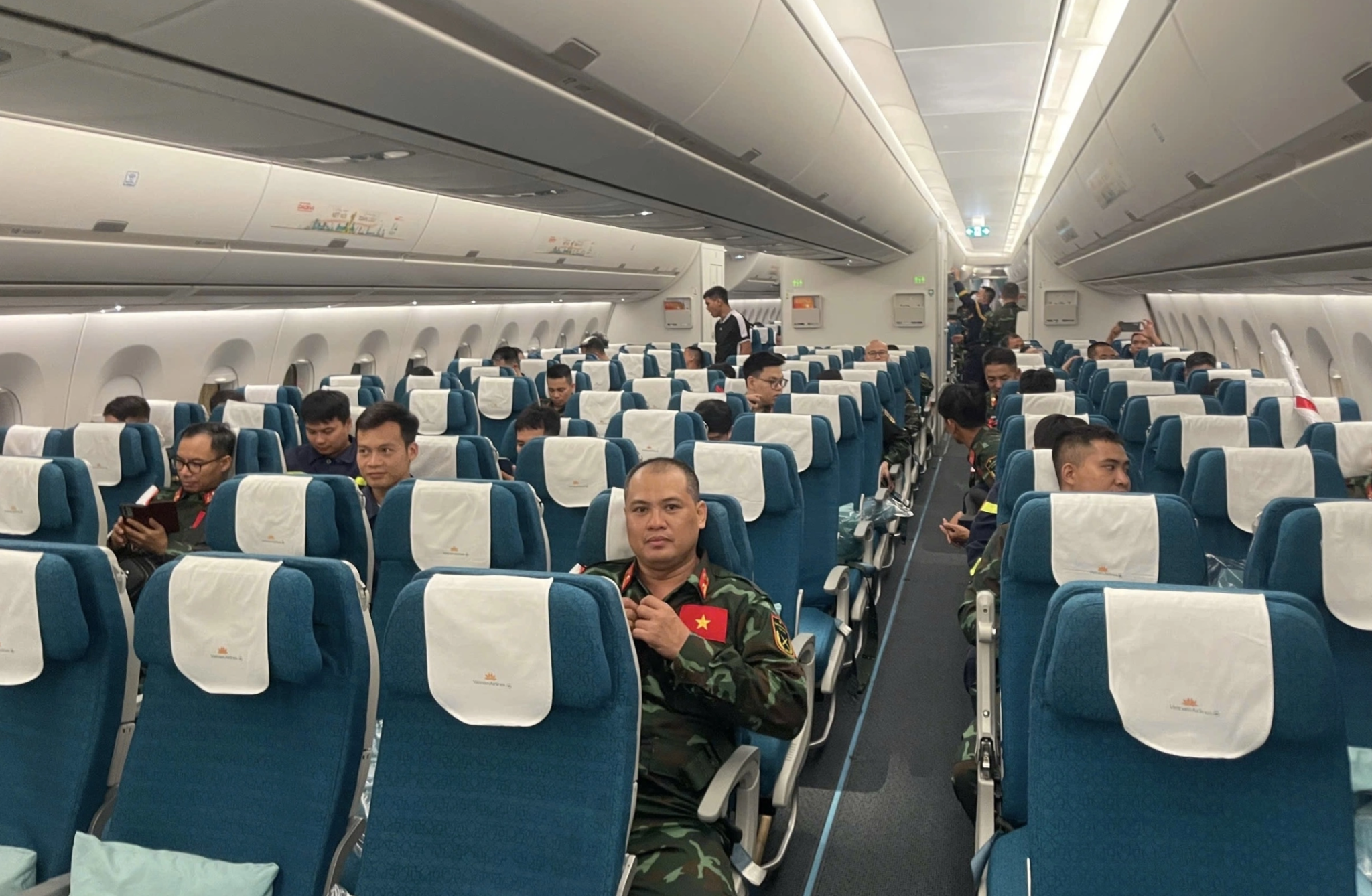
On the night of June 28, an Airbus A350 operating as Flight VN66 departed Noi Bai Airport, carrying 124 officers and soldiers, 10 service dogs, and 25 tons of equipment and supplies to Venezuela to support search, rescue, and humanitarian relief efforts.
Just hours before takeoff, at Vietnam Airlines' Operation Control Center (OCC), more than 150 staff members simultaneously executed a series of tasks that typically take days or even weeks to complete.
Formulating a flight plan halfway around the world
At 1:30 p.m. on June 28, Vietnam Airlines leadership was summoned to execute a relief flight, originally scheduled to take off at 11:00 p.m. on June 29. However, to deploy personnel and supplies to the scene as early as possible to serve search, rescue, and relief operations, the Party and State decided to advance the departure time to 11:00 p.m. on the same day, June 28. Vietnam Airlines was thus left with just over five hours to prepare the entire flight.
On the afternoon of the same day, the Ministry of National Defense and the Ministry of Public Security organized the dispatch of troops, transporting personnel and relief goods to Noi Bai Airport.
"Upon receiving the news, we identified this as an extremely urgent task. Preparing a special flight passing through 29 countries in just a few hours is a very short timeframe," said Tran Manh Hung, Head of Operations at Vietnam Airlines' Operation Control Center (OCC).
According to Mr. Hung, for a standard international flight, the airline typically needs about a week to prepare the aircraft, flight crew, overflight permits, and ground services; special flights usually take about three days. This time, the entire process had to be completed in just a few hours.
Immediately after receiving the assignment, the OCC activated a special operational mechanism. Instead of handling tasks sequentially, specialized teams executed multiple workflows simultaneously. One group coordinated with the Ministry of Foreign Affairs, the Consular Department, and Vietnamese diplomatic missions abroad to carry out diplomatic procedures. Another team worked with foreign aviation authorities to secure overflight permits. The remaining units concurrently developed operational plans for aircraft, flight crew, fuel, technical support, cargo, and ground services.
One of the most critical tasks was selecting the flight route. The OCC evaluated several options, including flying across the Pacific to the U.S., via the Middle East, via Central Asia, or through China to Europe. The transit option via the U.S. encountered obstacles as passengers would still require U.S. visas even for a technical stop. The route via the Middle East posed geopolitical risks, while the path through Central Asia required overflight permissions from more than 40 countries.
After assessing operational safety factors, flight duration, refueling capabilities, technical support, and contingency options, Vietnam Airlines selected a route passing over Russia, Mongolia, and Western Europe. "Flying over Europe shortens flight time, saves fuel, and increases payload capacity for relief cargo. Every minute saved on flight time means more capacity dedicated to cargo," Mr. Hung said.
Charles de Gaulle Airport (Paris, France) was chosen as the technical stopover to refuel and replenish meals before the aircraft continued its journey to Venezuela. This is also an airport where Vietnam Airlines possesses extensive operational experience and an appropriate support network.
Securing overflight permits from 29 countries
After finalizing the flight route, Vietnam Airlines urgently proceeded with the overflight permit application procedures. The airline's representative office in France coordinated with the Embassy of Vietnam to work with local authorities through diplomatic channels.
During the process of finalizing procedures, the Embassy of Vietnam in Venezuela reported that Caracas International Airport was expected to be affected by the earthquake and that the connecting road from the airport to the city center was damaged, rendering it unsuitable for operations. Vietnam Airlines had to switch the destination to Simón Bolívar International Airport, which meant many permit applications had to be re-processed.
The greatest challenge was securing overflight permits from 29 countries on a Sunday, a time when many air traffic management authorities in Europe do not staff personnel to handle emergency requests.
Vietnam Airlines received support from the Consular Department (Ministry of Foreign Affairs), the Permanent Mission of Vietnam to the United Nations, alongside Vietnamese embassies in China, France, the United States, and Venezuela. Through diplomatic channels, these agencies connected with the ministries of defense and air traffic control authorities of the respective countries to secure the overflight permits on time.
"In that situation, the role of diplomatic agencies was extremely vital. Contact points were continuously maintained to work with local aviation authorities," Mr. Hung said, adding that all operational data was updated continuously. If even a single permit remained unissued, a technical stop shifted, or operational information lacked precision, the entire plan could be compromised.
Utilizing every inch of space onboard the aircraft
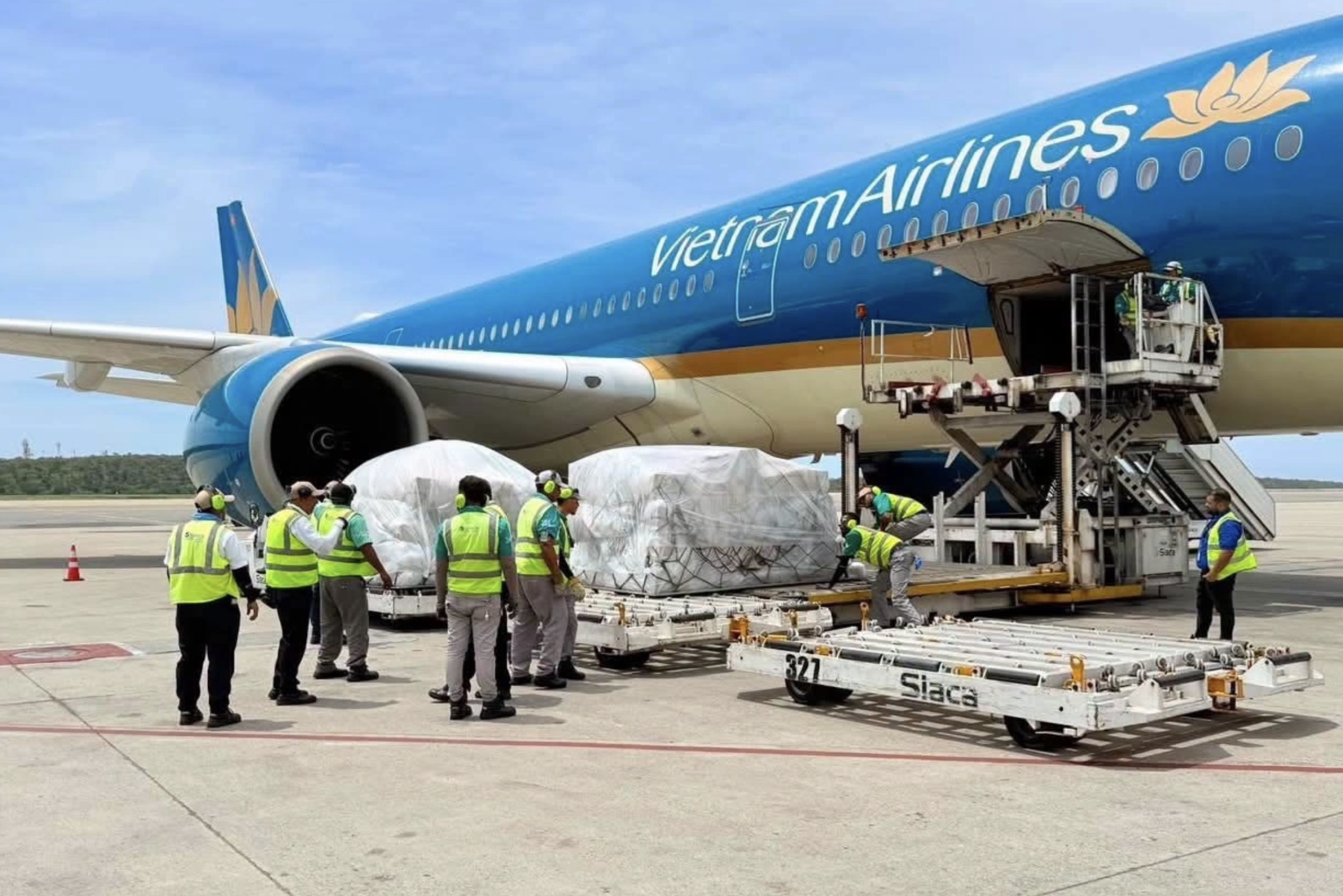
In addition to time constraints, the flight had to transport a large volume of personnel and cargo. To optimize payload capacity, Vietnam Airlines meticulously calculated the placement of every single piece of cargo. Goods were arranged in the cargo hold, passenger cabin, storage closets, under seats, and in other appropriate locations adhering to safety standards. Every available space was utilized while ensuring strict operational requirements were met.
This also marked the first time Vietnam Airlines transported 10 service dogs simultaneously on a long-haul flight. The airline prepared dedicated resting areas, mats, sanitation plans, and coordinated with dog handlers to care for and ensure the well-being of the animals throughout the journey.
To operate a long-haul flight spanning multiple time zones, Vietnam Airlines assigned a crew of 23 personnel, including 6 pilots, 10 flight attendants, 3 engineers, 1 flight dispatcher, and 3 loadmasters. The six pilots were divided into three shifts to rotate control of the aircraft. All flight attendants selected were male to meet the physical endurance demands of the long route. The engineering team carried roughly 1.5 tons of spare parts to remain ready for any unforeseen technical issues.
"For a flight lasting over 50 hours round-trip, we had to prepare for numerous potential scenarios," Mr. Hung stated.
According to him, preparation determines most of the flight's success. Once the aircraft leaves the runway, 90% of the work is already done. Throughout the journey, the flight crew maintained continuous contact with the OCC to promptly update and respond to changes in weather, air traffic, and operational conditions.
Flight VN66 subsequently landed safely in Venezuela, allowing the rescue force and service dogs to rapidly deploy for their mission. On the return leg, the aircraft completed a non-stop flight from Venezuela to Hanoi, covering a distance of approximately 14,500 kilometers.
Following the initial flight, Vietnam Airlines executed a second special flight, transporting an additional 46.8 tons of Vietnamese relief goods to Venezuela.
"When the flights completed their missions, we were immensely proud to have contributed to the nation's relief efforts and demonstrated our responsibility to the international community," said Mr. Tran Manh Hung, noting that this was not merely a long-haul flight, but a true test of Vietnam Airlines' operational capability in emergency situations.
TIN LIÊN QUAN
Note:  Link opens in new window. Site may not meet accessibility guidelines.







© 2025 Vietnam Airlines JSC
Contact Center for calls within Vietnam (24/7): 1900 1100
For Lotusmiles members: 1900 1800
For calls from outside Vietnam (24/7): +84 24 38320320
Email: Telesales@vietnamairlines.com
Certificate of Business Registration - No.: 0100107518, Initial registration made on 30 June 2010, the 10th registration of changes made on 24 July 2025.




You are about to leave Vietnamairlines.com

You will be redirected to a website that is not owned by Vietnamairlines and is not within our control. The site may not follow the same accesibility polices as Vietnam Airlines.
Would you like to continue?
Would you like to continue?
Notice

According to regulations of the Ministry of Finance, E-VAT invoices are only issued for payment in VND. In case of paying by other currency, please change website country/region.