Select region and language
Close button
Booking and service information for the selected country and language will be applied.
paradise

What to Wear in Vietnam? Complete Seasonal & Gender Guide for 2025

Planning your Vietnam adventure but unsure what to pack? Vietnam's diverse climate - from the cool mountains of Sapa to the tropical beaches of Phu Quoc - requires strategic wardrobe planning. This comprehensive guide covers seasonal clothing recommendations by region, gender-specific tips, and destination-specific packing advice to ensure you're perfectly dressed for every Vietnamese experience.

Table of Contents

1. Monthly Clothing Guide by Region

Vietnam's climate varies dramatically across three main regions, each requiring different clothing strategies throughout the year.

1.1. Northern Vietnam (Hanoi, Halong Bay, Sapa, etc.)

Think New York weather but more humid in summer - Northern Vietnam experiences four distinct seasons with significant temperature variations.

MonthAverage TemperatureWhat to WearWeather Notes
January59 - 64°F(15 - 18°C)Heavy jacket, sweater, long pants, closed shoes, scarfColdest month - feeling like London winter
February61 - 68°F(16 - 20°C)Light jacket, long sleeves, jeans, closed shoesCool and dry - perfect for sightseeing
March68 - 75°F(20 - 24°C)Long sleeves, light jacket for evenings, sneakersSpring warmth begins
April72 - 79°F(22 - 26°C)T-shirts, light sweater for evenings, comfortable pantsPleasant spring weather
May77 - 86°F(25 - 30°C)Cotton t-shirts, shorts, sandals, light rain jacketGetting warm and humid
June82 - 91°F(28 - 33°C)Tank tops, shorts, hat, sunscreenHot like summer in Texas
July84 - 93°F(29 - 34°C)Lightweight clothing, shorts, waterproof shoes, umbrellaHottest + heavy rains
August82 - 91°F(28 - 33°C)Breathable fabrics, shorts, rain gear, sandalsHot and wet
September77 - 86°F(25 - 30°C)Long sleeves, light pants, light jacketBeautiful autumn begins
October72 - 81°F(22 - 27°C)Long sleeves, cotton pants, light jacketPerfect weather - like California fall
November66 - 75°F(19 - 24°C)Light sweater, pants, closed shoesCool and pleasant
December59 - 68°F(15 - 20°C)Warm jacket, sweater, long pants, bootsWinter returns

Special note for Sapa (mountain region): Can drop to 32°F (0°C) in winter with occasional snow! On these days, pack like you're going to the Colorado mountains.

1.2. Central Vietnam (Hue, Hoi An, Da Nang, Nha Trang)

Think Southern California but with a monsoon season - Central Vietnam offers year-round warmth with distinct wet and dry periods.

MonthAverage TemperatureWhat to WearWeather Notes
January68 - 77°F(20 - 25°C)Long sleeves, light pants, light jacketCoolest and driest
February70 - 79°F(21 - 26°C)T-shirts, light pants, light layerPerfect weather
March75 - 84°F(24 - 29°C)T-shirts, shorts, light dresses, sandalsWarming up nicely
April79 - 88°F(26 - 31°C)Lightweight clothing, shorts, sun hatGetting hot
May84 - 95°F(29 - 35°C)Tank tops, light dresses, shorts, sunscreenVery hot - feeling like Arizona summer
June88 - 100°F(31 - 38°C)Minimal lightweight clothing, hat, lots of sunscreenExtremely hot - avoid midday sun
July88 - 100°F(31 - 38°C)Thinnest cotton clothes, shorts, sandalsPeak heat - stay hydrated
August86 - 97°F(30 - 36°C)Light cotton, shorts, sandals, hatStill very hot
September79 - 88°F(26 - 31°C)Light clothes + rain gear (storm season begins)Hot with increasing rain
October73 - 82°F(23 - 28°C)Long sleeves, waterproof clothing, rain bootsHeavy rains and flooding are possible
November68 - 77°F(20 - 25°C)Long sleeves, pants, rain gear, waterproof shoesWet and cool
December64 - 75°F(18 - 24°C)Long sleeves, cotton pants, light jacketCooler and drier

1.3. Southern Vietnam (Ho Chi Minh City, Phu Quoc, Mekong Delta)

Think Miami or Singapore - consistently tropical with minimal temperature variation but distinct wet and dry seasons.

MonthAverage TemperatureWhat to WearWeather Notes
January77 - 86°F(25 - 30°C)Cotton t-shirts, shorts, light dresses, sandalsDry season - perfect weather
February79 - 88°F(26 - 31°C)Tank tops, cotton dresses, shorts, flip-flopsIdeal beach weather
March8 2 -95°F(28 - 35°C)Lightweight fabrics, shorts, sun hatGetting hotter
April84 - 95°F(29 - 35°C)Thin cotton, shorts, sandals, sunscreenVery hot - like summer in Phoenix
May82 - 90°F(28 - 32°C)Light clothes + light rain jacket (wet season starts)Hot with afternoon storms
June79 - 88°F(26 - 31°C)Cotton clothes, shorts, waterproof sandalsRainy season - daily showers
July79 - 88°F(26 - 31°C)Quick-dry fabrics, shorts, rain gearHeavy afternoon rains
August79 - 88°F(26 - 31°C)Fast-drying clothes, shorts, and an umbrellaPeak wet season
September79 - 88°F(26 -31°C)Lightweight rain gear, cotton shortsStill rainy
October77 - 86°F(25 - 30°C)Cotton t-shirts, shorts, light rain jacketRains decreasing
November75 - 84°F(24 - 29°C)Comfortable cotton, shorts/pants, sandalsTransitioning to dry
December75 - 84°F(24 - 29°C)T-shirts, cotton dresses, comfortable pantsReturn to dry season

2. Clothing Guide by Gender: What to Wear and What to Avoid

Understanding Vietnamese cultural norms ensures respectful and comfortable travel experiences for all visitors.

2.1. For Women

CategoryWhat to WearWhat to AvoidCultural Notes
General Daily Wear• Lightweight cotton/linen shirts• Modest shorts (knee-length or longer)• Maxi/midi dresses• Light cardigans for layering• Comfortable sandals or sneakers• Very short shorts/mini skirts• Low-cut tops showing cleavage• Tight or transparent clothing• Revealing tank tops in rural areasVietnamese women commonly wear dresses and skirts daily. Pastels and bright colors are popular
Religious Sites• Long pants or long skirts (below knee)• Long-sleeved shirts or blouses• Light scarf to cover shoulders• Easy-to-remove shoes (slip-ons)• Conservative necklines• Sleeveless tops• Short skirts/shorts• Tight-fitting clothes• See-through fabrics• High heels (difficult to remove)Strict enforcement at temples and pagodas. Cover shoulders and knees as sign of respect
Beach/Resort Areas• Bikinis/swimwear (beach only)• Light cover-ups• Sundresses• Flip-flops/beach sandals• Sun hat and sunglasses• Bikinis away from beach• Topless sunbathing• Walking in swimwear outside resortVietnamese are not accustomed to seeing revealing beachwear outside designated beach areas
Business/Formal• Modest blouses with sleeves• Dress pants or knee-length skirts• Closed-toe shoes• Light blazer or cardigan• Conservative colors• Deep necklines• Very short skirts• Sleeveless tops• Bright, flashy patternsProfessional settings expect conservative dress
Trekking/Adventure• Moisture-wicking long pants• Long-sleeved technical shirts• Sturdy hiking boots• Hat for sun protection• Lightweight rain jacket• Cotton clothing (takes long to dry)• Short shorts• Open-toe shoes• Heavy fabricsLong sleeves protect from mosquitoes and sun exposure
Traditional Occasions• Ao Dai (Vietnamese traditional dress)• Modest colors (avoid all white)• Conservative styling• Comfortable flat shoes• Inappropriate modifications to Ao Dai• All-white outfits (mourning color)• Overly tight fittingWearing Ao Dai shows cultural appreciation when done respectfully

2.2. For Men

CategoryWhat to WearWhat to AvoidCultural Notes
General Daily Wear• Cotton/linen shirts (short or long sleeve)• Chino shorts (knee-length or longer)• Lightweight pants• Polo shirts• Comfortable sneakers or sandals• Tank tops in rural areas• Very short shorts• Shirtless anywhere except beach• Overly tight clothingVietnamese men typically wear shirts, shorts or trousers.
Religious Sites• Long pants (mandatory)• Collared shirt or t-shirt with sleeves• Closed shoes (easy to remove)• Conservative colors• Shorts of any length• Sleeveless shirts/tank tops• Bright, distracting patternsStrictly enforced - must cover shoulders and legs completely
Beach/Resort Areas• Swimming trunks (beach only)• Board shorts• Light t-shirts for cover• Beach sandals/flip-flops• Sun protection gear• Speedos (not culturally common)• Going shirtless outside beach• Walking in just swim trunksMore conservative than European beach culture
Business/Formal• Collared dress shirts• Dress pants (not jeans)• Closed-toe leather shoes• Light suit jacket if needed• Conservative ties• T-shirts• Shorts• Sandals• Overly casual attireThe business dress code is formal and conservative
Trekking/Adventure• Long hiking pants• Moisture-wicking long sleeves• Sturdy hiking boots• Sun hat• Quick-dry materials• Cotton t-shirts• Shorts (mosquito protection)• Canvas shoes• Heavy denimProtection from insects and sun is priority
Traditional Occasions• Ao Gam (traditional male outfit)• Simple, modest clothing• Dark, conservative colors• Comfortable dress shoes• Overly casual attire• Bright, flashy colors• Western formal wear when traditional is expectedShows respect for Vietnamese culture and traditions

3. Essential Packing Tips for International Travelers

Smart packing ensures comfort and cultural appropriateness throughout your Vietnamese journey.

3.1. Fabric Recommendations

  • Cotton and linen: Best for Vietnam's humidity (avoid polyester - you'll overheat!)
  • Quick-dry materials: Essential during the rainy season
  • Merino wool: Great for Northern Vietnam's cooler months
  • Bamboo fabric: Naturally antibacterial and cooling

3.2. Cultural Considerations

  • Temple visits: Cover shoulders and knees (carry a light scarf)
  • Business settings: More conservative dress expected
  • Rural areas: Modest clothing shows respect
  • Avoid: All-white outfits (associated with mourning), overly revealing clothes

3.3. Must-Have Items Year-Round

  • Sun protection: SPF 30+ sunscreen, hat, sunglasses
  • Rain gear: Lightweight, packable umbrella or rain jacket
  • Comfortable walking shoes: Vietnamese cities involve lots of walking
  • Insect repellent: Especially for rural areas and evening activities
  • Light scarf/sarong: Versatile for temples, sun protection, or style
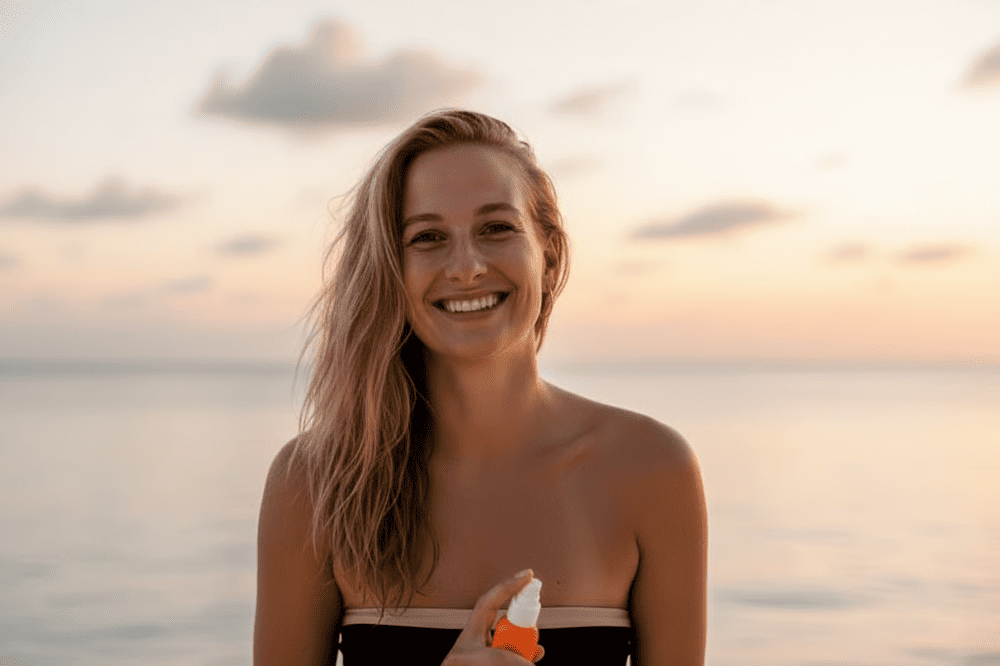
Apply sunscreen to protect your skin when visiting Vietnam

Apply sunscreen to protect your skin when visiting Vietnam

3.4. Footwear Guide

  • Flip-flops/sandals: Perfect for Southern Vietnam and beaches
  • Waterproof sandals: Essential during rainy season
  • Comfortable sneakers: Best for cities and light trekking
  • Hiking boots: Necessary for Sapa treks or mountain areas
  • Easy slip-off shoes: Many places require shoe removal

3.5. Cultural Sensitivity Tips

  • Modesty is key - cover shoulders and knees in religious sites
  • Remove shoes when entering temples, homes, some restaurants
  • Avoid all-white outfits (associated with mourning)
  • Respect photography rules in sacred places
  • Pack light scarves for quick coverage when needed

4. Destination-Specific Packing Guide

Each region of Vietnam offers unique experiences requiring specialized packing considerations based on climate, culture, and activities.

4.1. Ha Giang and Northern Mountain Provinces

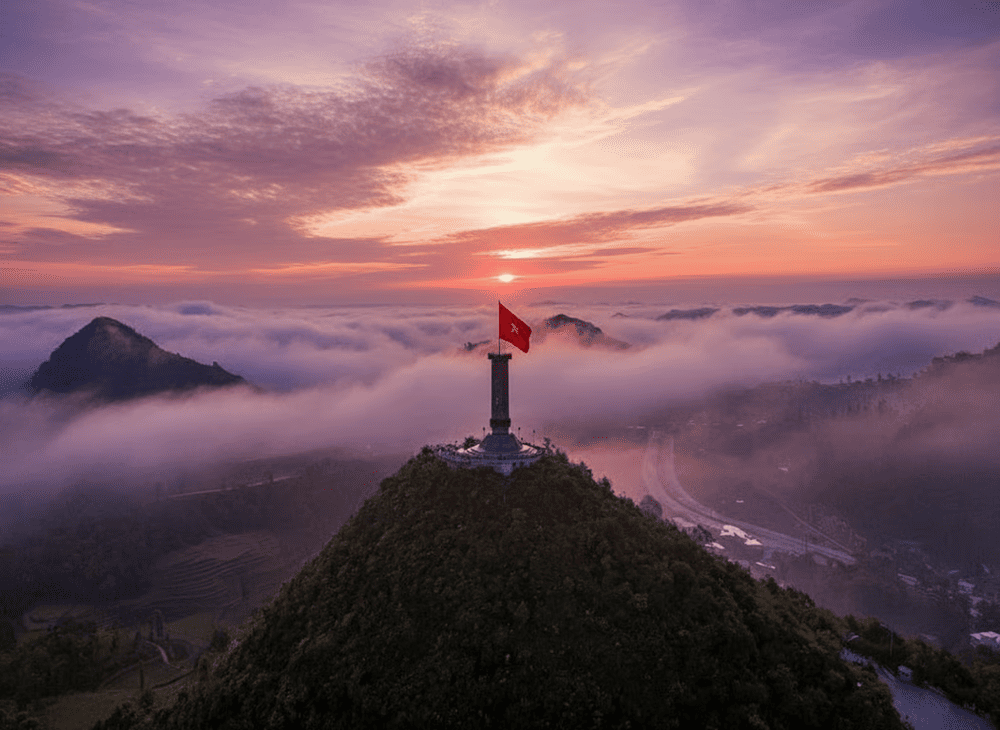
Ha Giang and the Northern mountain provinces offer Vietnam's most dramatic mountain scenery, featuring winding roads through terraced rice fields and traditional ethnic minority villages.

Regional Characteristics:

  • Dramatic mountain landscapes with ethnic minority villages
  • Cool temperatures year-round, especially at elevation
  • Many sacred sites and traditional communities
  • Motorbike loops and trekking adventures

Climate: Subtropical highland climate with cold winters (down to 32°F/0°C) and mild summers. Frequent fog and occasional snow in winter.

Ha Giang packing essentials for foreign tourist

Ha Giang packing essentials for foreign tourist

Packing Essentials:

  • October-March: Heavy jacket, thermal layers, waterproof boots, warm hat and gloves
  • April-September: Light jacket, long pants, sturdy hiking shoes, rain gear

Men's Essentials:

  • Long hiking pants, fleece jacket, waterproof boots, warm beanie
  • Avoid: Shorts, flip-flops, cotton t-shirts

Women's Essentials:

  • Warm leggings, insulated jacket, ankle boots, thermal underwear
  • Avoid: Skirts, sandals, lightweight fabrics

Additional Items: Headlamp, hand warmers, altitude sickness medication, respectful clothing for ethnic villages.

Visit Ha Giang and the Northern mountain provinces offer Vietnam's most dramatic mountain scenery

Visit Ha Giang and the Northern mountain provinces offer Vietnam's most dramatic mountain scenery

4.2. Hanoi and Northern Plains

As Vietnam's cultural and political capital, Hanoi blends ancient traditions with modern urban life, featuring countless temples, pagodas, and the famous Old Quarter's narrow streets. Almost all the Northern Plains experience four distinct seasons, making it essential to pack versatile clothing that can adapt from cool, dry winters to hot, humid summers with frequent afternoon rains.

Regional Characteristics:

  • Rich cultural heritage with numerous temples and pagodas
  • Four distinct seasons requiring versatile wardrobe
  • Business and governmental center with formal dress expectations
  • Street food culture and bustling markets

Climate: Subtropical with hot, humid summers and cool, dry winters. Temperature range from 59 - 93°F (15 - 34°C).

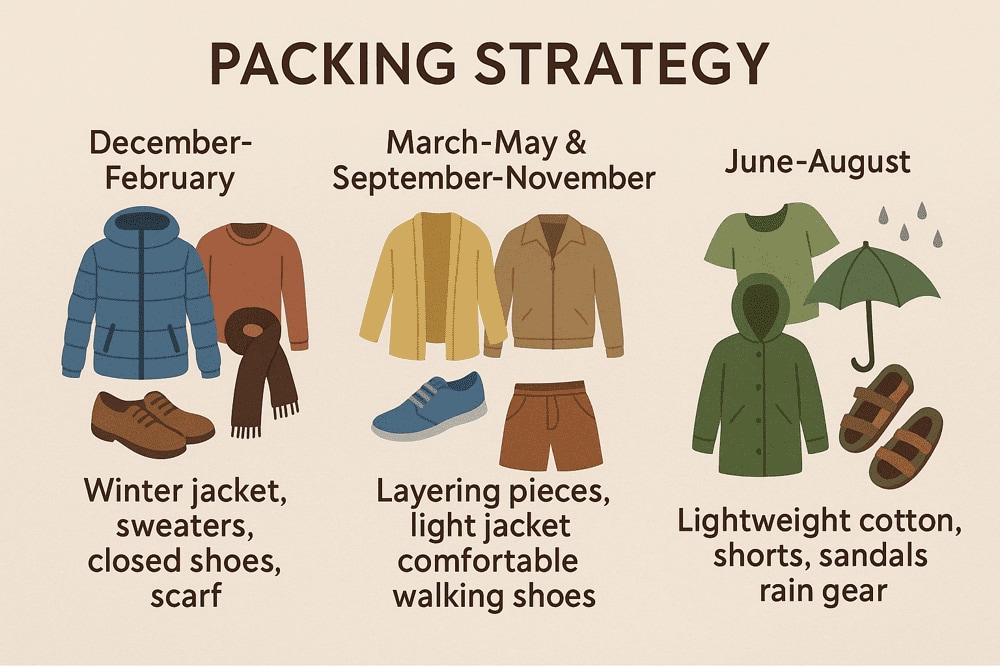
Packing Strategy:

  • December-February: Winter jacket, sweaters, closed shoes, scarf
  • March-May & September-November: Layering pieces, light jacket, comfortable walking shoes
  • June-August: Lightweight cotton, shorts, sandals, rain gear
Seasonal packing strategy when visiting Hanoi

Seasonal packing strategy when visiting Hanoi

Men's Recommendations:

  • Shirts, Tank tops, sandals, and comfortable sneakers
  • Avoid: Overly casual wear for cultural sites

Women's Recommendations:

  • Comfortable blouses, mini skirts, comfortable flats, light cardigan
  • Avoid: Low-cut tops, mini skirts, flip-flops for temple visits

Cultural Items: Conservative outfit for temple visits, business casual for upscale restaurants, comfortable walking shoes for Old Quarter exploration

4.3. Da Nang and Central Coast Cities

Central Vietnam's coastal region encompasses beach resort destinations like Da Nang, the ancient imperial city of Hue, and the UNESCO World Heritage town of Hoi An. This area experiences intense dry heat from February to August, followed by heavy monsoon rains, requiring both lightweight beach attire and waterproof gear depending on your travel season.

Regional Characteristics:

  • Beautiful beaches with resort culture
  • Ancient imperial cities (Hue) and UNESCO World Heritage sites (Hoi An)
  • Water sports and beach activities
  • Extreme heat in summer months

Climate: Tropical savanna with hot, dry season (February-August) and wet season (September-January). Temperatures 64 - 100°F (18 - 38°C).

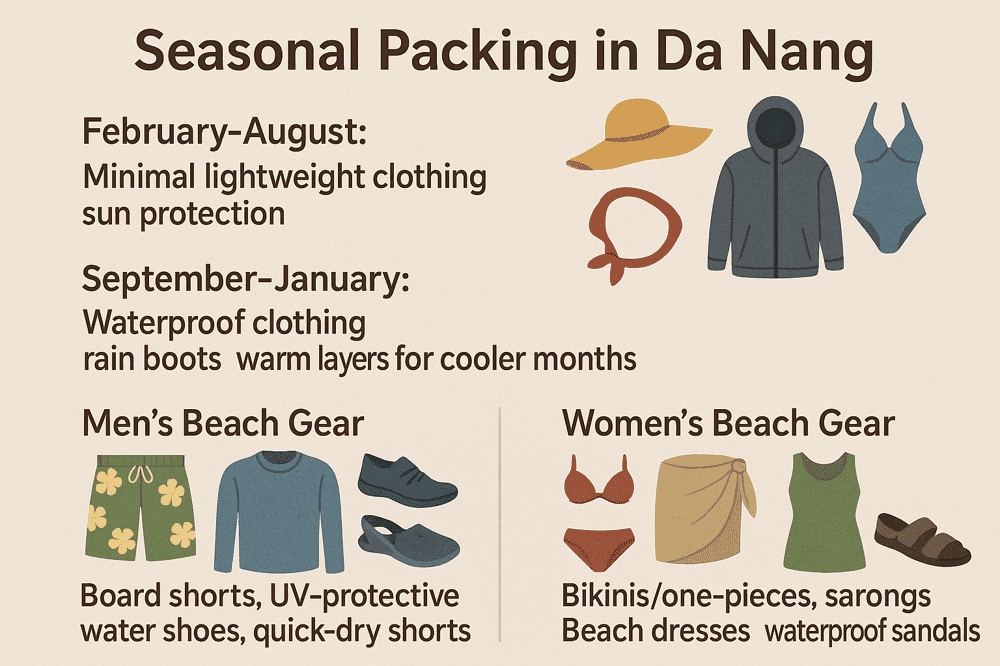
Seasonal Packing:

  • February-August: Minimal lightweight clothing, sun protection, swimwear
  • September-January: Waterproof clothing, rain boots, warm layers for cooler months

Beach Essentials for Both Genders:

  • Swimwear, cover-ups, reef-safe sunscreen, sun hat, waterproof phone case
Seasonal packing in Da Nang

Seasonal packing in Da Nang

Men's Beach Gear:

  • Board shorts, UV-protective shirts, water shoes, quick-dry shorts
  • Avoid: Speedos, shirtless outside beach areas

Women's Beach Gear:

  • Bikinis/one-pieces, sarongs, beach dresses, waterproof sandals
  • Avoid: Bikinis outside beach/resort areas, transparent cover-ups

Cultural Considerations: Modest clothing for Hue Imperial City and Hoi An Ancient Town, respectful attire for lantern festivals

4.4. Ca Mau and Mekong Delta Region

The Mekong Delta represents Vietnam's agricultural heartland, where life revolves around floating markets, river transportation, and traditional farming communities. This tropical wetland region maintains consistently high humidity and temperatures year-round, with a pronounced wet season that demands quick-dry fabrics and waterproof protection for exploring the intricate canal systems.

Regional Characteristics:

  • Tropical wetlands with unique floating markets
  • River-based transportation and activities
  • Rural farming communities with traditional lifestyles
  • High humidity and frequent rain

Climate: Tropical monsoon with two seasons - dry (November-April) and wet (May-October). Consistently warm and humid, 75 - 95°F (24 - 35°C).

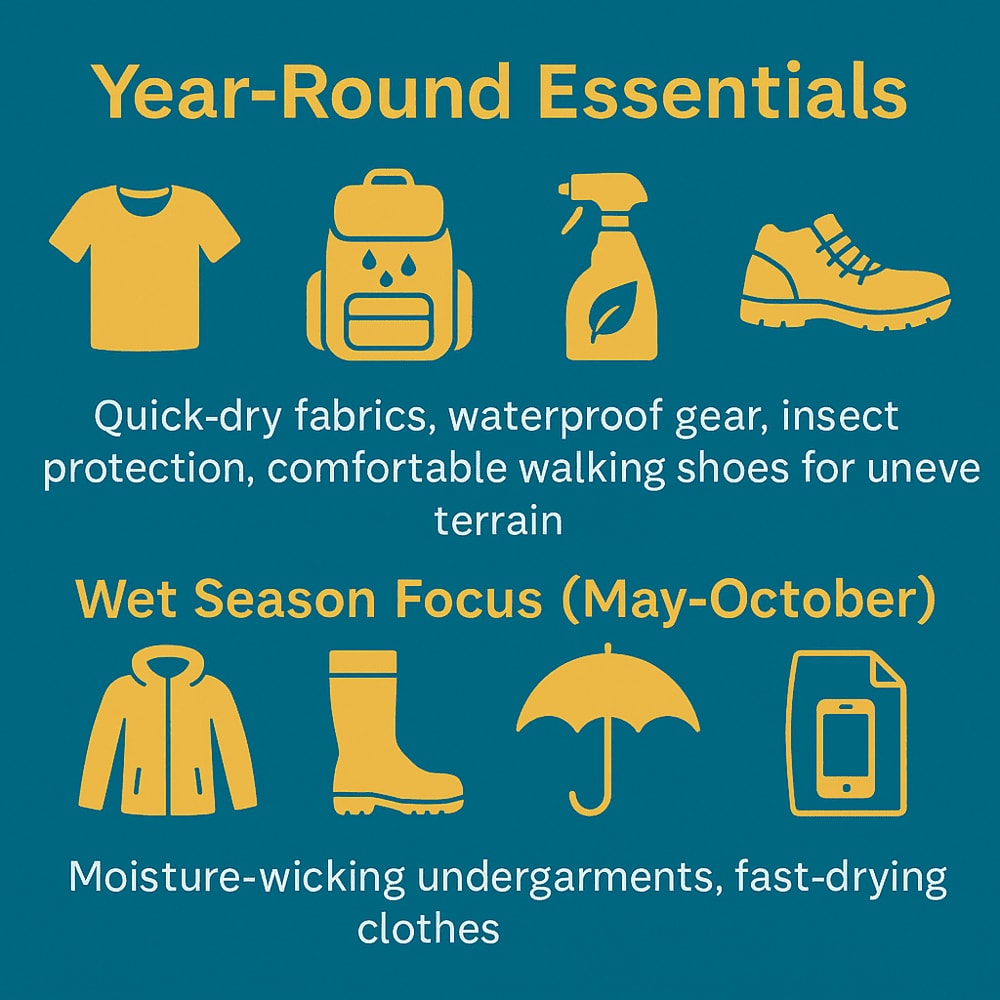
Year-Round Essentials:

  • Quick-dry fabrics, waterproof gear, insect protection, comfortable walking shoes for uneven terrain

Wet Season Focus (May-October):

  • Waterproof jacket, rain boots, umbrella, and plastic bags for electronics
  • Moisture-wicking undergarments, fast-drying clothes
Year-round essentials when visiting Ca Mau and Mekong delta region

Year-round essentials when visiting Ca Mau and Mekong delta region

Men's Delta Gear:

  • Lightweight long pants (mosquito protection), moisture-wicking shirts, waterproof sandals
  • Avoid: Cotton clothing, canvas shoes, heavy fabrics

Women's Delta Gear:

  • Long, loose pants, breathable blouses, waterproof sandals, sun hat
  • Avoid: White clothing (shows dirt), heavy materials, open-toe shoes for boat trips

Special Items: Insect repellent, waterproof bag for camera/phone, respectful clothing for rural village visits, comfortable shoes for muddy market walks

Knowing what to wear in Vietnam is essential for a comfortable and culturally respectful journey through this diverse Southeast Asian destination. Remember to pack modest, breathable fabrics and always respect local customs when visiting temples and traditional communities. Book your Vietnam adventure with Vietnam Airlines today and experience this incredible country in comfort and style.

Explore more

Find a flight

Loading