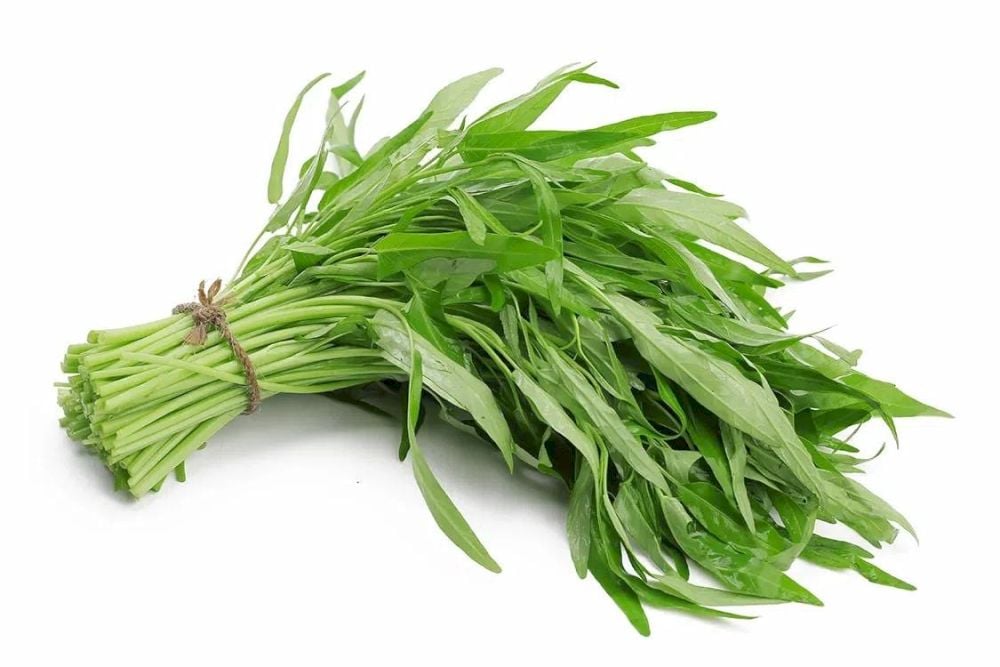
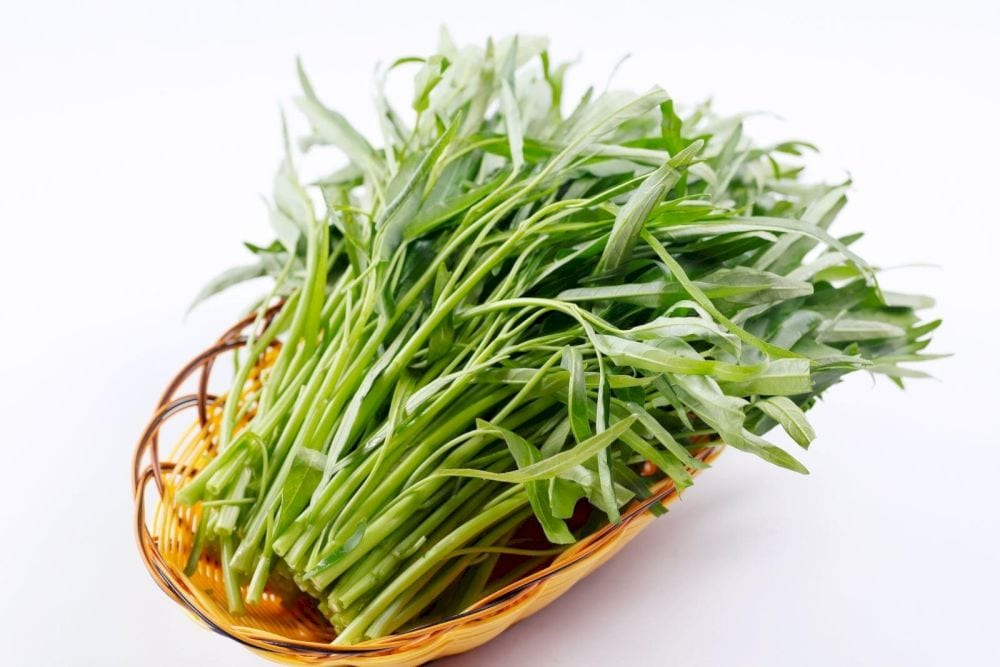
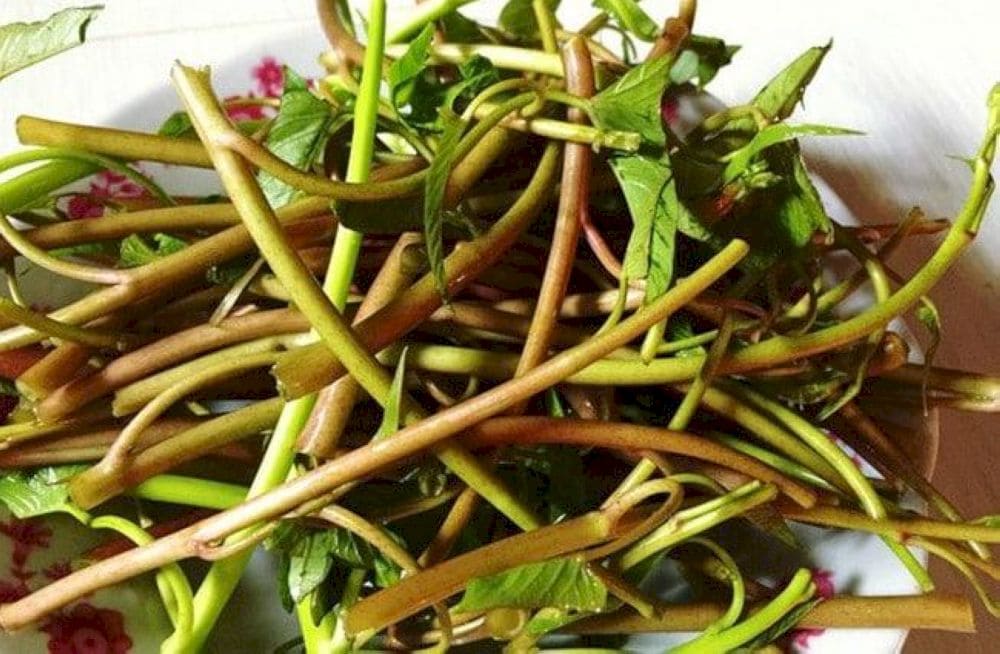
White and purple morning glory grow in different conditions from dry soil to wetlands
Common Culinary Uses:
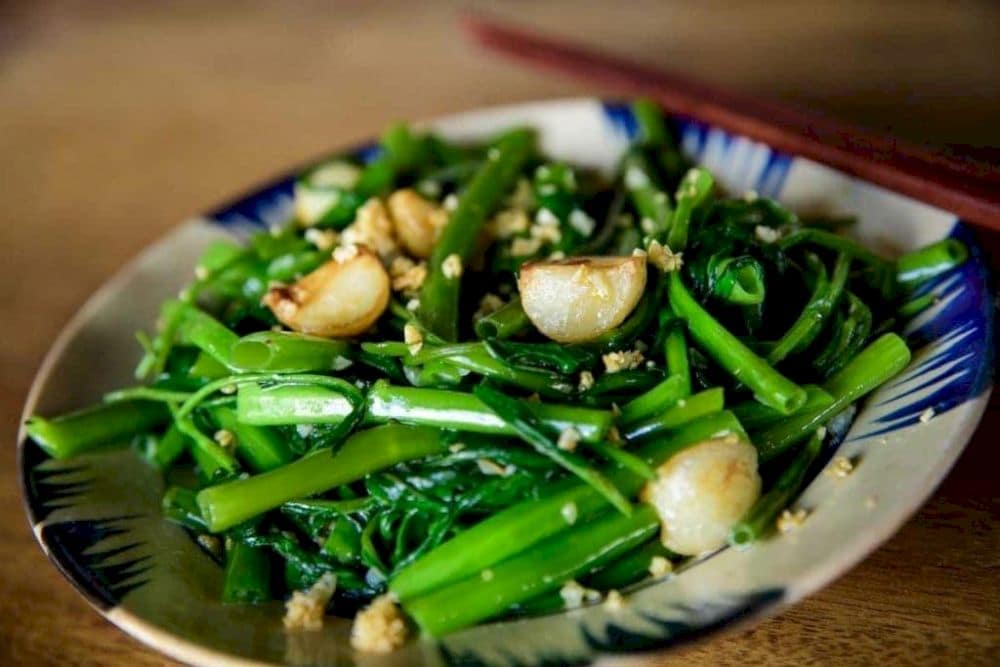
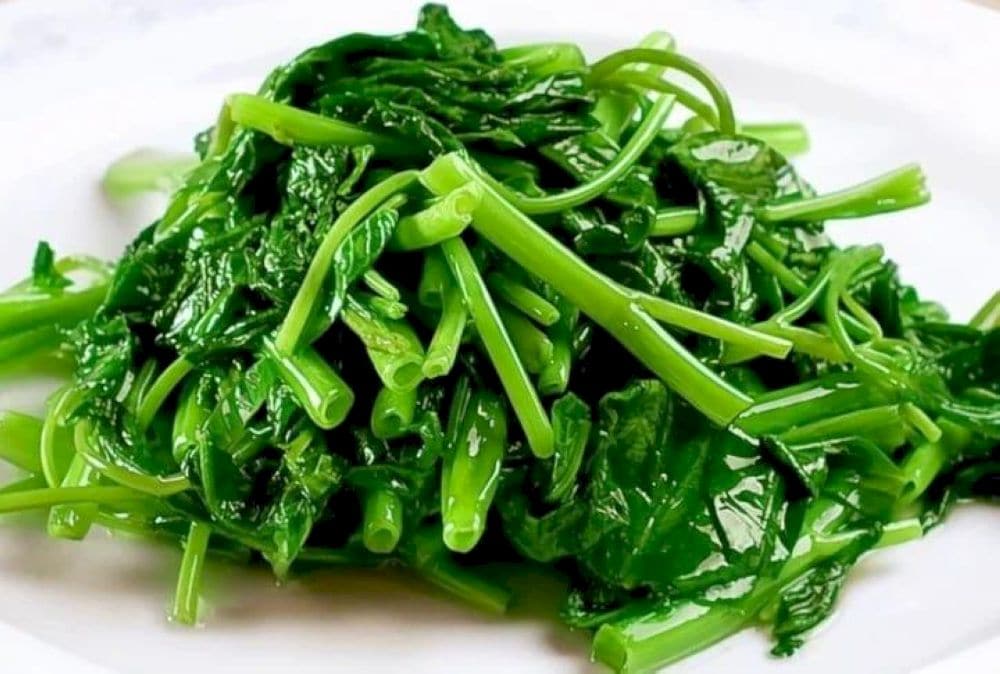
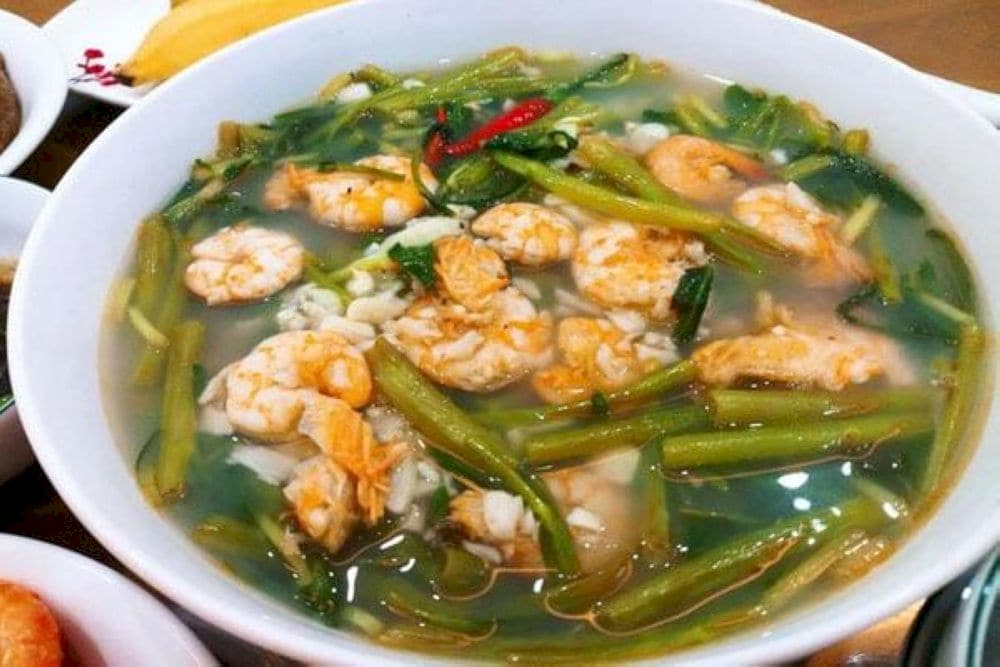
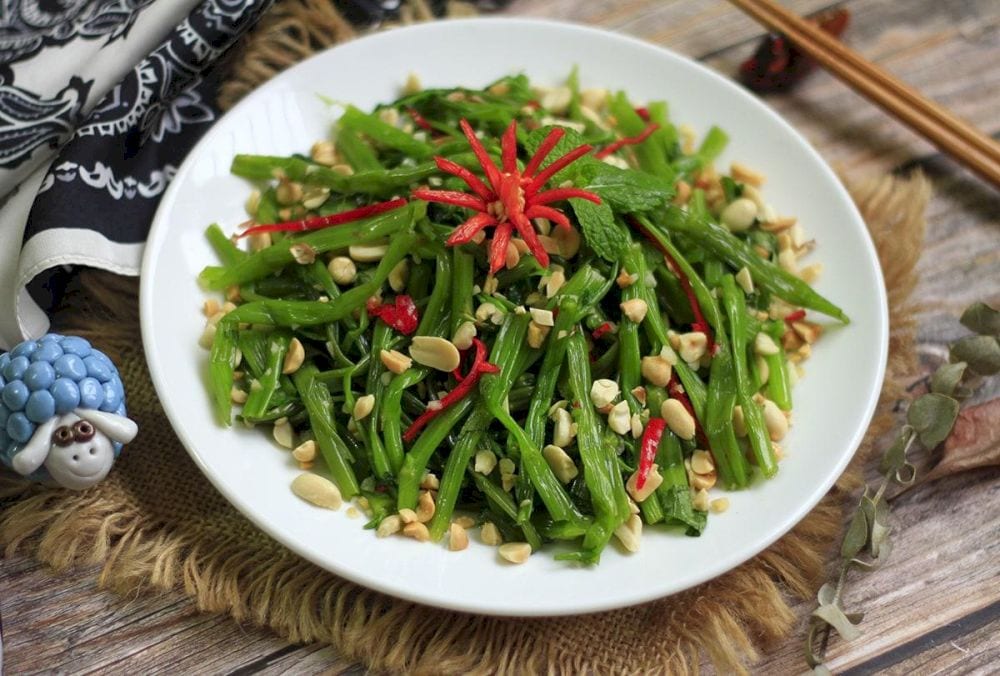
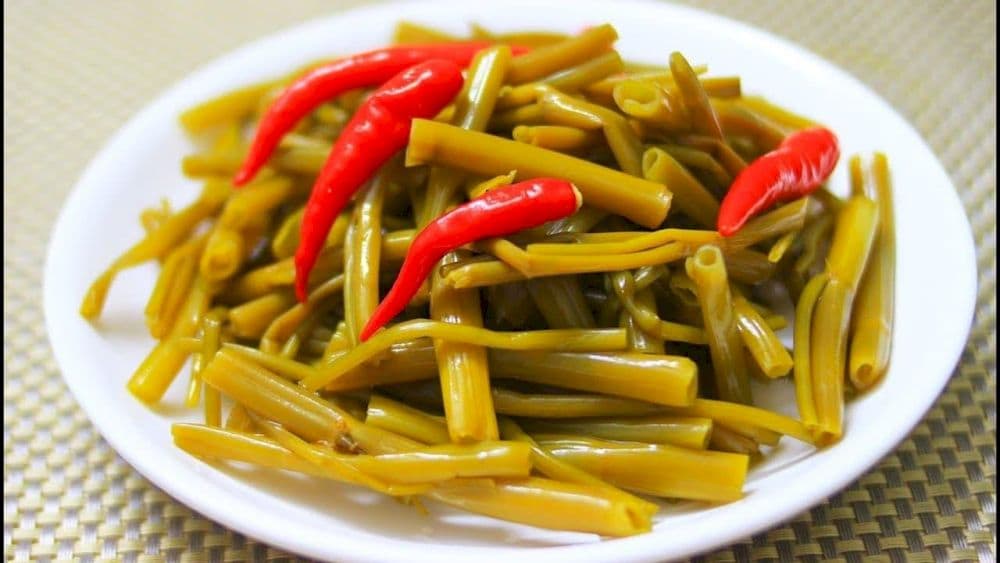
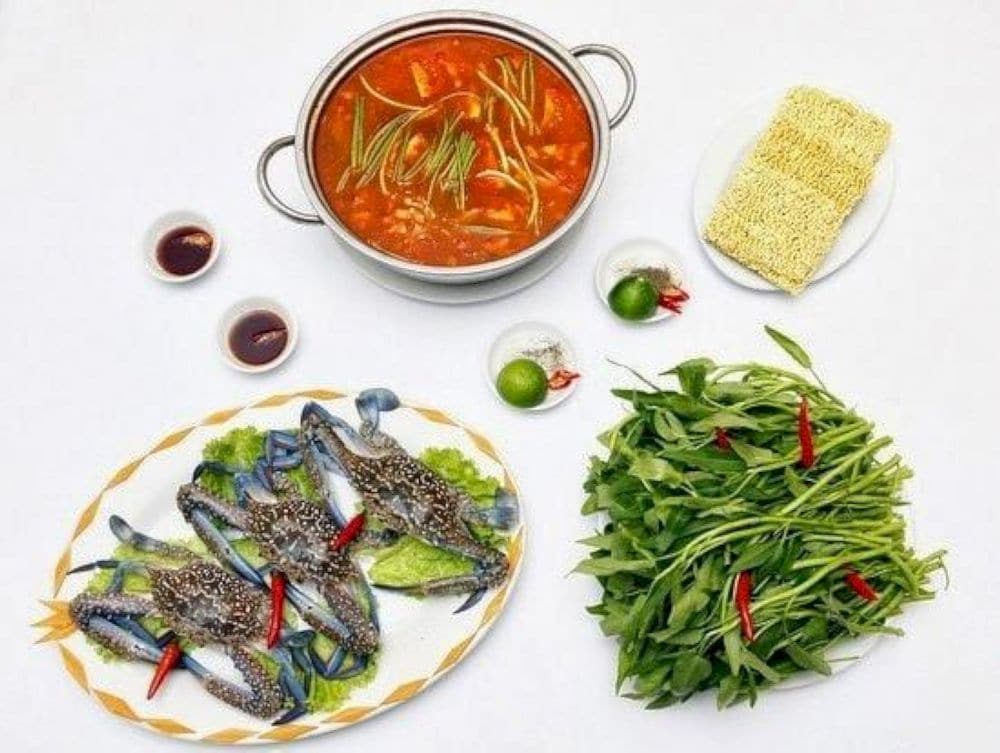
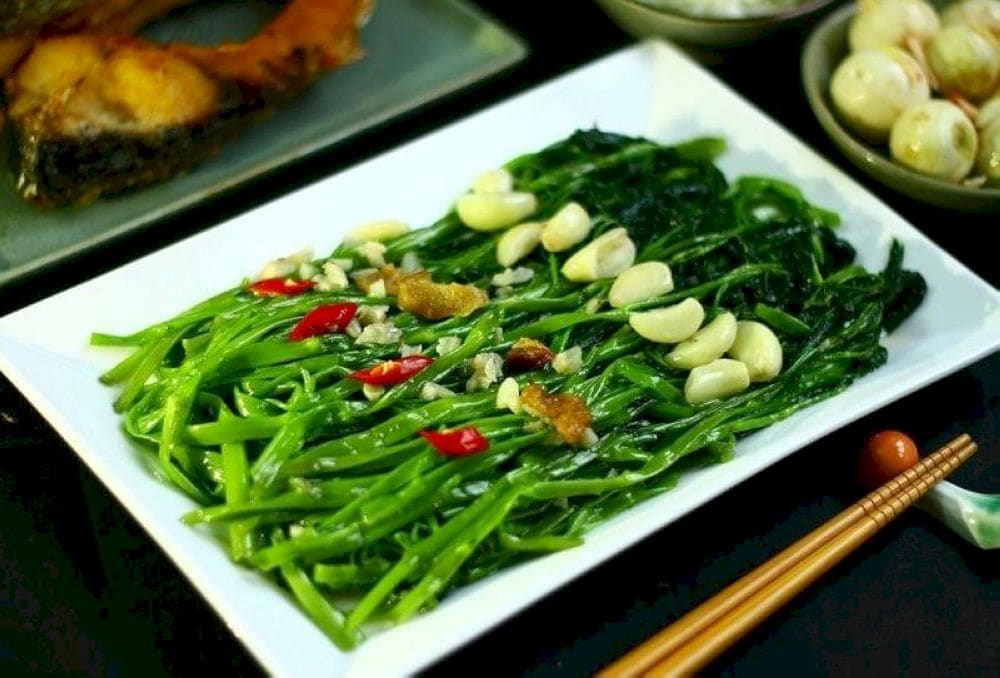
Because of its softer texture, white morning glory is most commonly used in stir-fried dishes or simply boiled and served with dipping sauce. Its mild flavor allows garlic or dipping sauces to shine. The purple variety, with its firmer texture and deeper flavor, is well-suited for soups, hotpots, and salads, where it retains a satisfying crunch and absorbs the richness of broths and dressings.
In sum, both types of morning glory are valued in Vietnamese cuisine, but each is chosen carefully depending on the dish, cooking method, and regional preference. Whether you’re sampling a street food stir-fry in Hanoi or savoring crab hotpot in Da Nang, understanding these subtle differences will help you enjoy the vegetable more fully.
6. Vietnamese Vs. Thai Stir-Fried Style
Stir-fried morning glory is a popular dish not only in Vietnam but also across Southeast Asia, particularly in Thailand. While both countries share a love for this vibrant vegetable, the flavors and cooking techniques used in each cuisine offer distinct interpretations that reflect their unique cultural palates. Here’s how the Vietnamese and Thai styles differ in preparing this much-loved dish:
Vietnamese Style:
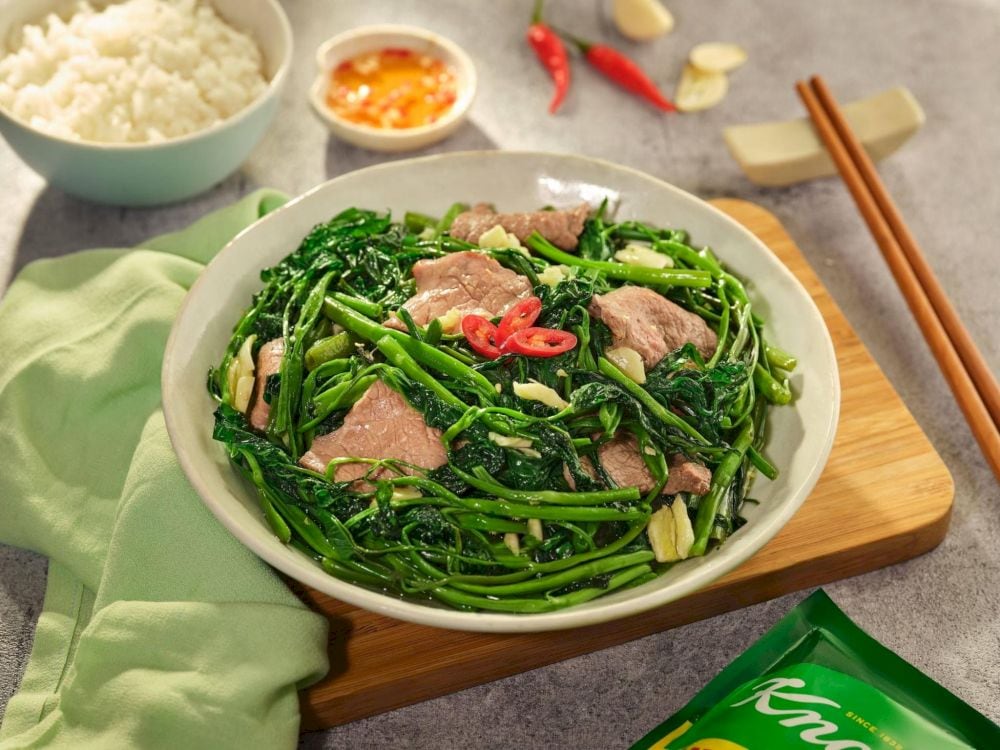
In Vietnam, stir-fried morning glory (rau muong xao toi) is all about simplicity, freshness, and balance. The dish typically features fresh garlic sautéed in oil until fragrant, followed by handfuls of chopped morning glory quickly tossed in a hot wok. A splash of fish sauce provides a savory umami depth, and sometimes a touch of oyster sauce is added for richness. Unlike its Thai counterpart, the Vietnamese version is not spicy and focuses on preserving the vegetable’s natural crunch and bright green color. This approach highlights the purity of ingredients and pairs beautifully with steamed rice and savory main dishes.
Thai Style:
Thailand’s take on stir-fried morning glory, known as pad pak boong fai daeng, delivers a bolder and more complex flavor profile. The sauce typically includes soy sauce, palm sugar, oyster sauce, and fermented soybean paste, which together create a richer, more caramelized umami taste. A defining feature of the Thai version is the use of bird’s eye chili and crushed garlic, which are stir-fried over high heat to release intense aroma and heat. The dish is noticeably spicier and sweeter than the Vietnamese style, with slightly softer stems due to the longer cooking time.
7. Where To Eat Morning Glory In Vietnam
Morning glory (rau muong) is one of the most widely available and beloved vegetables across Vietnam. No matter where your journey takes you — from bustling cities to coastal towns or peaceful rural villages — you’re likely to encounter this green staple on menus big and small. Its versatility makes it a popular choice in every type of dining setting, whether as a humble side dish or a gourmet culinary highlight.
You’ll find morning glory in:
- Street food stalls – Often served alongside grilled pork (thit nuong), crispy fish, or savory rice dishes, stir-fried morning glory is a comforting and affordable street food favorite.
- Traditional Vietnamese eateries – Here, you might find it boiled with a side of lime fish sauce, or stir-fried with garlic and fermented bean paste, forming an essential part of family-style meals.



 Link opens in new window. Site may not meet accessibility guidelines.