Select region and language
Close button
Booking and service information for the selected country and language will be applied.
paradise

A complete guide to things to do in Quang Ninh

Quang Ninh unfolds between the tranquil waters of Ha Long Bay and the forested slopes of its sacred mountains, with a modern coastal city resting beside one of Vietnam’s most poetic seascapes. Limestone islands emerge across the bay, while inland, ancient pagodas and wooded paths lead into a quieter world of contemplation and spiritual heritage. Along the coast, contemporary architecture, waterfront spaces and an unhurried pace of life add another layer to the province’s character. For travelers searching for things to do in Quang Ninh, the journey moves between sea, city, mountains and spirituality, creating a sense of calm and wonder shaped by the distinctive identity of northeastern Vietnam.

Things to do in Quang Ninh for its landscape and culture

The old people of the coast still tell of a time when invaders came by sea, and a mother dragon descended from the heavens with her children to defend the land. As the dragons fought, jewels and pearls fell into the water, becoming the islands and limestone towers of Ha Long Bay, while the mother dragon remained at Ha Long, “where the dragon descends”. The legend gives Quang Ninh a geography born from memory, while the province holds layers of history from generations of seafaring and coal mining to fishing communities, border mountains and Yen Tu, birthplace of Vietnamese Zen. For travellers seeking things to do in Quang Ninh, the journey moves through landscapes marked by heritage, resilience and the enduring relationship between people and the land.

From Ha Long Bay to peaceful island escapes

Quang Ninh’s coastal story begins with Ha Long Bay, but its character is easier to understand when the famous seascape is read together with the communities and islands around it.

Ha Long Bay – The timeless beauty of a UNESCO World Natural Heritage Site

Ha Long Bay rises from the Gulf of Tonkin in an astonishing expanse of jade water and towering limestone, where karst islands stand like immense stone sentinels beneath a vast northern sky. As a boat moves between them, cliffs emerge from the haze, their sheer faces glowing silver in the sun before sinking into green shadow. Mist gathers around distant peaks as the water shifts with the light, giving the bay a dreamlike beauty that has inspired generations of poets and painters. Recognised by UNESCO as a World Natural Heritage Site in 1994 and 2000 (and expanded in 2023), Ha Long Bay encompasses nearly 2,000 limestone karst islands and islets alongside magnificent grottoes such as Sung Sot, Thien Cung and Dau Go caves, formed through hundreds of millions of years of geological evolution.

The waters also hold memories of communities who built their lives around the sea. At Cua Van, generations of fishing families, descended from older communities including Giang Vong and Truc Vong, once lived in floating houses, reading the movement of tides, storms and currents as naturally as a sailor reads a chart. Although the community later moved ashore, Cua Van retains its cultural heritage through preserved floating houses, a floating classroom, fishing tools and traditional love duet singing, while some families continue aquaculture.

From the deck, limestone walls loom overhead, streaked with mineral colours, while caves plunge into cool darkness where droplets strike stone and echoes travel through vast chambers. Around Cua Van, painted boats and floating houses rest beneath the karsts, their reflections trembling across the water. Here, the grandeur of Ha Long Bay remains inseparable from the maritime life once lived upon its waters.

Đảo đá vôi và tàu du lịch trên vịnh Hạ Long

Ha Long Bay, the must-visit destination when travelling to Quang Ninh

Islands and coastal landscapes with distinct characters

Along Quang Ninh’s coast, the scenery shifts with every stretch of shoreline, from Tuan Chau’s polished waterfront to the wind-brushed beaches of Co To and the pine-scented sands of Quan Lan. Tuan Chau hums with maritime leisure beside Ha Long, while Co To feels further removed, its turquoise shallows, forested hills and broad beaches opening onto an island community whose fortunes have long followed the changing sea.

Further into Bai Tu Long, Quan Lan carries traces of an older maritime world. Situated within the tranquil waters of Bai Tu Long Bay, Quan Lan Island's sandy coves and casuarina groves once welcomed merchant vessels to the ancient Van Don trading port (established in 1149 under King Ly Anh Tong and flourishing throughout the Tran Dynasty), a maritime legacy still honoured at the historic Quan Lan communal house. On the mainland at Cua Ong Temple in Cam Pha, incense rises through the sacred complex dedicated to Hung Nhuong Dai Vuong Tran Quoc Tang – the third son of Supreme Commander Tran Hung Dao – who defended Vietnam’s northeastern maritime frontier. Bai Chay, meanwhile, brings the bay into the city, where the broad waterfront glows softly beneath evening skies. Together, these shores trace a vivid passage from island solitude and ancient trade to sacred heritage and contemporary coastal life.

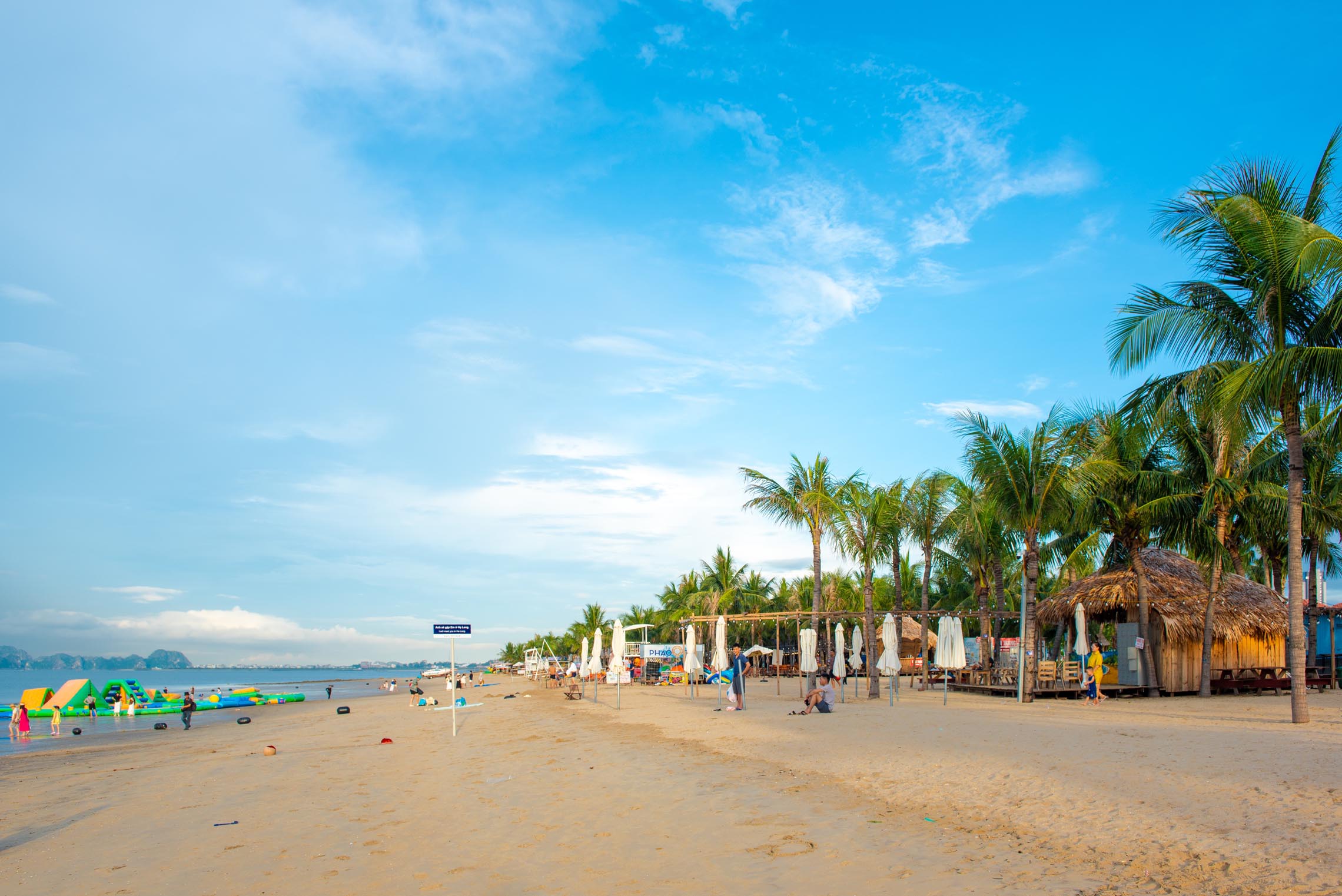
Bãi tắm Bãi Cháy với hàng dừa ven biển

Bai Chay Beach in a summer day

Things to do in Quang Ninh from mountain adventures to cultural discoveries

Quang Ninh is defined not only by its coast; its mountainous interior reveals a remarkably different side of the province. Away from the sea, primeval forests, river valleys and border ridges create one of Vietnam’s most striking combinations of maritime and upland geography. What makes the geography unusual is the swift change from drowned limestone islands to high border peaks, with communities in between developing distinct languages, foods and beliefs.

A landscape where mountains meet the sea

The sea is not an isolated resort zone and the mountains are not a separate hinterland. In Quang Ninh, the two worlds flow into one another, opening a landscape of hidden treasures where forested slopes, mineral springs, rivers and island coves remain within reach of the coast. At Quang Hanh, warm mineral waters rise beneath wooded hills, while Ba Che’s forests conceal tea gardens and clear streams winding through quiet valleys. Across Van Don, mountainous islands scatter across the sea, with secluded beaches, forest paths and traces of the ancient Van Don trading port tucked among the hills. This geography gives things to do in Quang Ninh an unexpected breadth, inviting travellers to leave the familiar coastline behind and search for hidden gems where mountain and sea meet.

Exploring the borderlands of Binh Lieu

At Binh Lieu, the border becomes part of the drama, with the route to Milestone 1305 climbing the famous “Dinosaur Backbone”, a narrow ridge that rises and falls like a spine along the mountain crest. The path threads through wind-swept grass, with steep green slopes falling away on either side and clouds drifting across distant peaks. Nearly two kilometres of steps lead towards the marker, turning the ascent into a test of endurance and a vantage point over the frontier.

Cao Xiem Mountain and Khe Van Waterfall extend the route into forests, high valleys and villages of Tay and Dao communities. Border markers punctuate the landscape, while terraced fields and winding roads appear between folds of mountain. At Milestone 1305, the view opens across ridges, winding roads and cultivated valleys, while the narrow path beneath the feet explains the name “Dinosaur Backbone” more vividly than any photograph can.

Con đường dẫn đến cột mốc 1305 Bình Liêu

Scenic road winding through the mountainous landscape of Binh Lieu, Quang Ninh

A vibrant highland culture

Leave the coast behind and Quang Ninh enters a culturally diverse highland world, far removed from the image created by Ha Long Bay. In Tien Yen, Ba Che, Dam Ha and Hai Ha, winding mountain roads pass through secluded valleys where mist hangs over forested slopes, rice fields stretch beneath rocky ridges and small villages appear quietly between the folds of the hills.

The beauty here is raw, tranquil and deeply alluring, with the slower pace of upland life giving each valley a distinct atmosphere. Tay, Dao, San Chi and other communities add vivid colours through indigo clothing, woven textiles, timber houses, seasonal festivities and foods drawn from mountain produce. In some villages, ancestral customs remain closely connected to farming cycles and family gatherings, preserving a way of life that feels far removed from the bustle of the coast. Among the places to visit in Quang Ninh, these highlands reveal a quieter, richly diverse side of the province.

The spiritual landscape of Yen Tu Mountain

High above Quang Ninh, Yen Tu rises through mist and forest, inviting a pilgrimage on foot along ancient stone paths, steep stairways and wooded slopes towards the sacred summit. As the climb grows quieter, pine-scented air, distant bells and the fragrance of incense lend the mountain a contemplative atmosphere, while pagodas emerge between moss-covered rocks. While a modern cable-car system shortens part of the ascent, the final stone steps leading to Dong Pagoda – a gleaming bronze shrine perched atop the sacred summit at 1,068 metres above sea level – remain a deeply memorable pilgrimage through the clouds.

Yen Tu is the revered cradle of Truc Lam Zen Buddhism, founded by Emperor-Monk Tran Nhan Tong – the wise monarch who twice led Dai Viet to victory over the Mongol–Yuan invasions before abdicating the throne and ascending Yen Tu Mountain in 1299 to unify Vietnamese Zen into the Truc Lam lineage. Today, the mountain preserves this spiritual legacy through temples, hermitages, inscriptions and pilgrimage paths, connecting Vietnamese royal history with Buddhist philosophy and centuries of personal devotion. For many Vietnamese people, Yen Tu remains an important place of pilgrimage, particularly during the spring festival season, when thousands travel here to pray, make offerings and begin the year in a quiet atmosphere of faith and renewal.

As one of the most famous places to visit in Quang Ninh, Yen Tu completes a province where sea and mountain, archaeology and living traditions exist side by side. For visitors, the journey combines the physical challenge of climbing the mountain with the chance to experience one of Vietnam’s most important Buddhist landscapes.

Quick information

Frequently Asked Questions 

The ideal period is from April to September, when warm weather is well suited to beach trips, island escapes and cruises around Ha Long Bay. From October to December, cooler temperatures make it a good time to explore the mountainous borderlands of Binh Lieu, especially for trekking and cloud hunting.

The main spiritual season falls from the first to the third lunar month, when pilgrimage festivals take place across the province. The most notable sites include the Yen Tu historical and scenic complex, Cai Bau Pagoda and Cua Ong Temple, each associated with a distinct chapter of Quang Ninh’s religious and cultural history.

A two-day, one-night cruise on a 4-star to 5-star vessel typically costs around VND 2,500,000 – VND 5,000,000 per person. Packages generally include meals, a cabin, entrance fees and activities such as kayaking and night squid fishing, although inclusions vary between cruise operators.

Quang Ninh local food, from mountain to the sea

In Quang Ninh, the story of a meal begins with the tides, as generations of families across Van Don, Ha Long and Cua Ong have followed the rise and retreat of the water, setting out in small boats before dawn to gather oysters, fish and shellfish from the bays and tidal flats that sustain their livelihoods. What arrives from the sea then moves naturally into the household kitchen, alongside rice, poultry, roots and mountain crops cultivated further inland, creating a culinary repertoire shaped by the province’s extraordinary geography. This is where Quang Ninh local food becomes an understated treasure, not because every dish is elaborate, but because eating remains closely connected to where an ingredient is raised, caught, traded and cooked.

The flavors from the mountains in Quang Ninh local foods

The upland table begins with household farming and ingredients cultivated close to home, with Tien Yen and Binh Lieu known for distinctive poultry, rice preparations and root crops. Food also records the presence of Tay, Dao, San Diu and Hoa communities, whose recipes have travelled through family meals, weddings, Tet gatherings and local trade.

Ca Say Tien Yen from the streamside hills

Along the streams of Tien Yen, farmers have long raised Ca Say Tien Yen – a prized local hybrid waterfowl crossbred between Muscovy duck and domestic duck – letting the birds forage freely along grassy banks and shaded hills, where the birds forage between water and woodland before returning to village households. At the table, slices of boiled Ca Say arrive glossy and tender, their savoury richness lifted by ginger, fish sauce and aromatic local seasonings. The breed belongs to an older food culture shaped by Tien Yen’s river valleys and upland villages, appearing at Tet meals, family reunions and occasions when guests are welcomed with regional delicacies. Its distinctive flavour remains closely tied to the land and households that raised it.

Mien Dong Binh Lieu from a mountain crop

On the high slopes of Binh Lieu, families have long tended red arrowroot among misty hills and cool streams, harvesting the roots when the crop reaches maturity and washing away the mountain soil before turning them into fine starch. Drawn through clean stream water and dried beneath highland sunlight, the resulting vermicelli takes on a delicate green-brown hue, with resilient strands that are firm, springy and subtly fragrant. Once a household staple made by hand, Mien Dong Binh Lieu (Binh Lieu arrowroot vermicelli) now travels from upland kitchens into markets across Quang Ninh, while remaining rooted in the farming traditions of the district.

Ga Tien Yen and Banh Gat Gu at the everyday table

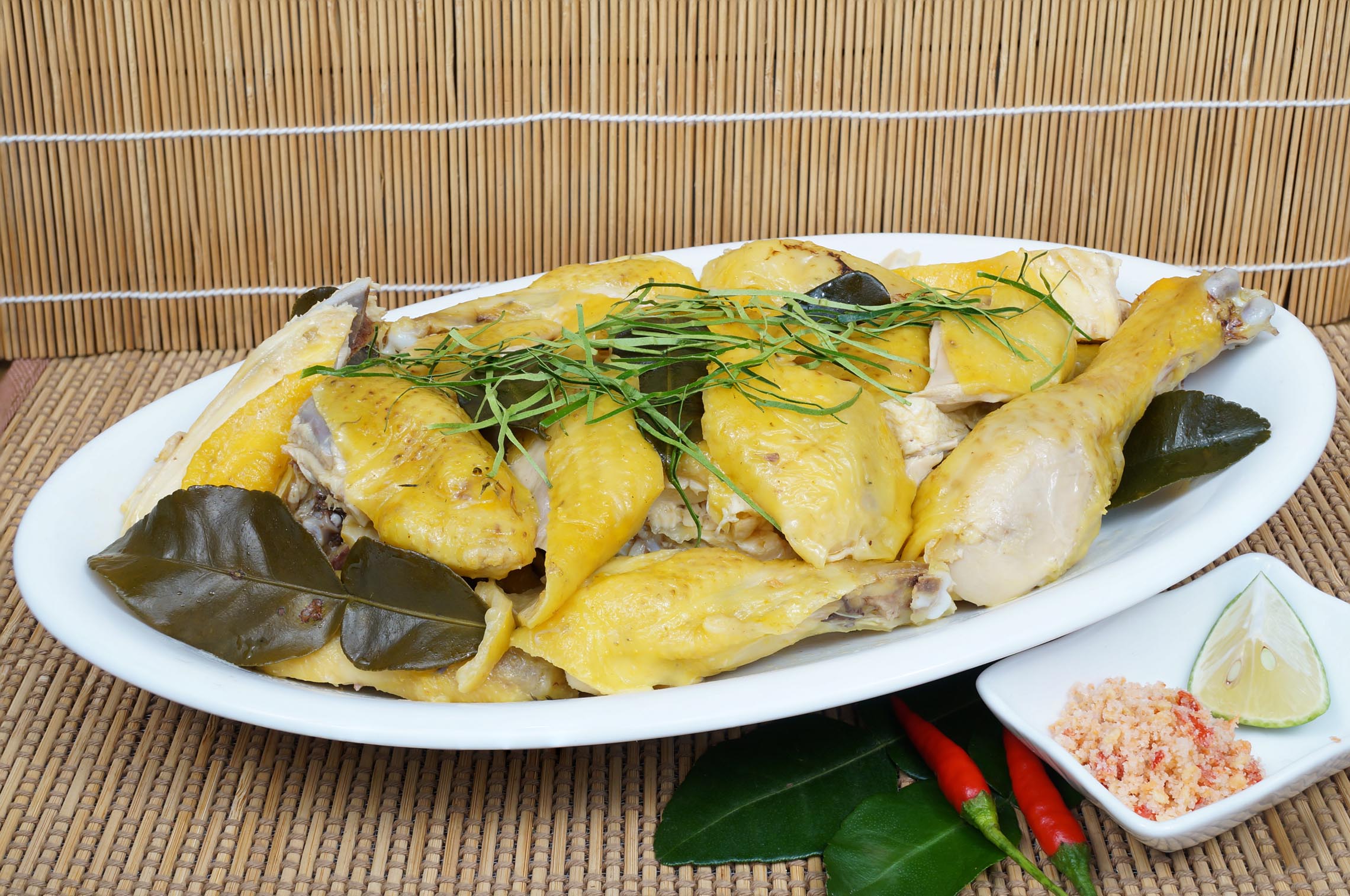
At a family table in Tien Yen, a whole boiled hill chicken with burnished golden skin is often set beside a plate of Banh Gat Gu (soft, translucent rolled rice pancakes playfully named for the way each long roll gently 'nods' up and down when held in the hand, dipped into braised pork sauce or fragrant chicken fat with fried shallots), bringing two regional favourites together over a generous meal. Tien Yen chicken is prized for its free-ranging life across hills and village gardens, which gives the meat a firm, finely fibred texture, pronounced sweetness and a distinctive savouriness beneath the thin, glossy skin.

Đĩa gà Tiên Yên luộc với lớp da vàng óng, ăn kèm rau thơm và muối chấm

Steamed Tien Yen chicken, a traditional Tien Yen dish

Khau Nhuc in the banquet traditions of the north

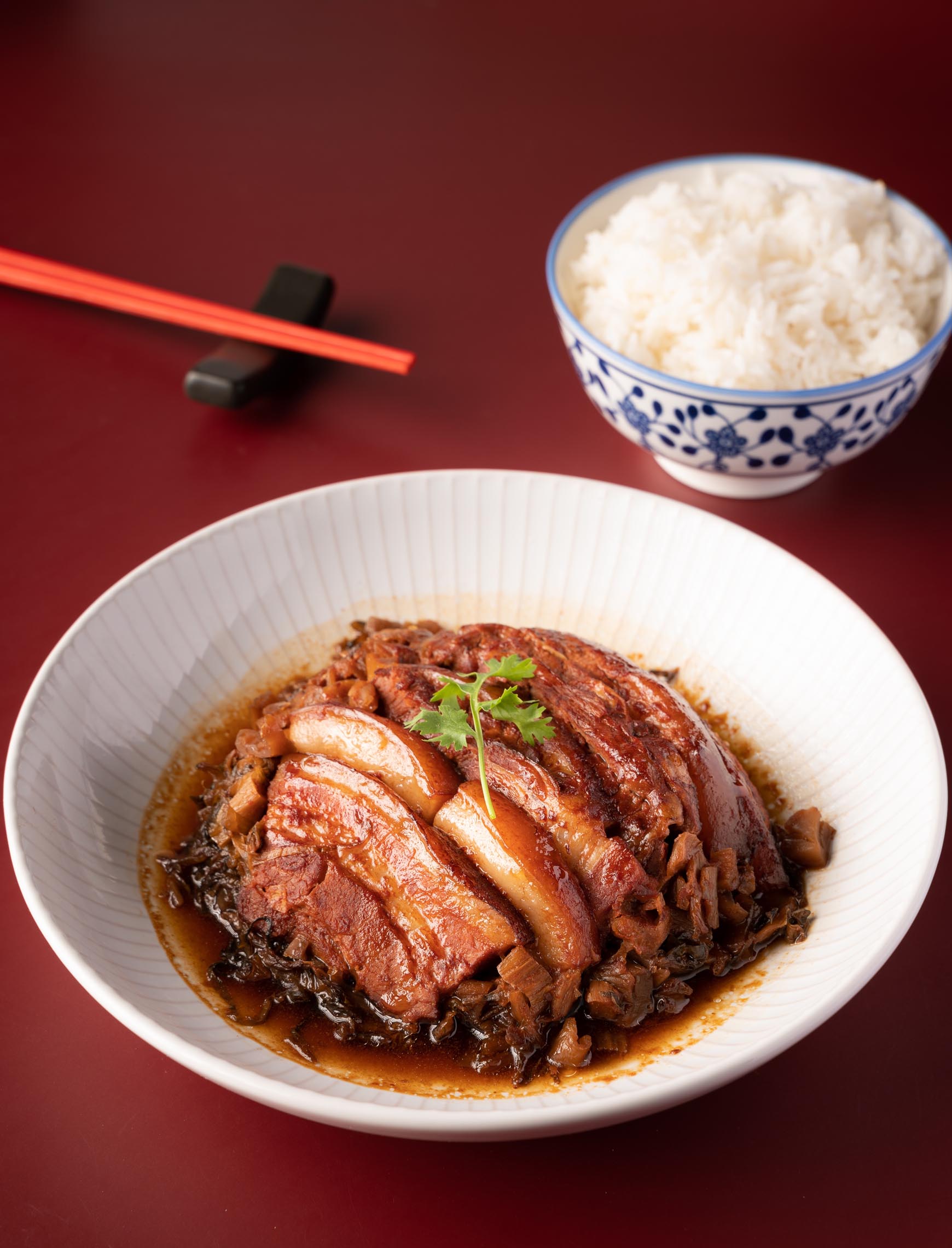
The refinement of Khau Nhuc (Slow-cooked pork belly) lies in how humble ingredients from the northern mountains are coaxed into extraordinary depth, with pork belly meeting fragrant herbs, forest-grown leaves and time-honoured seasonings passed through generations of Tay, San Diu and Chinese communities in Quang Ninh. As the lid lifts from the steaming bowl, warm aromas of star anise, cardamom, galangal and fermented seasonings rise around the burnished pork, its glossy skin yielding to tender layers beneath.

The preparation demands patience: the skin is meticulously pierced and fried before the meat is arranged with its aromatic filling and steamed slowly until fat melts silkily through the flesh. At Tet Holiday (Vietnamese Lunar New Year) and ceremonial gatherings, the inverted bowl reveals a rich mound of pork, its fragrance and texture embodying northern culinary craftsmanship.

Khâu nhục được chế biến theo phong cách truyền thống

Khau Nhuc (Steamed pork belly) with preserved mustard greens, a traditional dish enjoyed by ethnic communities in the mountainous areas of Quang Ninh

What to eat in Quang Ninh, the tale of the sea

From forested mountains to the open sea, Quang Ninh gathers an extraordinary abundance of ingredients, nourishing local households and ceremonial feasts prepared to welcome guests from near and far.

Regional delicacies from the tidal coast

Along the tidal shores of Minh Chau and Quan Lan, a remarkable repertoire of seafood has long formed part of island cuisine, with Sa Sung (Peanut worm), Sam Bien (Horseshoe crab), Ngan Bien (Quang Ninh special clam) and Be Be (Mantis shrimp) prized for flavours ranging from deep umami to delicate marine sweetness. Sa Sung, gathered from sandy flats as the tide recedes, has a firm, succulent bite when fresh, while drying concentrates its savour into an ingredient capable of lending remarkable depth to broth. Sam Bien, traditionally taken in pairs, requires meticulous preparation, with its eggs and flesh treated according to long-established culinary customs. Ngan Bien has plump, naturally sweet flesh, delicious steamed, grilled or simmered into porridge, while Be Be is prized for firm texture and gentle sweetness.

Such delicacies follow the lunar tides and changing seasons, giving island cooking an intimate knowledge of the shore. Their freshness also explains the restraint of local seasoning, where salt, herbs, ginger and heat sharpen flavours without obscuring the character of each ingredient.

Lau Ca Lap Sap with Quan Lan's sour fruit

At the distinctive floating restaurants around Hon Gai, Lau Ca Lap Sap (Thuyen Chai fish hot pot) is served aboard boats where tables sit close to the water, sea wind moves across the deck and the scent of simmering fish mingles with the briny air. The dish draws on a coastal style of cooking in which fresh fish is simmered in a clear broth sharpened with Bua, a sour fruit found around the island communities and particularly abundant in May and June. Its clean acidity cuts through the sweetness of the fish, leaving the broth bright, fragrant and refreshing against the salt air. The steaming pot remains at the centre of the meal as diners add fish and vegetables gradually, sharing the broth while herbs release their fragrance into the rising steam. This communal way of eating reflects a coastal food culture shaped by seasonal ingredients, freshly prepared seafood and long meals beside the sea.

Cha Muc Ha Long and the stone mortar tradition

A plate of Banh Cuon Cha Muc (Rice rolls with squid sausage) is a familiar sight in Ha Long’s residential streets as the city wakes, with delicate rice sheets folded around savoury filling before golden pieces of squid sausage are placed on top. For local families, this is the kind of uncomplicated meal that belongs to everyday life, yet its simplicity leaves little room for poor ingredients or careless preparation.

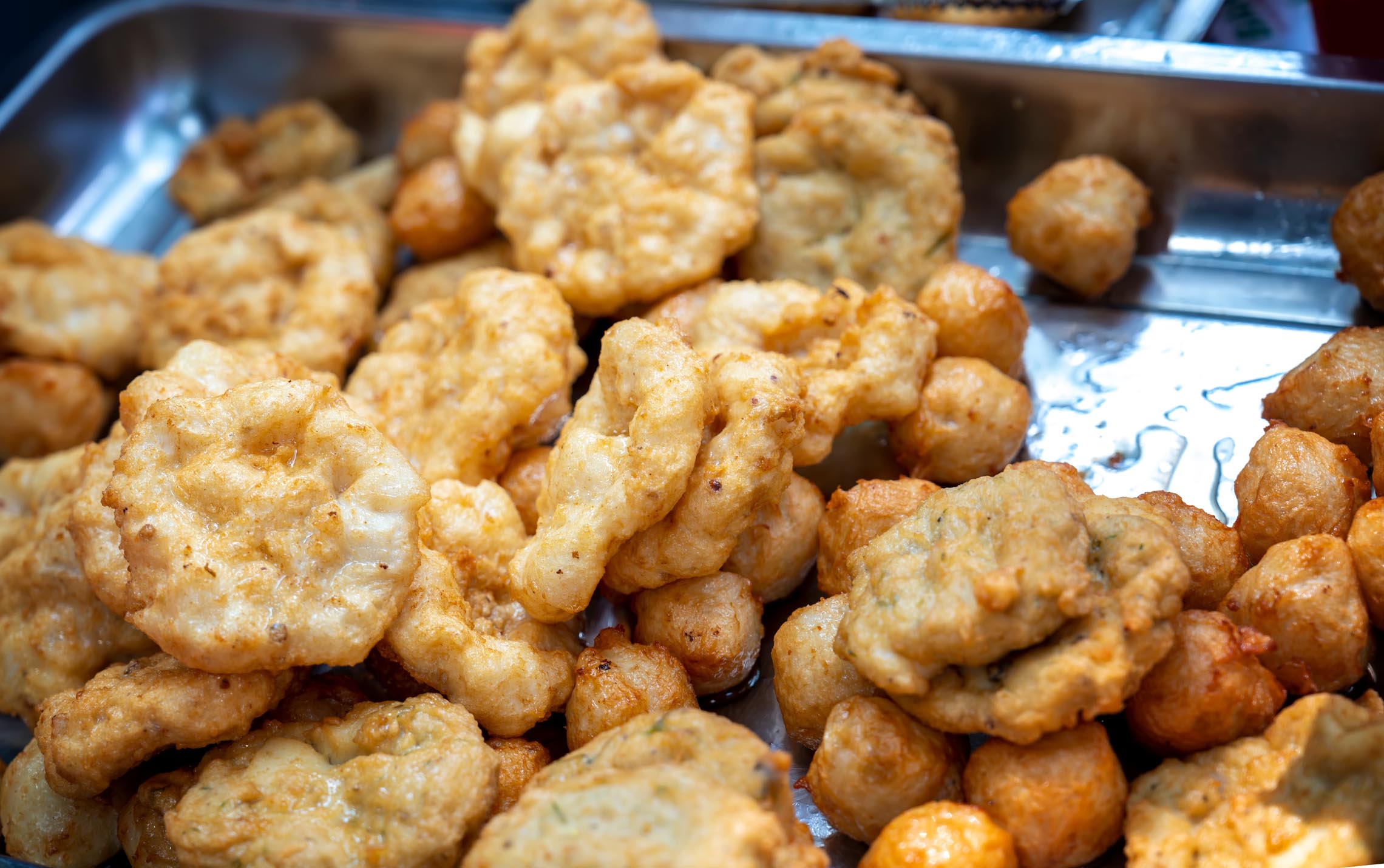
Cha Muc Ha Long (Ha Long squid sausage) has earned its place through the quality of fresh cuttlefish and the stone-mortar technique used to pound it by hand. Repeated pounding leaves tiny pieces of squid intact within the mixture, producing the springy, uneven bite that distinguishes the sausage from machine-ground versions. Served with traditional rice rolls or sticky rice, it brings the flavour of the bay to various meals, linking a humble daily treat with one of Ha Long’s most treasured culinary traditions.

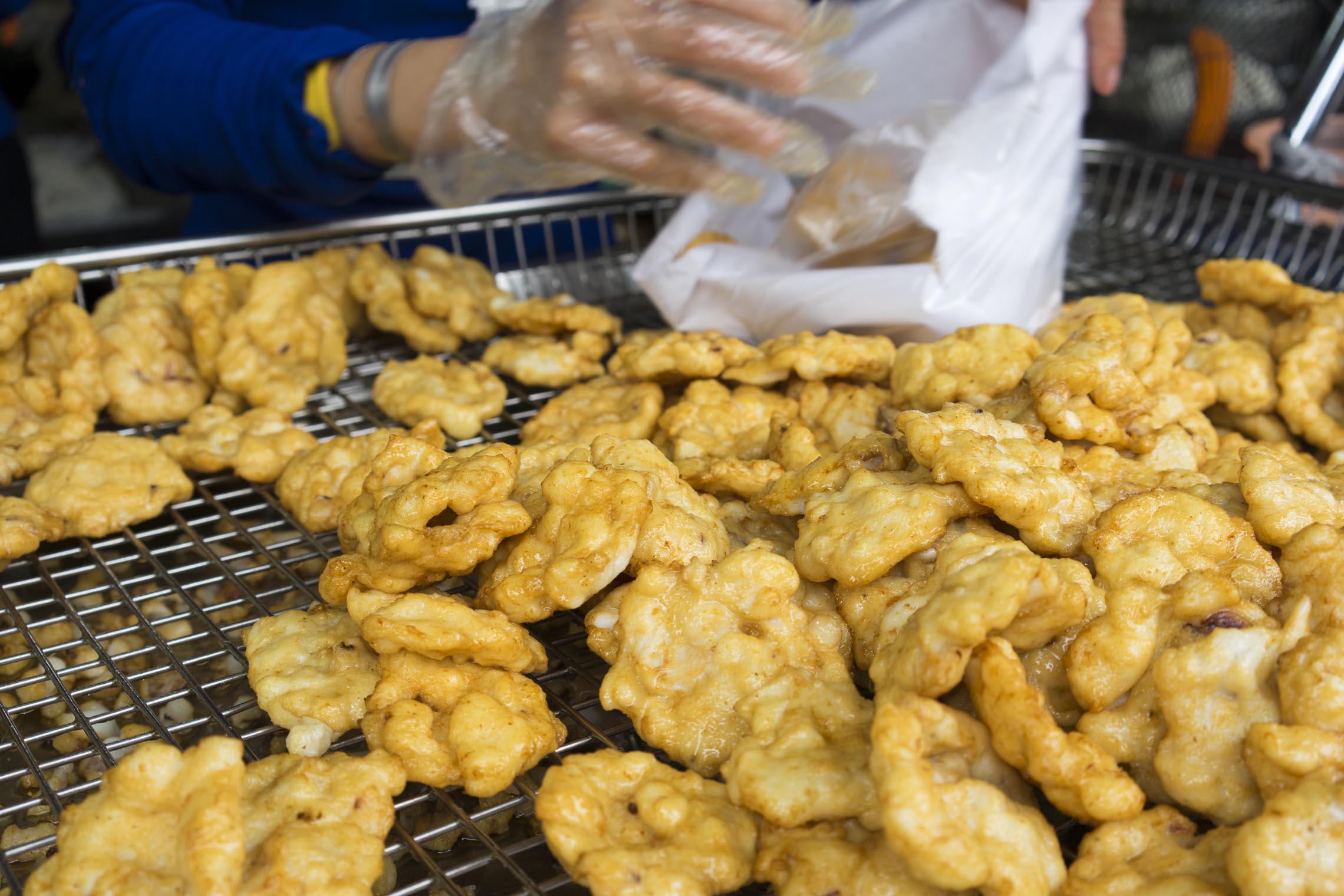
Những miếng chả mực Hạ Long chiên vàng trên khay

Ha Long squid sausage, a signature specialty of Quang Ninh

Quick information

Frequently Asked Questions 

Seafood is available year-round, but prices and varieties vary with the season. Local catches are generally most abundant during the warmer months, when coastal waters yield a wider selection of fresh seafood.

Ask about prices and have seafood weighed before preparation, especially at floating restaurants. Depending on the catch, a seafood meal generally costs around VND 200,000 – VND 500,000 per person.

Head to Hon Gai, where local restaurants and seafood eateries generally have more accessible prices than the tourist-oriented Bai Chay area. A casual seafood meal usually costs around VND 150,000 – VND 300,000 per person.

The easy ways to travel to Quang Ninh

Descending towards Quang Ninh by air, the first glimpse of Ha Long Bay opens beneath the aircraft, with islands scattered across an immense blue seascape. By road, the approach unfolds at ground level, leaving Hanoi’s dense streets for rice fields, waterways and rural settlements before the northeastern coast emerges ahead. For visitors deciding how to travel to Quang Ninh, each route carries its own atmosphere, from the swift perspective of a flight to the changing scenery of a road journey or the slower passage of a train towards the coast.

Ways to travel to Quang Ninh

The best way to reach Quang Ninh depends on the starting destination, how much time travellers have and whether you value speed, flexibility or the scenery along the way.

Limousine services from Hanoi for a comfortable transfer

Limousine services rank among the most comfortable ways to leave Hanoi, especially when luggage makes a conventional coach less attractive. Door-to-door pickup is available on many routes, sparing passengers the journey to a terminal and allowing the trip to begin from their accommodation. The drive usually takes around 1.5 – 2 hours, with fares of approximately VND 200,000 – VND 300,000 per ticket. For a brief coastal escape, that efficient transfer leaves the day open for discovering Quang Ninh.

Coach travel through northern Vietnam

Coaches remain a practical choice for travelers who prioritise affordable fares. Regular services leave Hanoi from My Dinh, Giap Bat and Gia Lam, travelling towards Bai Chay or Mong Cai Bus Station. Tickets generally cost around VND 150,000 – VND 250,000, although hotel pickup is usually unavailable. The experience is more functional than private transport, yet the changing landscape outside the window gradually introduces the northern character of Quang Ninh, from inland settlements towards the coast.

Private vehicles for a flexible road journey

For families and independent travellers, driving from Hanoi allows greater freedom over departure times, detours and stops. Cars can follow the Hanoi – Hai Phong – Ha Long – Van Don – Mong Cai expressway, reaching Quang Ninh in around two hours as the built-up landscape gradually opens beyond the Red River Delta. Motorbike riders can take National Highway 18 through Bac Ninh, Hai Duong, Dong Trieu, Uong Bi and Ha Long, with the journey taking approximately 3.5 – 4 hours. The longer route leaves room for spontaneous stops in smaller towns, local markets and roadside eateries along the way.

Train travel for a slower view of the countryside

The train from Yen Vien Station in Hanoi to Ha Long Station takes around five hours, making it slower than travelling by road. Rather than rushing towards the destination, passengers watch northern Vietnam change piece by piece, from dense settlement to open countryside and landscapes approaching Quang Ninh. Affordable fares make rail travel an appealing alternative for a slower trip.

Flying to Van Don Airport for direct arrival

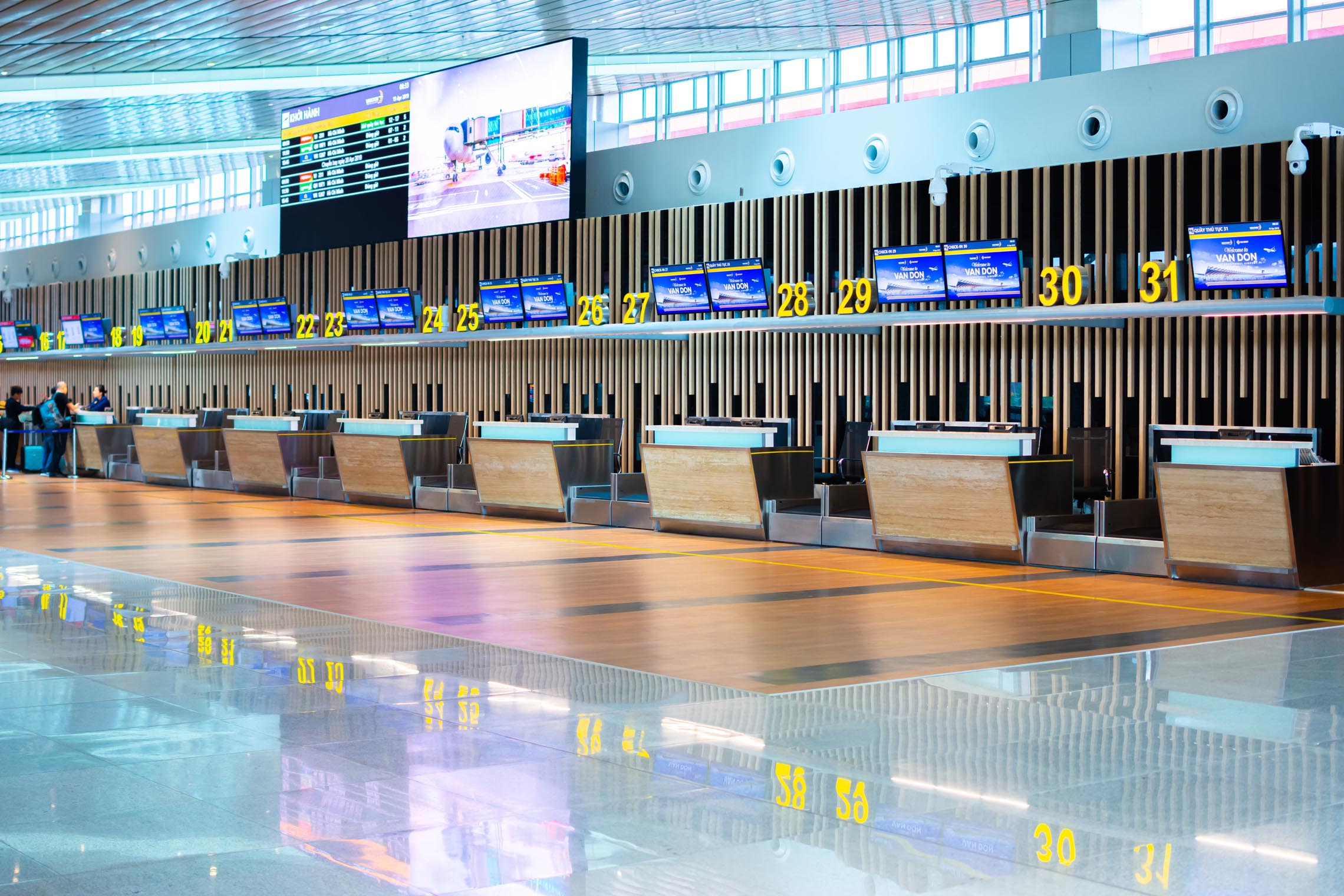
For travellers from Ho Chi Minh City and Da Nang, flying to Van Don brings the journey into Quang Ninh through an airport whose setting is part of the arrival. Perched beside the coast, Van Don International Airport is known for its striking contemporary architecture, expansive glass facades and spacious interiors, while the approach by air offers an arresting first view of the sea and islands surrounding the province.

After landing, free 14A and 14B bus routes connect the airport with Ha Long, around 50 km away. Before departure, checking flight schedules and advance reservations helps streamline the journey, while TripCARE insurance is available as an optional travel protection.

Quầy check-in tại sân bay quốc tế Vân Đồn

Modern check-in counters inside Van Don International Airport in Quang Ninh

Getting around Quang Ninh

Quang Ninh stretches from mainland cities to offshore islands, so getting around requires a different approach depending on the landscape and distance. Within urban areas, road transport is convenient, while island journeys naturally continue by sea.

Motorbikes for exploring beyond the main tourist routes

A motorbike is useful for independent travelers exploring areas around Uong Bi, where smaller roads lead towards hills, residential communities and countryside landscapes. Rental prices generally range from VND 100,000 – VND 150,000 per day, depending on the type of bike. Hotels can often arrange rentals and delivery, allowing travelers to begin their journey without spending time searching for a rental point.

Electric shuttles around Bai Chay and Hon Gai

Electric shuttles are well suited to relaxed sightseeing around Bai Chay and Hon Gai, particularly for families who prefer not to navigate traffic themselves. The open-air vehicles travel at a moderate pace and connect key areas around the city. Fares generally range from VND 50,000 – VND 80,000 per trip, while private rental costs around VND 200,000 – VND 300,000 per hour. The slower pace makes it easy to take in the coastal atmosphere without committing to a full-day excursion.

Taxi and ride-hailing services for city transfers

For groups of three to seven, taxis and ride-hailing apps are practical for longer urban journeys, evening outings or trips during hot and rainy weather. They are also useful when carrying luggage between transport hubs and accommodation. Compared with renting a vehicle, this option removes the need to navigate unfamiliar roads while keeping journeys direct.

Local buses for affordable inter-district travel

Local buses connect different parts of Quang Ninh and provide an economical way to reach major attractions. They work best for travelers with flexible schedules, as waiting times can be longer than with private transport. The routes also pass through residential neighbourhoods, commercial areas and local transport hubs used by local residents.

Xe đưa đón du khách trong hành trình khám phá Quảng Ninh

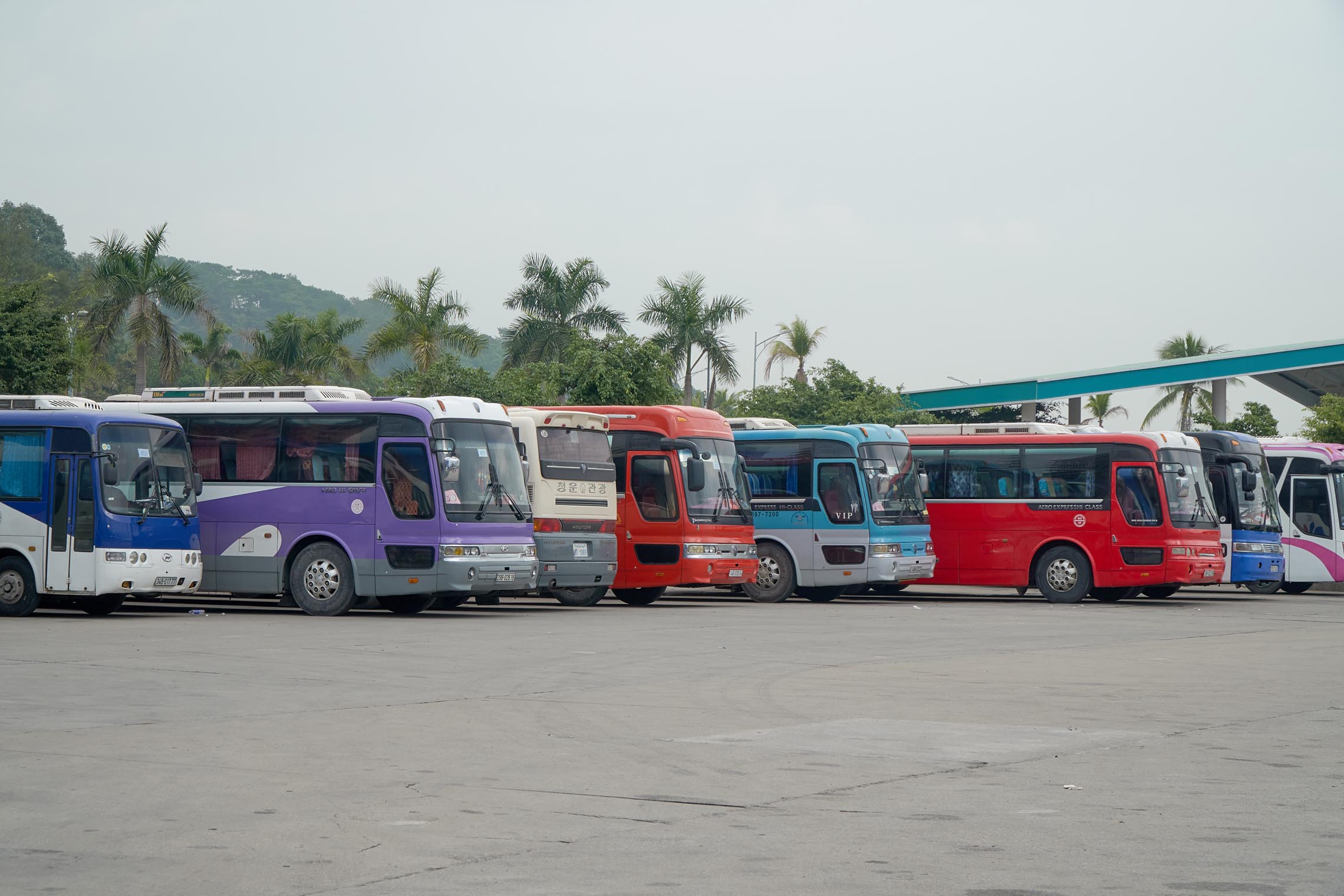
Local buses parked at a bus station in Quang Ninh

High-speed ferries to the islands

For Co To and Quan Lan – Minh Chau, the final stage of the journey takes place on the water. High-speed ferries depart from Ao Tien International Port, with tickets generally costing around VND 200,000 – VND 300,000. As the mainland recedes and the horizon opens, the sound of the engines and the salt carried on the sea air mark a clear transition into island life. For many travelers, this crossing becomes one of the most memorable parts of how to get to Quang Ninh.

Quick information

Frequently Asked Questions

Leaving Hanoi early in the morning is a practical choice for travelers who want to arrive with plenty of time for sightseeing. It also helps avoid heavier traffic on the approach to the coast, particularly during weekends and public holidays.

The airport is around 50km from central Ha Long. Travelers can take a free shuttle bus for passengers arriving on flights to Van Don, a door-to-door limousine or a taxi, which costs approximately VND 400,000 – VND 500,000.

Book high-speed ferry tickets in advance and check the weather forecast before departure. Rough sea conditions can cause ferry cancellations or delays, particularly during periods of unsettled weather.

Hotels in Quang Ninh for memorable bay retreats

Imagine opening the curtains to the limestone islands of Ha Long Bay, a UNESCO World Heritage Site stretching across the horizon, before the day’s first boats begin their passage. In Quang Ninh, such a view can be an everyday privilege of staying here. Hotels in Quang Ninh range from contemporary retreats overlooking the bay to secluded properties surrounded by greenery, alongside island stays and overnight cruises where the landscape remains part of the room’s outlook from dusk to dawn.

The best area to stay in hotels in Quang Ninh

Where a hotel sits quietly influences how a stay unfolds, from access to dining and entertainment to the ease of reaching cultural sites and quieter corners of the province. Quang Ninh spans lively city shores, peaceful islands and secluded retreats, with each area and its wide range of hotels offering a distinct setting and proximity to the experiences that define a journey.

Khách sạn nghỉ dưỡng ven vịnh tại Quảng Ninh với kiến trúc nhiều tầng, khuôn viên cây xanh và mặt nước phía trước.

A waterfront resort hotel in Quang Ninh featuring multi-story architecture, landscaped greenery, and water in the foreground.

Bai Chay area for a lively coastal holiday

Bai Chay once marked the route across the water, with its ferry carrying people and vehicles between the mainland and the northern shore. The ferry has long disappeared from daily life, yet its memory remains part of an area now lined with beaches, restaurants and entertainment. By day, the waterfront draws families and groups after excursions around the bay, while evenings fill with seafood restaurants, food streets and lively leisure spaces.

For a first stay in Quang Ninh, Bai Chay keeps many of the province’s attractions within easy reach, from the waterfront and ferry-era landmarks to restaurants and evening entertainment. Its central location also makes it convenient for combining sightseeing with time by the sea, whether the priority is exploring during the day, dining and shopping nearby, or simply returning to a comfortable base after a day around the bay. Families, couples and groups can move between sightseeing, dining and the beach without lengthy journeys.

Hon Gai area for everyday slow life

Morning in Hon Gai begins with the sounds of a working port, where the city’s long association with coal mining still lingers in its streets, markets and waterfront. Once the heart of Quang Ninh’s coal-mining industry, Hon Gai has grown into a refined coastal cultural quarter anchored by the iconic Quang Ninh Museum – whose monolithic black-glass facade mirrors a block of coal beside Ha Long Bay – without losing its connection to everyday local life. Seafood markets fill the day with the scent of grilled squid, simmering broth and fresh catch, while small eateries serve familiar dishes to residents rather than catering solely to sightseeing crowds.

For travellers drawn to food and local culture, Hon Gai is the central urban area of Ha Long, making it a practical base for staying close to the city’s markets, local restaurants and waterfront. Staying here places the beauty of Ha Long Bay within daily reach, with the waterfront opening towards limestone islands and fishing boats. Hon Gai also works as a convenient base for journeys deeper into Quang Ninh, linking Ha Long with historic sites, mountain communities and other landscapes across the province.

Tuan Chau Island or Reu Island for a private retreat

Tuan Chau Island and Reu Island lend themselves to a resort holiday where the pleasures of staying in matter as much as exploring beyond the property. Surrounded by open water, landscaped gardens and secluded resort spaces, both islands create a more private setting for couples seeking uninterrupted time together or families settling into a leisurely few days by the bay. Tuan Chau has long been associated with tourism and marine leisure, while Reu Island is known for its exclusive resort setting, with the sea forming a constant backdrop to days spent between poolside relaxation, dining and unhurried hours outdoors.

For travellers comparing island accommodation in Quang Ninh, Tuan Chau and Reu Island are best suited to those looking for a resort-focused stay, where private surroundings, pools, dining and time by the sea take priority. Their location close to Ha Long keeps the city within easy reach when sightseeing is on the agenda, while a Co To or Quan Lan island resort offers a more remote offshore escape suited to a longer coastal retreat.

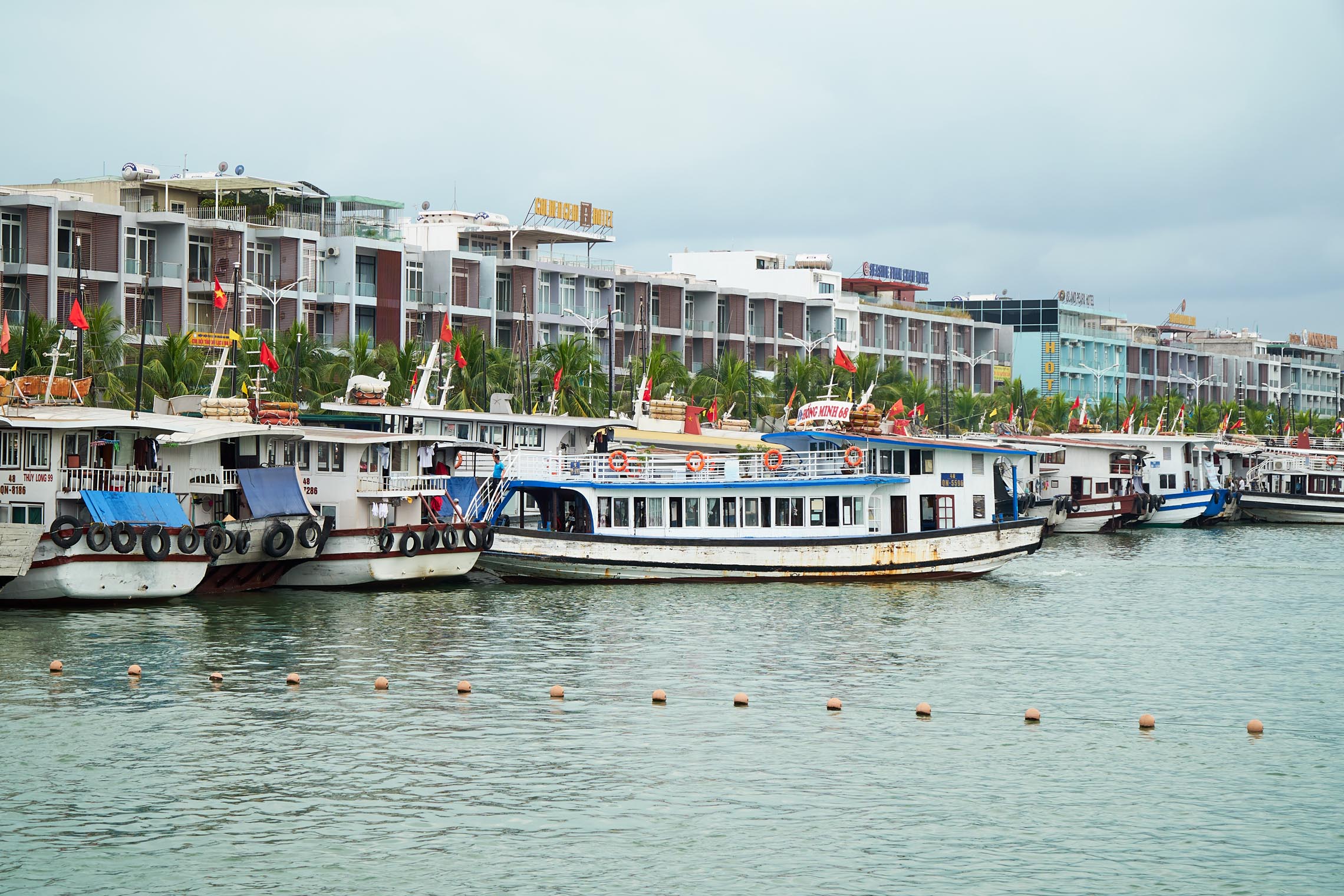
Dãy khách sạn ven bờ và những tàu du lịch neo đậu tại khu vực Tuần Châu, Quảng Ninh

Hotels in Tuan Chau with modern accommodation overlooking the coastal landscape of Ha Long Bay, Quang Ninh

Luxury cruises are great places to stay in Quang Ninh

An overnight cruise transforms accommodation in Quang Ninh into a night afloat on the waters of Ha Long Bay, where waves murmur against the hull and darkness settles around the karsts. Beyond the cabin, the bay holds centuries of maritime life, from floating villages such as Cua Van, where fishing families lived by tides, currents and catches, to boats moving between waters. Sleeping here keeps the landscape and its heritage close at hand, while dining, excursions and quiet hours unfold aboard a floating retreat.

Traditional cruises for a classic bay journey

Traditional cruises retain the pleasures of life on the water, with private cabins opening onto shared restaurants and sun decks where guests linger between excursions. A day might begin with coffee as the vessel glides through quiet waters, followed by a cave visit, kayaking or swimming before returning aboard for lunch and an afternoon of unhurried sailing.

The scenery remains constantly present, with karsts drifting past the deck and fishing boats appearing between the islands. As evening settles, waves brush against the hull and fading sunlight catches the cliffs, leaving guests with the rare sensation of spending an entire day surrounded by Ha Long Bay rather than simply looking out towards it.

Boutique cruises for privacy

Boutique cruises cultivate an atmosphere of seclusion through compact vessels, refined interiors and attentive service, with many itineraries venturing towards Lan Ha Bay or Bai Tu Long Bay, where limestone outcrops, sheltered coves and fishing boats appear along quieter passages.

The reduced number of cabins allows dining, excursions and service to feel distinctly personal, whether a couple lingers over a candlelit meal or a small group gathers on deck as dusk settles across the water. Away from the busier routes, the vessel becomes a private vantage point for watching changing skies, hearing the gentle wash against the hull and discovering corners of the bay that feel wonderfully removed from the mainland.

Ultra-luxury cruises for wellness and resort-style comfort

What could feel more luxurious than beginning the day with yoga on a sunlit deck, surrounded by the seascape of a UNESCO World Heritage Site, then surrendering to a spa treatment while the vessel glides across the water? Ultra-luxury cruises pair this rare setting with expansive suites, private balconies, infinity pools, wellness studios and sophisticated dining, creating a floating sanctuary devoted to indulgence and restoration.

A morning meditation, breakfast overlooking the bay, kayaking, a cave excursion and an afternoon treatment can fill the hours before cocktails at sunset, with every pleasure unfolding against the changing seascape. Among the places to stay in Quang Ninh, this is an experience where the comforts of a private resort remain afloat from sunrise to starlight.

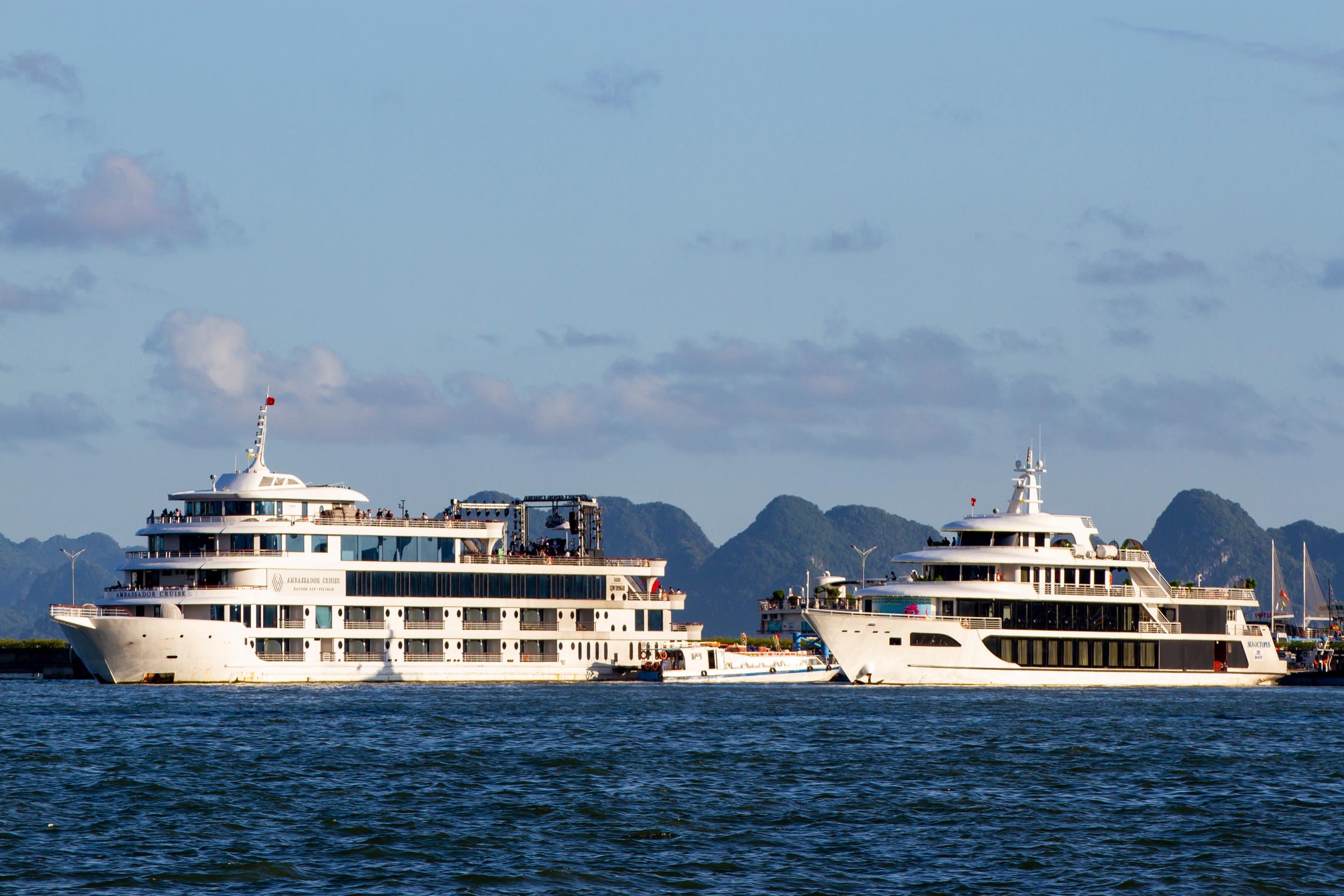
Hai du thuyền nghỉ dưỡng trên vịnh Hạ Long (Quảng Ninh)

Cruise Ships Docked At Ha Long International Cruise Port

Quick information

Frequently Asked Questions

Staying in Ha Long is more convenient for exploring the city, beaches and nearby attractions at your own pace, while an overnight cruise is a better choice for travelers who want to spend more time on the bay and experience the landscape from the water.

Book at least one to two months ahead, especially for weekends. Traveling from Monday to Thursday can help reduce costs, with mid-range rooms generally starting from around VND 800,000 – VND 1,500,000 per night, depending on the location, facilities and travel period.

Hotels and resorts are generally more practical for families with young children, with facilities such as children's play areas, swimming pools, breakfast options and easier access to essential services.

Visit Quang Ninh’s shopping malls and markets for authentic local gifts

A Quang Ninh shopping mall offers a polished way to experience the province’s changing retail scene, with fashion, dining, local specialties and everyday essentials gathered under contemporary roofs. Yet shopping here remains closely tied to the landscapes and communities outside, from coastal towns and fishing ports to markets carrying seafood, regional flavours and mountain produce.

What to buy at a Quang Ninh shopping mall: Signature coastal and mountain gifts

Inside a mall here, the search for local gifts becomes a question of what deserves to travel home: something fragrant, finely prepared or distinctly tied to the province. The choice may rest on texture, provenance, craftsmanship or how well a speciality captures Quang Ninh in a single purchase.

Cha Muc Ha Long from the coastal kitchen

Among the regional specialities displayed in Quang Ninh’s contemporary shopping spaces, Cha Muc Ha Long (Ha Long squid sausage) stands out through an aroma that immediately evokes the bay, with briny sweetness, hot oil and the rich scent of freshly prepared squid rising from the golden pieces. The catch is hand-pounded until supple while irregular fragments remain throughout the mixture, a traditional technique that gives chả mực its characteristic springiness, juicy texture and delicate sweetness; once fried, the surface turns deep golden brown, crisp at the edges while the centre stays tender and succulent.

At the local households, the same preparation moves effortlessly from an ordinary breakfast of sticky rice or noodles to family lunches and dinners. Then the dish appears again on wedding feasts, festival tables and ceremonial occasions, where a familiar dish can mark welcome, abundance and family celebrations here.

That continuity is part of what makes Cha Muc Ha Long such a compelling gift, since a carefully packed portion allows its fragrance and flavour to travel home while preserving a taste associated with Quang Ninh’s waters, household craftsmanship and generous table.

Chả mực chiên vàng được bày bán trên khay

Cha Muc Ha Long (Ha Long hand-pounded squid sausage) packaged as a local specialty gift from Quang Ninh

Sa Sung for a taste of the tidal coast

Walking past speciality stalls, packets of Sa Sung (Dried peanut worms) catch the eye with their slender, curled forms and pale ivory colour, neatly arranged among regional produce. Their unusual appearance hints at a coastal tradition shaped by the tides, as harvesters follow receding water across sandy flats, reading damp ground for worms buried beneath the surface. The work demands patience and timing, while drying concentrates the flesh into deep savouriness and prized umami.

Across northern cuisine, a small handful enriches Pho (Vietnam noodle soup), congee and hotpots, lending depth to broth. Its scarcity and demanding harvest have made sá sùng a prized Quang Ninh speciality, cherished by communities whose lives have long followed the sea. Once opened at home, the pale dried worms release the concentrated aroma of the sea, ready to deepen a simmering broth and recall the tidal shore where they were gathered. For a coastal province proud of its fishing heritage, taking sá sùng home is also a way of keeping a little of that sea-bound life close to the family table.

Tom Cha Bong for an easy pantry gift

Tom Cha Bong (Shrimp floss) may look familiar, yet the Quang Ninh version earns attention through the sweetness of locally sourced shrimp and the careful handwork behind its fine, fragrant strands. The seafood is cooked, seasoned and repeatedly shredded until each thread becomes light and tender, with enough savoury depth to transform steamed rice, porridge or a simple slice of bread. Families often keep it ready for quick breakfasts and everyday meals, making it a distinctly practical taste of home. Its modest appearance belies the care behind every strand, from selecting the seafood to patiently preparing it, giving this humble pantry staple a quiet place in the memory of a journey.

Ngan Kho as a valuable gift

In Quang Ninh, the day’s catch has traditionally been treated with care, with prized ingredients prepared for the kitchen long after they leave the water. Among the province’s best-known seafood, Ngan (Quang Ninh special clam) is gathered from brackish waters and valued for its protein, vitamins, minerals and amino acids, while its subtle sweetness enriches soups, rice dishes and broths.

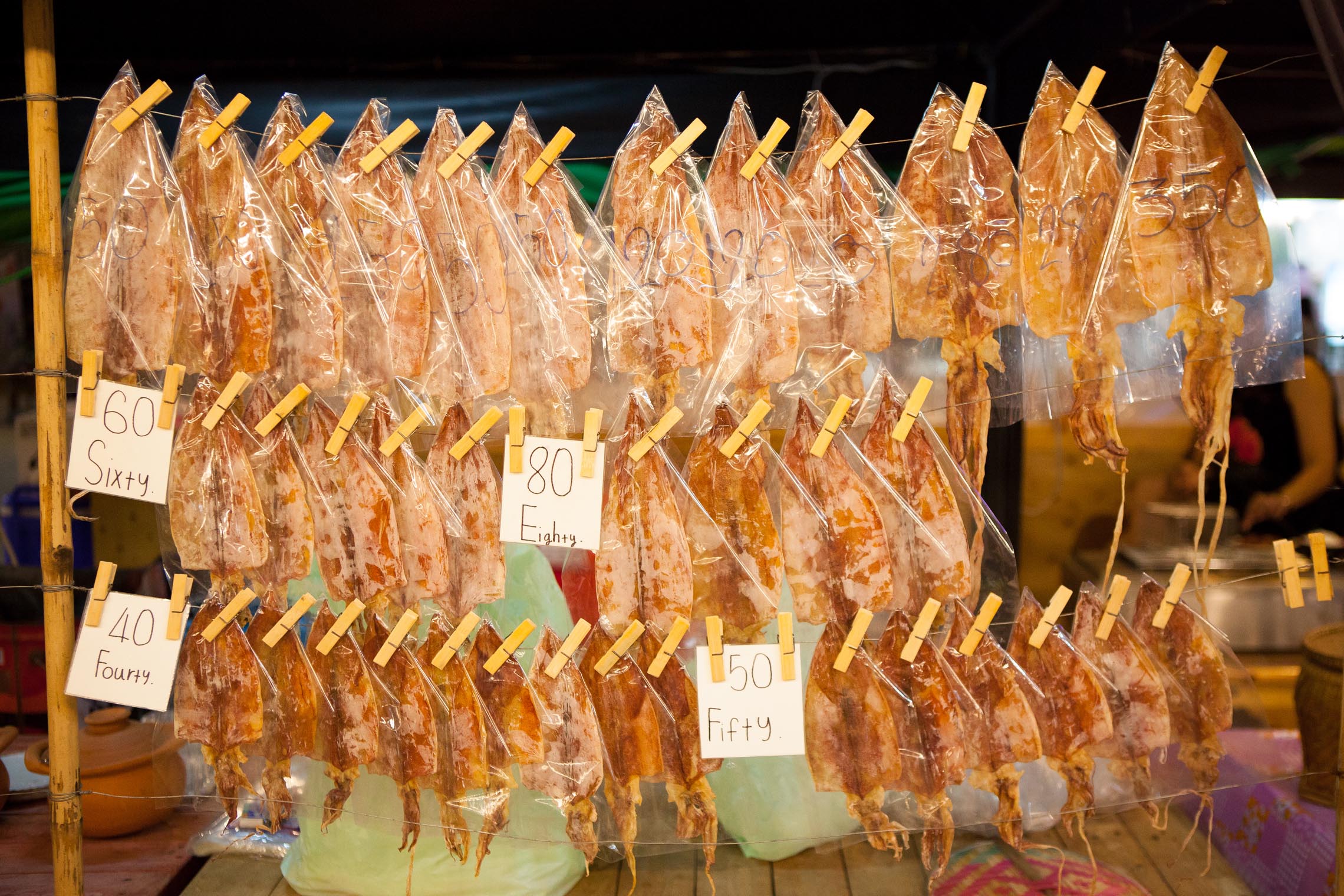
Drying extends this relationship with the sea, drawing moisture slowly from seafood until squid, shrimp, anchovies and other catches develop deeper savouriness and can be kept for later cooking. The practice speaks of thrift, patience and respect for the catch, turning what the water yields today into food for another meal. In this way, drying is not simply preservation but a household craft, shaped by seasons, available ingredients and the practical wisdom of keeping good food at its richest for when the kitchen needs it.

Những con mực khô treo tại quầy hải sản

Dried seafood, a local specialty from Quang Ninh, Vietnam, ideal for bringing home

Where to shop in Quang Ninh for local specialties and souvenirs

Beyond the glossy Ha Long shopping malls, the search for local specialties follows the changing face of Ha Long and Quang Ninh as a whole. Some places favour spontaneous purchases made amid the bustle of daily trade, while others make it easier to compare regional products, select gifts and have them prepared for the journey home.

Ha Long Market 1 and the sound of a working food city

Before the city’s waterfront fills with traffic, Ha Long Market 1 is already alive with the sounds of trade, as vendors arrange the morning catch and regular customers move through narrow aisles lined with seafood, herbs and household provisions. One of Ha Long’s principal traditional markets, it grew alongside a city whose fortunes have long been tied to fishing and maritime commerce, with Cha Muc Ha Long, sun-dried squid, yellow-striped scad and other Quang Ninh specialities filling the stalls. For visitors, the market becomes a sensory passage into everyday Ha Long, where the scent of broth and hot oil mingles with bargaining voices, clattering scales and the swift hands of vendors preparing the day’s food.

Quang Ninh specialty stores in modern shopping spaces

Modern specialty stores provide a more curated way to discover Quang Ninh through the products that arrive from its mountains, forests and waters. Many carry goods certified under Vietnam’s One Commune One Product programme, with details of provenance and production placed alongside the shelves, allowing each purchase to be traced back to the communities behind it.

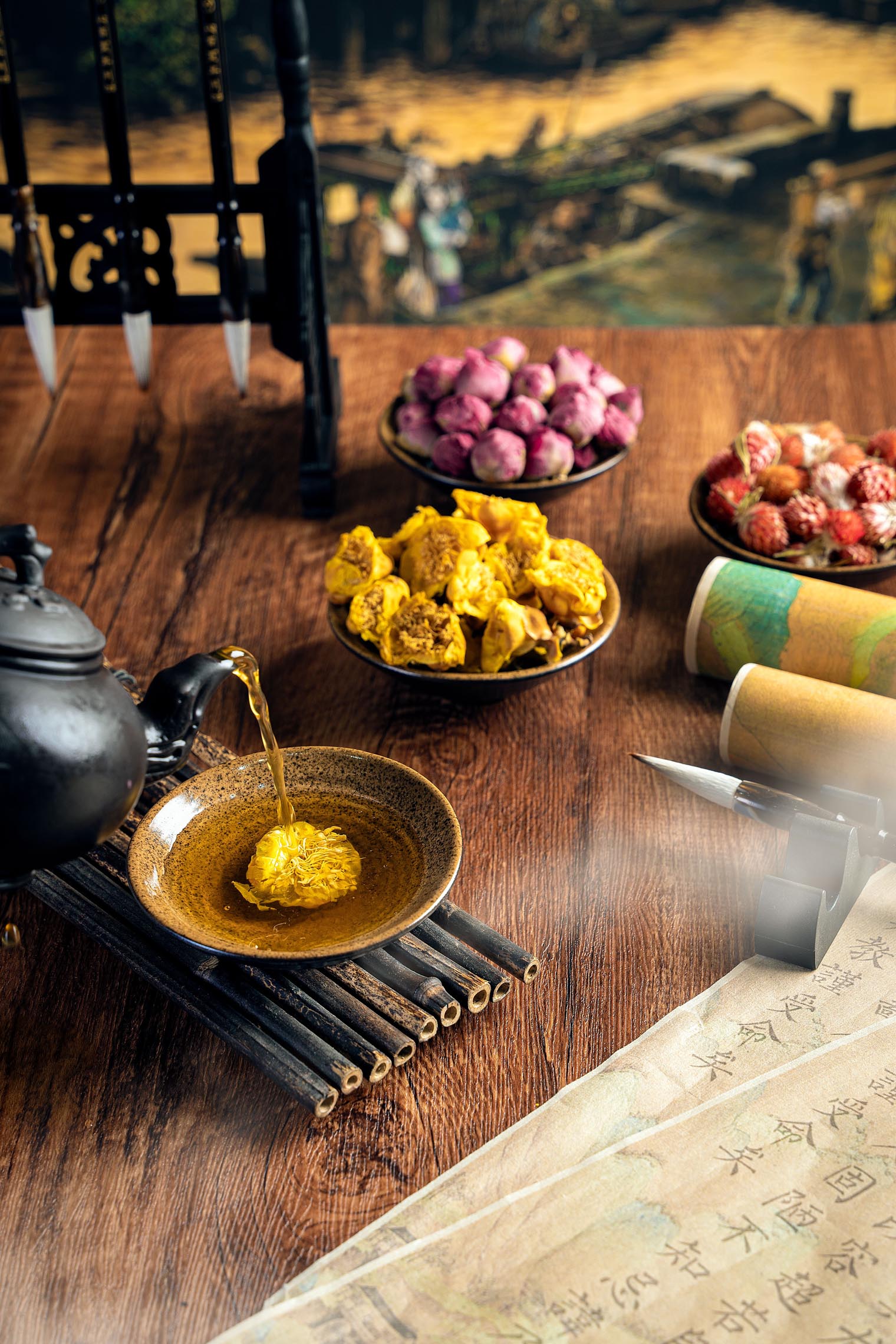
From the uplands of Binh Lieu, Mien Dong Binh Lieu (Binh Lieu arrowroot vermicelli) carries the earthy character of highland cultivation, while Tra Hoa Vang Ba Che (Ba Che golden flower tea) speaks of another agricultural tradition further east. Around Yen Tu, Ruou Ba Kich Yen Tu (herbal wine infused with purple morinda roots) and Ruou Mo Yen Tu (fragrant golden apricot liqueur crafted from forest apricots grown around the sacred mountain and steeped in traditional rice wine with honey) draw on botanicals cultivated across the Yen Tu foothills. Further along the shelves, oyster, cockle and mantis shrimp floss recalls the province’s waters, bringing Quang Ninh’s geography into one shopping space.

Trà hoa vàng được rót từ ấm vào chén, bên cạnh là những bát hoa trà khô

Tra Hoa Vang Ba Che (Ba Che golden flower tea), a specialty of Quang Ninh

Ha Long Night Market for souvenirs after sunset

As twilight settles over Bai Chay, Ha Long Night Market stirs beneath strings of lights, drawing visitors into a lively maze of stalls after a day on the bay. The pace is unhurried, allowing time to wander, pause at a display and listen to the easy chatter drifting through the evening air, while the scent of street food lingers around the pedestrian lanes.

Pearl jewellery glimmers beside seashell crafts, local paintings and photographs, each capturing a familiar image of Ha Long in a meaningful souvenir. After hours beneath the open sky, visitors linger over the displays, turning a necklace in the light or weighing up a small keepsake as music, laughter and vendors’ voices rise around them, extending the pleasure of the evening before heading back.

From Quang Ninh shopping malls to the morning bustle of traditional markets and the glow of night stalls, shopping traces the province through its changing landscapes and ways of life. What begins as a search for a gift can end with a deeper appreciation of the food, craftsmanship and living traditions that continue to define Quang Ninh.

Quick information

Frequently Asked Questions

Traditional markets such as Ha Long Market 1 and Cai Rong Market in Van Don are good places to look for local specialties, while specialty stores are more convenient for packaged gifts. Popular choices include hand-pounded squid sausage, dried peanut worms and Quang Yen fermented pork rolls.

Dried peanut worms are the more practical choice for long journeys because they are easier to store, pack and transport without refrigeration. Fresh peanut worms are better enjoyed locally or taken home in a well-insulated cooler with enough ice. If you are flying with several packs of local specialties, check your airline’s excess baggage information before packing.

Beyond seafood, Quang Ninh’s northern and upland areas are known for Tien Yen hill chicken, Khâu nhục, Binh Lieu arrowroot vermicelli and products made from Ba Che golden flower tea. These specialties introduce flavors and ingredients from the province’s mountain communities.

Offers from Vietnam Airlines

Promotion List
Sorry, there are currently no promo codes matching the selected criteria!
Please search again with different criteria
Filters

Loading