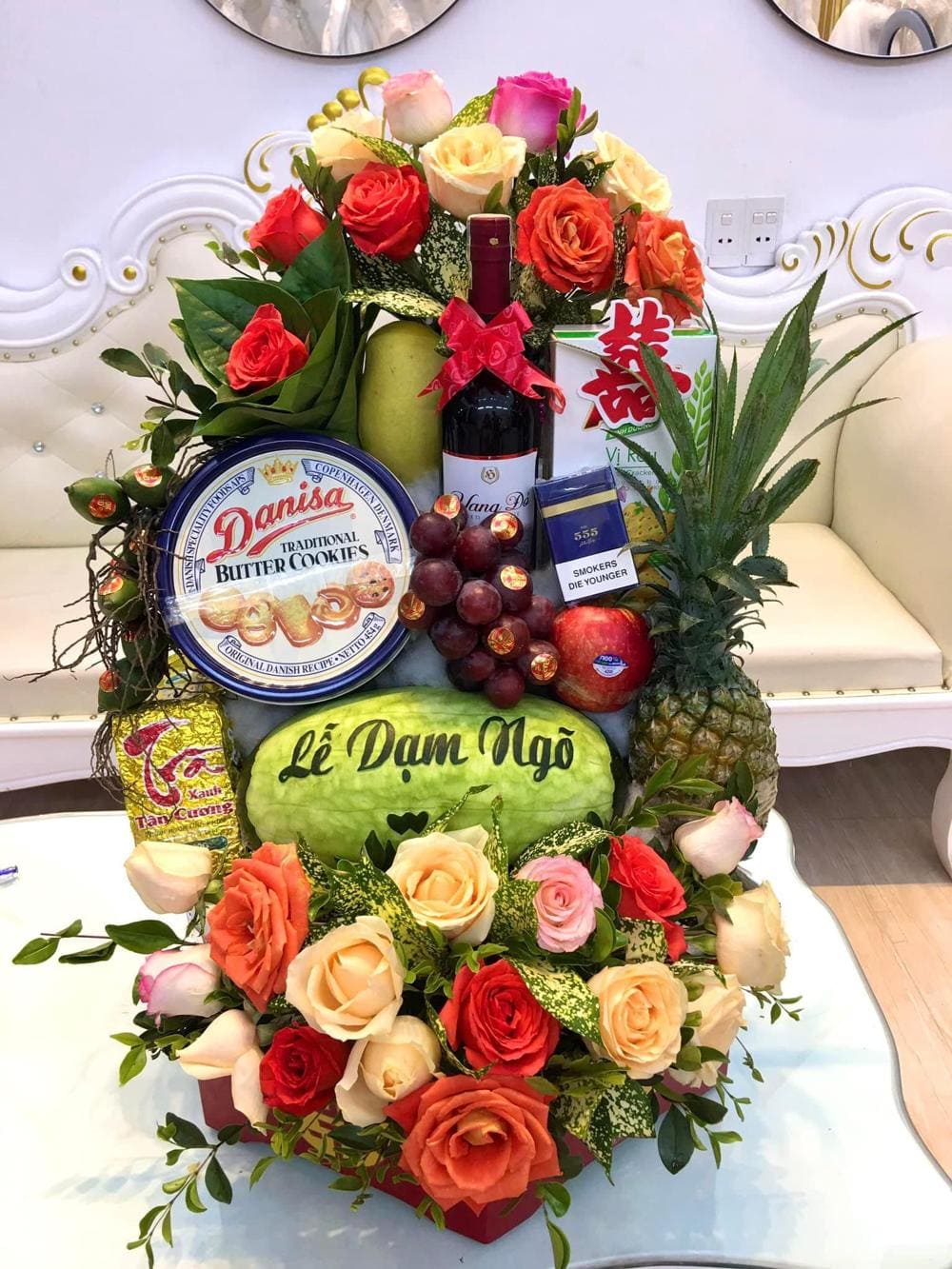
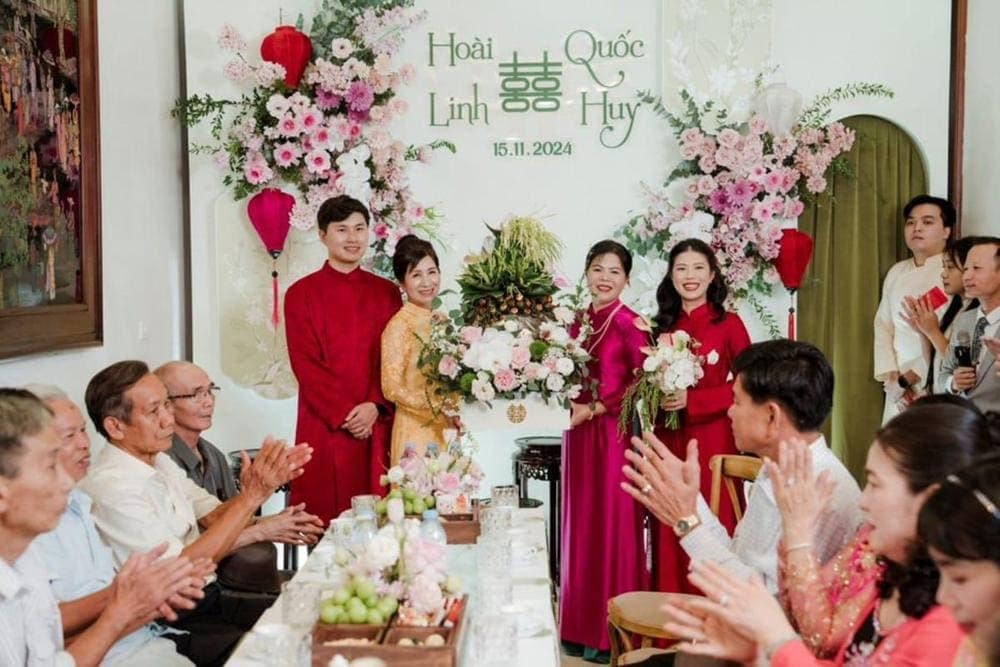
This ceremony is rather an “official” engagement party, witnessed by families of the bride and the groom
2.4. Le Thanh Hon (Wedding Ceremony)
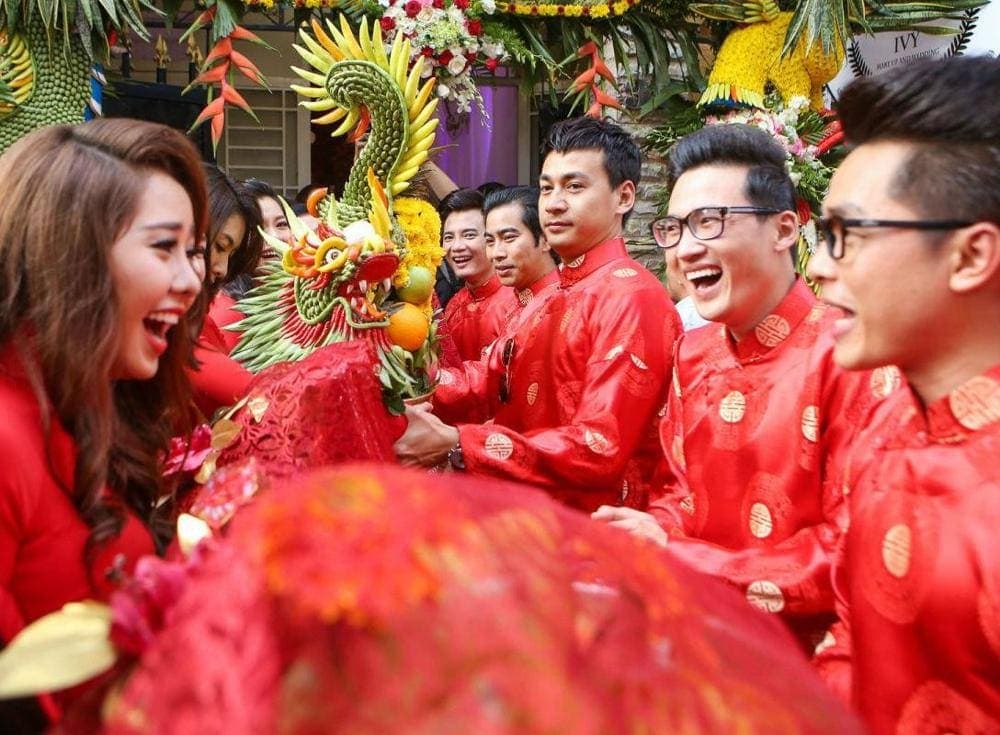
The main wedding ceremony typically takes place at the groom's home and includes the most significant rituals of ancestor worship and family blessing.
Core Components:
- Procession from bride's home to groom's home
- Ancestor worship at family altar
- Tea ceremony with family elders
- Exchange of vows and rings
- Candle lighting ceremony
2.5. Le Cuoi (Wedding Reception)
The celebratory feast brings together both families and the community to celebrate the new union with food, music, and traditional entertainment.
Reception Features:
- Multi-course Vietnamese feast
- Traditional music and dancing
- Table visits by the couple to thank guests
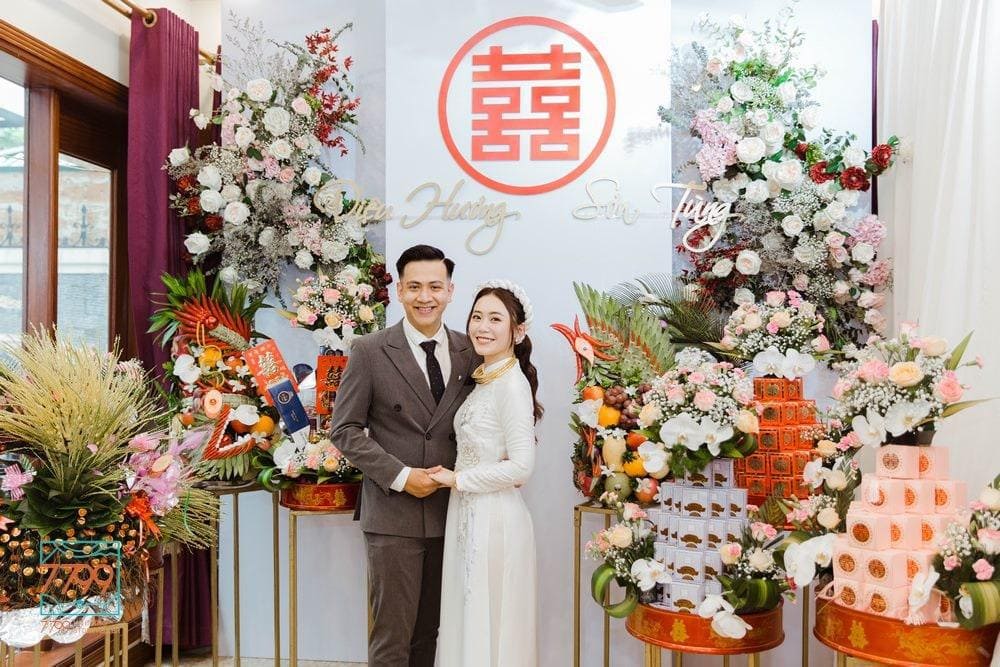
- Welcome photos (step-and-repeat style)
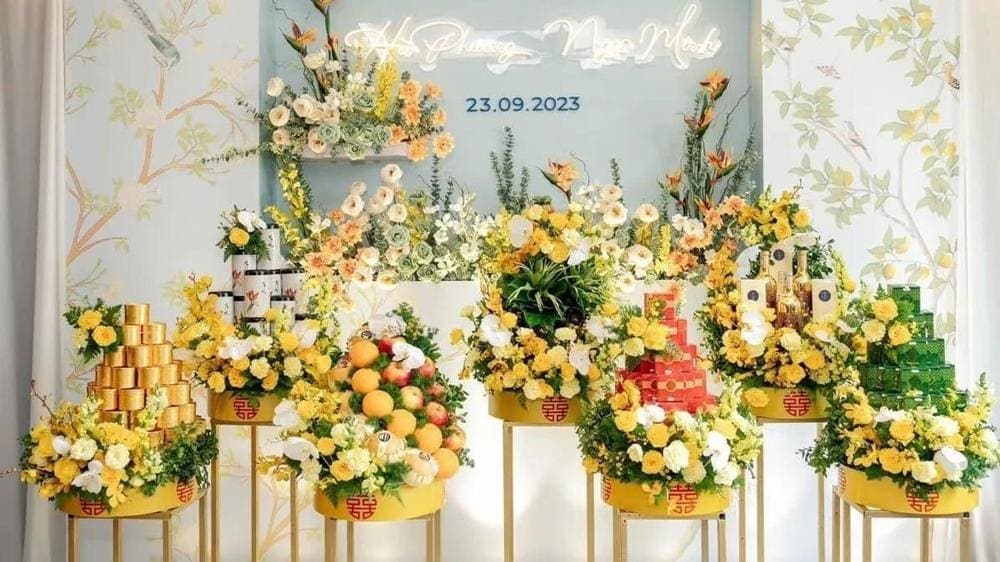
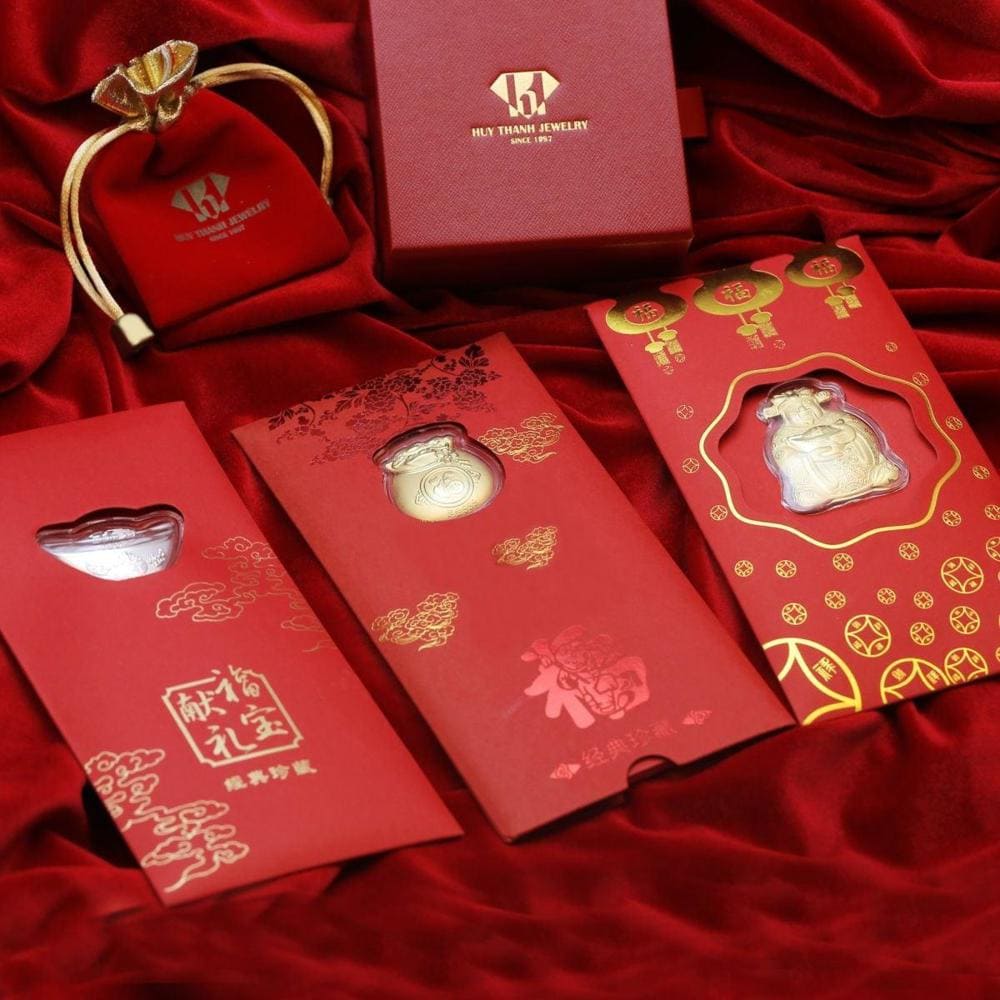
- Gift presentations and red envelope exchanges
2.6. Le Ve Nha (Post-Wedding Return Ceremony)
A few days after the wedding, the couple visits the bride's family home to express gratitude and maintain family connections. This ceremony emphasizes that while the bride has joined her husband's family, she maintains eternal bonds with her birth family.
3. Vietnamese Wedding Attire and Symbolism
3.1. The Ao Dai: Traditional Wedding Dress
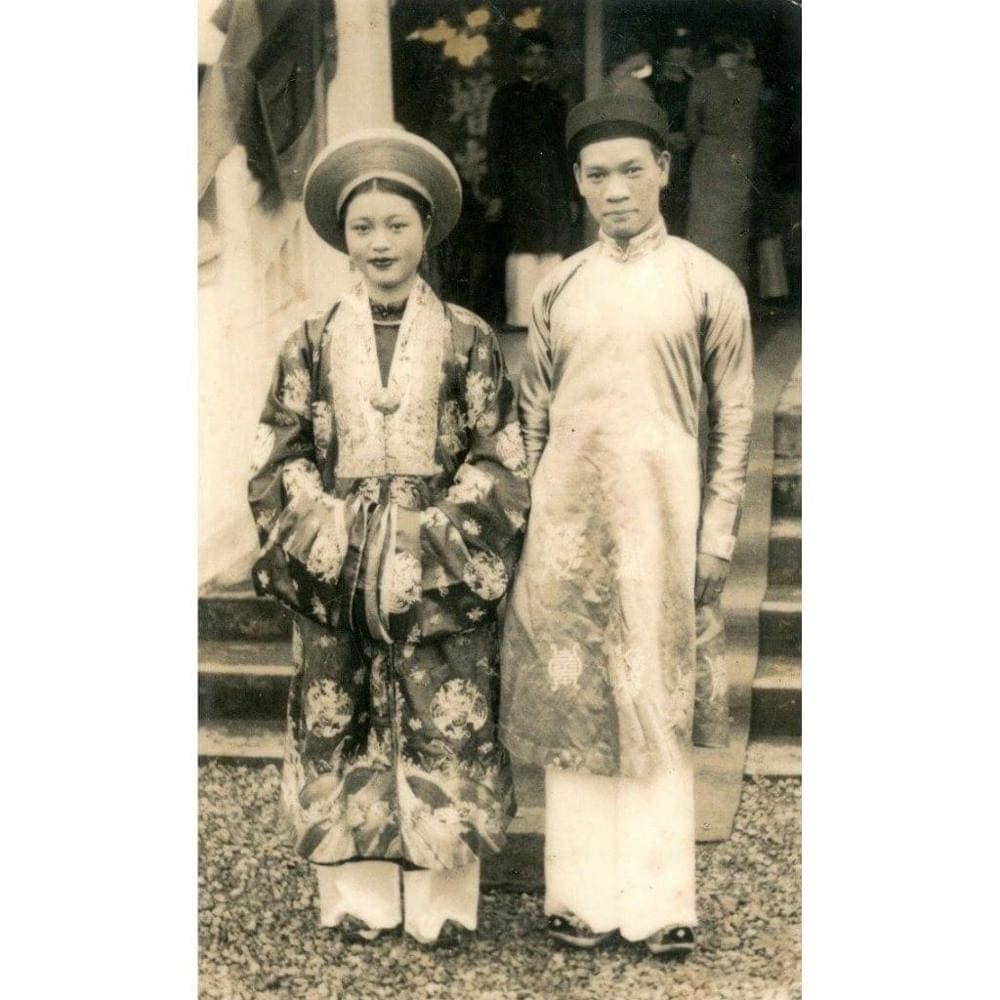
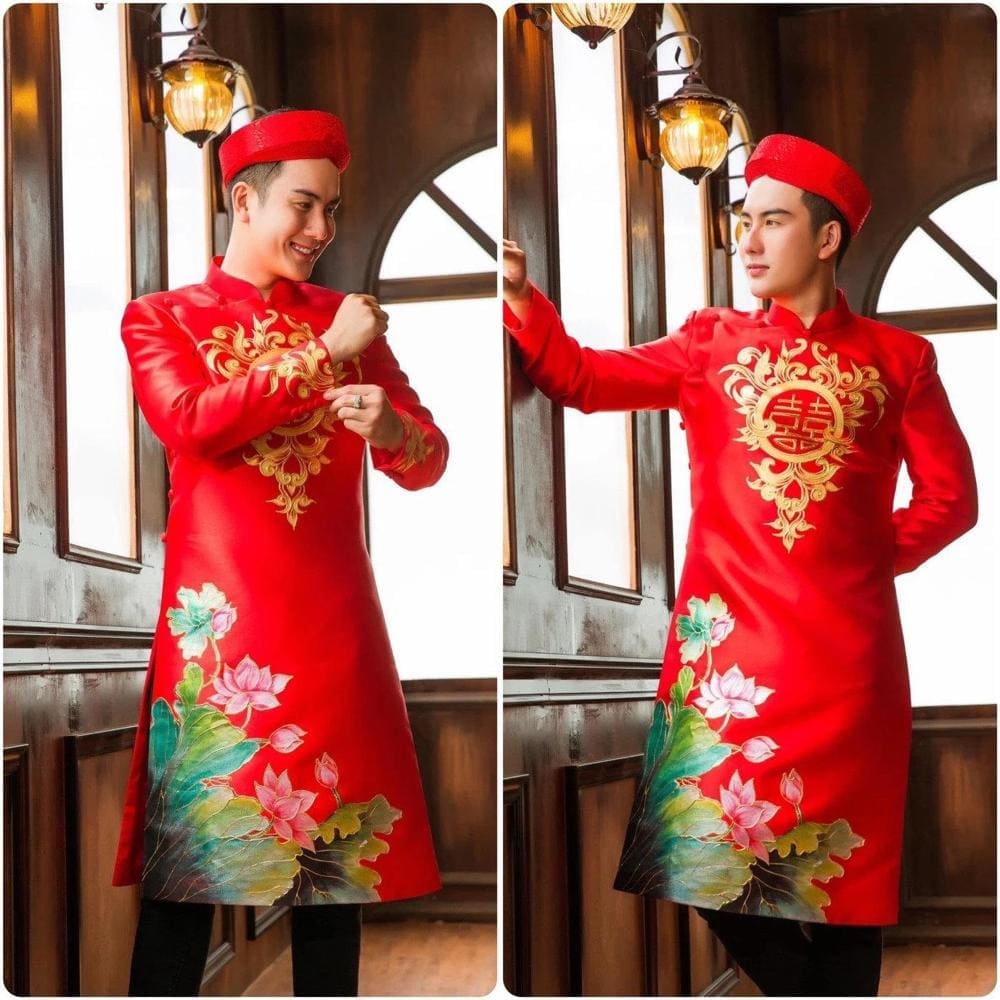
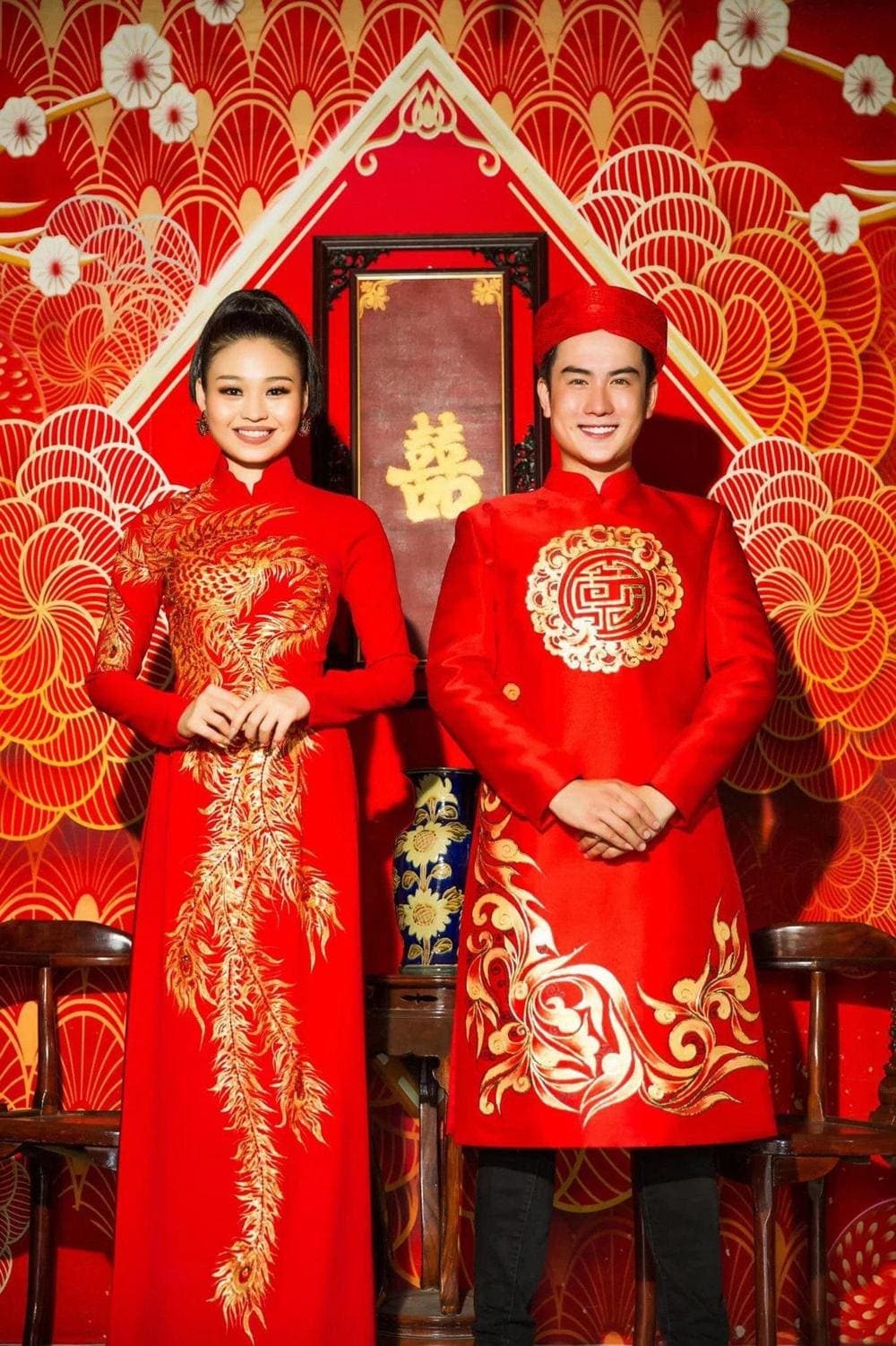
The áo dài is the most iconic element of Vietnamese wedding attire, representing elegance, cultural pride, and tradition. This fitted silk garment features floor-length panels worn over pants, creating a graceful silhouette that embodies Vietnamese femininity.
Bridal Ao Dai Features:
- Color: Traditionally red for good fortune and happiness
- Design: Intricate embroidery with gold or silver threads
- Materials: High-quality silk or brocade
- Accessories: Matching pants, often in contrasting colors
- Embellishments: Beading, sequins, and traditional motifs
Groom's Attire:
- Color: Traditionally blue for peace, calmness, and hope
- Style: More understated design compared to bride's attire
- Modern Options: Some grooms choose Western tuxedos for certain ceremonies
3.2. Khan Van - Traditional Headpiece
Both bride and groom traditionally wear the khan van, a tiered headpiece resembling an open-top turban made from layers of fabric.
Design Characteristics:
- Bride's Version: Elaborate and larger, often matching or contrasting the ao dai
- Groom's Version: Simpler and smaller than the bride's
- Materials: Silk or brocade with decorative elements
- Modern Adaptations: Some couples use fresh flowers instead of traditional fabric



 Link opens in new window. Site may not meet accessibility guidelines.