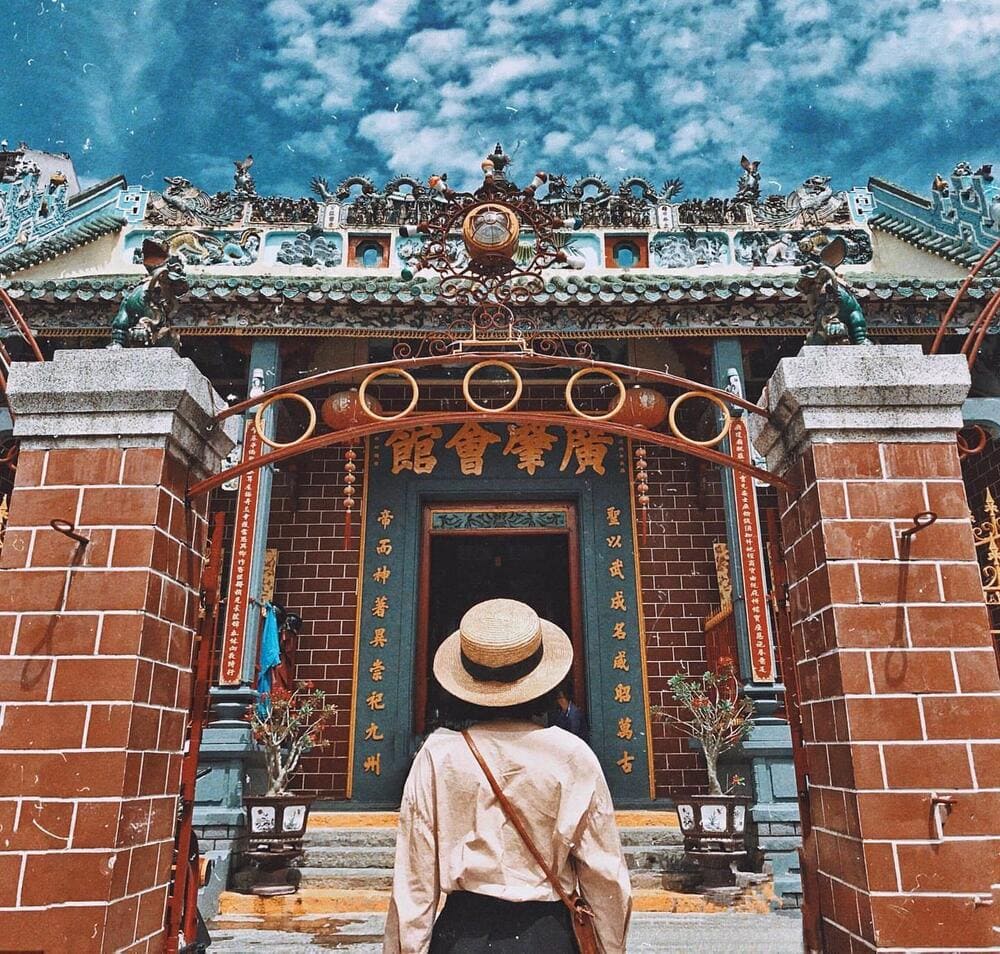
An ornate Guan Di Assembly Hall showcasing intricate heritage details (Source: Vietnam Airlines)
Though quieter than the bustling markets nearby, these spaces are rich in atmosphere and provide valuable insight into how different Chinese communities maintained their cultural identity while contributing to the growth of Saigon’s Chinatown.
3.11. Tuyen Lam Ancient Pagoda
- Address: 887 Hong Bang Street, Ward 9, District 6, Ho Chi Minh City
- Opening hours: 06:00 AM – 06:00 PM daily
- Entry fee: Free (donations accepted for upkeep)
Tuyen Lam Ancient Pagoda is another significant Buddhist site in District 6, offering a peaceful retreat from the urban bustle. This ancient pagoda, with its traditional architecture, intricate details, and serene ambiance, is a testament to the enduring Buddhist heritage in the area. Visitors can observe daily rituals, admire the statues, and find a quiet moment for reflection, immersing themselves in the spiritual tranquility of this historical landmark.
Historical destinations
3.12. Secret Printing Tunnel
District 6, Ho Chi Minh City, bore witness to many pivotal events during the Second Indochina War. Hidden within the district's bustling streets lies an unassuming house that doubled as the Secret Printing Tunnel. This site once concealed three basements dedicated to printing revolutionary materials during the resistance. Today, it stands as a living embodiment of the undying spirit of Vietnam's founding fathers.
Designed beneath a wooden house with a thatched roof, the Secret Printing Tunnel offers a glimpse into the lives of the people and the equipment that played a considerable role in the war. You can still see the living quarters and working areas, which provide a clear idea of the hardships the resistance fighters endured to contribute to the country’s independence efforts.
3.13. Secret Base of the Saigon - Gia Dinh Party Committee
The secret base of the Saigon - Gia Dinh Party Committee is another historic spot in District 6, Saigon. Reflecting the pivotal role of the local Chinese community in the war, this house once concealed equipment, weapons, tunnels, and communication systems, all designed to protect revolutionary soldiers. In recognition of its significance, the secret base was designated a city-level historical site in 2008. Today, visitors can explore the base and examine the equipment of the heroic individuals whose resourcefulness and resilience allowed them to survive a tumultuous era.
3.14. Tomb and Temple of Mr. Pham Van Chi
When discussing Vietnamese resistance, Mr. Pham Van Chi stands among the most significant figures. Originally a village official from Cholon, he ultimately sacrificed himself in the First Indochina War. In recognition of his valor, his tomb and temple were designated a municipal-level historical site. This sacred attraction is a good place for visitors to learn more about the life of a revered figure and reflect on the indomitable spirit of the Vietnamese people during their struggle for independence.
3.15. Heritage Architecture Walking Routes
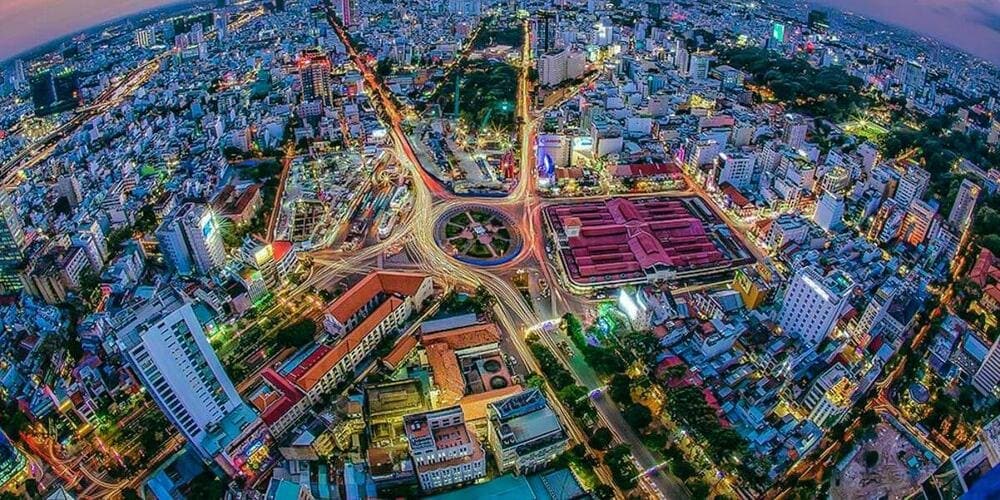
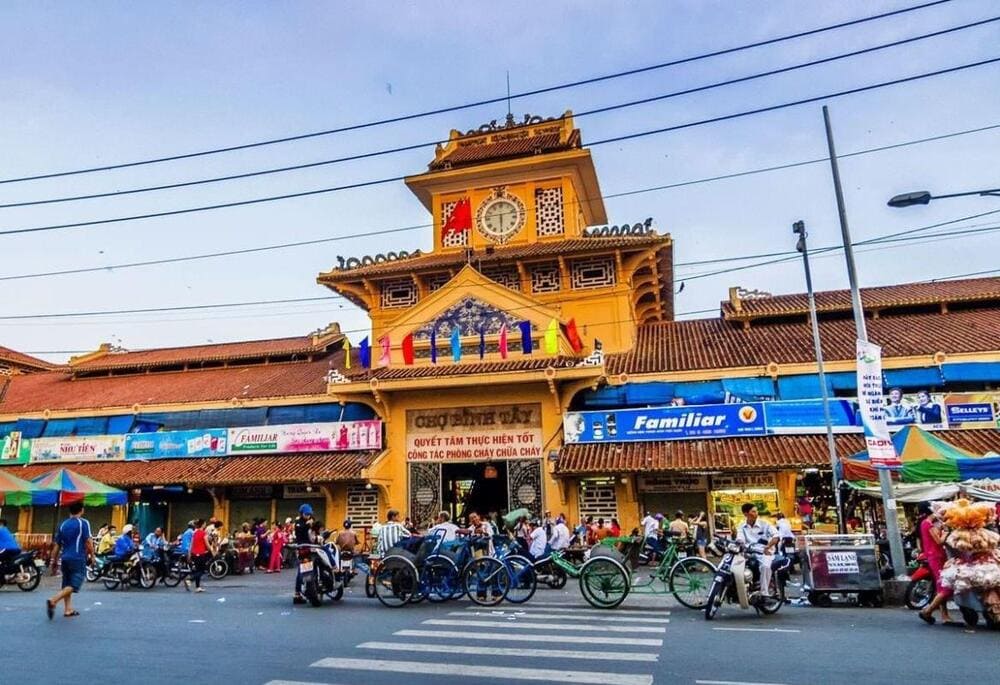
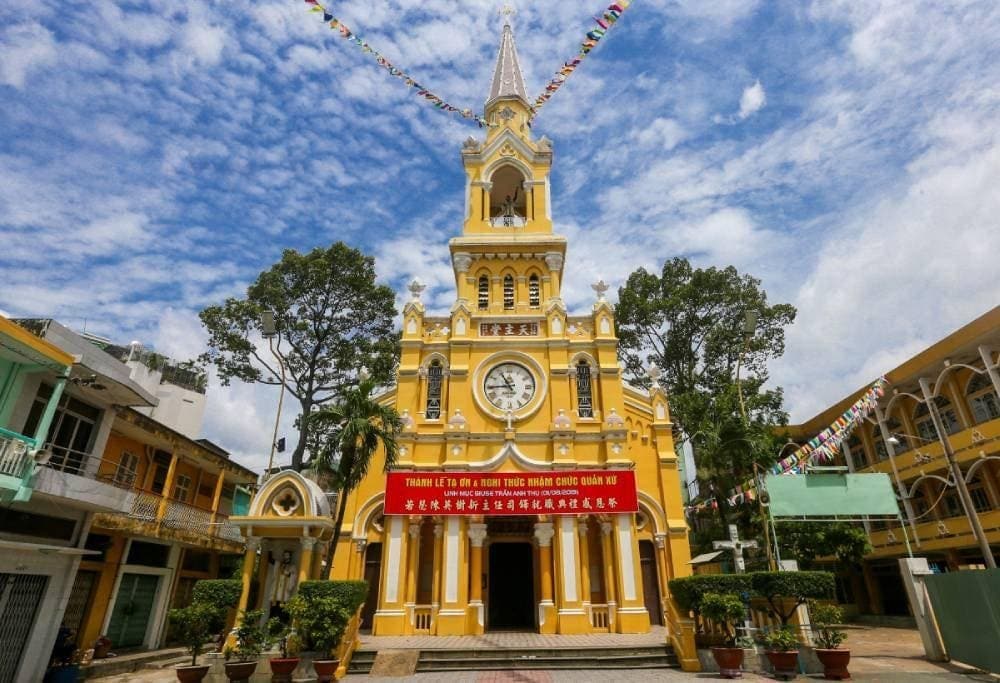
Walking around District 6 offers a fascinating dive into Ho Chi Minh City's rich history, particularly its Vietnamese-Chinese heritage. You'll discover a captivating blend of old-style Chinese shophouses, reflecting centuries of commerce and daily life with their intricate facades. Scattered among them are remnants of colonial buildings, hinting at French influences.
The district's spiritual heart is found in its many traditional temples and pagodas, which are stunning examples of architectural artistry. These sacred sites, like the Giac Hai Pagoda or Thien Hau Pagoda, beautifully blend Chinese and Vietnamese design, featuring ornate carvings and vibrant decorations. These walking routes provide a unique visual experience, showcasing how the district's diverse architecture tells the story of its layered past.




 Link opens in new window. Site may not meet accessibility guidelines.