

Select region and language


Vietnam Airlines Honored by SkyTeam at The Aviation Challenge 2025 for Exemplary Sustainability Solutions
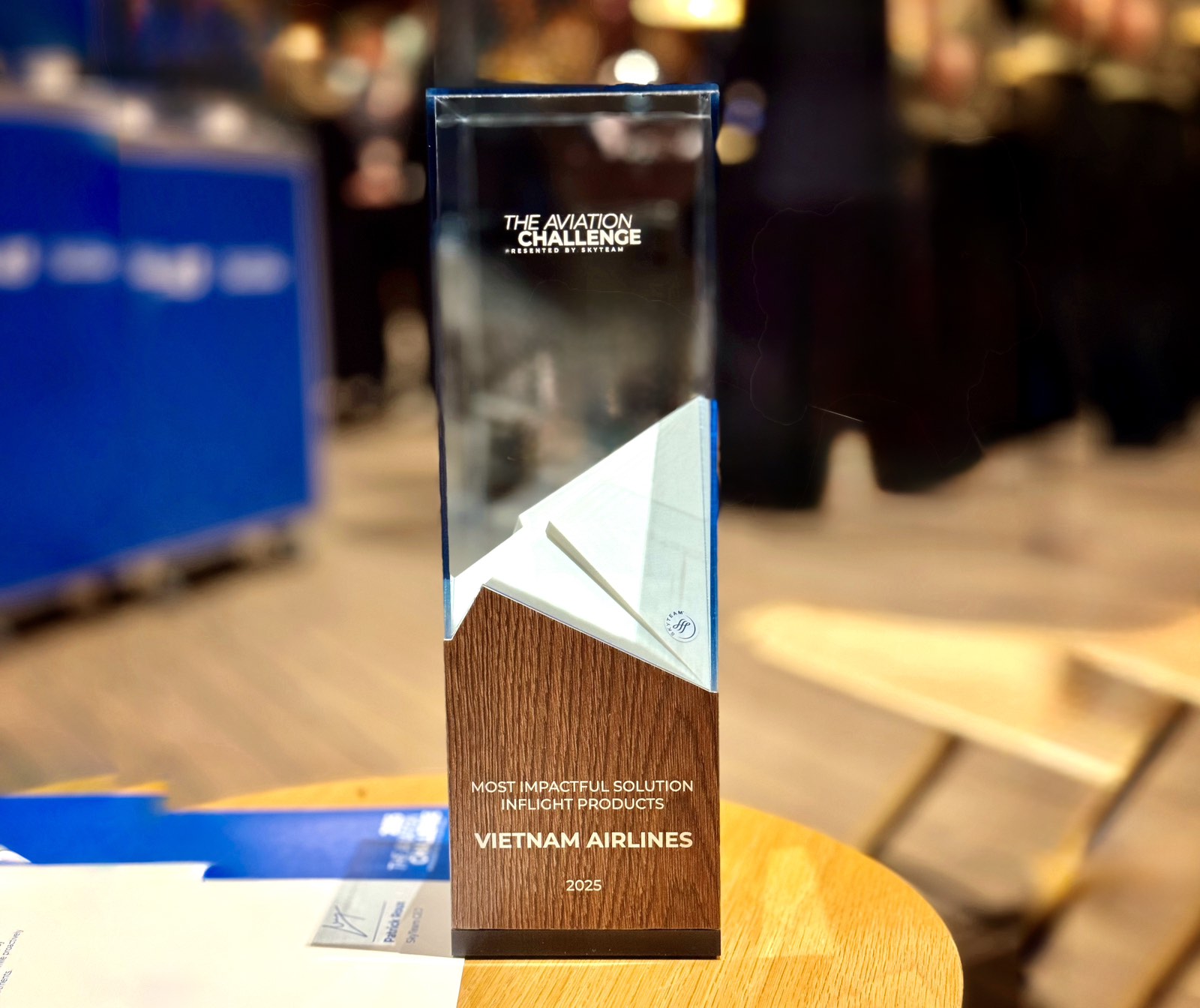
Vietnam Airlines was recently honored by the SkyTeam Airline Alliance at The Aviation Challenge 2025 (TAC 2025) with the Direct Impact Award. This is one of the six most prestigious categories of TAC 2025.
This result not only recognizes specific initiatives but also affirms Vietnam Airlines' increasingly prominent role and position in driving sustainable development within the SkyTeam alliance and the global aviation industry.
At the awards ceremony in Copenhagen, Vietnam Airlines received the “Highest Efficiency Solution – Onboard Product” award. Additionally, the airline made a significant impression by becoming a finalist in five categories, making it one of the three SkyTeam airlines with the most nominations this year.
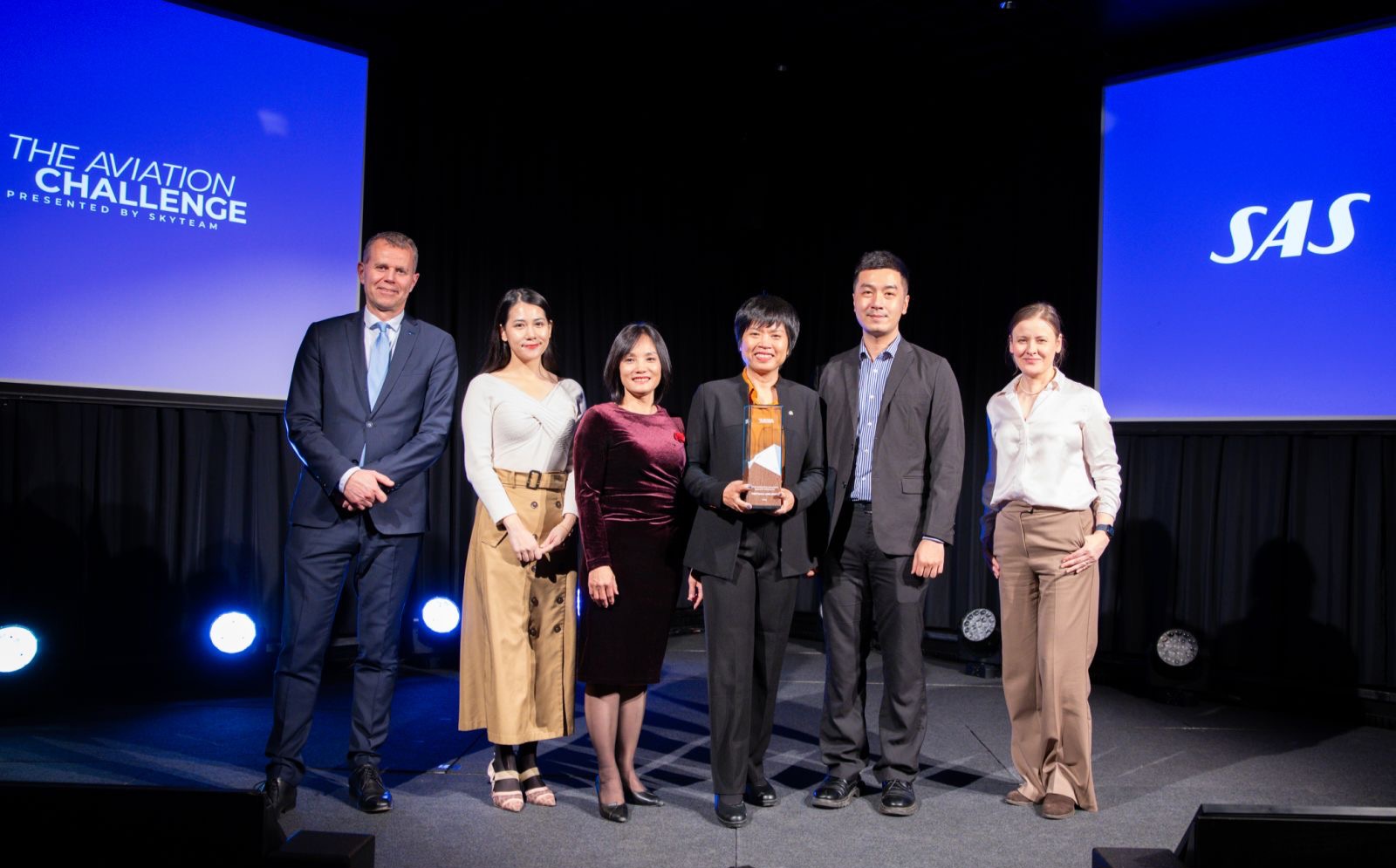
The award recognizes Vietnam Airlines' initiative to replace single-use onboard service items with reusable and recyclable alternatives. This solution significantly reduces single-use plastic waste while enhancing operational efficiency and the sustainability of the aviation service supply chain. Being honored by SkyTeam in this category demonstrates the feasibility and scalability of the initiative in real-world operations.
Within the framework of TAC 2025, Vietnam Airlines participated with domestic flight VN248 (HCMC – Hanoi) and international flight VN037 (Hanoi – Frankfurt), applying a synchronized set of sustainable solutions throughout the journeys. On the domestic "Fly Light to Hanoi" flight, solutions such as payload optimization, digitalization of procedures, and reduction of consumables saved approximately 0.77 tons of fuel, equivalent to a reduction of 2.43 tons of CO2. Furthermore, nearly 80% of passengers checked in online, reducing paper usage and cutting an additional 2–3 kg of CO2 per flight.
For the international flight from Hanoi to Frankfurt, using ultra-light Unit Load Devices (ULDs), dry engine washing, and flight plan optimization reduced fuel consumption by approximately 1.1 tons, preventing 3.5 tons of CO2 from entering the environment, a clear demonstration of fuel-saving efficiency in long-haul operations.
Beyond technical solutions, Vietnam Airlines places people at the center of its sustainability journey. The "Most Compelling Story" and "Best Showcase Flight" finalist rankings reflected how the airline tells its sustainability story authentically, based on data and the real-world experiences of pilots, flight attendants, engineers, and passengers.
Sharing thoughts on the results, Mr. Dang Anh Tuấn, Executive Vice President of Vietnam Airlines, stated: “The awards at The Aviation Challenge 2025 are a great source of pride for the entire Vietnam Airlines team. This is a recognition of our persistent efforts to gradually integrate sustainable solutions into actual operations, closely linked with safety, service quality, and operational efficiency.”
In addition to TAC initiatives, Vietnam Airlines proactively implements ESG-oriented sustainable development solutions. The airline is gradually operating routes using Sustainable Aviation Fuel (SAF) while boosting flight optimization, reducing aircraft weight, digitalizing processes, and saving fuel across its entire network.
Simultaneously, Vietnam Airlines carries out community engagement activities linked to nature conservation, such as forest restoration through the “Donate Leaves to Patch Forests” program. The airline also encourages responsible consumption and raises environmental awareness among passengers.
Through these efforts, Vietnam Airlines is step-by-step realizing its sustainable development goals aligned with its ESG strategy and the roadmap toward Net Zero emissions by 2050, while continuing to elevate service quality as a modern, responsible 5-star airline.
The Aviation Challenge 2025 brought together 22 airlines with over 80 demonstration flights, the highest number to date. Under the theme “Impact,” TAC 2025 focused on evaluating initiatives that are not just ideas but are implemented in reality, backed by clear measurable data and long-term applicability in regular operations.
RELATED NEWS
Note:  Link opens in new window. Site may not meet accessibility guidelines.






© 2025 Vietnam Airlines JSC
Contact Center for calls within Vietnam (24/7): 1900 1100
For Lotusmiles members: 1900 1800
For calls from outside Vietnam (24/7): +84 24 38320320
Email: Telesales@vietnamairlines.com
Certificate of Business Registration - No.: 0100107518, Initial registration made on 30 June 2010, the 10th registration of changes made on 24 July 2025.




You are about to leave Vietnamairlines.com

You will be redirected to a website that is not owned by Vietnamairlines and is not within our control. The site may not follow the same accesibility polices as Vietnam Airlines.
Would you like to continue?
Would you like to continue?
Notice

According to regulations of the Ministry of Finance, E-VAT invoices are only issued for payment in VND. In case of paying by other currency, please change website country/region.