

Select region and language



Inter-regional Logistics Corridors: Creating Sustainable Supply Chains
According to Vietnam Airlines leadership, forming inter-regional logistics corridors with optimized costs and reduced emissions will contribute to creating a sustainable supply chain.
According to data from the Vietnam Logistics Business Association (VLA), with an annual growth target of 12-15%, the total revenue of Vietnam's logistics market is expected to reach $250-280 billion by 2035, placing it among the top 15 largest markets globally. At that stage, logistics will play a pivotal role in realizing Vietnam's goal of reaching the top 20 global economies by GDP.
However, growth comes with significant challenges regarding NetZero targets. According to Mr. Dao Trong Khoa – President of VLA, transportation accounts for approximately 16-24% of total greenhouse gas emissions, while logistics alone contributes 7-8% of global $CO_2$. "As environmental standards in international trade become increasingly stringent, 'greening' has become a prerequisite for Vietnamese logistics to enter the most demanding markets," Mr. Khoa added.
Mr. Le Hong Ha, CEO of Vietnam Airlines, suggested that greening transport gateways like airports not only aims to reduce emissions but also enhances the operational efficiency of the logistics system and lowers the fundamental costs of the economy.
The Vital Role of Aviation Gateways
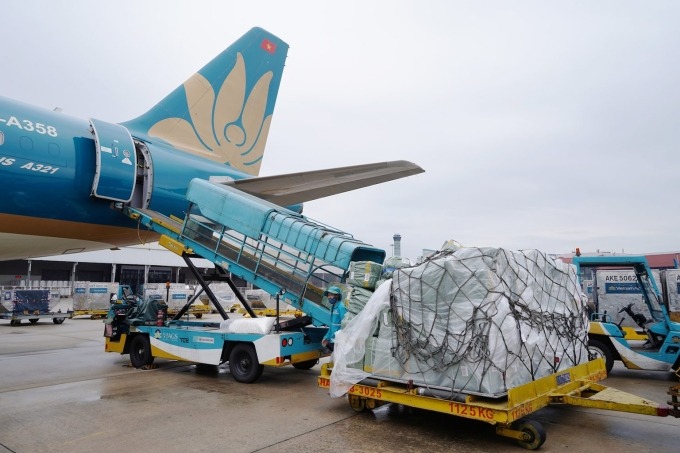
In the economy, transport gateways such as airports play a unique role. They are not just points of departure and arrival for passengers or goods, but also the convergence points for flows of trade, investment, and tourism. The operational efficiency of these gateways directly impacts logistics costs, corporate competitiveness, and regional attractiveness.
For instance, in Hanoi, the intersection of international trade flows passes through the Noi Bai gateway, extending to inter-regional corridor axes and major industrial hubs in Bac Ninh, Hai Phong, Quang Ninh, and Vinh Phuc. Millions of tons of cargo pass through this airport and surrounding logistics centers annually before being distributed to domestic and international markets.
According to Mr. Ha, increasing airport efficiency and reducing congestion will improve the public experience and strengthen the region's international connectivity. Simultaneously, it is essential to ensure the stable and continuous operation of aviation and logistics gateways to enhance resilience and supply chain security amidst global fluctuations.
"However, a modern airport terminal with trillions of VND in investment will see a decline in efficiency if goods leaving the gateway are bottlenecked on roads or lack storage and processing yards," the CEO of Vietnam Airlines emphasized.
Connecting "Hard" and "Soft" Infrastructure
Therefore, airports like Noi Bai and others in the region must be closely linked in the future with hubs like ICD Long Bien and inter-regional transport axes (such as Ring Road 3.5 and Ring Road 4) to form a closed-loop supply chain. These hubs serve as transit and distribution points, moving goods from airports to industrial zones, seaports, or domestic consumer markets.
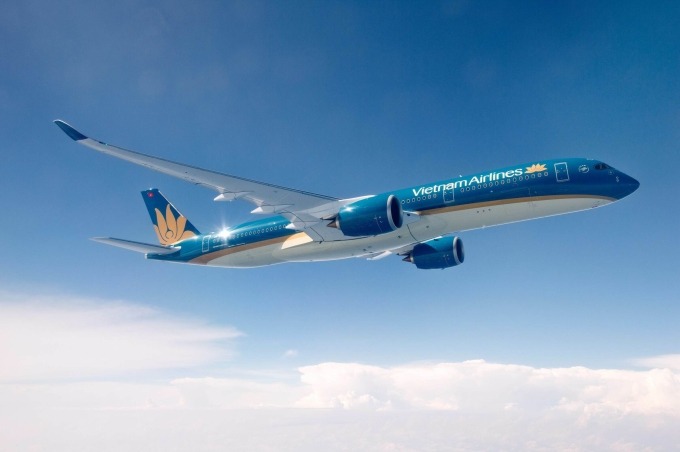
When effectively connected, logistics centers can help reduce operational pressure at aviation gateways while optimizing the cargo transit process, ensuring seamlessness and synchronization. This leads to the potential reduction of logistics costs, which currently account for 16-17% of GDP, significantly higher than the global average of about 10-11%.
The President of VLA evaluated that the biggest challenge for the logistics industry today does not lie in planning blueprints or new construction, but in execution and synchronization. From a logistics perspective, three factors are emphasized: connectivity – synchronization – operation.
"If individual projects perform well but lack inter-regional coordination, data sharing, and common operational standards, the chain's efficiency cannot be optimized," Mr. Khoa analyzed.
Regarding this issue, Mr. Le Hong Ha suggested that it is necessary to monitor and accelerate the construction of Ring Road 3.5 and Ring Road 4 in the Capital Region to form logistics, industrial, and satellite urban axes. This must be accompanied by fostering coordination mechanisms between Hanoi and relevant provinces to ensure key milestones are met.
Mr. Ha also supports the development of high-volume public transport, particularly the Metro network, to reduce congestion, improve urban quality, and lower social costs.
Beyond "hard" infrastructure, the green transition must go hand-in-hand with building a "soft infrastructure" of data and digital standards. Sharing common data between aviation, inland container depots (ICDs), customs, and transport enterprises will create a smart system with better forecasting capabilities.
According to Vietnam Airlines leadership, the digitalization of urban traffic must be linked to ensuring data safety, protecting personal data, and cybersecurity, while preventing data misuse in the digital environment.
RELATED NEWS
Note:  Link opens in new window. Site may not meet accessibility guidelines.







© 2025 Vietnam Airlines JSC
Contact Center for calls within Vietnam (24/7): 1900 1100
For Lotusmiles members: 1900 1800
For calls from outside Vietnam (24/7): +84 24 38320320
Email: Telesales@vietnamairlines.com
Certificate of Business Registration - No.: 0100107518, Initial registration made on 30 June 2010, the 10th registration of changes made on 24 July 2025.




You are about to leave Vietnamairlines.com

You will be redirected to a website that is not owned by Vietnamairlines and is not within our control. The site may not follow the same accesibility polices as Vietnam Airlines.
Would you like to continue?
Would you like to continue?
Notice

According to regulations of the Ministry of Finance, E-VAT invoices are only issued for payment in VND. In case of paying by other currency, please change website country/region.